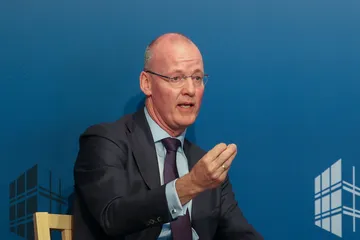
据有望接替克里斯蒂娜·拉加德出任欧洲央行行长的热门人选之一克拉斯·诺特称,欧洲央行可能将不得不继续维持鹰派立场,并对通胀冲击保持警惕。
The European Central Bank will likely have to continue with a hawkish stance and be wary of inflation shocks, according to Klaas Knot, who is one of the frontrunners to succeed President Christine Lagarde.
“不幸的是,核心通胀,也就是消费篮子中服务与商品带来的第二轮效应,可能也将上升,届时对欧洲央行来说也将成为一个问题,”诺特说。“我们将继续看到推高通胀的小冲击,欧洲央行届时将不得不以略偏鹰派的货币政策姿态加以应对。”欧洲央行已两次加息,外界普遍预计12月将再次加息。周三早些时候公布的数据显示,欧元区10月通胀率飙升至4%,创三年新高。
By Patrick Van Oosterom and Dasha Afanasieva“Unfortunately, core inflation, so second-round effect via services and goods in the consumption basket, will probably also pick up, and is going to be a problem then also for the ECB,” Knot said. “We will continue to see small shocks that will lift inflation, which the ECB then will have to counter with a somewhat hawkish monetary policy posture.”The ECB has hiked interest rates twice and is widely expected to do so again in December. Inflation in the euro area surged to a three-year high of 4% in October, according to data released earlier on Wednesday.
在此背景下,拉加德上周宣布,她将于2月初离任,比其任期正式结束提前近九个月。荷兰周三证实,将提名去年卸任荷兰央行行长的诺特接替她。他的竞争对手是西班牙的巴勃罗·埃尔南德斯·德科斯。
Against this backdrop, Lagarde announced last week that she’ll be leaving her post in early February, almost nine months before the official end of her term. The Netherlands confirmed on Wednesday that it will nominate Knot, who was the Dutch central bank chief until last year, to succeed her. He’s up against Spain’s Pablo Hernandez de Cos.
欧元区国家提交候选人的截止日期为周五。欧元区各国财长将于11月9日对提名人选进行“评估”,但预计届时不会作出决定,财政部长埃尔科·海宁在致议会的一封信中说。
Euro-zone countries face a Friday deadline to propose candidates. Euro-zone finance ministers will “take stock” of the nominees on Nov. 9, but with no decision foreseen yet, Finance Minister Eelco Heinen said in a letter to parliament.
当被问及是什么促使他寻求欧洲央行最高职位时,诺特在海牙发表讲话,提到自己在应对危机方面的经验,并表示他不喜欢危机,但危机也带来机遇。
Asked about what motivated him to seek the top ECB job, Knot — speaking in The Hague — cited his experience with crises, observing that he doesn’t like them, but that they present opportunities.
“事情会变得流动起来,”他说。“从分析角度看,正是在这些时候,你才会真正进行一些创新性思考,才能真正把边界推得更远。”诺特还说:“欧洲央行可能将不得不更频繁地从上方而非下方接近其2%的通胀目标。”
“Things become fluid,” he said. “Analytically these are the times where you really do some innovative thinking, where you can really push the envelope much further.”Knot also said: “The ECB will probably have to approach its 2% inflation target more often from above than from below.”
“如今,在地缘经济碎片化的世界里,这也是一个会产生更多负面供给冲击的世界,而负面供给冲击对央行官员来说非常难以应对,因为它们既会造成通胀,但不幸的是,它们也会造成经济活动放缓,因为这些更高的化石燃料价格会拖累消费者的购买力,也会拖累企业的盈利能力。”
“Now, in a world of geo-economic fragmentation, that is also a world that produces more negative supply shocks, and negative supply shocks are very difficult to navigate for central bankers because they both create inflation, but unfortunately they also create a slowdown in economic activity because these higher fossil fuel prices they weigh on consumer purchasing power, they weigh on corporate profitability.”
“这些冲击之一显然是中东战争。在考虑欧洲央行的反应函数时,重要的是,不幸的是,这些能源价格上涨已成过往。当欧洲央行启动其对抗通胀的工具时,需要一年半或大约两年时间,这些工具才能见效。所以不幸的是,今天的通胀已经太晚了——我们无法再对此作出反应。”
“One of these shocks is obviously the war in the Middle East. It is important, when you think about the reaction function of the ECB, these energy price increases are water under the bridge, unfortunately. When the ECB activates its instrument to combat inflation, it takes a year and a half, or two or so, before these instruments can become effective. So today’s inflation, unfortunately, is too late — we can’t react to that anymore.”
“我的意思是,世界已经变了,而且是根本性地变了。我认为其驱动因素主要是美国。顺便说一句,这主要是受其与中国的关系以及世界上这两个——姑且说——大国之间的竞争所驱动,而欧洲正处在承受端。但这意味着我们的关系已经发生了根本性变化,也意味着我们必须重新思考。我们必须重新思考那些几十年来我们视为理所当然、认为或多或少没问题的依赖关系。而这些依赖关系超出了安全与防务领域。”
“I mean, the world has changed, and the world has changed fundamentally. And I think the driver of that is primarily the US. That, by the way, is primarily motivated by its relationship with China and of the rivalry between the two, let’s say, big areas in the world, and Europe is on the receiving end of that. But it means that our relationship has fundamentally changed, and that means that we have to rethink. We have to rethink the dependencies that, for decades, we took for granted and we thought were more or less okay. And these dependencies are they go beyond security and defense.”