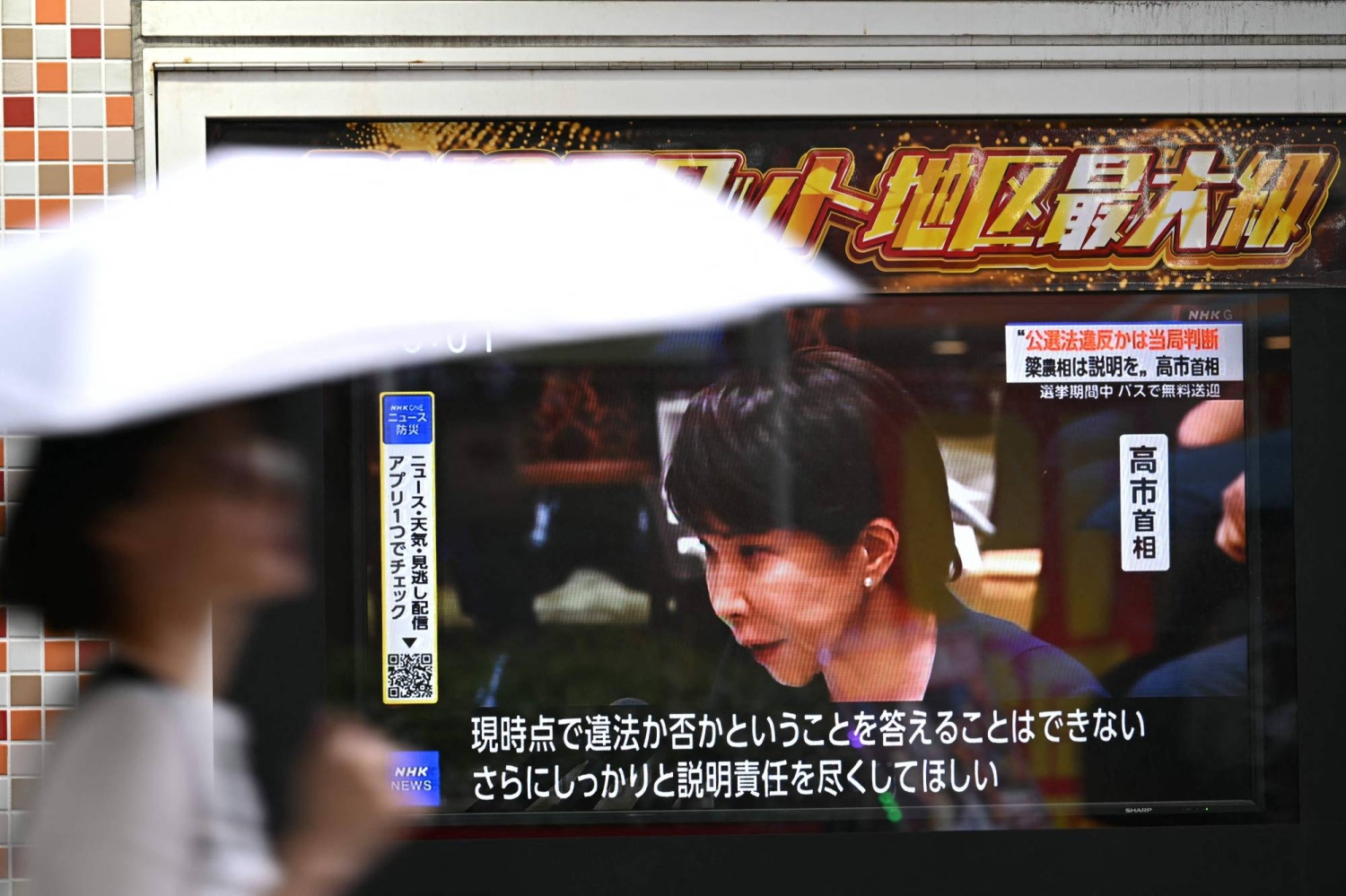
一名女子走过东京一块显示首相高市早苗于10月14日在众议院会议上发言的屏幕。 | AFP-JIJI文 / 吉田健治 记者2026年11月5日随着首相高市早苗步入执政第二年,选民有许多理由对她迄今的表现感到不满。生活成本居高不下,对华关系紧张,其旗舰政策——食品消费税减免尚未生效。
- U.S. midterm elections Today's print edition Home Delivery for more access JAPAN / Politics / ANALYSIS What keeps Takaichi defying political gravity? A woman walks past a screen showing Prime Minister Sanae Takaichi speaking at a Lower House session in Tokyo on Oct. 14. | AFP-JIJI By Kenji Yoshida STAFF WRITER Nov 5, 2026 As Prime Minister Sanae Takaichi begins her second year in office, voters have plenty of reasons to be dissatisfied with the job she’s done so far. Living costs remain high, relations with China are strained and her flagship consumption tax cut on food has yet to take effect.
然而,尽管高市的初期支持率在过去一年里有所下滑,但仍高于其前任在任职同期的水平。
Yet while Takaichi’s initial approval ratings have fallen over the past year, they have still stayed higher than her predecessors at the same time in their administrations.
在10月31日至11月1日进行的JNN民调中,1024名受访者中有64.9%表示支持内阁,较上次民调上升1.9个百分点。10月下旬《日本经济新闻》和《每日新闻》的民调分别显示支持率为62%和45%,均与9月持平。
Of 1,024 people who responded to a JNN survey on Oct. 31 and Nov. 1, 64.9% approved of the Cabinet, up 1.9 percentage points from its previous poll. Late October polls by the Nikkei and Mainichi Shimbun put approval at 62% and 45%, respectively, both unchanged from September.