在其5月份的月度气温更新中,领先的非营利气候分析机构伯克利地球预测,2026年成为有记录以来最暖年份的概率仅为2.5%。随后,厄尔尼诺现象开始形成。
In its monthly temperature update in May, Berkeley Earth, a leading non-profit climate analysis organization, forecast that 2026 had just a 2.5 per cent chance of being the warmest year on record. Then El Niño started to develop.
次月,这一概率升至12%。到8月,已跃升至69%。现在?伯克利地球将其定为96%。
The next month it was a 12 per cent chance. By August it had jumped to 69 per cent. Now? Berkeley Earth puts it at a 96 per cent chance.
2026年可能成为有记录以来最暖年份,与这一特别强烈的厄尔尼诺现象有关联吗?
Is there a link between 2026 potentially being the warmest year on record and this particularly strong El Niño?
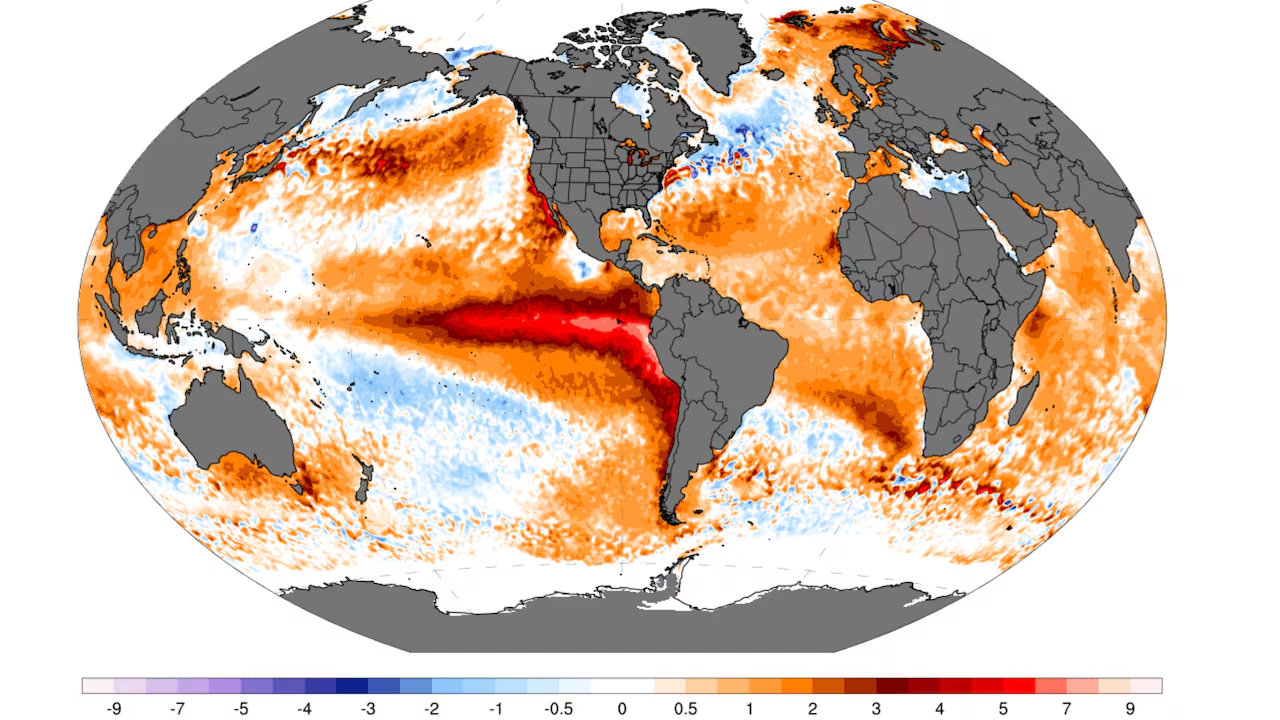
这种厄尔尼诺现象——太平洋海水变暖,可导致全球气温暂时升高——自1950年有记录以来已是最强,以较大优势超越了2015-16年创下的前一纪录。
This El Niño — a warming in the Pacific Ocean that can contribute to a temporary warming in the global temperature — is already the strongest one since record-keeping began in 1950, beating out the previous record set in 2015-16 by a wide margin.
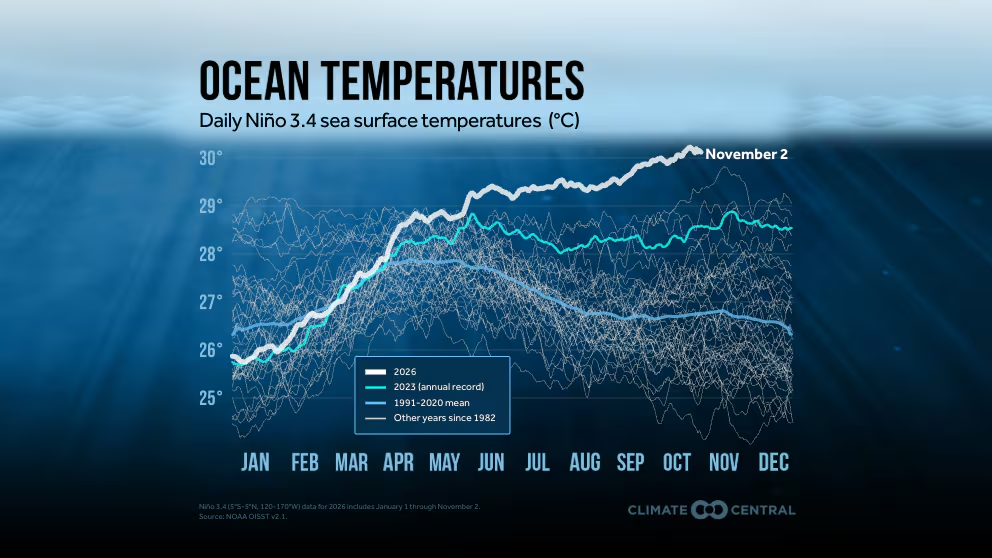
科学家认为,海温较平均值升高2摄氏度即属强厄尔尼诺。上周,赤道附近太平洋特定区域“尼诺3.4区”的海温较平均值高出3.5摄氏度。
Scientists consider a strong El Niño to be a warming of 2 C above average. Ocean temperatures in a specific part of the Pacific, near the equator, dubbed “Niño 3.4” reached 3.5 C above average last week.
通常,厄尔尼诺对全球气温的影响在其达到峰值约三个月后显现,峰值预计将出现在11月或12月。然而,模型显示,2026年要么将成为有记录以来最暖年份,超越2024年,要么将成为第二暖年份。
Typically, we see the effects of an El Niño on the global temperature about three months after its peak, which is forecast for November or December. However, models show that 2026 will either be the warmest year on record, beating out 2024, or the second-warmest.
“厄尔尼诺肯定是导致我们所见升温的原因,”多伦多大学大气物理学教授肯特·摩尔说。
“El Niño definitely is leading to the warmth that we're seeing,” said Kent Moore, a professor of atmospheric physics at the University of Toronto.
伯克利地球在9月月度更新中报告:“与2026年其他月份相比,它依然显著偏暖。2026年9月延续了从7月开始连续高于1.5摄氏度阈值的月份序列,因为厄尔尼诺的增暖影响在增强。”但并非全是厄尔尼诺的作用。
In its September monthly update Berkeley Earth reported, "It remains sharply warmer than other months in 2026. September 2026 continued the run of months above the 1.5 C mark that began in July, as the warming influence of El Niño has grown."
海洋热量积聚 正如世界气象组织秘书长塞莱斯特·绍洛上月在全球高温论坛上所言:“厄尔尼诺不会给地球增加新热量。它释放的是海洋表层以下早已储存的热量。”而这些热量源于气候变化,因为我们持续燃烧化石燃料,向大气排放更多温室气体。
But it’s not all El Niño. Trapped ocean heat As World Meteorological Organization (WMO) Secretary-General Celeste Saulo told the Global Heat Forum last month“El Niño doesn't add new heat to the planet. It releases heat the ocean has already been storing beneath the surface.”And that heat is due to climate change, as we continue to burn fossil fuels, pumping more greenhouse gases into the atmosphere.
“超级”厄尔尼诺并未导致今年的火灾和热浪,但它即将带我们进入一场“狂野之旅”厄尔尼诺已经来临,且看起来可能会“令人震惊”。莫尔说:“我们在海洋中看到的温暖……主要与过去150年来我们一直在加热海洋有关。”
'Super' El Niño didn't cause this year's fires and heat waves, but it's about to take us on a 'wild ride' El Niño is here, and it’s already looking like it could be 'mind-blowing' “The warmth we're seeing in the ocean ... is mostly related to the fact that we've just been warming the ocean up for the last 150 years,” Moore said.
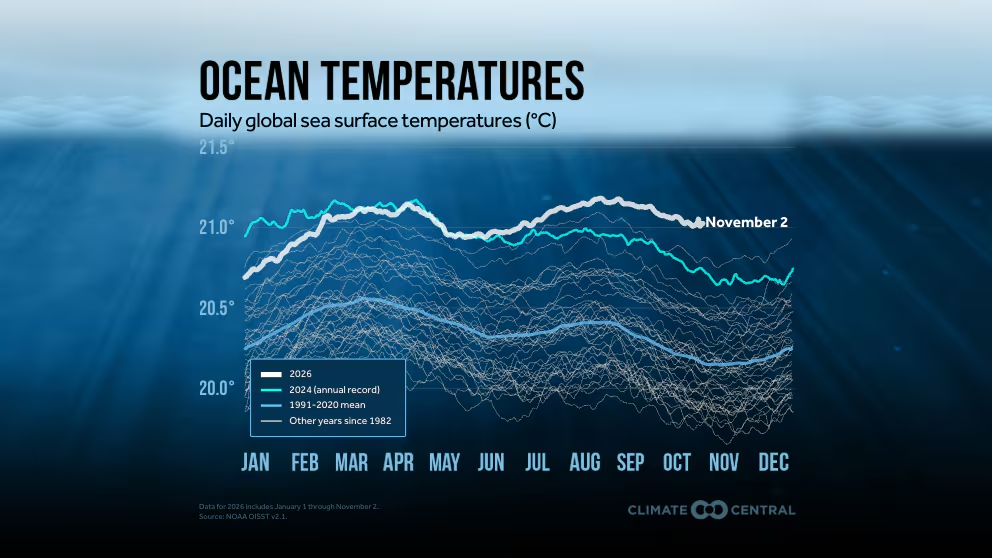
总体而言,全球海洋温度是有记录以来最暖的,这因为海洋非常擅长储存多余的热量。事实证明,海洋同样非常擅长储存二氧化碳。但它们也有极限。
Overall, global ocean temperatures are the warmest they’ve ever been on record, and that’s because the oceans are really good at trapping excess heat. And it turns out they’re also really good at trapping CO2. But there are limits.
莫尔说:“随着海洋变暖,它能够容纳的二氧化碳量会减少。所以,这里存在一种反馈循环。海洋变暖后,作为二氧化碳汇的效率下降,这意味着更多的二氧化碳留在大气中,进一步加热大气。”我多年来一直在追踪厄尔尼诺——在9月16日之前,我从未见过这种情况。
因此,虽然厄尔尼诺可能在2026年全球年均气温中扮演小角色,但主要驱动因素是化石燃料的使用以及释放到大气中的温室气体。
“As the ocean warms, the amount of carbon dioxide that it can hold is reduced," said Moore. "So, there's a bit of a feedback loop there. As the oceans warm, they become a less efficient sink for carbon dioxide, which means more of the carbon dioxide stays in the atmosphere [and it] warms more.”I’ve tracked El Niño for years — I’ve never seen this before September 16 Duration So, while El Niño may be playing a small role in 2026's annual global temperature, the main driver is the use of fossil fuels and greenhouse gases released into our atmosphere.
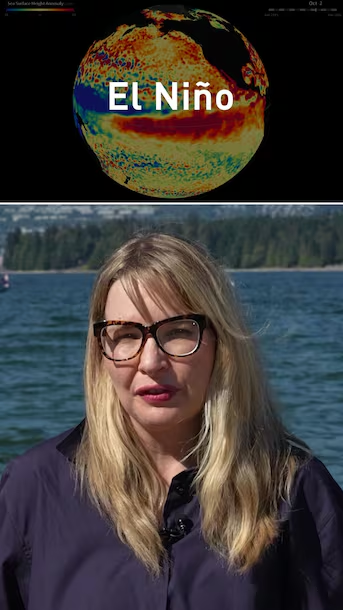
莫尔说:“海洋的缓慢逐步升温,加上厄尔尼诺的出现,持续约六个月左右,使气温大幅上升。随后,厄尔尼诺自然会消退,但升温仍会持续存在。”
“You got the slow gradual warming of the ocean, and then the El Niño comes along, kicks [around], for six months or so, [and] the temperature goes way up,” Moore said. “And then, of course, El Niño will go away. But of course the warming will still be there.”
目前,并非所有人都认为2026年会超过2024年成为有记录以来最热的一年。
Now, not everyone thinks 2026 will beat out 2024 as the hottest year on record.
美国国家环境信息中心仅给出2026年成为最热年份的概率为0.1%,成为第二热年份的概率为86.9%。但2027年的全球年均气温肯定会更受厄尔尼诺的影响。
The U.S. National Centers for Environmental Information gives only a 0.1 per cent chance of it being the warmest and an 86.9 per cent chance of it being the second-warmest But 2027's annual global temperature will definitely be more influenced by El Niño.
气候科学家泽克·豪斯法瑟在气候出版物《碳简报》撰文称:“今年创下纪录的厄尔尼诺现象将在2027年对全球气温产生最大影响。《碳简报》预测,2027年气温将比工业化前水平高出约1.7摄氏度,有96%的几率成为有记录以来最热的一年。”
Climate scientist Zeke Hausfather, writing for Carbon Brief, a climate publication, said, "This year’s record-setting El Niño will have its largest effect on global temperatures in 2027. Carbon Brief projects 2027 at around 1.7 C above pre-industrial levels, with a 96 per cent chance that it will be the warmest year on record."