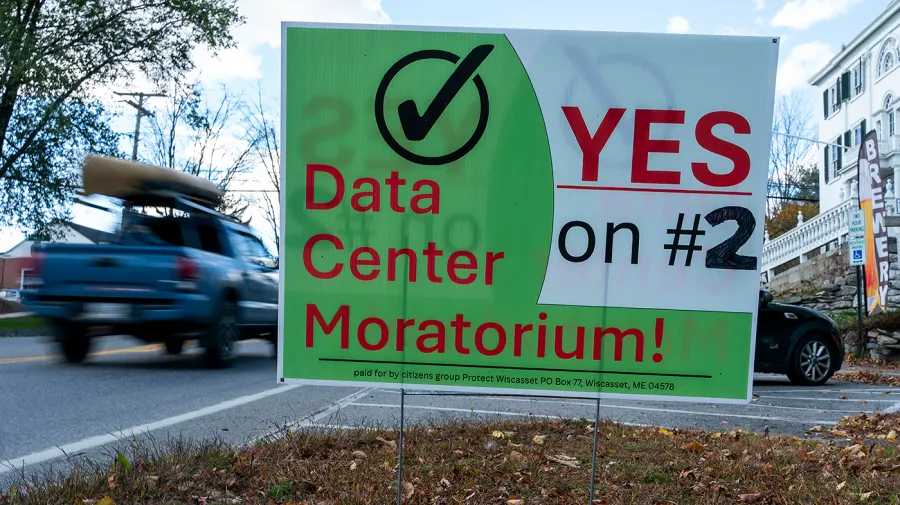
对数据中心的强烈抵制帮助民主党人在本周全美关键选战中获胜,而在数据中心明确成为选票议题的地方,它们以压倒性劣势落败。中期选举选民既拒绝了行业支持的候选人,又以压倒性多数支持暂停数据中心建设的决议,给该行业造成重创。选举日或许是迄今为止对数据中心民意的最大考验。科技监督团体抓住这一结果,声称结果显示公众在很大程度上拒绝这些设施及其所支撑的技术。
Fierce pushback to data centers helped carry Democrats to victory in key races across the nation this week, and where the centers were explicitly on the ballot, they lost overwhelmingly. Midterm voters both rejected industry-backed candidates and overwhelmingly backed resolutions to halt data center construction, dealing a major blow to the sector. Election Day marked perhaps the biggest test so far for data center sentiment. Technology watchdog groups are seizing on the outcome, stating results show the public is largely rejecting the facilities and the technology they power.
“数据中心代表了选民对被人工智能取代、失去工作、失去生计以及当地能源价格上涨的恐惧和焦虑,”布伦丹·斯坦豪泽说,他曾管理参议员约翰·科宁(共和党-得克萨斯州)2014年的竞选活动,现任安全人工智能联盟首席执行官。他补充说,数据中心也代表了“大科技寡头”的“腐败”。虽然经济、高昂的油价、腐败和民主状况位居选民关切榜首,但出口民调显示,数据中心是周二晚“蓝色海啸”形成的几个因素之一。
“Data centers represent a fear and an angst that voters have about being replaced by AI, losing their jobs, losing their livelihoods [and] the rising price of energy in their local area,” said Brendan Steinhauser, who managed Sen. John Cornyn’s (R-Texas) 2014 campaign and is now CEO of the Alliance for Secure AI. He added that they were also representative of “corruption” from “Big Tech oligarchs.”While the economy, high costs at the pump, corruption and the state of democracy topped voters’ list of concerns, exit polls suggest data centers were one of several factors contributing to the blue tsunami Tuesday night.
据美国全国广播公司新闻网(NBC News)出口民调,23%的选民表示数据中心在其国会投票中“至关重要”,另有33%称其为“主要”因素。76%表示将反对在其社区建设新数据中心。
In an NBC News exit poll, 23 percent of voters said that data centers were “crucial” in their congressional vote, while another 33 percent said they were a “major” factor. Seventy-six percent said they would oppose construction of a new data center in their community.
“这是一个真正定义了民众可负担性的议题,州长、参议员、当选众议员都将其视为巨大机遇,”气候力量组织主席洛里·洛德斯对记者说。对数据中心的担忧出现在多个关键战场选战中,贯穿整张选票,俄亥俄州和得克萨斯州尤为显著。
“This is an issue that really defined affordability for folks, and governors, senators, House-elect members all saw it as a huge opportunity,” Lori Lodes, president of Climate Power, told reporters. Concerns around data centers were seen in several battleground races up and down the ballot, notably in Ohio and Texas.
环保选民联盟主席皮特·梅史密斯指出俄亥俄州参议院竞选,称其为“一个非常清晰的例子,[参议员] 乔恩·休斯特 [共和党] 投票支持大规模税收让利——给数据中心开发商的税收减免——这在该竞选中被广泛争论,并让他们付出了代价,帮助 [前参议员] 谢罗德·布朗 [民主党] 赢得了那场竞选。” 年初,全国共和党参议员竞选委员会曾警告称,数据中心是“挂在休斯特脖子上的累赘”。
League of Conservation Voters President Pete Maysmith pointed to the Ohio Senate contest, calling it “a really clear example where [Sen.] Jon Husted [R] voted for massive tax giveaways — tax breaks for data center developers — and that was litigated extensively in that race, and it cost them, and it helped propel [former Sen.] Sherrod Brown [D] to winning that race.”Earlier in the year, the National Republican Senatorial Committee had warned that data centers were an “anchor hanging around Husted’s neck.”
此外,休斯特和几位共和党人无法与特朗普总统的反监管立场划清界限,特朗普支持数据中心,尽管公众对它们的反对情绪日益高涨。数据中心是人工智能发展为数不多的有形体现之一,作为对该技术更广泛抵制的一部分而引发强烈反弹。加上对这些设施对当地社区和环境影响的担忧,几位民主党人将数据中心作为政治武器。
Further, Husted and several Republicans could not distance themselves from the anti-regulatory stance of President Trump, who has backed data centers even as public opposition to them has grown. Data centers are one of the only tangible representations of AI development, drawing backlash as part of a wider pushback on the technology. Coupled with concerns around the facilities’ impact on local communities and the environment, several Democrats used data centers as a political weapon.
虽然民主党在选举前约一年就围绕该问题形成共识,但随着反弹加剧,越来越多的共和党人,包括得克萨斯州州长格雷格·阿博特和得克萨斯州检察长肯·帕克斯顿,突然改变了立场。阿博特在州长选举中败给得克萨斯州众议员吉娜·伊诺霍萨 (民主党),帕克斯顿在参议员空缺席位竞选中败给州众议员詹姆斯·塔拉里科 (民主党)。
While Democrats coalesced around the issue about a year before the election, a growing number of Republicans, including Texas. Gov Greg Abbott and Texas Attorney General Ken Paxtron, abruptly switched their views as backlash grew. Abbott lost the governor’s seat to Texas state Rep. Gina Hinojosa (D), and Paxton lost the open Senate seat to state Rep. James Talarico (D).
阿博特今年早些时候突然宣布该州将停止发放数据中心新许可,令全国震惊。(倡导组织“公共市民”发现,尽管有此承诺,仍有部分许可在发放,导致该州关闭了其自动发放系统)。宣布停发许可此前,这位共和党州长曾于去年表示得克萨斯州将成为“AI 发展的中心”,随后公众反弹巨大。
Abbott surprised the nation earlier this year when he said the state would stop issuing new permits for data centers. (Advocacy group Public Citizen found that some permits were still being issued despite the pledge, leading the state to shut down its automatic system). The announcement to halt permits came after the GOP governor previously stated that Texas would be the “epicenter of AI development” last year, before an immense swell in public backlash.
在竞选途中,伊诺霍萨多次猛烈抨击阿博特近期在数据中心问题上的立场转变,称他最近暂停州数据中心许可的举措“仅是挂名而已”。她誓要建立数据中心建设暂停令,她周二晚间的胜利让得克萨斯州的数据中心建设热潮陷入不确定性。斯坦豪泽表示,他认为如果阿博特“能更早、更坚定地站出来,不仅支持暂停令,也许还支持限制措施,让大型科技公司更加负责,他的表现可能会更好。”
On the campaign trail, Hinojosa repeatedly hammered Abbott over his recent switch on data centers, calling his recent move to pause state data center permits “in name only.”She has vowed to establish a moratorium on data center construction, with her win Tuesday night throwing Texas’s data center buildout into uncertainty. Steinhauser said he believes that if Abbott “would have come out earlier stronger, not only for a moratorium, but maybe for restrictions, holding big tech more accountable, he might have performed better.”
“但话说回来,以他落后的票数差距来看,很难说他本会赢,”斯坦豪泽说。对行业而言,得克萨斯州州长竞选可能产生重大后果。“对人工智能而言,伊诺霍萨的胜利确实是震撼性的。数据中心建设热潮是一个得克萨斯州的故事,这只是稍微夸张而已,”前民主党众议员布拉德·卡森(俄克拉荷马州)在X上写道。卡森是“负责任创新美国人”组织的主席,该非营利组织推动人工智能安全护栏。
“But again, to lose by the amount of votes he's losing by, it'd be hard for me to say that he would have won,” Steinhauser said. For the industry, the Texas gubernatorial race could have significant consequences. “For AI, the Hinojosa win is truly earth-shaking. The data center buildout is a Texas story, with only slight exaggeration,” former Democratic Rep. Brad Carson (Okla.) wrote on X. Carson is the president of Americans for Responsible Innovation, a nonprofit pushing for AI safety guardrails.
与其他民主党人一样,伊诺霍萨在数据中心问题上采取了民粹主义路线,回应选民对可能拥有这些设施的超级富豪的情绪。民粹主义、工会支持的超级政治行动委员会“护栏联盟”执行主肖娜·托马斯表示,周二的结果显示,“数据中心反弹是我们这个时代最具两党共识的政治议题之一,因为全国各地民众面临噪音污染、费率上涨,以及大型科技公司试图碾压地方政府。”
Like other Democrats, Hinojosa took the populist approach towards data centers, tuning into voters’ sentiment about the ultrawealthy who may own the facilities. Shaunna Thomas, the executive director of the populist, labor-backed super PAC Guardrails Alliance, said Tuesday’s results showed “data center backlash is one of the most bipartisan political issues of our time as people across the country face noise pollution, rate hikes and Big Tech trying to steamroll local governments.”
托马斯告诉《国会山报》:“各种政治倾向的美国人都厌倦了人工智能行业试图控制我们生活的方方面面,在我们社区建设数据中心,从我们的数据中牟利,并试图控制谁在政府中代表我们。”在41项限制数据中心建设的地方投票议案中,选民在除一项外的所有议案中都反对数据中心。拥有200多座数据中心的俄亥俄州占了其中21项。
“Americans of every political persuasion are sick and tired of the AI industry trying to control every aspect of our lives, building data centers in our communities, profiting off our data and trying to control who represents us in government,” Thomas told The Hill. Out of 41 local ballot measures to restrict data center construction, voters were against the centers on all but one. Ohio, which is home to more than 200 data centers, accounted for 21 of these.
行业组织数据中心联盟的州政策和政府事务副总裁丹·迪奥里奥在一份声明中表示,该组织“期待与联邦、州和地方政策制定者、社区及其他利益相关方合作,赢得信任,支持数据中心负责任地发展,并帮助为每一位美国人构建更强劲的经济未来。”迪奥里奥补充说,该行业“将继续与居民和地方领导人接触,了解社区优先事项,并确保数字基础设施的增长带来全国各地社区所寻求的明确利益。”
Dan Diorio, vice president of state policy and government affairs at the industry group Data Center Coalition, said in a statement the organization “looks forward to working with federal, state, and local policymakers, communities, and other stakeholders to earn trust, support responsible data center growth, and help build a stronger economic future for every American.”Diorio added that the industry “will continue to engage with residents and local leaders to understand community priorities and ensure that the growth of digital infrastructure delivers clear benefits that communities across the nation are seeking.”
尽管如此,许多技术乐观主义者并不认同数据中心在选举中扮演了重要角色。中左翼科技政策组织“国会商会”的创始人兼首席执行官亚当·科瓦切维奇对《国会山报》表示,这次选举“是对特朗普及其经济政策的公投……试图将其定性为人工智能选举或数据中心选举,只是一厢情愿。”
Still, many techno-optimists don’t agree that data centers played a large role in races. The election “was a referendum on Trump and his economy … efforts to try to deem it an Al election or a data center election are just wish-casting,” Adam Kovacevich, founder and CEO of the center-left tech policy group Chamber of Congress, told The Hill.
专注于能源政策的共和党策略师克里斯·约翰逊表示,数据中心并非本届中期选举周期中“最突出的议题”,但“它确实被纳入了可负担性讨论的一部分,尤其是在涉及能源价格方面。”
Chris Johnson, a GOP strategist focused on energy policy, said data centers were not the “most salient issue” this midterm cycle, but “it does get wrapped up as part of the affordability conversation especially as it relates to energy prices.”
然而,据报道在中期选举中投入至少4.74亿美元的埃隆·马斯克,在X平台上的一条帖文中似乎承认了这些设施的不受欢迎程度,他写道:“把数据中心建在太空看起来现在相当有吸引力。”
However, Elon Musk, who reportedly poured at least $474 million into the midterms, appeared to acknowledge the facilities’ unpopularity in a post on X, writing, “Data centers in space looking pretty appealing right now.”