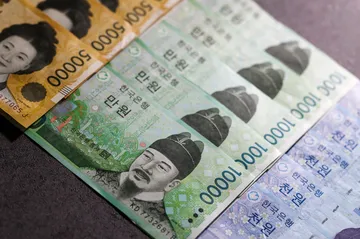
美国银行表示,在人工智能驱动的股市遭到抛售之后,韩国元和新台币提供了买入机会。
The South Korean won and Taiwan dollar offer buying opportunities after the artificial intelligence-driven equity selloff, according to Bank of America Corp.
美国银行全球研究部亚洲外汇和利率策略主管克劳迪奥·皮龙表示,这两种货币随着与人工智能相关的股票一同走弱,但其经常账户顺差的规模为投资者建立多头头寸提供了“实质性”的掩护。
Both currencies have weakened in tandem with AI-linked stocks, but the size of their current-account surpluses gives investors “substantial” cover to build long positions, said Claudio Piron, head of Asia foreign-exchange and rates strategy at BofA’s global research unit.
他在接受彭博电视台采访时表示:“这将发挥作用。从边缘来看,我认为目前的这些水平为人们进入韩元多头头寸和新台币多头头寸提供了机会。”皮龙表示,新台币是与人工智能交易所交易基金相关性最高的亚洲货币,这使得其近期的下跌更符合持仓挤压,而非基本面恶化。
“That will come into play,” he said in a Bloomberg TV interview. “I would say at the margin that these levels here provide an opportunity for people to enter into long Korean won positions and long Taiwan positions.”Piron said the Taiwan dollar was the Asian currency most correlated with AI exchange-traded funds, making its recent decline consistent with a positioning squeeze rather than a fundamental deterioration.
关于美元,皮龙表示,曾推动美元走强的美国例外论——即美国独好论——与人工智能有关,目前已经消退。他将年底的美元兑韩元汇率目标设为1330,下一季度的目标设为1300。
On the dollar, Piron said US exceptionalism — the narrative that had driven dollar strength — was linked to AI and had faded for now. He set a dollar-won target of 1,330 for the year-end, and 1,300 for the next quarter.