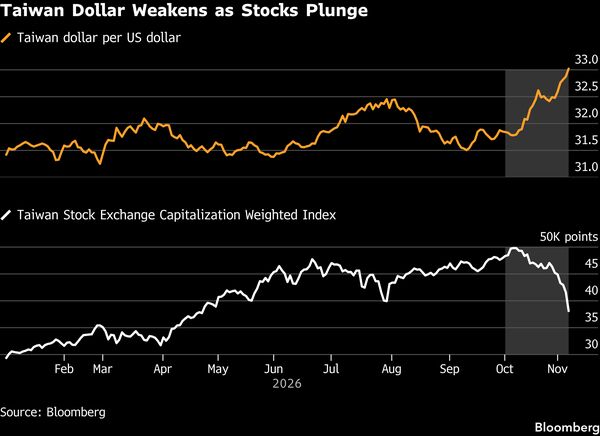
由于人工智能股票普遍回调拖累了该岛以科技股为主的股市,新台币兑美元汇率自2025年4月以来首次跌破33这一关键心理关口。
The Taiwan dollar weakened past the key psychological level of 33 per US dollar for the first time since April 2025, as a broad retreat in artificial intelligence shares weighed on the island’s tech-heavy equity market.
周五,该货币一度下跌0.5%,至每1美元兑33.040新台币。该岛的一项股市指标下跌了约8%。
The currency fell as much as 0.5% to 33.040 per US dollar on Friday. A gauge of the island’s stocks dropped around 8%.
民主党在美国国会选举中大获全胜后,股市跌势在周五进一步加深。这一胜利引发了人们的担忧,即政治优先事项的转变可能会给高速增长的人工智能和巨额硬件支出踩下刹车。由于外国投资者抛售本土股票并将所得资金兑换回外币,削弱了对当地货币的需求,本地科技股的持续抛售通常会给新台币带来压力。
The equity slump deepened on Friday after Democrats swept the US Congressional elections. The victory fueled concern that shifting political priorities could tap the brakes on breakneck AI growth and massive hardware spending. Sustained selling in local tech shares typically piles pressure on the Taiwan dollar, as foreign investors offloading domestic equities convert their proceeds back into foreign currencies, sapping demand for the local unit.
华侨银行策略师王浩(Christopher Wong)表示:“台湾对半导体和人工智能供应链的高度敞口,使其特别容易受到中期选举后美国更严格的监管可能放缓人工智能基础设施投资的担忧影响。”
“Taiwan’s heavy exposure to the semiconductor and AI supply chains makes it particularly vulnerable to concerns that tighter US regulation could slow AI infrastructure investment following the midterm elections,” said Christopher Wong, a strategist at Oversea-Chinese Banking Corp.
他表示:“短期内,我们预计新台币将保持动荡,股市表现和外国投资组合资金流动可能会主导外汇走向,”并补充说,该货币短期内存在贬值至每1美元兑33.30新台币的风险。
“Near term, we expect the Taiwan dollar to remain volatile, with equity market performance and foreign portfolio flows likely to dominate FX direction,” he said, adding that there’s a near-term risk for the currency weakening to 33.30 per US dollar.
当地股市上个月遭遇了创纪录的外国资金外流,导致该货币跌至亚洲表现排行榜的底部。尽管央行最近做出了放松出口商美元出售限制的决定(此举旨在减轻新台币的贬值压力),但跌势仍在加深。
Local equities suffered record foreign outflows last month, sinking the currency to the bottom of the Asian performance rankings. The slide has deepened despite a recent decision by the central bank to ease restrictions on US dollar sales by exporters, a move aimed at reducing depreciation pressure on the Taiwan dollar.