英国在人工智能、先进芯片和清洁能源方面的雄心,依赖于由中国主导的矿产供应链,下议院议员表示,他们无法确定政府部长是否拥有可信的计划来降低这种依赖。
Britain's ambitions for AI, advanced chips, and clean energy rest on mineral supply chains dominated by China, and MPs say they cannot establish whether ministers have a credible plan to reduce that dependence.
下议院商业、创新、科学与贸易委员会已为部长们设定了十项确保关键矿产供应的测试标准。其结论并不乐观——委员会无法确信政府在任何一项测试中达标。
The House of Commons Business, Innovation, Science and Trade Committee has set ministers ten tests for securing critical minerals. Its verdict is hardly glowing – it cannot be confident the government passes any of them.
这些测试涵盖:部长们是否知晓哪些行业和技术需要保护、它们需要哪些矿产、供应可能在何处中断,以及国内生产、海外伙伴关系、技能和融资将如何弥补缺口。
The tests cover whether ministers know which industries and technologies need protecting, what minerals they require, where supplies could be disrupted, and how domestic production, overseas partnerships, skills, and financing will close the gaps.
在今日发布的报告中,委员会警告称,实现供应多元化将需要十到十五年,并需要持续的投资和与盟友的合作。报告指出,完全将中国排除在外既不现实也不合意。但让北京保留如此大的杠杆作用则是另一码事。
In a report published today, the committee warns that diversifying supplies will take ten to 15 years, and will require sustained investment and cooperation with allies. Completely cutting China out is neither realistic nor desirable, it says. Leaving Beijing with so much leverage is another matter.
关键矿产支撑着从电池、半导体到数据中心和军事装备的一切。这一认定反映了它们的经济或安全重要性以及易受供应中断的影响,而非意味着它们属于一个特别独特的地质俱乐部。
Critical minerals underpin everything from batteries and semiconductors to datacenters and military equipment. The designation reflects their economic or security importance and vulnerability to supply disruption, rather than membership of an especially exclusive geological club.
英国——与几乎所有主要工业化经济体一样,包括美国、欧盟、日本和印度——几乎完全依赖这些材料和矿产品的进口。但在中国以外开采更多矿石只能解决部分问题。更大的瓶颈在于加工环节。
The UK – like pretty much all major industrialized economies including the US, the EU, Japan, and India – is almost entirely dependent on imports of these materials and mineral products. But digging up more ore outside China would solve only part of the problem. The bigger bottleneck is processing.
委员会引用国际能源署的数据称,中国是20种战略矿产中19种的主要提炼国,平均市场份额达70%。矿山易帜,不一定意味着提炼路线会改变。
Citing International Energy Agency figures, the committee says China is the leading refiner for 19 of 20 strategic minerals, with an average market share of 70 percent. A different flag over the mine does not necessarily mean a different route through the refinery.
这种风险敞口已超越芯片和电池范畴。正如《IEEE Spectrum》8月所报道,铒用于放大光纤链路中的信号,而钇则用于陶瓷电容器等组件。该刊警告称,中国实际上垄断了将这两种元素加工成制造商所需工业可用材料的过程。
The exposure extends beyond chips and batteries. As The reported in August, erbium is used to amplify signals in fiber-optic links, while yttrium goes into components including ceramic capacitors. IEEE Spectrum warned that China effectively monopolized the processing of both into the industrially usable materials manufacturers need.
这种高度集中已造成实际扰动。2025年4月,中国在美方加征关税后实施稀土出口管制,冲击波传导至制造业供应链,迫使汽车工厂暂时停产。即使英国并非针对目标,英国制造商也可能遭受冲击。
That concentration has already caused disruption. China's rare earth export controls in April 2025, introduced following US tariffs, rippled through manufacturing supply chains and forced temporary automotive plant closures. British manufacturers can suffer even when Britain isn't the intended target.
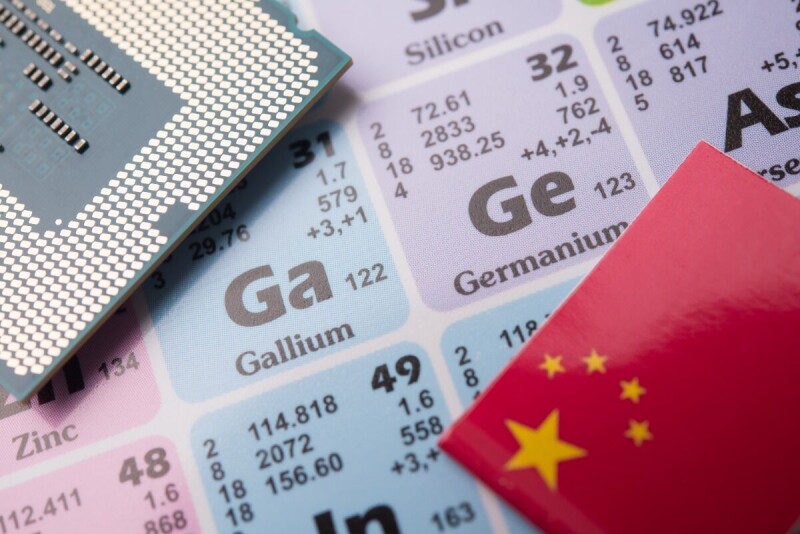
报告[PDF]还强调了镓和锗,它们用于雷达、通信和电子战的先进半导体。根据报告,中国分别占全球产量的95%和93%。
The committee also highlights gallium and germanium, used in advanced semiconductors for radar, communications, and electronic warfare. China accounts for 95 percent and 93 percent of their global production respectively, according to the report [PDF].
北京利用芯片材料施加杠杆并非新举措。2023年7月,在西方收紧半导体技术限制之际,中国宣布对镓和锗实施出口许可证要求。
Beijing flexing its leverage over chip materials is not new. China announced export licensing requirements for gallium and germanium in July 2023 amid tightening Western restrictions on semiconductor technology.
然而议员们指出,政府尚未明确界定其想要保护的国内工业和技术能力,导致难以判断哪些供应链应获优先保障。
Yet MPs say the government has not clearly identified which domestic industrial and technological capabilities it wants to protect, making it difficult to determine which supply chains deserve priority.
进口统计数据也无法完全反映风险敞口。矿物可能以电池、磁体及其他制造组件的形式入境,作为单一材料便从视野中消失。企业自身可能也不清楚其供应链深处几层究竟包含何种材料。
Nor do import statistics reveal the whole exposure. Minerals can arrive inside batteries, magnets, and other manufactured components, disappearing from view as individual materials. Businesses themselves may not know precisely what lies several layers down their supply chains.
委员会希望与关键行业企业开展保密的供应链测绘和压力测试,随后通过与盟友建立联合采购安排,为新的采矿和冶炼项目提供稳定客户群。
The committee wants confidential mapping and stress-testing with firms in critical sectors, followed by joint purchasing arrangements with allies to give new mining and refining projects dependable customers.
委员会主席利亚姆·伯恩表示:“关键矿产是新经济的‘阿尔法’(核心基石)。除非我们确保这些技术所依赖的矿产供应,否则无法重振英国国防、建设人工智能或实现净零排放目标。”
Committee chair Liam Byrne said: "Critical minerals are the alpha of the new economy. We cannot re-arm Britain, build AI or deliver net zero unless we secure the minerals these technologies depend on.
“然而,在中国首次将其对稀土的垄断地位武器化十六年后,英国依然处于危险的暴露状态。我们对需要哪些矿产以及在哪里寻找它们知之甚少。我们的能源成本使得加工处理缺乏经济性,我们正在出口宝贵的金属废料,而我们的公共金融机构则受制于过时的规则。”不仅仅是一张购物清单该委员会提出的五部分处方是:确定英国必须保护的能力,绘制其矿产需求图谱,扩大国内采矿、加工和回收,与盟友整合采购能力,并设立专门的融资机构。
"Yet sixteen years after China first weaponised its chokehold over rare earths, Britain remains dangerously exposed. We don't know enough about what minerals we need or where to find them. Our energy costs make processing uneconomic, we're exporting valuable metal waste, and our public finance institutions are shackled by outdated rules." More than a shopping list The committee's five-part prescription is to identify the capabilities Britain must protect, map their mineral needs, expand domestic mining, processing, and recycling, pool purchasing power with allies, and establish a dedicated financing facility.
拟议的融资机构将汇聚公共资金主体,通过赠款、股权投资、贷款、担保和长期购买协议为项目提供支持。
The proposed facility would bring together public funding bodies to back projects through grants, equity, loans, guarantees, and long-term purchase agreements.
伯恩表示:“我们永远无法从供应链中彻底剔除中国矿产。但当我们本可以建立替代供应时,却任由英国暴露在经济胁迫之下,这是愚蠢的。”
"We're never going to eliminate Chinese minerals from our supply chains. But it's foolish to leave Britain exposed to economic coercion when we could be building alternative supplies," Byrne said.
“这就是为什么我们需要一个拥有强大财力的新关键矿产融资机构,投资新矿山、加工厂和回收设施,并与盟友分担成本。”
"That's why we need a new Critical Minerals Finance Facility with the financial firepower to invest in new mines, processing plants and recycling, working with our allies to share the costs."
报告指出,现有机构留下了空白,尤其是在早期项目方面。报告建议扩大英国出口融资局的职权范围,并允许英国国际投资公司在海外矿产项目中持有股权。
The report argues that existing institutions leave gaps, particularly for early-stage projects. It recommends expanding UK Export Finance's remit and allowing British International Investment to take equity stakes in overseas mineral projects.
长期采购承诺和价格担保,可帮助战略重要项目在矿产价格波动的情况下保持商业可行性。
Long-term purchasing commitments and price guarantees could help keep strategically important projects commercially viable despite volatile mineral prices.
国内也蕴藏着资源。报告称,被归类为废料的英国金属产品中有80%被出口。议员们希望建设更好的分拣和分离基础设施,并获取更详细的贸易数据,以准确掌握哪些有价值的废料正在流出该国。
There is also material closer to home. The report says 80 percent of UK metal products classified as waste are exported. MPs want better sorting and separation infrastructure, alongside more detailed trade data to establish exactly what valuable scrap is leaving the country.
对于国内项目,他们建议设立指定的关键矿产集群,并设定许可截止日期,提供审批导航协助、能源支持以及优先电网接入。
For domestic projects, they recommend designated critical mineral clusters with permitting deadlines, help navigating approvals, energy support, and priority grid access.
储备也能提供短期缓冲。委员会呼吁建立初步储备,覆盖国防能力所需矿产约60天的用量,同时强调仓储无法替代多元化供应。
Stockpiles could provide a short-term buffer too. The committee calls for an initial reserve covering approximately 60 days of minerals needed for defense capabilities, while stressing that warehouses are no substitute for diversified supply.
这一切都无法让英国迅速摆脱对中国的依赖。委员会的论点是,英国需要决定必须保护什么,弄清这些行业实际消耗什么,并在下一次中断发生前帮助为替代方案提供资金支持。
None of this offers a quick escape from dependence on China. The committee's argument is that Britain needs to decide what it must protect, work out what those industries actually consume, and help finance alternatives before the next disruption.
“即使只对我们供应中审慎的比例进行去风险化,也将耗时十年以上。英国无法承担漂泊不定的后果,”伯恩说。“我们必须立即行动,在危险的依赖关系演变为战略负债之前采取行动。” ®
"De-risking even a prudent proportion of our supplies will take over a decade. Britain cannot afford to drift," Byrne said. "We must act now before dangerous dependencies become strategic liabilities." ®