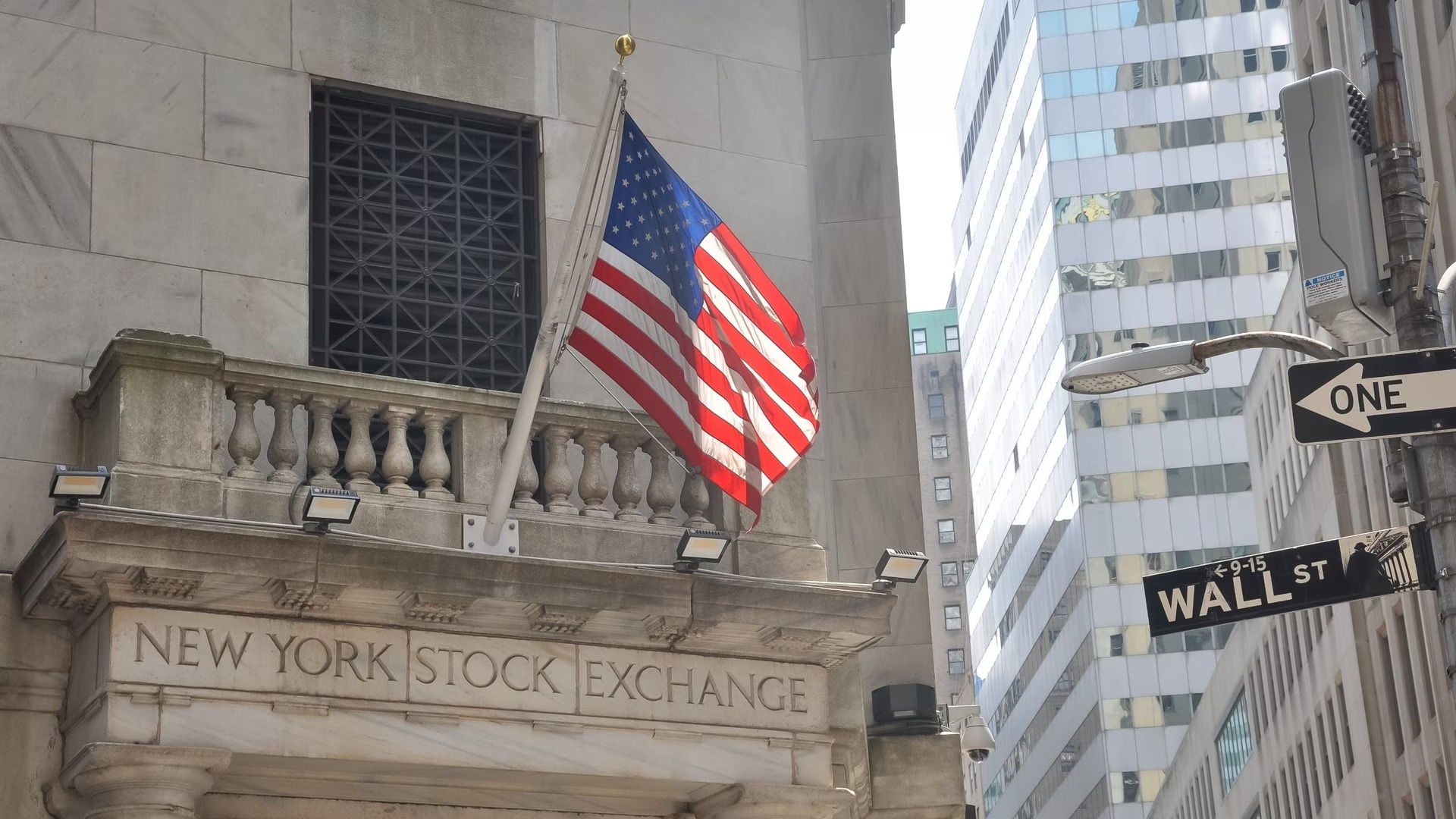
美国股市在11月5日星期四遭遇了数月来最大单日跌幅,投资者纷纷从今年推动市场大部分涨幅的芯片制造商、云服务商和电力公司撤资。
US stocks suffered their sharpest one-day decline in months on Thursday, November 5, as investors pulled back from the chipmakers, cloud providers and power companies that have driven much of this year’s market gains.
美联社数据显示,标普500指数下跌4.4%,收于7353.73点,创下自2025年4月“解放日”关税宣布以来的最大单日跌幅。这一跌幅抹去了该指数自中期选举以来的所有涨幅。
The S&P 500 fell 4.4% to close at 7,353.73, its biggest single-day drop since the April 2025 “Liberation Day” tariff announcement, according to the Associated Press. The decline wiped out the index’s gains since the midterm elections.
就在前一天,道琼斯工业平均指数刚刚创下自1982年以来中期选举后的最佳表现,上涨了3%。
Just a day earlier, the Dow Jones Industrial Average had posted its best performance after a midterm election since 1982, rising 3%.
然而在周四,道指下跌了1833点,跌幅为3.4%,纳斯达克综合指数则下跌5.5%,收于24315点。这个以科技股为主的指数目前比10月份的纪录高位下跌了11.9%,进入了回调区间(即从近期高点下跌超过10%)。
On Thursday, however, the Dow lost 1,833 points, or 3.4%, while the Nasdaq Composite dropped 5.5% to 24,315. The tech-heavy index is now 11.9% below its October record, putting it in correction territory, which means a fall of more than 10% from a recent peak.
包含多家最大型科技公司的纳斯达克100指数下跌了6.4%,市值蒸发约2.3万亿美元。跌幅最大的是与人工智能基础设施热潮紧密相关的公司。
The Nasdaq-100, which includes many of the largest technology companies, fell 6.4%, wiping roughly $2.3 trillion off its market value. The biggest losses came from companies closely tied to the AI infrastructure boom.
英伟达股价下跌9.3%,成为标普500指数最大的单日拖累因素,今年以来的股价涨幅收窄至2.6%,而就在短短五个星期前,该公司的估值刚创下约5.7万亿美元的纪录。
Nvidia dropped 9.3% and was the largest single drag on the S&P 500, leaving its shares down 2.6% for the year, barely five weeks after the company hit a record valuation of about $5.7 trillion.
超威半导体下跌17.3%,为运行人工智能工作负载的公司出租计算能力的CoreWeave下跌9.8%。向数据中心供应电力设备的通用电气能源业务(GE Vernova)下跌7.5%。
Advanced Micro Devices dropped 17.3%, while CoreWeave, which rents out computing capacity to companies running AI workloads, lost 9.8%. GE Vernova, a supplier of power equipment used by data centres, fell 7.5%.
抛售潮还蔓延至大量投资人工智能基础设施的公司。微软、Meta、亚马逊和Alphabet均下跌了2%至4%。
The selling also spread to the companies investing heavily in AI infrastructure. Microsoft, Meta, Amazon and Alphabet all lost between 2% and 4%.
芝加哥期权交易所波动率指数(又称VIX,用于衡量投资者对标普500指数波动率的预期)反映了此轮变动的规模。该指数在交易时段内飙升超过65%,达到27.45,创下两年多来的最大单日涨幅。
The scale of the move was reflected in the Cboe Volatility Index, or VIX, which measures how much volatility investors expect in the S&P 500. It rose more than 65% during the session, reaching 27.45, its largest one-day increase in more than two years.
也有少数例外。例如,广告技术公司AppLovin在公布超出分析师预期的营收和利润后,股价上涨了31%。
There were a few exceptions. For example, AppLovin, an advertising technology company, gained 31% after reporting revenue and profit above analysts’ expectations.
周四发布的经济数据也相对令人鼓舞。申请失业救济的美国人减少,而夏季的生产力增长则强于经济学家此前的预期。
Economic data released on Thursday was also relatively encouraging. Fewer Americans filed for unemployment benefits, while productivity growth over the summer came in stronger than economists had expected.
10年期美国国债收益率从4.90%降至4.84%,这表明一些投资者正在将资金转入政府债券。但市场的注意力在别处:放在了数据中心行业的政治未来上。为什么说中期选举对人工智能至关重要?
The yield on the 10-year US Treasury fell from 4.90% to 4.84%, suggesting that some investors were moving money into government bonds. But the market’s attention was elsewhere: on the political future of the data centre industry. Why the midterm elections matter to AI?
选举结果为这个依赖于建设更多数据中心、扩大电力供应以及获得地方和州政府许可的行业,引入了新的不确定性。
The election results introduced a new source of uncertainty for an industry that depends on building more data centres, expanding electricity supply and securing permits from local and state governments.
民主党赢得了国会参众两院的控制权,并在拥有大量数据中心集聚的几个州赢得了州长职位。随着反对新建此类设施日益成为一个突出的地方议题,他们的胜选也随之而来。
Democrats won control of both chambers of Congress and several governorships in states with large concentrations of data centres. Their gains came as opposition to new facilities became an increasingly prominent local issue.
正如他们在竞选数据中所说的那样,人们的担忧相对直接:数据中心需要大量的电力、土地和水。它们的建设还会给地方电网带来压力,引发关于谁应当为必要基础设施付费的疑问。
The concern is relatively straightforward, as they said in campaign data centres require large amounts of electricity, land and water. Their construction can also put pressure on local power grids, raising questions about who should pay for the necessary infrastructure.
在居民反对新项目的社区里,政客们越来越将对数据中心发展的限制纳入其竞选活动中。
In communities where residents oppose new projects, politicians have increasingly made restrictions on data centre development part of their campaigns.
这个问题似乎对选民产生了影响,因为在全国广播公司(NBC)的出口民调中,近60%的受访者表示数据中心是他们投票时的一个关键或主要因素。近80%的人表示反对在自己社区附近建设数据中心。
The issue appears to have influenced voters, as in an NBC exit poll, almost 60% said data centres were a crucial or major factor in their vote. Nearly 80% said they opposed having one built in their neighbourhood.
地方投票结果表明,这种反对意见正在转化为具体的政治行动。根据美联社报道的雷德布德咨询公司(Redbud Consulting)的数据,在12个州已完成的45场关于数据中心的公投中,有44场批准了限制措施。
Local votes suggest that opposition is translating into concrete political action. According to figures from Redbud Consulting reported by the AP, restrictions were approved in 44 of the 45 completed data centre referendums across 12 states.
州长选举的结果也指向了相似的方向。在美联社(AP)已宣布结果的34场选举中,有32场由支持对数据中心实行更严格规则或限制的候选人赢得。
The results of the governors’ races pointed in a similar direction. Of the 34 races called by the AP, 32 were won by candidates who supported tighter rules or restrictions on data centres.
根据追踪项目“数据中心观察”(Data Center Watch)的数据,其中有12名候选人曾支持彻底的禁令或暂停令。
Twelve of those candidates had backed outright bans or moratoriums, according to the tracking project Data Center Watch.
对于投资者而言,这带来了一个潜在的问题。即使人工智能计算的需求继续增长,企业也可能会发现建设满足该需求所需设施的难度更大、成本更高。
For investors, this creates a potential problem. Even if demand for AI computing continues to grow, companies may find it harder or more expensive to build the facilities needed to meet it.
得克萨斯州和俄亥俄州成为关键战场。得克萨斯州之所以尤为重要,是因为它占了计划中数据中心开发份额的很大一部分。据CNBC引用的富国银行(Wells Fargo)数据,该州占美国计划中数据中心容量的27%。
Texas and Ohio emerge as key battlegrounds Texas is particularly important because of its share of planned data centre development. The state accounts for 27% of planned US data centre capacity, according to Wells Fargo figures cited by CNBC.
民主党人吉娜·伊诺霍萨(Gina Hinojosa)击败了州长格雷格·阿博特(Greg Abbott),她此前展开竞选活动反对数据中心项目,并称这些项目不符合得州人的利益,或者在批准时缺乏足够的公众意见征询。
Democrat Gina Hinojosa defeated Governor Greg Abbott after campaigning against data centre projects that she said were not in Texans’ interests or had been approved without sufficient public input.
摩根士丹利(Morgan Stanley)的分析师将她的胜利描述为对数据中心开发而言最重要的选举结果。
Morgan Stanley analysts described her victory as the most important election result for data centre development.
俄亥俄州也产生了一个可能影响该行业扩张计划的结果。在一个Meta曾计划建设占地约6.5万平方米设施的县,选民批准了一项针对大型数据中心的禁令。
Ohio also produced a result that could affect the industry’s expansion plans. In one county where Meta had planned a facility covering roughly 65,000 square metres, voters approved a ban on large data centres.
民主党人埃米·阿克顿(Amy Acton)当选俄亥俄州州长,为该行业增添了另一层不确定性。摩根士丹利表示,她的胜利给项目延误带来了重大风险。
The election of Democrat Amy Acton as Ohio governor adds another layer of uncertainty. Morgan Stanley said her victory created a significant risk of project delays.
高盛(Goldman Sachs)也曾警告称,民主党人的势力增长可能会延迟佐治亚州和得克萨斯州的建设项目。
Goldman Sachs has also warned that Democratic gains could delay construction projects in Georgia and Texas.
这些担忧并不局限于个别州。在联邦层面,议员们已经提出了对新数据中心开发的限制措施。
These concerns are not limited to individual states. At the federal level, lawmakers have already proposed restrictions on new data centre development.
今年早些时候,参议员伯尼·桑德斯(Bernie Sanders)和众议员亚历山大·奥卡西奥-科尔特斯(Alexandria Ocasio-Cortez)提交了一项立法,该立法将对新建数据中心实施全国性的暂停令,直至国会制定出涵盖电费、环境影响和社区批准的规则。
Earlier this year, Senator Bernie Sanders and Representative Alexandria Ocasio-Cortez introduced legislation that would impose a nationwide moratorium on new data centres until Congress establishes rules covering electricity costs, environmental impact, and community approval.
该提案在提出时遭到了两党议员的反对。它还需要总统唐纳德·特朗普的签字才能成为法律,考虑到他对该行业的坚定支持,这是一个重大的障碍。
The proposal faced opposition from lawmakers in both parties when it was introduced. It would also need President Donald Trump’s signature to become law, a significant obstacle given his strong support for the industry.
一项范围较窄的提案可能会对运营商产生更直接的影响。参议员马丁·海因里希的《电网节约法案》将阻止公用事业公司将大型数据中心所需的电网升级成本转嫁给当地社区。
A narrower proposal could have a more direct impact on operators. Senator Martin Heinrich’s GRID Savings Act would prevent utilities from passing the cost of grid upgrades required by large data centres on to local communities.
然而,各州对许可证、公用事业监管和税收优惠拥有更直接的控制权。
States, however, have more immediate control over permits, utility regulation and tax incentives.
纽约州于7月成为第一个实施数据中心暂停令的州,特朗普将此举形容为“糟糕的”。
New York became the first state to enact a data centre moratorium in July, a move Trump described as “terrible”.
在威斯康星州,当选州长戴维·克劳利表示,他支持暂停令,并希望取消该州对数据中心运营商和开发商的营业税豁免。第二个问题:科技公司还会花费多少?政治反对并不是压在人工智能股票上的唯一担忧。
In Wisconsin, governor-elect David Crowley has said he supports a moratorium and wants to end the state’s sales tax exemption for data centre operators and developers. A second problem: how much more will tech companies spend? Political opposition is not the only concern weighing on AI stocks.
这轮抛售也发生在10月下旬的一系列财报发布之后,这些财报引发了人们对最大科技公司将以多快速度继续扩大其人工智能基础设施预算的质疑。
The sell-off also followed a series of earnings reports in late October that raised questions about how quickly the largest technology companies will continue expanding their AI infrastructure budgets.
微软和Alphabet均在10月28日报告称,其季度资本支出低于分析师预期。微软还将其全年的支出预测从1750亿美元下调至1700亿美元。
Microsoft and Alphabet both reported quarterly capital expenditure below analysts’ expectations on October 28. Microsoft also lowered its full-year spending forecast to $170 billion from $175 billion.
Alphabet维持了1950亿美元至2050亿美元的预测不变。与此同时,Meta将支出区间的下限提高到1350亿美元,并报告该季度的自由现金流为负。
Alphabet maintained its forecast of between $195 billion and $205 billion. Meta, meanwhile, raised the lower end of its spending range to $135 billion and reported negative free cash flow for the quarter.
这些数字之所以重要,是因为人工智能基础设施的繁荣取决于一小部分公司在数据中心、芯片和计算能力上投入巨资。
These figures matter because the AI infrastructure boom depends on a relatively small group of companies spending enormous sums on data centres, chips and computing capacity.
如果这些公司放缓投资,其影响可能会波及整个供应链,从半导体制造商到云服务提供商和电力设备供应商。投资者也在重新考虑他们想保留今年多少的收益。
If those companies slow their investments, the effects could spread across the entire supply chain, from semiconductor manufacturers to cloud providers and power equipment suppliers. Investors are also reconsidering how much of this year’s gains they want to hold on to.
野村证券(Nomura)策略师查理·麦克埃利戈特(Charlie McElligott)在接受雅虎财经(Yahoo Finance)采访时表示,周四的大部分抛售归因于对冲基金在年底前锁定部分今年表现最佳股票的利润,而不是对公司业绩突然恶化的反应。
Nomura strategist Charlie McElligott, quoted by Yahoo Finance, attributed much of Thursday’s selling to hedge funds locking in profits on some of the year’s best-performing stocks ahead of year-end, rather than reacting to a sudden deterioration in company results.
散户投资者也在抛售,根据Vanda Research的数据,截至周四午后,他们已成为净卖出约3.58亿美元美国股票的卖家,创下自2020年3月以来的最高净卖出额。
Individual investors were also selling, and by mid-afternoon on Thursday, they had become net sellers of roughly $358 million in US stocks, their largest net selling since March 2020, according to Vanda Research.
直接的市场反应可能无法告诉我们选举结果最终将如何影响人工智能行业。
The immediate market reaction may not tell us how much the election results will ultimately affect the AI industry.
周五早些时候,纳斯达克100指数期货上涨约0.7%,而道琼斯指数期货下跌约1%,预示着在交易员等待9月就业报告之际,市场将迎来涨跌互现的开盘。
Early on Friday, Nasdaq-100 futures were up around 0.7%, while Dow futures were down approximately 1%, pointing to a mixed opening as traders waited for the September jobs report.
更重要的考验将在明年到来,届时新当选的州长和议员将就职,并开始将竞选承诺转化为政策。
The more important test will come next year, when newly elected governors and legislators take office and begin turning campaign promises into policy.
对于人工智能行业而言,问题不再仅仅是公司是否买得起建造更多的数据中心,或者对计算能力的需求是否会继续增长。问题在于它们是否会被允许建造这些设施、它们可以在哪里建造,以及谁来支付它们所需的电力和基础设施费用。
For the AI industry, the question is no longer simply whether companies can afford to build more data centres or whether demand for computing power will continue to grow. It is whether they will be allowed to build them, where they can do so, and who will pay for the electricity and infrastructure they require.
可以肯定的是,人工智能的繁荣并没有结束,这只是表明,在今年大部分时间里专注于其增长潜力之后,投资者正变得更加关注构建其背后基础设施的风险。
For sure, the AI boom is not ending, it only suggests that investors are becoming more concerned about the risk of building the infrastructure behind it, after spending much of this year focusing on its growth potential.