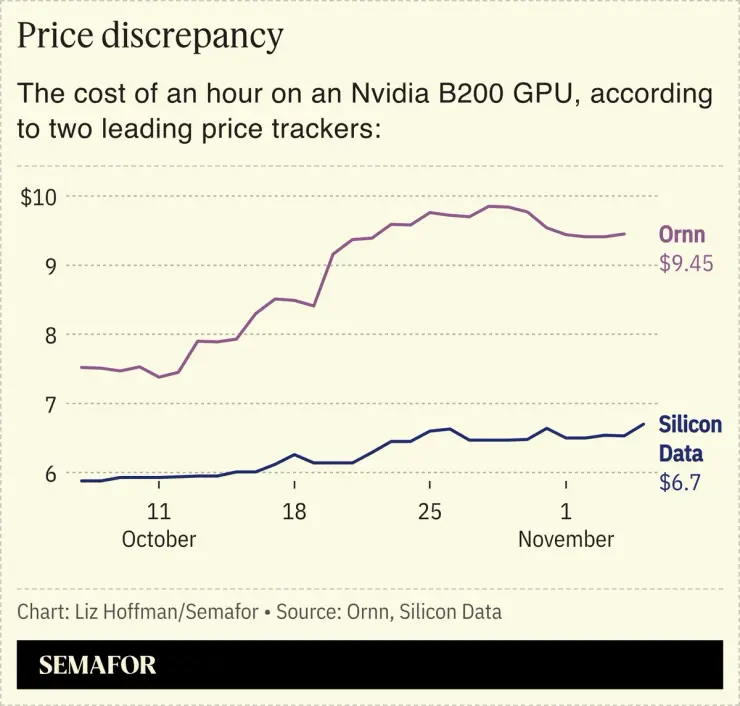
华尔街想要为AI算力定价,华盛顿可能不想。交易所运营商正竞相将GPU算力打造成像石油、小麦一样的可交易商品。但这一努力因最大买家——AI超大规模企业——在保密合同下采购而变得复杂,导致大多数关于人们为算力支付多少的公开数据,都来自新型云服务商零星的报价。
Wall Street wants a price for AI compute. Washington may not. Exchange operators are racing to make GPU compute a tradable commodity like oil or wheat. But that effort is complicated by the fact that the biggest buyers, AI hyperscalers, pay under secret contracts, leaving most of the public data on how much people are paying for compute coming from the spotty offerings from neoclouds.
洲际交易所首席执行官杰夫·斯普雷彻在本周于芝加哥举行的期货行业年度会议上接受我采访时表示,他对这一前景“看好但谨慎”。期货通常跟随一个成熟的现货市场,而算力并没有真正的现货市场(见这场激烈的X平台辩论)。斯普雷彻说:“我们有点是在‘倒着干’。”
Intercontinental Exchange CEO Jeff Sprecher told me when I interviewed him this week at the futures industry’s annual confab in Chicago that he was “bullish but cautious.”Futures normally follow an established spot market, and compute doesn’t really have one (see this robust X debate). “We’re kind of [working] backwards,” Sprecher said.
AI债务热潮或许能给市场推动提供所需动力。斯普雷彻表示,越来越担心为数据中心融资的贷款方,可能会开始要求公司在其申请借款的整个期限内锁定GPU价格。“考虑到借出的资金规模,资本市场可能会要求这样做,”他说。“然后扎克伯格过来表示,‘我需要做一笔大交易,’”他笑着补充道。
The AI debt boom might just bring the push the markets need. Sprecher said lenders that are increasingly nervous about financing data centers could start demanding that companies lock in their GPU prices for as long as they’re asking to borrow. “It may be that the capital markets require that, given how much money is being lent,” he said. “And then Zuckerberg comes over and says, ‘I need to do a big trade,’” he added with a smile.
更大的变数在于华盛顿。据Semafor报道,特朗普政府的压力迫使Kalshi在9月撤下了其一个GPU价格追踪器,斯普雷彻将此归因于担忧:AI透明定价可能会在美国与中国的竞争中使美国处于劣势。“美国是自由市场,这一直让我们相对于中国占据优势,所以我怀疑他们最终会得出这个结论。但我们都在屏息以待。”
The bigger wild card is Washington. Pressure from the Trump administration forced Kalshi to scrap one of its GPU price trackers in September, Semafor reported, which Sprecher chalked up to concerns that transparent pricing for AI could disadvantage the US in its competition with China. “The United States is a free market and that has always advantaged us vis-à-vis China, so I suspect that’s where they’ll come out. But we’re all waiting with bated breath.”