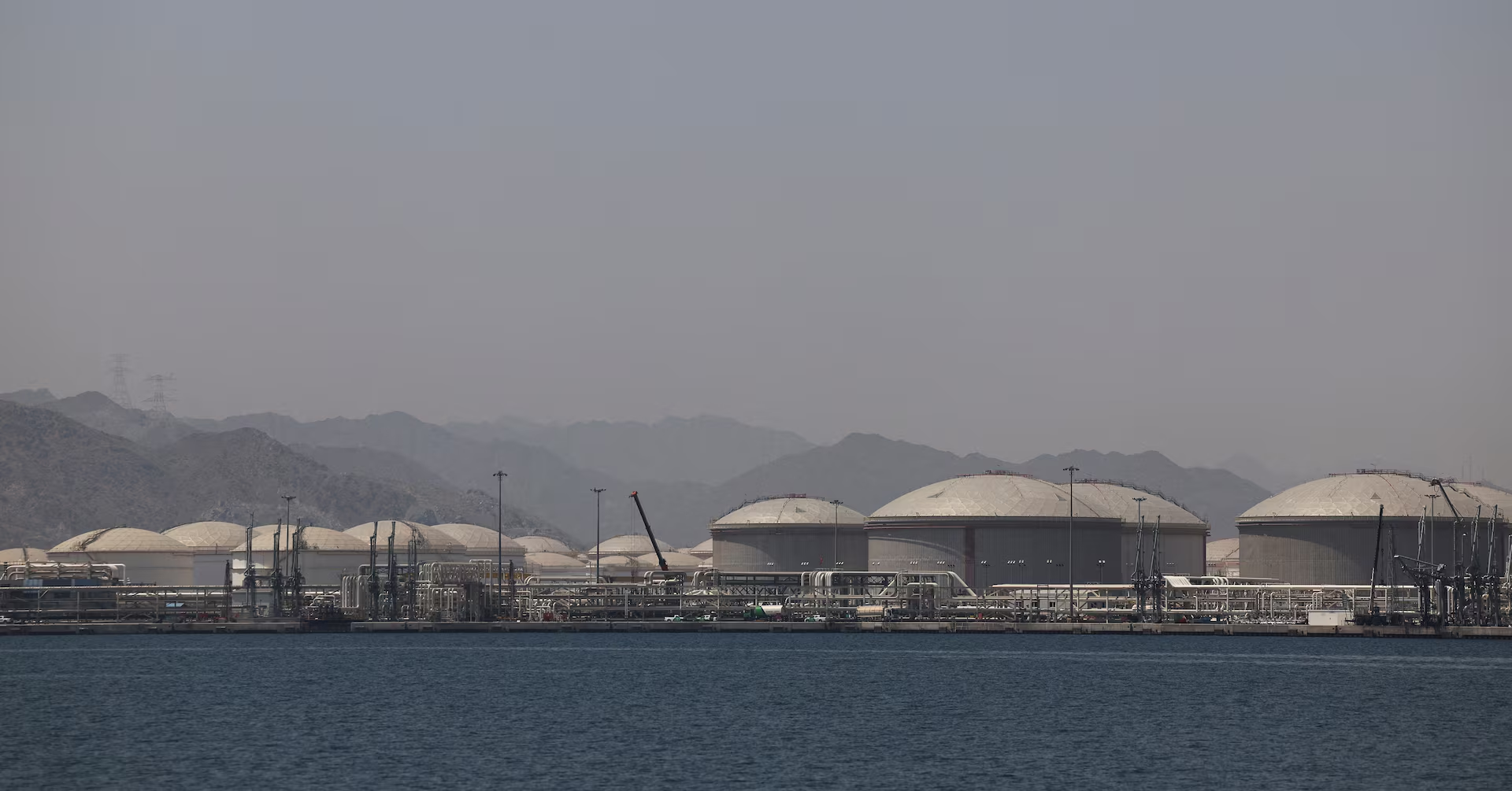
霍尔木兹海峡已成为中东石油的繁忙通道,自九月以来出口量急剧上升。
The Strait of Hormuz has become a bustling corridor for Middle Eastern oil, with exports rising sharply since September.
伦敦:中东石油生产国正在降价以吸引买家,随着通过霍尔木兹海峡的石油流量大幅回升,全球原油市场正趋向于供过于求——这是伊朗战争可能留下的拥挤、竞争激烈的石油市场的预演。
LONDON: Middle East oil producers are slashing prices to attract buyers as a sharp recovery in flows through the Strait of Hormuz tips the global crude market toward oversupply - a preview of the crowded, hyper-competitive oil market that the Iran war may leave in its wake.
全球基准布伦特原油上周暴跌超过17%,跌至每桶约97美元,创下2020年疫情以来最大的单周跌幅。这一下跌紧随美国总统特朗普的共和党在中期选举中惨败,此举提高了人们的预期,即华盛顿可能迅速缓和这场自2月28日以来颠覆能源市场的战争。
Global benchmark Brent crude tumbled more than 17 per cent last week to around $97 a barrel, its steepest weekly decline since the 2020 pandemic. The slump followed the electoral rout of US President Donald Trump's Republican Party in the US midterm elections, which raised expectations that Washington could swiftly de-escalate the war that has upended energy markets since February 28.
无论华盛顿和德黑兰在未来几周是否能达成持久的和平协议,市场都面临原油供过于求的前景——这是一个令人意外的结果,而这一年经历了现代史上最大的能源供应冲击之一。
Regardless of whether Washington and Tehran secure a durable peace deal in the coming weeks, the market faces the prospect of a crude oil glut - a surprising outcome at the end of a year that has featured one of the biggest energy supply shocks in modern history.
然而,尽管原油正从海湾流出,全球石油市场远未恢复战前正常状态。需求仍受高价格和有限炼油能力的制约,而全球库存已被耗尽。
Yet even though crude is flowing out of the Gulf, the global oil market is far from its pre-war normal. Demand remains constrained by elevated prices and limited refining capacity, while global inventories are depleted.
快速回升:自九月以来,通过霍尔木兹海峡的石油出口大幅回升,因为海湾生产国现在可以使用由美国海军护航的油轮船队航行这条狭窄水道。
RAPID RECOVERY Oil exports through Hormuz have recovered sharply since September, as Gulf producers can now navigate the narrow waterway using tanker convoys protected by the US Navy.
通过该海峡的原油出口在十月平均每天1030万桶,而战争首月几乎为零,不包括伊朗船运。根据Kpler的数据,这与战前平均每天1350万桶相比。
Crude exports through the strait averaged 10.3 million barrels per day in October, up from virtually zero in the first month of the war, excluding Iranian shipments. That compares with a pre-war average of 13.5 million bpd, according to Kpler data.
如果把沙特阿拉伯红海亚恩布港和阿拉伯联合酋长国富查伊拉码头等替代出口路线也算上,复苏的态势看起来更加显著。船舶追踪公司Kpler的数据显示,10月区域原油出口总量达到日均1660万桶,仅略低于战前日均1700万桶的平均水平。
The recovery looks even more striking when alternative export routes through Saudi Arabia's Red Sea port of Yanbu and the United Arab Emirates' Fujairah terminal are included. Total regional crude exports reached 16.6 million bpd in October, just shy of the pre-war average of 17 million bpd, Kpler data showed.
与此同时,中东以外的产油国通过增产回应战时供应冲击,尤其是美国、巴西和加拿大。
At the same time, producers outside the Middle East have responded to the wartime supply shock by increasing output, particularly in the US, Brazil and Canada.
咨询公司Energy Aspects的数据显示,10月全球原油产量达到日均8500万桶。这不仅是战争爆发以来的最高水平,也高于过去五年日均8300万桶的平均值。几乎按任何衡量标准,世界原油市场都将供应充裕。全球竞争 价格信号无疑指向供过于求。
Global crude production reached 85 million bpd in October. That's not only the highest since the start of the war, but also above the five-year average of 83 million bpd, according to consultancy Energy Aspects. By almost any measure, the world is set to be awash in crude. GLOBAL COMPETITION Price signals certainly point to oversupply.
沙特阿拉伯将12月面向亚洲客户的旗舰原油阿拉伯轻质油官方售价较11月下调每桶2美元,使其对阿曼/迪拜平均价的折扣扩大至每桶6.50美元,为2020年5月疫情期间以来最低。
Saudi Arabia cut the December price of its flagship Arab Light crude for Asian customers by $2 a barrel from November, pushing the discount against the Oman/Dubai average to $6.50 a barrel, the lowest since the pandemic in May 2020.
中东原油基准的现货升水也大幅回落。路透数据显示,阿曼原油对迪拜基准的升水从9月中旬的每桶34美元跌至上周二的仅95美分,为7月以来最弱,周四略微回升至1.76美元。
Spot premiums for Middle Eastern crude benchmarks have also collapsed. Oman's premium to the Dubai benchmark dropped from $34 a barrel in mid-September to just 95 cents last Tuesday, its weakest since July, before recovering slightly to $1.76 on Thursday, Reuters data showed.
大幅折价有多重驱动因素,包括对高昂运费的补偿。尽管有美国护航,伊朗对穿越霍尔木兹海峡船只的袭击仍近乎每天发生,迫使许多生产商不得不在阿曼湾进行昂贵的船对船转运。这导致油轮运费飙升,目前航运成本平均约为每桶30美元,而战前大约只有每桶5美元。
The sharp discounts have several drivers, including compensation for elevated freight costs. Iranian attacks on vessels transiting Hormuz continue on a near-daily basis, despite US escorts, forcing many producers to resort to expensive ship-to-ship transfers in the Gulf of Oman. This has sent tanker freight rates soaring, with shipping costs now averaging around $30 a barrel, compared with roughly $5 before the war.
但海湾产油国提供的陡峭折扣也反映出为争夺有限买家而日益激烈的竞争。
But the steep discounts Gulf producers are offering also reflect growing competition to attract a limited number of buyers.
由于中东地区遭受破坏以及乌克兰对俄罗斯能源基础设施的打击,今年全球炼油能力大幅下降。这反过来又削弱了炼油商将不断恢复的原油供应转化为汽油、柴油和其他燃料的能力。炼油商现在有了更广泛的原料选择,但他们的需求依然低迷。
Global refining capacity has declined significantly this year due to damage in the Middle East and Ukrainian strikes on Russian energy infrastructure. This, in turn, has reduced refiners' ability to turn much of the recovering crude supply into gasoline, diesel and other fuels. Refiners now have a much wider choice of feedstocks, but their demand remains depressed.
在正常时期,这种失衡将迫使生产商减产或将过剩的原油存入仓储。
In normal times, such an imbalance would force producers to cut output or push surplus barrels into storage.
但储存石油并不经济。中东冲突持续的不确定性使即期布伦特原油价格较远期合约保持大幅溢价,这种市场结构被称为现货溢价(backwardation)。花钱储存一种今天必须在日后以更低价格出售的大宗商品,在经济上毫无意义。
But storing oil is uneconomical. Continued uncertainty surrounding the Middle East conflict has kept prompt Brent prices at a sharp premium to future-dated contracts, a market structure known as backwardation. Paying to store a commodity today that must be sold later at a lower price makes little economic sense.
这使得生产商在应对日益增加的过剩供应时选择减少,并加剧了争夺买家的竞争压力。实现这一目标的最佳方式就是降价。且慢 这种供应过剩的说法有几个重要的注意事项。
That leaves producers with fewer options for dealing with the growing surplus and intensifies pressure to compete for buyers. The best way to do that is by lowering prices. NOT SO FAST There are several important caveats to this glut narrative.
首先,低迷的需求可能会反弹。今年高企的燃料价格迫使许多消费者削减消费,而一些亚洲国家则诉诸燃料配给。摩根大通估计,自战争爆发以来,全球石油消费量已减少约每天330万桶。如果其中一部分需求并未被永久摧毁而只是推迟,一旦价格下跌,消费量可能会激增。
For starters, depressed demand could rebound. High fuel prices this year have forced many consumers to cut consumption, while some Asian countries have resorted to fuel rationing. JPMorgan estimates that global oil consumption has fallen by around 3.3 million bpd since the start of the war. If some of that demand was not destroyed but simply delayed, consumption might surge if prices fall.
受损的炼油厂也可能比预期更早恢复运营,特别是如果伊朗或乌克兰战争出现突破。
Damaged refineries could also return to operation sooner than anticipated, especially if there are breakthroughs in the wars in Iran or Ukraine.
此外,伊朗战事的长期重燃可能会抑制供应,尽管白宫几乎肯定希望避免这种情况。
Moreover, a return to prolonged fighting in Iran could curb supply, though the White House will almost certainly want to avoid this.
另一方面,美国与伊朗之间达成一项恢复霍尔木兹海峡正常通行的持久协议,可能会大幅削减货运和安保成本,并允许海湾产油国将更多原油输往市场——在美国、巴西、加拿大和其他供应国已经提高产量的情况下。
On the other hand, a durable settlement between the US and Iran that restores normal passage through Hormuz would likely slash freight and security costs and allow Gulf producers to move even more crude onto a market where the US, Brazil, Canada and other suppliers have already boosted output.
与此同时,海湾国家将拥有充分的动力去最大化产量和收入,以此修复冲突造成的经济损失并寻求充实国库。
Gulf states, meanwhile, will have every incentive to maximise volumes and revenues as they repair the economic damage inflicted by the conflict and seek to replenish state coffers.
与伊朗的战争造成了罕见的能源短缺,然而冲突的结束可能会创造出一个原油多得让生产商不知所措的市场。旧的能源市场已经不复存在,而新的能源市场将会拥挤得多。
The Iran war created an extraordinary energy shortage, yet the end of the conflict could create a market with more crude than producers know what to do with. The old energy market is gone, and the new one is going to be far more crowded.