
寻求摆脱人工智能引发的全球股市动荡的选股者,正将目光投向新兴市场的机会。
Stock pickers seeking relief from the AI-fueled turbulence in global equities are zeroing in on opportunities in emerging markets.
对人工智能日益加剧的担忧重创了MSCI主要发展中国家指数,因为芯片巨头SK海力士、三星电子和台积电合计占该指数近30%的权重。这些股票周五将该基准指数拖至七个月低点,随后有所回升。
The growing angst over artificial intelligence has hit the main MSCI developing-country index hard, because chip giants SK Hynix Inc., Samsung Electronics Co. and Taiwan Semiconductor Manufacturing Co. together account for almost 30% of the gauge. Those stocks dragged the benchmark to a seven-month low on Friday before recovering.
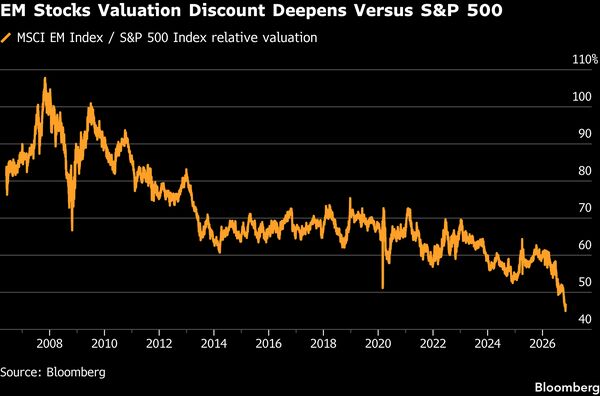
但放眼AI交易之外,资金管理人表示,他们看到新兴市场估值处于低位且股息收益率较高,存在获利机会。按一项指标衡量,新兴市场估值处于全球金融危机18年来的最低水平。
But looking beyond the AI trade, money managers say they’re seeing a chance to profit from rock-bottom valuations and high dividend yields in emerging markets, which by one metric are the cheapest since the global financial crisis 18 years ago.
“只押注三四只股票、高度集中配置,长期来看其实行不通,”Janus Henderson Investors投资组合经理Sat Duhra表示。“AI之外还有大量表现很好的领域,那就是我们的配置方向。”Duhra周五表示,他一直在增持中国和香港的高收益股票,理由是“分红纪律有所改善”。尽管香港被归类为发达市场,但在那里上市的公司中,很大一部分注册地在中国。“我们目前尚无意重建科技板块敞口,”他说。
“Just hogging three or four names and being really concentrated actually doesn’t work over the long term,” said Sat Duhra, a portfolio manager at Janus Henderson Investors. “There’s a whole bunch of other areas outside of AI that have worked really well, and that’s where we positioned.”Duhra said Friday that he’s been adding higher-yielding stocks in China and Hong Kong, citing “improving payout discipline.”Although Hong Kong is classified as a developed market, a large share of companies listed there are domiciled in China. “We are not yet tempted to rebuild exposure to tech,” he said.
其他投资者则指出,南美公用事业、中台消费品制造商,以及中东欧金融公司,都是AI敞口股票之外极具吸引力的替代选择。
Other investors highlight South American utilities, Chinese and Taiwanese consumer-goods manufacturers, and eastern and central European financial firms as compelling alternatives to AI-exposed stocks.
上周因担忧民主党在美国中期选举中大胜可能危及支撑人工智能的庞大数据中心建设而引发的动荡,几乎波及所有市场。
The turmoil that hit equities last week, as fears grew that the Democrats’ sweep of US midterm elections could imperil the vast data center buildout underpinning artificial intelligence, left few markets untouched.
纳斯达克100指数周四暴跌6.4%后,日本、韩国和台湾股市周五也随之遭殃。韩国以科技股为主的基准指数在上半年曾因追逐动能的散户投资者涌入而上涨,周五跌至3月以来最低点。即使是以人工智能敞口有限著称的瑞士股市,一度也录得八个月来最大跌幅。
After the Nasdaq 100 Index tumbled 6.4% on Thursday, stocks in Japan, Korea and and Taiwan got swept along the following day. South Korea’s tech-heavy benchmark, which rallied in the first half as momentum-chasing retail investors piled in, sank to the lowest since March. Even Swiss stocks, notable for their limited exposure to AI, at one point fell the most in eight months.
与此同时,周五收益的分散情况凸显了新兴市场某些板块如何免受人工智能溢出效应冲击。MSCI指数成分股中约30%周五上涨,这一比例是前一日标普500指数上涨个股占比的两倍,当时标普500指数暴跌4.4%。
At the same time, Friday’s dispersion of returns highlights how corners of emerging markets have been shielded from the AI fallout. Some 30% of stocks on the MSCI gauge rose on Friday, double the share of the S&P 500 that posted gains the day before, when it tumbled 4.4%.

近几个月,新兴市场经历了各自特有的暴雷事件,范围涵盖土耳其的基金操纵丑闻、MSCI威胁将印度尼西亚踢出其基准指数,以及巴西总统卢拉·达席尔瓦上月意外连任后引发的股市暴跌。
Emerging markets have seen their own idiosyncratic blowups in recent months, ranging from a fund-manipulation scandal in Turkey to MSCI’s threat to throw Indonesia out of its benchmark and the equities swoon that followed Luiz Inácio Lula da Silva’s surprise reelection last month.
尽管如此,巨大的估值鸿沟以及新兴市场某些板块对人工智能的相对低敞口,正吸引部分投资者入场。在美国总统特朗普在中期选举中受挫后,市场预期美国贸易政策将不那么苛刻,这提供了另一股顺风。
Still, a yawning valuation gap and the relatively low exposure to AI in corners of emerging markets are drawing some investors in. Expectations of less onerous US trade policies in the wake of US President Donald Trump’s setback in the midterms are providing another tailwind.
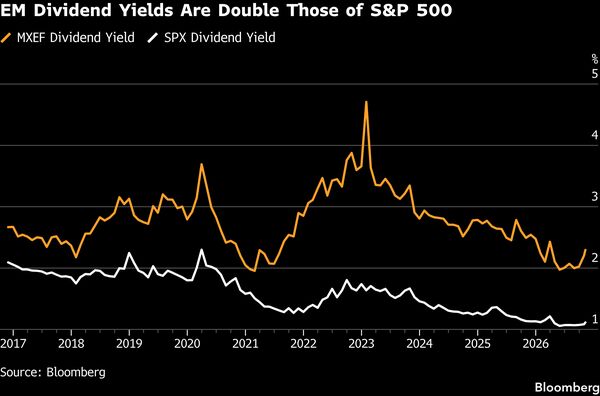
彭汇编的数据显示,MSCI发展中国家基准指数按未来12个月预测盈利计算的市盈率约为8倍,不及标普500指数倍数的一半,尽管其提供的股息收益率约为后者的两倍。MSCI指数较低的市盈率部分源于分析师迅速上调指数中人工智能巨头的盈利预期。
The MSCI developing-nations benchmark trades at around 8 times forecast earnings over the next 12 months — less than half the S&P 500’s multiple, despite offering a dividend yield about twice as high, data compiled by Bloomberg show. The low MSCI ratio is in part a result of analysts rapidly raising their earnings estimates for the AI giants on the index.
迪拜Arkevium Capital首席投资官Maxence Visseau表示:“新兴市场许多非科技板块和市场提供的长期增长强于其美国同类资产,且估值倍数显著更具吸引力。”
“Many non-tech sectors and markets in EM offer stronger long-term growth than their US counterparts, at significantly more attractive multiples,” said Maxence Visseau, chief investment officer of Arkevium Capital in Dubai.
上周人工智能交易的快速平仓导致数十亿美元资金流入印度,而印度直到最近还是今年的表现落后者。
The rapid unwinding of the AI trade last week sent billions of dollars flowing into India, until recently a laggard this year.
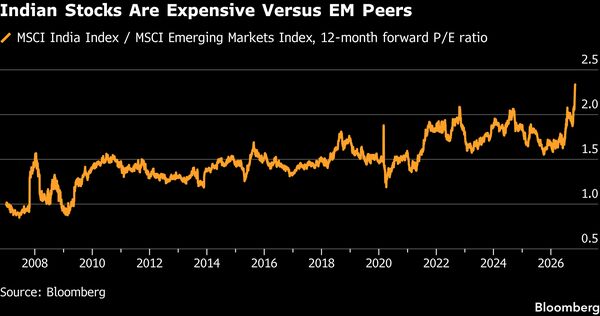
印度NSE Nifty 50指数周五飙升2%,录得自2021年以来最佳单周表现,而亚洲和欧洲其他基准指数则陷入下跌泥潭。流入该国股市的资金有望创下周度纪录,即使估值相对于新兴市场同行已显膨胀,凸显出交易员愿意为寻求避开AI动荡的庇护所支付溢价。
India’s NSE Nifty 50 Index jumped 2% on Friday, capping its best week since 2021, while other benchmarks across Asia and Europe were mired in red. Inflows into the nation’s equities were on track to hit a weekly record even as valuations have swelled relative to emerging-market peers, highlighting how traders are paying a premium for shelter from the AI ructions.
“毫无疑问,反AI交易的首选应该是印度,”Edmond de Rothschild基金经理Bing Yuan表示,她近期开始增加对该市场的敞口,但对其占主导地位的IT服务板块保持谨慎。“如果你想从AI板块轮换出来,印度应该是候选之一。”她还持有中国医药公司股份,如百奥泰生物药有限公司,该股2026年以来上涨37%,以及药明生物,该股飙升58%。
“The no-brainer anti-AI trade should be India,” said Bing Yuan, a fund manager at Edmond de Rothschild who recently began adding exposure to the market, though she remains cautious on its dominant IT services sector. “If you want to switch out from AI, it should be a candidate.”She also holds Chinese healthcare companies such as BeOne Medicines Ltd., which has advanced 37% in 2026, and Wuxi Biologics Cayman Inc., which has rallied 58%.
在巴西大选中,市场普遍视为更友好的候选人Flavio Bolsonaro败给Lula,引发惨烈抛售后,南美股市也开始吸引买盘。
South American equities are also starting to attract buyers after the bruising selloff that greeted Lula’s win in Brazil over Flavio Bolsonaro, widely seen as the more market-friendly candidate.
“拉丁美洲是另一个AI敞口极低、深度被低估且拥有大宗商品的地区,”总部位于美国、管理规模达930亿美元的Global X Management高级投资组合经理Malcolm Dorson表示。“巴西的波动使其超越预期的门槛极低。”Dorson一直在增加该地区铜金矿企、公用事业和银行股的配置。
“Latin America is another region that presents minimal AI exposure, deep value, and commodities,” said Malcolm Dorson, senior portfolio manager at the $93 billion Global X Management in the US. “Brazil’s volatility has left it with an extremely low bar for outperformance.”Dorson has been adding allocations to copper and gold miners, utilities and banks across the region.
Nordea Investment Management投资组合经理Robert Naess一直在将投资转向电信和消费品板块,买入中国体育用品制造商安踏体育用品有限公司和台湾电脑硬件制造商Getac Holdings Corp.等公司股份。
Robert Naess, a portfolio manager at Nordea Investment Management, has been shifting investments into telecoms and consumer goods, buying shares in companies like Chinese sportswear maker Anta Sports Products Ltd. and Taiwanese computer hardware manufacturer Getac Holdings Corp.
“我相信AI将对全球经济产生重大影响,但这不一定意味着AI股票是未来最佳的投资标的,”协助管理11亿美元新兴市场投资的Naess表示。
“I believe AI will have a major impact on the global economy, but that does not necessarily make AI stocks the best investments going forward,” said Naess, who helps oversee $1.1 billion in emerging-market investments.