俄罗斯正在打两场战争。第一场是乌克兰的实弹冲突,第二场是针对支持基辅政府的国家的更隐秘的行动。
Russia is waging two wars. The first is the live-fire conflict in Ukraine, the second a more covert affair targeting countries that support the government in Kyiv.
在国家间的网络攻击、虚假信息和宣传运动之外,克里姆林宫越来越多地诉诸更具戏剧性的“混合战争”手段,包括纵火、破坏和武装无人机入侵。
Alongside state-on-state cyberattacks, disinformation and propaganda campaigns, the Kremlin has resorted increasingly to more dramatic “hybrid warfare” tactics including arson, sabotage and armed drone incursions.
普京政府始终否认对这类事件负责,而且很难将其追溯到莫斯科。有些行为可能是与外国势力毫无关联的罪犯所为。俄罗斯的做法通常会制造足够的不确定性,使人难以确定责任。
Vladimir Putin’s government always denies responsibility for such incidents, and it can be hard to trace them back to Moscow. Some acts may be the work of criminals with no ties to a foreign power. Russia’s approach usually creates enough uncertainty to make it hard to pin blame.
目标国家在证明和指出俄罗斯参与方面变得更好了。但这只会导致一个更棘手的问题:该如何应对。俄罗斯的对手将其活动视为一种外交煤气灯操纵,这使得他们难以达成集体反击。
Target nations have got better at proving and calling out Russian involvement. But this only leads to a thornier problem: what to do about it. Russia’s adversaries see its activities as a form of diplomatic gaslighting that makes it hard for them to agree a collective riposte.
“你不知道究竟什么是战争行为,什么不是,”芬兰总统亚历山大·斯图布说。
“You don’t know exactly what is an act of war versus what is not,” said Finnish President Alexander Stubb.
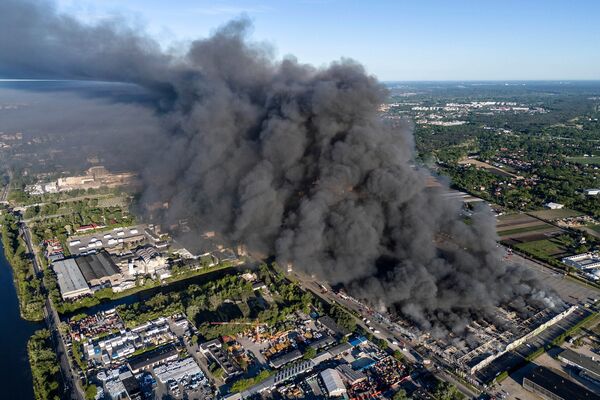
纵火。波兰总理唐纳德·图斯克将2024年5月烧毁华沙一家购物中心的火灾归咎于“俄罗斯特勤机构”。更近期的袭击针对的是与乌克兰战争努力相关的设施。8月15日,爱沙尼亚国防公司米尔雷姆机器人公司使用的一栋建筑发生火灾,该公司已向乌克兰提供无人地面车辆。爱沙尼亚政府表示,确信俄罗斯政府策划了这次袭击。10月18日,袭击者向立陶宛一家公司的场所投掷了燃烧瓶,该公司正在存放为乌克兰及更广泛地区服务的星链卫星宽带设备。一名保安在设备受损前扑灭了火灾。
Arson Prime Minister Donald Tusk blamed “the Russian special services” for a fire that engulfed a Warsaw shopping center in May 2024. More recent attacks have targeted facilities tied to the Ukraine war effort. On Aug. 15, fire broke out at a building used by Estonian defense company Milrem Robotics that’s supplied Ukraine with unmanned ground vehicles. Estonia’s government said it was confident that Russia’s government had commissioned the attack. On Oct. 18, assailants threw Molotov cocktails into the premises of a company in Lithuania that was storing Starlink satellite broadband equipment serving Ukraine and the wider region. A security guard put out the fires before the equipment could be damaged.
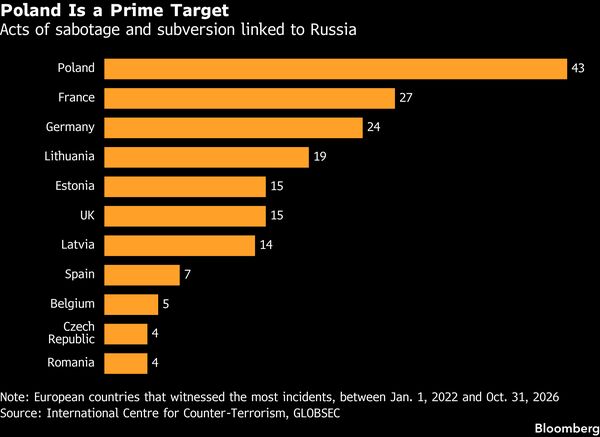
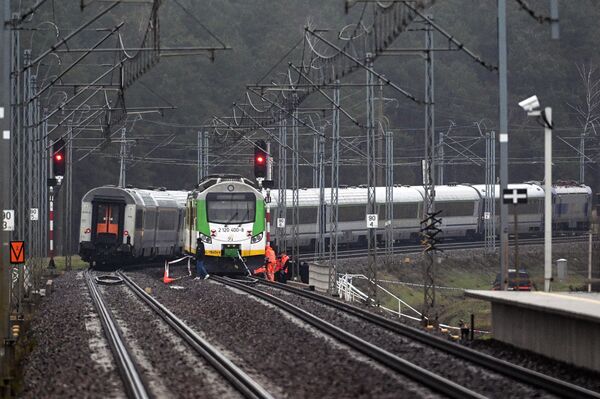
对海底互联网和电力电缆等关键基础设施的破坏损害通常是意外造成的。在其他一些案例中,当局发现了俄罗斯介入的证据。波兰民众对政府支持乌克兰的立场日益分裂,该国已成为破坏袭击的最大目标。2025年11月,一枚爆炸装置炸毁了连接波兰首都华沙和乌克兰边境口岸多罗胡斯克的一段铁路轨道。在更远处的轨道上发现了受损的电力线和一个金属支架。波兰政府认定,两名为俄罗斯情报机构工作的乌克兰人对该爆炸负责。
Sabotage Damage to critical infrastructure such as subsea internet and power cables is often accidental. In some other cases, authorities have found evidence of Russian involvement. Poland, where the population is increasingly divided over the government’s support for Ukraine, has been the biggest target of sabotage attacks. In November 2025, an explosive device destroyed a section of railway track linking the Polish capital Warsaw and the Ukrainian border crossing at Dorohusk. Damaged power lines and a metal brace were discovered on the track further down the line. Poland’s government determined that two Ukrainians working for Russian intelligence were responsible for the blast.
使用炸药 今年发生的其他事件涉及实际武器,但仍未达到公开战争的程度。8月5日深夜,德国东部莱比锡/哈勒机场的一名工人——该机场是通往乌克兰的重要货运枢纽——在停机坪上、乌克兰安东诺夫航空公司运营的一架货机附近发现了一架装载炸药的无人机。德国正式指责俄罗斯应对该事件负责。8月11日,军事潜水员在罗马尼亚黑海海岸一座天然气平台附近摧毁了两架漂浮的海上无人机。
Use of Explosives Other incidents this year have involved actual weapons, while still falling short of outright war. On the night of Aug. 5, a worker at Leipzig/Halle Airport in eastern Germany — an important conduit for goods to Ukraine — spotted an explosive-laden drone on the tarmac near a cargo jet operated by Ukraine’s Antonov Airlines. Germany formally blamed Russia for the incident. On Aug. 11, military divers destroyed two maritime drones floating near a gas platform off Romania’s Black Sea coast.
九天后,罗马尼亚空军两架F-16战机在该天然气平台附近击毁了一架海上无人机。10月,保加利亚和罗马尼亚海岸附近至少七艘商船成为无人机袭击目标,造成二十多名水手丧生。
Nine days later, two Romanian air force F-16s destroyed a sea drone near the gas platform. In October, at least seven commercial ships were the target of drone attacks off the coast of Bulgaria and Romania that killed more than two dozen sailors.
政治干预 西方情报官员称,俄罗斯利用社交媒体和实地特工,破坏支持乌克兰国家的选举并影响舆论。莫斯科动用了一个名为“风暴-1516”的组织制作深度伪造视频,常借助人工智能技术,针对美国和欧洲的选举。据网络安全专家称,其中一些视频触达数百万观众,描绘了各种针对民选官员的虚假犯罪和违规指控。
Political Interference Western intelligence officials say Russia uses social media and agents on the ground to undermine elections and influence public opinion in countries that support Ukraine. Moscow has employed a group called Storm-1516 to produce deepfake videos, often made with the help of artificial intelligence, targeting elections in the US and Europe. Some of these reached millions of viewers and depicted all manner of fraudulent claims of crimes and offenses by elected officials, according to cybersecurity experts.
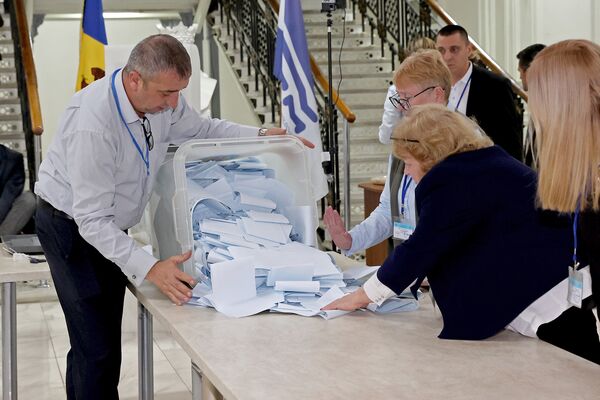
此类行动在与乌克兰接壤的国家尤为公开。据检察官历时数月的调查结果显示,2024年11月,罗马尼亚因一项精心策划的俄罗斯阴谋而陷入政治混乱,该阴谋通过网络攻击和虚假信息,将一名边缘亲克里姆林宫候选人推上了选举胜利的宝座。该结果随后被该国最高法院宣告无效。次年,俄罗斯设计了一项多管齐下的战略,干预摩尔多瓦大选,破坏其加入欧盟的进程。
Such campaigns have been especially overt in countries bordering Ukraine. Romania was plunged into political chaos in November 2024 when an elaborate Russian scheme propelled a fringe pro-Kremlin candidate to electoral victory with cyberattacks and disinformation, according to the findings of a months-long investigation by prosecutors. The result was later annulled by the country’s highest court. The following year, Russia devised a multi-pronged strategy to intervene in elections in Moldova and disrupt its progress toward European Union membership.
网络攻击 被归咎于俄罗斯的黑客攻击瞄准了欧洲军工企业。其他攻击击中了公用事业设施,导致数百万人失去基本服务,并拖慢了恢复工作的进度。11月1日,乌克兰和俄罗斯均称面临针对应急和防空警报系统的网络攻击。基辅居民深夜通过数百万人使用的防空警报应用程序收到了“核危险”警告。随后该应用又发送了“化学危险”警报,并称:“基辅街头正在交火,请勿离开住所。”
Cyberattacks Hacks blamed on Russia have targeted European weapons companies. Others have hit utilities, leaving millions without essential services and slowing efforts to get them back up and running. On Nov. 1, Ukraine and Russia both said they faced cyberattacks on emergency and air raid alert systems. Residents of Kyiv received warnings of a “nuclear danger” late at night through the air raid alert app used by millions. The app then sent alerts about a “chemical danger” and said: “There’s fighting on Kyiv’s streets, don’t leave your homes.”
除乌克兰外,名为NoName057(16)和“俄罗斯网络军”等亲俄黑客组织对西方目标发动所谓分布式拒绝服务攻击,一度瘫痪了政府、银行及其他IT基础设施的网站。7月,欧盟将9个成员国发生的“恶意网络活动”归咎于受俄罗斯联邦安全局(即FSB)控制的团体。这些活动包括在波兰针对热电联产电厂等目标实施的破坏性蓄意破坏行动,攻击者关闭了蒸汽轮机和用于水处理的水处理系统。结果造成短暂中断,但未影响向用户的供热。
Beyond Ukraine, so-called distributed denial of service attacks on Western targets by pro-Russian hacking groups with names such as NoName057(16) and the Cyber Army of Russia temporarily brought down the websites of governments, banks and other IT infrastructure. In July, the EU attributed “malicious cyber activities” in nine member states to groups controlled by Russia’s Federal Security Service, also known as FSB. These included disruptive sabotage operations in Poland against targets such as combined heat and power plants, where attackers switched off a steam turbine and the water treatment system used to process water. The result was a short outage that failed to disrupt heat supplies to consumers.
自俄罗斯全面入侵乌克兰以来,俄罗斯无人机和有人驾驶战斗机进入北大西洋公约组织成员国领空的事件变得更加常见。2025年9月,二十架无人机飞入波兰领空,三架俄罗斯米格-31战斗机在不同日期侵犯爱沙尼亚领空,促使这两个国家的政府援引北约第4条,这是盟友在危险时刻彼此磋商的机制,盟友极少使用。俄罗斯否认有任何意图攻击波兰境内的目标。
Airspace Violations Incursions of Russian drones and piloted combat aircraft into North Atlantic Treaty Organization countries have become more common since Russia’s full-scale invasion of Ukraine. Twenty drones flew into Polish airspace and three Russian MiG-31 fighter jets violated Estonian airspace on separate days in September 2025, prompting the governments of those countries to invoke NATO’s Article 4, a mechanism used only rarely by allies to consult with each other in times of danger. Russia denied any intention to attack targets in Poland.
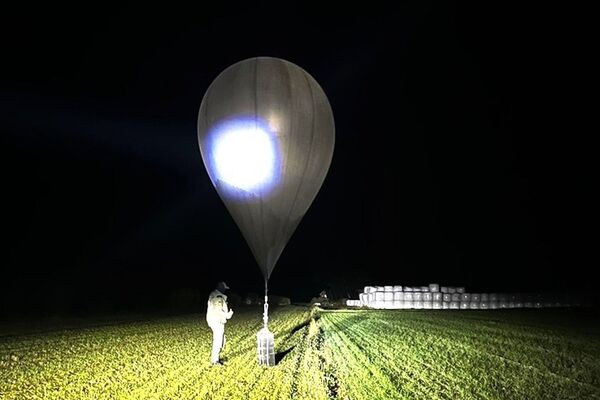
2025年底,立陶宛主要机场多次关闭,航班受到干扰,原因是数百个携带白俄罗斯违禁品的泪滴形气象气球在附近漂浮,促使政府宣布进入紧急状态。
Lithuania’s main airport was repeatedly closed and flights were disrupted in late 2025 after hundreds of teardrop-shaped weather balloons ferrying contraband from Belarus floated nearby, prompting the government to declare a state of emergency.
近年来,欧洲国家驱逐了数百名俄罗斯情报官员,而归因于莫斯科的近期混合战争行为大多是远程策划的。袭击的实施者通常是小罪犯。波兰国内安全局前反情报官员安娜·格拉博夫斯卡-西维茨表示,一些人是前苏联国家的年轻公民,通过互联网招募,并以加密货币报酬。
European nations have expelled hundreds of Russian intelligence officers in recent years, and recent acts of hybrid warfare attributed to Moscow are largely orchestrated remotely. Perpetrators of attacks are often small-time criminals. Some are young citizens of former Soviet states recruited over the internet and paid in cryptocurrency, said Anna Grabowska-Siwiec, a former counterintelligence officer with Poland’s Internal Security Agency.
一个国际调查记者团队揭露了俄罗斯格鲁军事情报局据称的一项行动,该行动招募在申根地区拥有旅行权的拉丁美洲人,在东欧各地实施纵火和破坏。立陶宛LRT报道称,相关人员通过Telegram即时通讯应用和Facebook群组被接洽,承诺提供有偿工作。
An international team of investigative journalists uncovered an alleged operation by Russia’s GRU military intelligence agency that recruited Latin Americans with travel rights in the Schengen area to carry out arson and sabotage across eastern Europe. According to Lithuania’s LRT, individuals were approached through the Telegram messaging app and Facebook groups with promises of paid work.
这种陷阱的运作方式可能如下:在不知情为俄罗斯总参谋部情报总局(GRU)效力的情况下,人们被提供加密货币,以完成看似无害的任务,例如拍摄仓库照片。渐渐地,要求变得更加敏感,例如提供关键基础设施的照片。随后,招募者给他们一个选择:实施更严重的犯罪行为,或被移交当地警方并被指控为外国势力效力。
The trap can work like this: Unaware that they are working for the GRU, the people are offered cryptocurrency to carry out seemingly innocuous tasks, such as photographing warehouses. Gradually, the requests become more sensitive, such as supplying photos of critical infrastructure. The recruiter then gives them a choice: commit a more serious criminal act, or be handed over to the local police and accused of working for a foreign power.
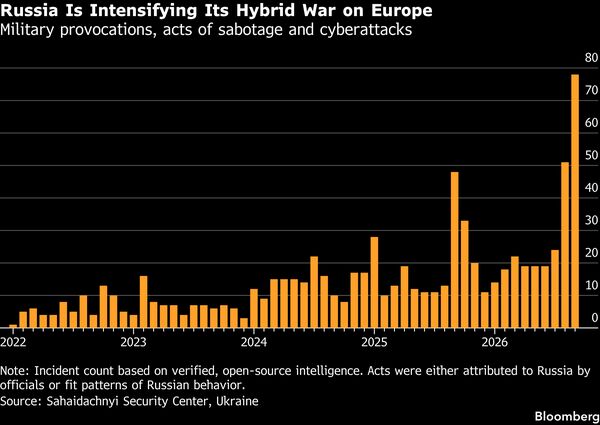
2024年,归咎于俄罗斯的暴力行为大幅增加。虽然数字在2025年似乎有所回落,但后续调查推高了年度总数,并指向多起严重破坏活动。这场行动似乎在2026年仍在继续。总部设在乌克兰的萨盖达奇内安全中心智库记录显示,截至9月底的12个月内,欧洲国家发生328起事件,高于前一个12个月的207起,这些事件要么被当地官员归咎于莫斯科,要么符合俄罗斯以往的行为模式。
There was a big increase in acts of violence attributed to Russia in 2024. While the number appeared to fall back in 2025, subsequent investigations raised the annual tally and pointed to several cases of serious sabotage. The campaign appears to have continued in 2026. The Ukraine-based Sahaidachnyi Security Center think tank recorded 328 incidents in European countries in the 12 months to the end of September, up from 207 from the preceding 12-month period, that were either blamed on Moscow by local officials or were consistent with previous patterns of Russian behavior.
袭击目标范围已扩大。过去主要波及与俄罗斯接壤的国家,现在则涉及西欧国家。2025年12月,据报军用风格无人机闯入禁飞区,并与载有乌克兰总统泽连斯基的飞机航线在都柏林机场附近交叉。
The focus of attacks has widened. Where once they largely affected countries bordering Russia, they now involve western European nations. In December 2025, military-style drones were reported to have breached a no-fly zone and intersected with the path of a plane carrying Ukrainian President Volodymyr Zelenskyy near Dublin airport.
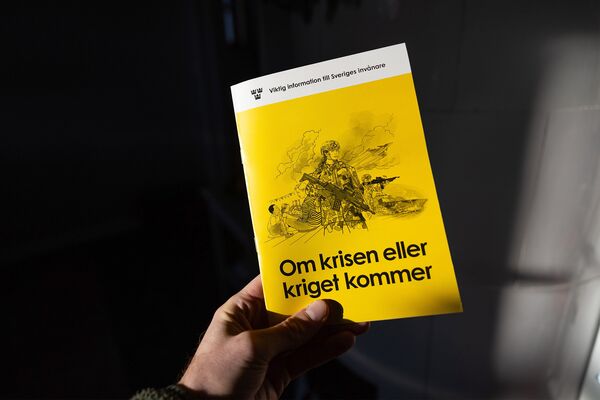
一些欧洲政府一直在分发应急准备手册,其中警告可能发生的未来袭击,这些袭击可能导致大量平民伤亡,例如纵火、破坏活动、瘫痪基本服务的网络攻击,或生物、化学事件。
Some European governments have been sending out emergency preparedness pamphlets that contain warnings of potential future attacks that could cause large numbers of civilian casualties such as arson, sabotage, cyberattacks bringing down essential services or a biological or chemical incident.
此外,还存在俄罗斯隐蔽特种部队小规模渗透欧盟或北约领土的可能性,以测试安全承诺、集体防御和决策能力。莫斯科还可能利用缴获的乌克兰无人机策划“自导自演”式袭击,波罗的海国家被视为可能的目标。
There’s also the possibility of a small incursion by covert Russian special forces into EU or NATO territory to test security commitments, collective defenses and decision-making ability. Moscow may also orchestrate a “false-flag” operation using captured Ukrainian drones, with Baltic countries seen as a likely target.
俄罗斯的影子战争旨在破坏并削弱其对手,分化其民众,制造困惑与不信任,从而削弱国际社会对乌克兰的支持。其思路是“制造一种感觉,即坏事正在发生在普通民众身边”,格拉博夫斯卡-希维茨说。
Russia’s shadow war is designed to destabilize and weaken its adversaries, divide their populations, sow confusion and mistrust and thereby undermine international support for Ukraine. The idea is to “create a sense that something bad is happening close to ordinary citizens,” said Grabowska-Siwiec.
莫斯科的野心范围可能超出乌克兰冲突。普京认为,俄罗斯作为一个大国,应当扩大其在欧洲的势力范围。2021年12月,莫斯科向美国要求广泛的安全保障,这意味着要求北约大幅退回到1991年冷战结束后的边界。萨海达奇内中心的研究人员认为,近期俄罗斯的混合活动不仅是对北约集体决心及其应对能力的考验,也是为可能使用直接武力做准备。
The scope of Moscow’s ambitions may reach beyond the Ukraine conflict. Putin believes that Russia, as a great power, should widen its European sphere of influence. In December 2021, Moscow demanded broad-based security guarantees from the US that implied a broad rolling back of NATO to its 1991, post-Cold War borders. Researchers at the Sahaidachnyi center view recent Russian hybrid activity not just as a test of NATO’s collective resolve and its ability to respond, but as preparation for the possible use of direct military force.
溯源至俄罗斯的网络虚假信息和宣传攻势,正在助长欧洲政治两极分化,并提升对克里姆林宫更友好的极右翼政党的支持率。欧洲官员批评美国社交媒体平台允许虚假信息和仇恨言论充斥用户的新闻推送。言论自由保护,以及国家支持的俄罗斯网络喷子能够调整战术,也使得欧洲更难应对。德国总理弗里德里希·默茨10月19日告诉彭博社,俄罗斯“正在走向破坏我们欧洲大陆的整个政治秩序”。
Online disinformation and propaganda campaigns traced back to Russia are helping to polarize European politics and boost support for far-right parties more amenable to the Kremlin. European officials have criticized US-based social media platforms for allowing disinformation and hate speech to flood users’ news feeds. Free-speech protections, and the ability of state-backed Russian trolls to adapt their tactics, also make it harder for Europe to respond. German Chancellor Friedrich Merz told Bloomberg on Oct. 19 that Russia is “on the way to destabilize the entire political order of our European continent.”
在欧洲领土上的实体袭击组织成本低廉,能扰乱交通和其他系统。但就目前而言,几乎没有证据表明此类小规模事件影响事态的整体走向。国际战略研究所2025年的一项研究发现,俄罗斯通过网络招募外国公民的“零工经济”模式,在其主要目标——破坏欧洲政府稳定、削弱集体应对和削弱对乌克兰支持——上已告失败。
Physical attacks on European territory cost little to organize and can disrupt transport and other systems. But, for now, there’s little evidence that such small-scale incidents affect the wider course of events. A 2025 study by the International Institute for Strategic Studies found that Russia’s “gig economy” approach of recruiting foreign nationals online has failed in its primary aims of destabilizing European governments, weakening collective responses and undermining support for Ukraine.
第三方代理人往往训练不足,这使得阴谋更容易被发现、被挫败或以失败告终。大多数代理人造成的破坏仅限于有限程度。而且,他们引发了一场集体反应,可能使俄罗斯整体处于更弱的地位:各国政府正在加强反间谍工作和基础设施保护。北约通过波罗的海哨兵等行动,增强了在东翼的存在。
Third-party operatives are often poorly trained, making it more likely that plots will be detected, disrupted or will fail. Most have caused only limited damage. And they have triggered a collective response that may put Russia in a weaker position overall: Governments have been strengthening counter-intelligence and the protection of infrastructure. NATO has beefed up the presence on its eastern flank with operations such as Baltic Sentry.
目前缺乏更暴力、更致命的袭击,体现了俄罗斯面临的两难。扩大混合攻击规模以产生更大影响,将使其更难维持“可信的否认”,并可能招致北约更强硬的回应。这或许就是为什么莫斯科似乎仍偏好“低于阈值”的袭击——这些袭击不足以引发常规军事反击。廉价的破坏行动可以迫使政府和企业花费数百万美元保护其资产,而调查则占用警察资源,从而帮助提高支持乌克兰的总体成本。
The absence for now of more violent, deadly attacks speaks to a Russian dilemma. Scaling up its hybrid attacks so they have greater impact would make it harder to preserve “plausible deniability” and potentially invite a more muscular NATO response. That may be why Moscow still appears to favor “sub-threshold” attacks that aren’t overt enough to provoke a conventional military riposte. Cheap sabotage operations can force governments and companies to spend millions protecting their assets, and investigations tie up police resources, helping to raise the overall cost of supporting Ukraine.
在俄罗斯影响力行动最为公开的国家,反击似乎最容易取得成效。在摩尔多瓦,官员们回应俄罗斯的选举干预,公开了其行动,总统迈娅·桑杜称之为“全社会响应”,并与媒体合作,向民众揭露俄罗斯的所作所为。这一做法取得了成效,桑杜去年获得授权,继续推进将该国引向欧盟的议程。
It’s proven easiest to fight back in countries where Russia’s influence campaigns are most overt. In Moldova, officials reacted to the Russian election meddling by exposing its actions in what President Maia Sandu termed “a whole of society response,” working with the press to reveal to the population what Russia was doing. The approach paid off, and Sandu last year secured a mandate to press ahead with her agenda to steer the country into the EU.
在破坏、纵火和无人机入侵方面,欧洲官员试图通过将责任明确归于克里姆林宫,将普京可能希望保持在阴影中的事情曝光于光天化日之下,以此夺回主动权,希望阻止更加肆无忌惮的袭击。
When it comes to sabotage, arson and drone incursions, European officials have tried to seize back the initiative by laying the blame squarely on the Kremlin, bringing into the daylight something Putin may prefer to remain in the shadows, in the hope of discouraging more brazen attacks.
“别再用委婉说法了,”爱沙尼亚外长马尔古斯·查克纳说。“普京在欧洲的破坏和颠覆行动不是‘混合战争’,而是国家支持的恐怖主义。”
“Enough with the euphemisms,” said Estonian Foreign Minister Margus Tsahkna. “Putin’s campaign of sabotage and subversion across Europe is not ‘hybrid warfare.’ It is state-sponsored terrorism.”Governments have been trying to ensure damaged equipment can be quickly fixed and investing in “redundancy” — backup systems that fire up when core infrastructure goes down. One lesson from the Ukraine war is that more decentralized systems with fewer points of failure are harder to knock out.
各国政府一直在努力确保受损设备能够快速修复,并投资于“冗余”——即在核心基础设施失效时能够启动的备份系统。乌克兰战争的一个教训是,拥有更分散、故障点更少的系统更难被击垮。
They’re also trying to prevent attacks from happening. The Baltic Sentry naval monitoring operation has reduced the number of breaches of undersea power links and telecom cables. Fences have been put up along 200 km (125 miles) of the Finland-Russia border to make it harder for Moscow to direct droves of migrants from third countries across the frontier as a way to strain Finland’s national resources and undermine liberal European governments.
他们还在努力防止攻击的发生。波罗的海哨兵海上监视行动已经减少了对海底电力线路和电信光缆的破坏次数。芬俄边境约200公里(125英里)已修筑围栏,以使莫斯科难以通过大量第三国移民跨境,进而消耗芬兰的国家资源并削弱欧洲自由派政府。
What’s proving harder is forcing Russia to pay a higher price for its hybrid campaign through offensive countermeasures.
更为困难的是通过进攻性反制措施让俄罗斯为其混合行动付出更高代价。
On Sept. 16, when European Commission President Ursula von der Leyen used her state of the union address to propose a regionwide emergency security protocol in response to hybrid attacks, there was a mixed response from national capitals. Modeled on NATO’s Article 4, the measure would require a joined-up European response. Skeptics said it would duplicate NATO, and that the EU lacked defense command structures to turn words into action.
9月16日,欧盟委员会主席乌尔苏拉·冯德莱恩在国情咨文中提出在全欧范围内启动紧急安全协议,以应对混合攻击。各国首都的反应不一。该措施以北约第4条为模型,要求欧盟统一响应。怀疑者认为这会与北约功能重复,并指出欧盟缺乏将文字转化为行动的防务指挥结构。风险在于欧洲各国始终只能落后一步。
The risk is that European nations will always be running one step behind.
“这些混合攻击的形态不断变化,以至于我们可能永远没有足够的时间来部署足够的对策,”欧洲混合威胁中心(位于赫尔辛基)主任泰雅·蒂利卡宁说。
“These hybrid attacks keep changing form in such a way that we perhaps never have enough time to put sufficient countermeasures in place,” said Teija Tiilikainen, director of the European Centre of Excellence for Countering Hybrid Threats in Helsinki.