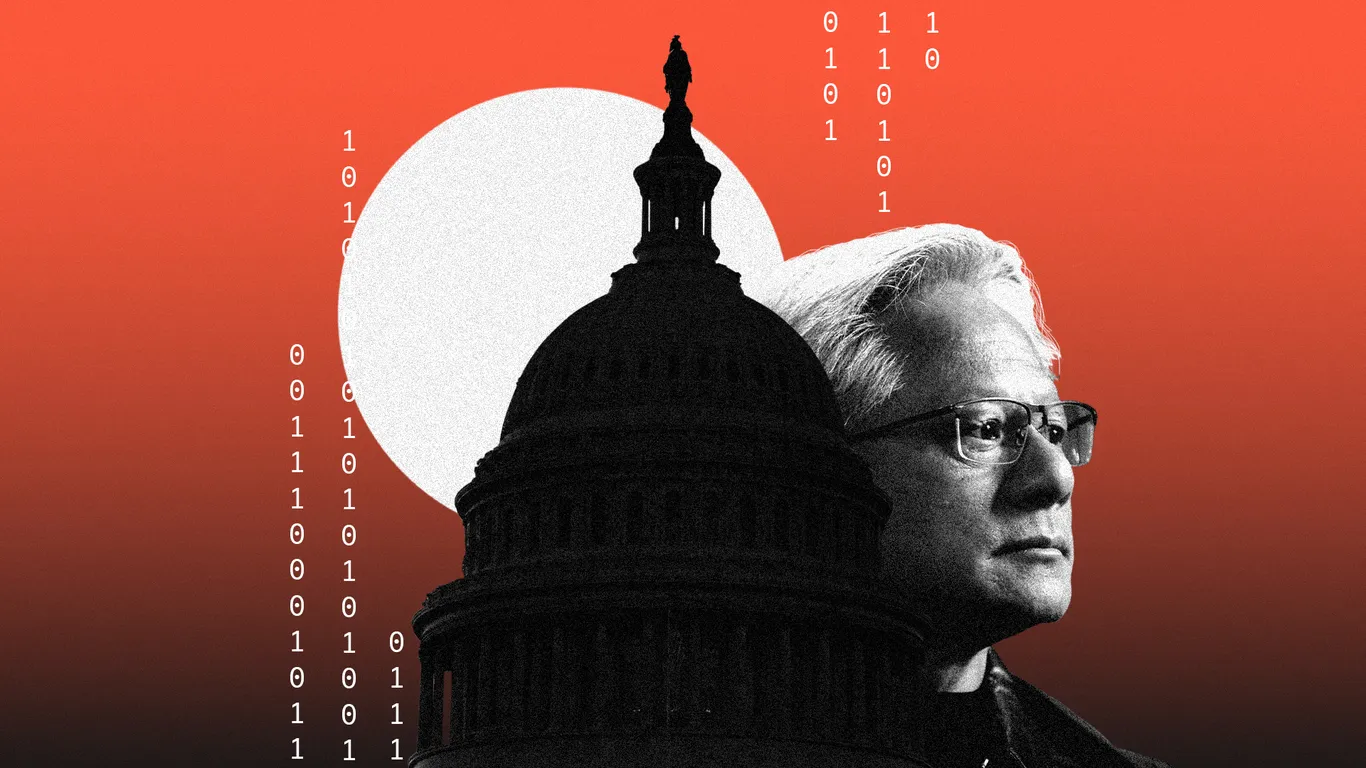
针对人工智能和数据中心的政治反弹——目前正与这家技术最具影响力巨头所面临的危机交织在一起——可能会迫使行业放慢脚步,而这正是行业领袖一直难以自愿做到的。
A political backlash against AI and data centers — now compounded by a crisis facing the technology's most influential champion — could help force a slowdown that industry leaders have struggled to achieve voluntarily. Why it matters:
原因何在:踩下人工智能发展的刹车(前沿人工智能开发商声称希望这样做,但鉴于可能给竞争对手提供优势的风险,迄今未能做到)可以为社会争取更多时间,以应对经济动荡和超级智能系统带来的风险。
Tapping the brakes on AI development — which frontier AI developers claim to want but have so far failed to do given the risk of offering an advantage to a competitor — could give society more time to prepare for economic upheaval and the risks of superintelligent systems.
- 民主党的一系列胜利和数据中心暂停令,如今又加上了一个潜在削弱的英伟达首席执行官黄仁勋,他承认与一名被指控的中国间谍有交往。
• A wave of Democratic victories and data center moratoriums are now joined by a potentially weakened Nvidia CEO Jensen Huang, who admitted to having a relationship with an alleged Chinese spy.
- 黄仁勋过去一直引领行业冲破对人工智能加速发展的种种阻力,如今在受到严密监督的情况下,他可能更无力这样做。
• Huang, who has led the industry in barreling through past resistance to AI acceleration, may be less able to do so while under a microscope.
- 尽管这两个因素都可能阻碍美国数据中心的扩张,但这是否会放慢人工智能的推进速度远未可知。
• While both factors could stymie data center expansion in the U.S., it's far from clear that would slow AI's advance. Between the lines:
字里行间:黄仁勋一直是呼吁限制人工智能的强有力对抗力量,他对人工智能泡沫的担忧或该技术对人类的所谓灾难性风险不屑一顾。
Huang has been a powerful counterweight to calls for AI restraint, dismissing fears of an AI bubble or purported catastrophic risks to humanity from the technology.
- 董事会、日益壮大的民主党国会或联邦当局展开的调查,可能会限制他为继续扩张进行辩护的能力,从而为那些呼吁加强限制的人留下空间。
• An investigation — by the board, an ascendant Democratic congress or federal authorities — could curb his ability to make the case for continued expansion, leaving an opening for those calling for more restrictions.
- 英伟达表示黄仁勋将继续担任首席执行官,且该消息不会拖慢公司发展,但其对政治影响力的潜在冲击难以衡量。
• Nvidia says Huang will remain CEO and the news won't slow the company, but the potential impact on his political influence is hard to measure.
- 潜在影响远不止于此。英伟达既是人工智能芯片的主导供应商,也是构建人工智能基础设施的公司的投资者。一场引发对其领导层、商业做法或财务关系质疑的危机,可能会在整个行业的扩张计划中引发连锁反应。
• The potential impact extends beyond that as well. Nvidia is both the dominant supplier of AI chips and an investor in companies building AI infrastructure. A crisis that raises questions about its leadership, business practices or financial relationships could ripple through the industry's expansion plans.
内幕: Anthropic首席执行官达里奥·阿莫代、OpenAI首席执行官山姆·奥尔特曼和埃隆·马斯京都曾警告高级人工智能潜在的灾难性风险,且都曾表达过放慢或调整高级人工智能发展步伐的必要性。
The intrigue: Anthropic CEO Dario Amodei, OpenAI CEO Sam Altman and Elon Musk have all warned about the potentially catastrophic risks of advanced AI, with all expressing, at times, the need to slow or pace the development of advanced AI.
- 但竞争让任何一家公司都很难主动踩下刹车,因为这冒着在争夺霸权的激烈竞赛中落后于竞争对手或中国的风险。
• But the competitive race has made it difficult for any one company to hit the brakes without risking falling behind rivals or China in a high-stakes race for supremacy.
各方观点:生命未来研究所首席执行官安东尼·阿吉雷表示,放慢数据中心建设将受到欢迎,即使它无法起到像直接限制前沿人工智能发展那样大的作用。
What they're saying: Anthony Aguirre, CEO of the Future of Life Institute, says a slowdown in data center construction would be welcome, even if it wouldn't accomplish nearly as much as more direct restrictions on frontier AI development.
- “能捞多少是多少,”阿吉雷在接受《Axios》采访时表示。阿吉雷和许多其他研究人员长期以来一直将日益强大的人工智能的发展视为一种生存威胁。
• "I'll take whatever I can get," Aguirre told Axios in an interview. Aguirre and a number of other researchers have long seen the development of increasingly powerful AI as an existential threat.
- 但他怀疑,鉴于公司已经拥有庞大的计算资源以及人工智能系统不断增强的自我改进能力,单单放慢数据中心建设是否能为社会争取到额外的一两年时间。
• But he is skeptical that slowing data center construction alone would buy society an additional year or two, given the vast computing resources companies already possess and the growing ability of AI systems to help improve themselves.
- 阿吉雷表示,更大的机会可能在于政治:对数据中心的抵制可能有助于为那些更直接限制潜在危险人工智能系统发展的立法和监管产生势头。
• Aguirre said the bigger opportunity may be political: Resistance to data centers could help generate momentum for legislation and regulation that more directly limits the development of potentially dangerous AI systems. The big picture:
大局观:阿吉雷认为,目标不应仅仅是将超级智能推迟一两年,而是重新考虑人类是否应该建造它。
Aguirre argues that the goal shouldn't simply be to delay superintelligence by a year or two, but to reconsider whether humanity should build it at all.
- 他倾向于“暂停并转向”旨在增强而非取代人类能力的人工智能系统。
• He favors a "pause and pivot" toward AI systems designed to augment human abilities rather than replace them.
- 其他研究人员和高管则倾向于在加强保障措施的同时继续发展,这反映出关于需要多少克制以及应采取何种形式的更广泛辩论。
• Other researchers and executives favor continued development with stronger safeguards, reflecting a broader debate over how much restraint is necessary and what form it should take.
然而:放慢美国的数据中心建设并不一定意味着放慢全球人工智能的进展。
Yes, but: Slowing data center construction in the U.S. doesn't necessarily mean slowing AI progress globally.
- Meta和其他公司正在探索美国以外的数据中心建设。谷歌本周宣布了一项计划,将在两年内在马来西亚投资150亿美元。
• Meta and other companies are exploring data center construction outside the U.S. Google announced a plan this week to invest $15 billion over two years in Malaysia.
- 中国的人工智能开发商将不会面临同样的美国限制,这可能会让他们缩小与美国竞争对手的差距。
• And Chinese AI developers wouldn't face the same U.S. restrictions, potentially allowing them to narrow the gap with American competitors.
另一面:来自中国的威胁并不像表面看起来那么简单。
The other side: The threat from China isn't as straightforward as it appears.
- 阿吉雷说,中国人工智能公司在一定程度上受益于美国领先模型的提炼以及在美国开发的技术知识。因此,放慢美国的前沿步伐也可能会对中国的步伐产生一定影响。
• Chinese AI companies benefit in part from distillation of leading American models and technical knowledge developed in the U.S., Aguirre said. Slowing the American frontier could therefore have some effect on China's pace as well.
- 美国关于放慢前沿发展的决定,可能会为与中国就共同调整该技术步伐展开直接对话打开大门,而不是将超级智能视作不可避免的军备竞赛。
• A U.S. decision to slow frontier development could open the door to direct conversations with China about mutually pacing the technology, rather than treating superintelligence as an unavoidable arms race. The bottom line:
底线:人工智能行业正希望克服政治阻力并继续建设。放慢前沿人工智能的倡导者看到了将这种阻力转化为更大成果的机会:这不仅是重新考虑人工智能应该以多快速度发展,更是重新考虑它应该走多远的机会。
The AI industry is hoping to overcome political resistance and keep building. Advocates of slowing frontier AI see an opportunity to turn that resistance into something bigger: A chance to reconsider not just how fast AI should advance, but how far it should go.