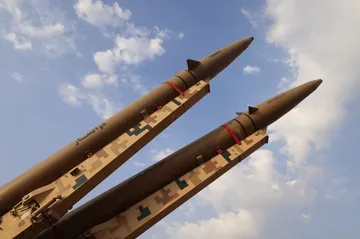
一份西方情报机构的估计称,伊朗每月可制造约50枚弹道导弹——大约是战前产能的一半——如果敌对行动恢复,这将提供强大的报复手段,尽管已遭受数月空袭。
A western intelligence estimate says Iran can build about 50 ballistic missiles per month — roughly half its prewar capacity — providing a formidable means of retaliation if hostilities resume, despite months of airstrikes.
美国自战争初期以来一直表示,德黑兰的武器库及其重建能力已被彻底削弱。国防部长皮特·赫格塞思周二在讲话中再次强调这一点,称伊朗80%的工业基础已被摧毁。
The US has said since the early days of the war that Tehran’s arsenal, and its ability to reconstitute it, had been thoroughly degraded. Defense Secretary Pete Hegseth reiterated that in remarks on Tuesday, saying 80% of Iran’s industrial base had been destroyed.
伊朗常规军队在美以空袭中基本被摧毁。但据一位引用军事情报报告的西方官员称,伊朗很可能仍有至少1700枚弹道导弹,并以大约战前一半的速度继续制造新导弹。伊朗革命卫队——伊朗军队中最有影响力的分支——周二还发布了视频,展示其描述的新地下“导弹城”。伦敦国王学院战争研究系访问研究员、前专注于伊朗和中东的中央情报局分析师吉姆·拉姆森表示,其武器库中可能还剩下数千枚沙希德型打击武器。
Iran’s conventional military has largely been wiped out by US and Israeli airstrikes. But it most likely has at least 1,700 ballistic missiles remaining and is building more at roughly half the rate possible before the war, according to a western official citing military intelligence reports. The Islamic Revolutionary Guard Corps — the most powerful wing of Iran’s military — also released footage on Tuesday of what it described as the unveiling of a new underground “missile city.”There could also be thousands of Shahed-type strike weapons remaining in its arsenal, said Jim Lamson, a visiting research fellow in the Department of War Studies at King’s College London and former CIA analyst focused on Iran and the Middle East.
弹道导弹和沙希德导弹的确切数量难以确定,因为伊朗战前武器储备的规模未知,其重建已发射或被摧毁导弹的程度也未知。
The exact number of both ballistic missiles and Shaheds is difficult to pin down because the size of Iran’s prewar weapons stockpile is unknown, as is the degree to which it has been able to reconstitute fired or destroyed missiles.
赫格塞斯周二举行新闻发布会,为自己辩护,以应对即将面临的弹劾指控,这些指控主要与他执行伊朗战争和加勒比海军事行动的方式有关。他的部分辩护是宣称美国军事行动取得成功,并指出“伊朗80%以上的核工业基础设施已被摧毁”。尽管有库存下降的报道,美国仍拥有数十万枚精确制导炸弹、数千枚雷神公司BGM-109“战斧”巡航导弹和数百枚隐形JASSM巡航导弹可供使用。但其中一些物资是以牺牲其他地区为代价的,例如印太地区和欧洲。
Hegseth held a news conference on Tuesday to defend himself against pending impeachment charges, largely for his conduct of the Iran war and military actions in the Caribbean. Part of his defense was to declare US military operations a success and note that “more than 80% of Iran’s nuclear industrial base is gone.”Despite reports of declining stockpiles, the US still has hundreds of thousands of precision-guided bombs, thousands of Raytheon BGM-109 Tomahawk cruise missiles and hundreds of stealthy JASSM cruise missiles available. But some of those supplies have come at the expense of other regions, such as the Indo-Pacific and Europe.
尽管美国总统特朗普本周表示,他不认为需要更多打击,但对伊朗的封锁仍然存在——这是一项战争行为,给德黑兰造成了严重的经济痛苦——伊朗继续袭击商业船只。
Although US President Donald Trump said this week that he didn’t see the need for more strikes, the blockade of Iran remains in place — an act of war that has imposed severe economic pain on Tehran — and Iran has continued to strike commercial shipping.
“这从来不是伊朗与美国导弹储备之间的直接较量,”彭博社经济学国防负责人贝卡·瓦瑟说。“美国火力压倒伊朗,但伊朗的战略只需要足够的能力来干扰、造成损失并坚持下去。”伊朗外交部没有立即回复周二晚间发出的置评请求。
“It was never a direct contest between Iran and American missile stockpiles,” said Becca Wasser, Bloomberg Economics defense lead. “The US outguns Iran, but Iran’s strategy requires just enough capability to disrupt, impose costs and endure.”Iran’s Ministry of Foreign Affairs didn’t immediately reply to a message requesting comment late on Tuesday.
在半官方法尔斯通讯社发布的伊朗革命卫队视频中,武装部队总参谋长阿卜杜拉希将军在导弹设施对部队表示,“未来战争中的惊喜将一个接一个地揭晓。”对美军来说,更大的问题是导弹拦截弹:根据彭博社经济学的分析,伊朗在该地区发射的6000多枚武器消耗了至少1000枚洛克希德·马丁公司爱国者PAC-3拦截弹,每枚造价400万美元,年产量仅为650枚。
In the IRGC video, published by the semi-official Fars news agency, General Ali Abdollahi, the armed forces’ chief of staff, told troops in the missile facility that “surprises in a future war will be revealed one after the other.”A bigger issue for US forces is missile interceptors: the more than 6,000 weapons Iran launched around the region ate up at least 1,000 Lockheed Martin Corp. Patriot PAC-3 interceptors, according to Bloomberg Economics analysis, $4 million weapons that are produced at a rate of just 650 a year.
以色列估计,战争前伊朗拥有约2500枚弹道导弹。美国国防情报局局长詹姆斯·亚当斯中将在四月——战争开始大约一个月后——告诉国会,伊朗仍有“数千枚导弹和单向攻击无人机”,西方情报机构六月的评估称,伊朗保留了战前约四分之三的弹药。
Israel estimated that Iran had about 2,500 ballistic missiles before the war. Lieutenant General James Adams, head of the US Defense Intelligence Agency, told Congress in April — about a month after the war began — Iran had “thousands of missiles and one-way attack UAVs” remaining, and Western intelligence assessments in June said Iran held about three-quarters of the munitions it had before the war.
据彭博经济部门统计,自2月28日冲突开始以来,伊朗已发射超过4900枚沙希德螺旋桨驱动巡航导弹,以及至少2200枚弹道导弹。
Iran has launched more than 4,900 Shahed propeller-driven cruise missiles, and at least 2,200 ballistic missiles since the conflict began on Feb. 28, according to Bloomberg Economics.
伦敦国王学院战争研究系访问研究员、前中情局伊朗和中东问题分析师吉姆·拉姆森表示,伊朗储备了导弹部件,这意味着德黑兰仍可继续组装武器,尽管美国空袭已严重削弱其大规模制造导弹的能力。
A stockpile of missile components means Tehran can continue to assemble weapons, even though US airstrikes have severely degraded its ability to manufacture them at scale, said Jim Lamson, a visiting research fellow in the Department of War Studies at King’s College London and former CIA analyst focused on Iran and the Middle East.
西方情报官员还表示,俄罗斯正向伊朗提供打击武器,但具体类型和数量不明。
Western intelligence officials have also said Russia is providing strike weapons to Iran, although the type and number are not known.
不过,拉姆森说,目前对伊朗导弹储备的公开估计“五花八门”,其不确定性甚至高于战前数字——部分原因是基准数字本身就是一个范围,部分原因是自二月战争开始以来,伊朗新建了多少枚导弹尚不清楚。
Lamson said, however, that public estimates of its stockpile now were “all over the map,” with even more uncertainty than prewar numbers — partly because the baseline number is a range, and partly because how many new missiles Iran has built since the war began in February is unknown.
卡内基国际和平基金会核政策项目高级研究员安基特·潘达表示:“伊朗人很可能已经重建了大量无人机和导弹。鉴于地区外交努力,他们可能会将重点放在对美国和以色列造成成本上。”
“The Iranians have likely reconstituted a substantial amount of drones and missiles,” said Ankit Panda, a senior fellow in the Nuclear Policy Program at Carnegie Endowment for International Peace. “Given regional diplomatic efforts, they may focus on cost imposition on the United States and Israel.”