澳大利亚第三季度新增住房贷款创纪录下降,凸显出在澳联储为遏制通胀而大幅加息后,借贷需求受到侵蚀。
Australian home loans posted a record drop in the third quarter, underscoring the erosion of borrowing demand in response to the Reserve Bank’s aggressive interest-rate increases to control inflation.
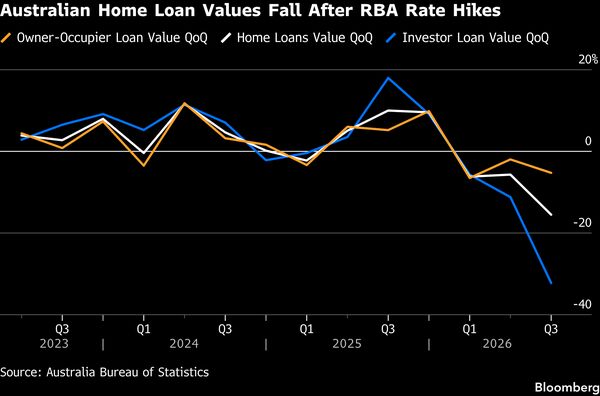
澳大利亚统计局(ABS)周三公布的数据显示,在截至9月的三个月里,新增住房贷款价值下降15.5%,几乎是经济学家预期的两倍,也是自2002年开始这项统计以来最大的季度降幅。投资者贷款价值暴跌32.3%。
The value of new home loans fell 15.5% in the three months through September, almost double economists’ forecast and the biggest quarterly decline since the series began in 2002, Australian Bureau of Statistics data showed Wednesday. The value of loans to investors tumbled 32.3%.
澳大利亚统计局表示,新的自住业主首次购房者贷款价值下降8%。
The value of new owner-occupier first-home buyer loans slipped 8%, the ABS said.
澳大利亚统计局金融统计负责人米什·谭(Mish Tan)在一份声明中表示:“我们的数据表明,投资者活动正受到借贷成本上升以外因素的影响,包括税收变化的潜在影响以及房价下跌预期。”
“Our data suggests that investor activity is being influenced by factors beyond increasing borrowing costs, including the potential impacts of tax changes and expectations of lower house prices,” Mish Tan, head of finance statistics at the ABS, said in a statement.
澳联储今年已五次加息,以应对持续居高不下的通胀,此举导致全澳房价大幅下跌。在上周加息后,现金利率升至4.85%,为18年来最高水平。
The RBA has raised borrowing costs five times this year to tackle stubbornly high inflation, a campaign that has contributed to significant declines in house prices across the country. The cash rate stands at an 18-year high of 4.85% after the central bank’s hike last week.
政府还在5月取消了对现有购房出租房产的长期税收优惠,包括较低的资本利得税以及以租金损失抵税的政策。
The government in May also scrapped longstanding tax incentives on existing homes for buy-to-let properties, which included lower capital gains levies as well as the ability to offset rental losses against tax.
澳大利亚联邦银行(Commonwealth Bank of Australia)周三报告称,9月当季住房贷款逾期率(即抵押贷款持有人未按期还款)上升了7个基点,该行将其归因于通胀上升和利率上调带来的生活成本压力。
On Wednesday, Commonwealth Bank of Australia reported that home loan arrears — when mortgage holders miss scheduled payments — increased by 7 basis points during the September quarter, which it attributed to cost-of-living pressures from elevated inflation and rising rates.