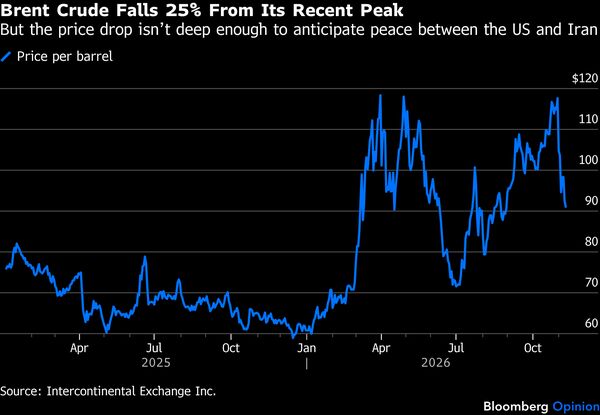
布伦特原油连续10个交易日下跌近25%之后,人们很容易认为市场正在为和平定价。事实并非如此。交易者并非预期美伊敌对行动已经结束,而是预见没有第三轮冲突的风险。如果两国达成协议,无论多么脆弱,原油交易价格将显著低于目前每桶约90美元的水平。因此我认为,市场目前处于一种不确定状态。
After Brent crude’s 10-day decline of nearly 25%, it’s tempting to say the market is pricing in peace. It isn’t. Rather than anticipating that hostilities between the US and Iran are over, traders are foreseeing no risk of a third round of fighting. If the two countries reach a deal, however fragile, oil will trade significantly cheaper than its current value of around $90 a barrel. So I’d argue that the market is currently in limbo.
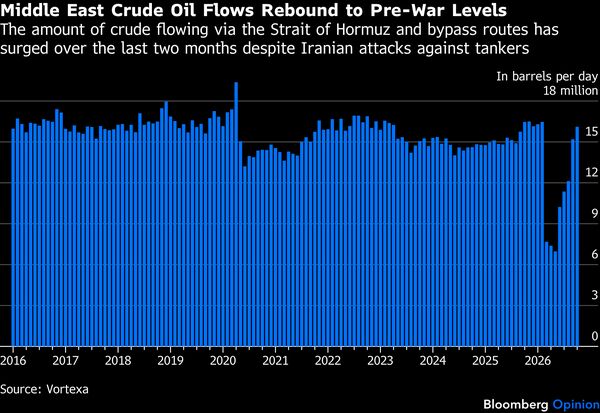
10月份,在市场猜测美国将再次轰炸伊朗的推动下,油价上涨。然而,这一市场走势掩盖了基本面供需平衡的显著改善。尽管伊朗几乎每天都袭击油轮,但除伊朗以外的中东原油出口已通过霍尔木兹海峡和绕行路线激增至战前水平的90%以上。
Oil prices climbed in October amid speculation that the US would start bombing Iran again. That market move, though, masked a significant improvement in the underlying supply-and-demand balance. Despite near-daily Iranian attacks on tankers, crude exports from the Middle East, excluding the Islamic Republic, have surged to more than 90% of pre-war levels via both the Strait of Hormuz and bypass routes.
目前的繁荣反映在实物原油市场上,多个原油品种现在以大幅折价交易,低于布伦特原油和西德克萨斯中质原油(WTI)基准期货合约。例如,加拿大原油现在的交易价格已低于每桶60美元。随着中东出口增加以及其他地区产量同样强劲,全球供应肯定足以满足当前需求。我不会称之为供应过剩,但自战争开始以来,世界首次不再每周都消耗库存,甚至允许印度和韩国等一些国家开始重建其枯竭的储备。
The current boom is reflected in the physical oil market, where multiple grades now trade at deep discount to the Brent and West Texas Intermediate benchmark futures contracts. Canadian crude, for example, now trades below $60 a barrel. With Middle East exports rising and production elsewhere also strong, global supply is certainly ample to meet current demand. I wouldn’t call it a glut but, for the first time since the war started, the world isn’t drawing on inventories every week, even allowing some countries such as India and South Korea to start rebuilding their depleted stockpiles.
话虽如此,从波斯湾流出的成品油仍然有限,使得一些价格——尤其是柴油和航空燃油——居高不下。但供应开始增加,接近战前水平的60%左右。该地区的炼油厂受损,但沙特阿拉伯以外的大多数工厂已完全修复。只有油轮短缺限制了出口。但俄乌战事同样重要;柴油价格上涨约三分之一归因于乌克兰对俄罗斯炼油厂的袭击。
That said, the flow of refined products from the Persian Gulf remains limited, keeping some prices — notably for diesel and jet fuel — elevated. But supplies are starting to increase, approaching about 60% of pre-war levels. Refineries in the region were damaged, but most plants outside Saudi Arabia have been fully repaired. Only a lack of tankers is constraining exports. But the battle between Russia and Ukraine is equally important; about a third of the increase in diesel prices is due to Ukrainian attacks on Russian refineries.
任何美伊协议都有可能进一步增加供应,因为这将允许伊朗恢复销售。战争爆发前,伊朗定期每天出口超过 250 万桶原油和成品油。这足以满足德国的需求,德国是欧盟最大的消费国。如今,德黑兰充其量每天只能走私 30 万桶,主要通过陆路卡车运往伊拉克和巴基斯坦,外加通过里海绕过美国海军封锁的少量运输。
Any US-Iran deal has the potential to further boost supply by allowing Iranian sales to resume. Before the war, Iran regularly exported north of 2.5 million barrels a day of crude and refined products. That’s enough to meet the needs of Germany, the largest consumer in the European Union. Today, Tehran is smuggling, at best, 300,000 barrels a day, mostly via overland trucking to Iraq and Pakistan, plus small shipments via the Caspian Sea bypassing the US Navy blockade.
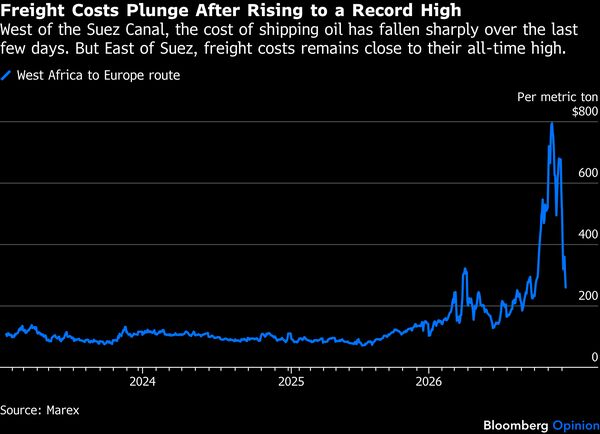
由于采用耗时的船对船转运和更长的航线,将燃料从波斯湾运出的成本变得非常高昂。从该地区向中国运输原油租用一艘超大型油轮的价格最近飙升至每天 140 万美元,而战争前不到 10 万美元。不过,全球压力开始缓解,美洲和欧洲的航运成本在最近几天大幅下降。美伊达成协议将延续这一下降趋势;但维持现状不太可能引发另一轮飙升。
The effort to get fuel out of the Persian Gulf, with the use of time-consuming ship-to-ship transfers and longer routes, has made freight very expensive. The price to rent a supertanker to ship crude from the region to China recently soared to $1.4 million per day, up from less than $100,000 before the war. Global pressures, however, are starting to ease, with shipping costs in the Americas and Europe falling significantly in recent days. A deal between Iran and the US would extend that decline; but a continuation of the status quo is unlikely to trigger another surge.
中东九个月的战争耗尽了商业和战略石油库存,可能减少了约 10 亿桶,全球剩余约 70 亿桶。补充库存的需求是真实的,但补充的速度可能被夸大了。例如,中国只有在价格进一步下跌时才会恢复储备;根据历史经验,北京会等到布伦特原油跌破每桶 70 美元。补库将为原油价格提供支撑,但远低于当前水平。不要指望任何国家在布伦特原油仍接近每桶 100 美元时大幅重建库存。
Nine months of war in the Middle East have drained commercial and strategic oil inventories, probably to the tune of 1 billion barrels leaving around 7 billion barrels available globally. The demand to refill them is real, but the pace at which they’ll be replenished is probably exaggerated. China, for example, will only resume stockpiling if prices drop further; based on history, Beijing would wait until Brent falls below $70 a barrel. Restocking would provide a floor to crude prices, but well below current levels. Don’t expect any country to significantly rebuild inventories with Brent still close to $100 a barrel.
现状持续的时间越长,中东国家就有越多时间在霍尔木兹海峡周围修建额外的绕行路线。目前,这些额外的替代方案尚未就绪。但到4月,阿拉伯联合酋长国希望开始通过其第二条绕行管道输送原油,使其出口更具可持续性,并为该地区其他国家腾出油轮运力。
The longer the status quo persists, the more time Middle East nations have to build additional bypass routes around the Strait of Hormuz. Today, those extra workarounds aren’t are ready. But by April, the United Arab Emirates hopes to begin pumping crude via its second bypass pipeline, making its exports more sustainable and freeing tanker capacity for others in the region.
综合考量,目前的油价似乎不对劲。要么是因为美国和伊朗升级冲突的风险导致油价过低,要么是因为华盛顿和德黑兰将达成协议导致油价过高。布伦特原油在每桶90美元左右交易,是一种反映当前僵局的异常现象。
All things considered, the current price of oil seems wrong. It’s either too low because of the risks of the US and Iran escalating the conflict, or too high because Washington and Tehran will sign a deal. Brent trading at around $90 a barrel is an oddity that reflects the prevailing stalemate.