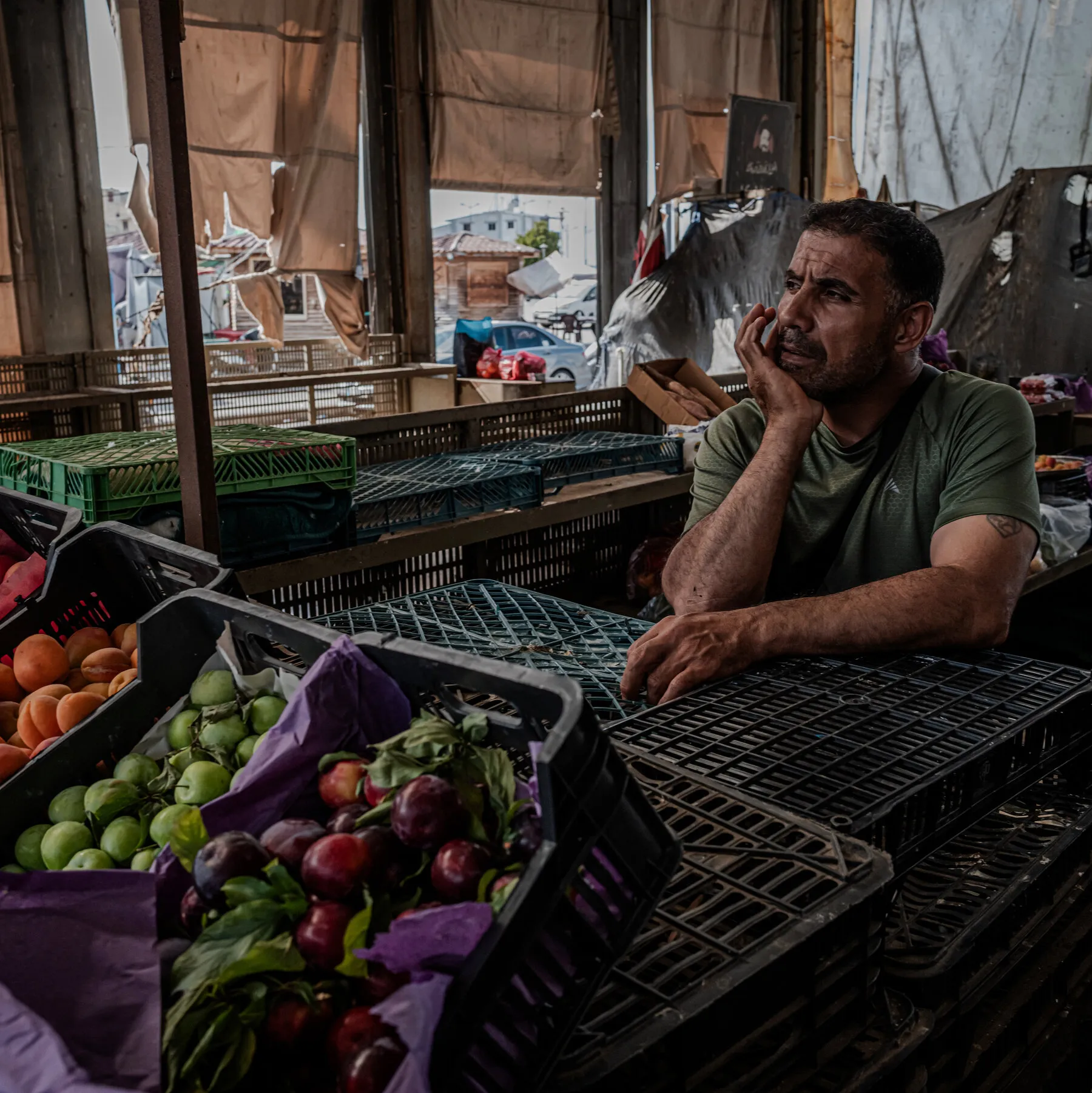
黎巴嫩在战争和多年管理不善后面临经济“灾难”。与以色列的冲突以及美以对伊朗的战争使系统性问题进一步恶化,导致生活成本飙升,许多黎巴嫩人陷入绝望。
Lebanon Faces Economic ‘Catastrophe’ After War and Years of Mismanagement Hezbollah’s conflict with Israel and the U.S.-Israel war with Iran have made systemic problems worse, causing the cost of living to soar and driving many Lebanese to despair.
数十年来,阿卜杜勒纳赛尔·奥斯曼在黎巴嫩贝卡谷的大家族农场种植葡萄,历经干旱、战争和经济动荡耕作土地。
For decades, Abdelnaser Ossman has grown grapes at his family’s expansive farm in Lebanon’s Bekaa Valley, tilling the soil through years of drought, war and economic turmoil.
但今年压力已变得难以承受。自3月以色列与伊朗支持的黎巴嫩武装组织真主党之间的战争爆发以来,他的成本飙升,利润骤降。燃料和化肥价格翻倍,劳动力成本增加了五倍,而收获的售价下降了一半。55岁的奥斯曼先生已将部分土地出租以维持生计,并在考虑出售农场的部分土地。“今年是一次灾难,”他说。“这是迄今为止最艰难的一年。”
But this year the pressures have become overwhelming. His costs have soared and profits have plunged since the war between Israel and Hezbollah, the Iran-backed Lebanese militant group, began in March. Fuel and fertilizer prices have doubled and labor costs have quintupled, while the price his harvest fetches has dropped by half. Mr. Ossman, 55, has rented out part of his land to help make ends meet and is considering selling parts of his farm. “This year has been a catastrophe,” he said. “This is the hardest year of them all.”
黎巴嫩正面临因多年管理不善而加深的经济危机,冲突已导致数千人死亡、数十万人流离失所,整个城镇化为废墟。2月开始的美以对伊朗的战争只会进一步加剧经济挑战。
Lebanon is facing a deepening economic crisis caused by years of mismanagement and exacerbated by a conflict that has killed thousands, displaced hundreds of thousands more and left entire towns in ruins. The U.S.-Israel war with Iran that began in February has only added to the economic challenges.
数据十分严峻。世界银行预测,今年黎巴嫩通胀率将超过17%,原因是供应中断、运费上升和燃料价格飙涨。该机构还预测经济将收缩6.4%。
The data is stark. The World Bank forecasts inflation as rising more than 17 percent in Lebanon this year, driven by supply disruptions, higher shipping costs and soaring fuel prices. It also predicts that the economy will contract by 6.4 percent.
对许多黎巴嫩人而言,经济生存是首要关注点,他们在失业和低工资的情况下艰难负担基本生活必需品和燃料。危机威胁到去年上任、志在彻底改革经济的总理纳瓦夫·萨拉姆取得的脆弱进展。政府面临日益高涨的公众愤怒、工会威胁罢工以及对金融政策进行根本性改革的呼声。
For many Lebanese, economic survival is the overriding concern, as they struggle to afford basic necessities and fuel amid joblessness and low wages. The crisis threatens to derail the fragile progress made by Prime Minister Nawaf Salam, who took office last year with ambitions to overhaul the economy. The government faces mounting public anger, unions threatening to strike and growing demands for a lasting overhaul of financial policy.
“这是一个艰难时期,也是一个令人深感沮丧的时期,”经济和贸易部长阿梅尔·比萨特在接受采访时说。“黎巴嫩不该遭受这一切。”数十年的危机黎巴嫩经济遭受的冲击源于多年的系统性问题,自1990年内战结束以来,这些问题一直在掏空这个国家。
“It is a difficult time, and it is also a deeply frustrating one,” Amer Bisat, the minister of economy and trade, said in an interview. “Lebanon does not deserve this.”Decades of Crisis The shocks to Lebanon’s economy stem from years of systemic problems that have hollowed out the country since the end of the civil war in 1990.
一个由教派权力掮客和富有商业利益主导的政治和经济精英阶层,通过任人唯亲和自私自利的政策中饱私囊,造成了一个极度不平等的社会。腐败依然根深蒂固,反腐败监督机构透明国际将黎巴嫩列为全球得分最低的国家之一。
A political and economic elite, dominated by sectarian power brokers and wealthy business interests, has enriched itself through cronyism and self-serving policies, creating a deeply unequal society. Corruption remains deeply entrenched, with Transparency International, an anticorruption watchdog, ranking Lebanon among the world’s lowest-scoring nations.
这种腐败的后果在2019年达到顶点,当时黎巴嫩的银行体系崩溃,抹去了数十亿美元的储蓄,导致黎巴嫩镑自由落体式贬值,并使大部分人口陷入贫困。新冠疫情加剧了损害,随后2020年贝鲁特港口爆炸摧毁了整个街区,造成数十亿美元的损失。
The consequences of that rot came to a head in 2019, when Lebanon’s banking system collapsed, wiping out billions of dollars in savings, sending the Lebanese lira into free-fall and pushing large parts of the population into poverty. The Covid-19 pandemic compounded the damage, and then the Beirut port explosion in 2020 devastated entire neighborhoods and caused billions of dollars in losses.
正当黎巴嫩艰难地承受这些打击之际,又一轮冲突开始了。2024年,在哈马斯于2023年10月7日袭击以色列之后,真主党在黎巴嫩开辟了针对以色列的新战线。这引发了一场战争,造成了进一步的破坏和流离失所。
Just as Lebanon struggled to absorb these blows, another round of conflict started. In 2024, Hezbollah opened a new front against Israel in Lebanon after the Hamas-led attacks on Israel on Oct. 7, 2023. That triggered a war that inflicted further destruction and displacement.
反复的危机削弱了黎巴嫩脆弱的国家和公共机构,使经济被既有精英和真主党所主导。与政治有关联的银行家、大企业主、金融家和世袭政治家族组成的网络对关键部门施加着过大的影响力,维系着一个庇护主义、不平等和政治瘫痪的体系。
The repeated crises have weakened Lebanon’s fragile state and public institutions, leaving the economy dominated by established elites and Hezbollah. Networks of politically connected bankers, major business owners, financiers and dynastic political families exert outsize influence over key sectors, sustaining a system of patronage, inequality and political paralysis.
黎巴嫩公民倡导组织“我们皆有意愿”公共政策主任西比尔·里兹克在谈到精英阶层和真主党时说:“尽管二者遵循截然不同的逻辑行事,但都在激烈抵制变革。因为攸关的不只是他们自身的存亡,还有他们共同维系的政治与金融秩序的存亡。”困境的规模极为庞大。
“Despite operating according to very different logics, both are fiercely resisting change,” said Sibylle Rizk, the director of public policies at Kulluna Irada, a Lebanese civic advocacy group, referring to the elites and Hezbollah. “Because what is at stake is not just their own survival, but the survival of the political and financial order they have sustained together.”
预计黎巴嫩大片地区到明年仍将缺乏食物,因为战争扰乱了农业生产,并切断了收入来源。
The scale of hardship is vast. Large parts of Lebanon are expected to remain short of food into next year, as the war has disrupted farming and cut off income.
找工作和保住工作变得更加困难。国际劳工组织7月发布的一项调查发现,受访的私营部门劳动者中,每三人就有一人已失业。
Finding and keeping a job have become harder. An International Labor Organization survey released in July found that one in three private-sector workers surveyed was no longer employed.
比萨特说,旅游业已经放缓,尤其是那些为经济带来急需资金的黎巴嫩侨民。汇款目前保持稳定,但他看到有迹象显示,随着在波斯湾的黎巴嫩劳动者面临与伊朗战争的冲击,汇款可能会减弱。
Tourism has slowed, particularly among Lebanese expatriates who bring much-needed money into the economy, Mr. Bisat said. Remittances have held up, but he sees signs they could weaken as Lebanese workers in the Persian Gulf face the fallout of the war with Iran.
他说,黎巴嫩是“一个拥有太多好东西的国家——人民、教育、侨民、地理位置”,“而不幸的是,它正受到压制。我们的工作就是努力释放它的潜力,在我们做到这一点之前,挫败感一直存在。”为了维持生计,许多家庭被迫借钱、变卖黄金和传家宝,并削减医疗和教育等基本开支。
Lebanon is “a country that has too many good things — from people, education, diaspora, location,” he said. “And unfortunately it’s being stifled. And our job is to try to unlock it, and until we do that, the frustration is there.”To make ends meet, many families have been forced to borrow money, sell gold and heirlooms, and cut back on essentials like health care and education.
贝鲁特美国大学经济学助理教授阿里·阿布德说:“你在黎巴嫩看到的是苦苦挣扎、难以负担生活成本的民众。”
“What you are seeing in Lebanon is a population that is struggling to afford life,” said Ali Abboud, an assistant professor in economics at the American University of Beirut.
他还说:“黎巴嫩是一个小型且依赖进口的国家,经济与邻近地区深度交织。”“因此任何危机都意味着生活质量和经济的健康与生产力将受到重大影响。”电力问题长期电力短缺是经济危机的象征。
“Lebanon is a small and import-dependent country, where the economy is deeply intertwined with the neighboring region,” he added. “So any crisis means the quality of living, along with the health and productivity of the economy, will be impacted significantly.”Power Problems Chronic electricity shortages are emblematic of the economic crisis.
黎巴嫩国营电网每天仅供电几个小时,导致大多数家庭和企业依赖柴油发电机来填补缺口。这使他们尤其容易受到燃料价格上涨的影响,比如当私人发电机运营商收费高于政府规定的费率,而当局又无法跟上那些违规者时。
Lebanon’s state-run power grid delivers electricity for only a few hours each day, leaving most households and businesses dependent on diesel generators to fill the gaps. That makes them especially vulnerable to increases in fuel prices, like when operators of private generators charge above government-mandated rates and the authorities cannot keep pace with those breaking the rules.
位于贝鲁特的Submarine共享办公空间老板拉亚·萨克尔一直受到成本飙升和停电的挤压。
Rayah Sakr, owner of the Submarine co-working space in Beirut, has been squeezed by the soaring costs and power cuts.
今年夏天随着气温攀升,该公司每月的发电机电费几乎翻倍,超过1600美元,此外还有150美元的政府供电费用。萨克尔女士的企业在电力危机之前就已不盈利,她正在权衡是提高会员费还是关门停业。
As temperatures climbed this summer, the company’s monthly generator electricity bill nearly doubled to more than $1,600, on top of the $150 for government-provided electricity. Ms. Sakr, whose business was unprofitable before the power crisis, is weighing whether to raise membership fees or shut down.
“电力和电价是我们遭受诅咒的地方,也是我们期盼奇迹的地方,”她说。“这样做生意非常艰难。”比萨特先生说,政府已加强了对发电机的检查,没收了数十台向客户多收费的运营商的发电机,开出了罚单,并将违规行为移交司法机关。
“Electricity and its price are where we have a curse and where we hope for a miracle,” she said. “It’s very hard to do business like this.”Mr. Bisat said the government had stepped up generator inspections, confiscated dozens whose operators were overcharging customers, issued fines and referred violations to the judiciary.
萨拉姆先生上个月在一次讲话中还表示,他的政府正在制定降低电力成本的解决方案,包括为家庭提供贷款以购买太阳能电池板。
Mr. Salam also said in a speech last month that his government was developing solutions to lower electricity costs, including offering families loans to buy solar panels.
他补充说,当局计划增加医疗保健和社会援助的资金,提高包括教师在内的公共部门工作人员的工资,并补贴公共交通。政府将通过向游艇和私人飞机征税,以及从数十家公司和采石场运营商那里收取数亿美元的欠款来支付这些费用。
The authorities plan to increase funding for health care and social assistance, raise salaries for public-sector workers, including teachers, and subsidize public transportation, he added. The government would pay for it by imposing levies on yachts and private aircraft and collecting hundreds of millions of dollars in outstanding payments from dozens of companies and quarry operators.
但比萨特先生承认,对于一个资金拮据、面临巨大人道主义和重建需求的国家,这些努力仍将不足。他引用了一句阿拉伯俗语来形容这种困境:“眼能看到,但手不够长。”专家们表示,黎巴嫩需要制定长期计划,以打击腐败、改革其机构并恢复民众对政府的信任。
But Mr. Bisat acknowledged these efforts would fall short for a strapped nation facing enormous humanitarian and reconstruction needs. He invoked an Arabic expression that captures the predicament: “The eye can see, but the hand is short.”Experts say Lebanon needs a long-term plan to tackle corruption, overhaul its institutions and restore confidence in government.
在过去一年里,萨拉姆先生推动立法以应对银行业危机。但国际货币基金组织表示,仍需解决重大障碍,其中包括就谁将承担银行业崩溃造成的损失达成一致、通过一份可持续的2027年预算,以及提高政府筹资、控制支出和管理公共债务的能力。一些分析人士认为,政府行动过于迟缓。
Over the past year, Mr. Salam has advanced legislation to address the banking crisis. But the International Monetary Fund has said that significant hurdles need to be addressed. These include agreeing on who will bear the losses from the collapse of the banking sector, adopting a sustainable 2027 budget and improving the government’s ability to raise money, control spending and manage public debt. Some analysts say the government has been too slow.
“库卢纳·伊拉达”组织的里兹克女士说,精英阶层的目的是“将损失社会化、将利润私有化”,即公众将承担代价,而银行及其所有者则免于承担责任。
The elite’s aim is to “socialize losses and privatize profits,” said Ms. Rizk of Kulluna Irada, meaning the public will bear the costs while banks and their owners are shielded from liabilities.
像奥斯曼先生这样生活艰难的黎巴嫩人正在为更加艰难的日子做准备。近日的一个下午,凉风吹过他的葡萄藤,他说他希望政府最终能够掌控经济。最重要的是,他希望自己这一代人不会失去父亲和祖父传下来的土地。
Struggling Lebanese like Mr. Ossman are bracing for even harder days. On a recent afternoon, as a cool breeze blew through his vines, he said he hoped the government would finally get a handle on the economy. More than anything, he hoped his generation would not be the one to lose the land his father and grandfather passed down.
“这片土地就是我的灵魂,”他说。但今年,他又说,这片土地给他的只有“痛苦连着痛苦”。萨拉·沙伊托从贝鲁特对本文作出了报道。
“This land is my soul,” he said. But this year, he added, all it had given him was “pain after pain.”Sarah Chaayto contributed reporting from Beirut.