分析人士警告称,日本加强武装力量的推进正遭遇逆风,仅靠资金投入无法解决,他们指出美国武器装备交付长期延迟以及国内制造瓶颈正在削弱作战准备状态。
Japan’s push to strengthen its armed forces is running into headwinds that money alone cannot resolve, analysts warn, pointing to prolonged delays in US weapon shipments and domestic manufacturing bottlenecks that undermine operational readiness.
这些问题令外界对东京能否实现雄心勃勃的军力扩充目标产生怀疑,而日本政府正准备彻底改革其防务和安全支出优先次序。
The issues have cast doubt on Tokyo’s ability to meet ambitious force expansion targets as the government prepares to overhaul its defence and security spending priorities.
观察人士表示,这些挫折凸显了日本建设本国防务工业、减少对美国供应商依赖的必要性。然而,影响日本国产飞机的持续维护和供应问题表明,更大程度的自主也带来了自身的挑战。
Observers say these setbacks highlight the need for Japan to build up its domestic defence industry and reduce reliance on US suppliers. However, persistent maintenance and supply issues affecting Japanese-made aircraft suggest that greater self-reliance brings its own set of challenges.
东京目前正在起草新的为期五年的《防卫力整备计划》,勾勒出至2020年代末的支出和采购优先次序。但交付延迟和成本超支引发担忧,鉴于货币贬值、通胀和采购成本飙升,日本能否在现有预算上限内采购所有计划装备尚存疑问。
Tokyo is currently drafting a new five-year Defence Buildup Programme outlining spending and procurement priorities through the late 2020s. But delivery delays and cost overruns are raising concerns over whether Japan can acquire all the planned hardware under existing budget caps, given currency weakness, inflation and surging procurement costs.
据8月发布的一份报告,防卫省承认采购进度落后于计划,价格大幅飙升。报告称,例如,国产川崎P-1海上巡逻机的单机采购成本在2023财年至2026财年预算间跳涨逾50%——从305亿日元增至460亿日元(约1.92亿美元至2.9亿美元)。
The Defence Ministry acknowledged that acquisitions have fallen behind schedule and prices have soared, according to a report released in August. For example, the unit procurement cost for the domestically developed Kawasaki P-1 maritime patrol aircraft jumped more than 50 per cent – from 30.5 billion yen to 46 billion yen (US$192 million to US$290 million) – between the fiscal 2023 and 2026 budgets, the report said.
提交国会的审计委员会1月报告披露,根据政府间“外国军事销售”机制签订的118份美国军事装备订单,总价值约72亿美元,在合同签署五年或更长时间后仍未交付。
A Board of Audit report submitted to parliament in January disclosed that 118 orders for US military equipment, valued at about US$7.2 billion under the government-to-government Foreign Military Sales mechanism, remained undelivered five years or more after contracts were signed.
立命馆亚太大学国际关系教授佐藤洋一郎表示,积压订单主要源于美国库存枯竭,影响了“战斧”巡航导弹等关键装备。
Yoichiro Sato, an international relations professor at Ritsumeikan Asia Pacific University, said the backlogs largely stemmed from depleted US inventories, affecting key assets like Tomahawk cruise missiles.
“它们是日本新战略教义的一部分,该教义设想具备有限的反击能力,”佐藤说。
“[They] are part of Japan’s new strategic doctrine, which envisions limited counterstrike capabilities,” Sato said.
在首相高市早苗领导下,日本正在修订其三份主要战略文件:《国家安全保障战略》、《国家防卫战略》和《防卫力整备计划》。预计东京将在与华盛顿的协调下强化其“拒止能力”以应对潜在对手的侵略,同时扩大产业基础合作与互操作性。
Under Prime Minister Sanae Takaichi, Japan is revising its three main strategic documents: the National Security Strategy, the National Defence Strategy and the Defence Buildup Programme. Tokyo is expected to reinforce its “capabilities to deny” potential adversary aggression in coordination with Washington, while expanding industrial-base cooperation and interoperability.
5月,美国国防部长皮特·赫格塞斯告诉日本防卫大臣小泉进次郎,多达400枚“战斧”巡航导弹的交付可能面临长达两年的延迟,因为美国需补充因对伊朗军事行动而消耗的库存。
In May, US Defence Secretary Pete Hegseth told Japanese Defence Minister Shinjiro Koizumi that deliveries of up to 400 Tomahawk missiles could face delays of up to two years as the US replenishes stocks drawn down by military operations against Iran.
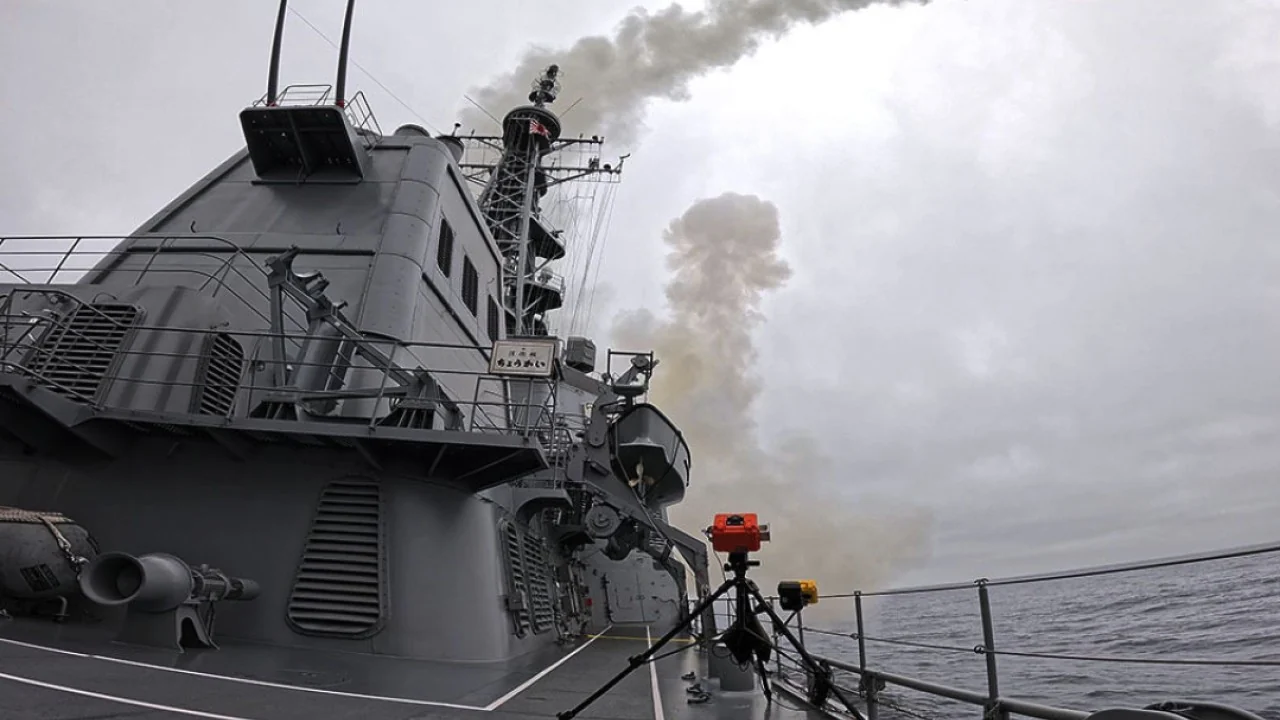
日本引进“战斧”导弹标志着其从依赖防御性导弹拦截盾牌转向获取反击能力。
Japan’s acquisition of Tomahawks represents a shift away from a reliance on a defensive missile-interceptor shield towards acquiring a counterstrike capability.
据日本战略研究论坛高级研究员格兰特·纽舍姆称,除“战斧”导弹外,由于美国生产线需求旺盛,防空拦截弹在短期内也供应短缺。
Apart from Tomahawk missiles, air-defence interceptors are also in short supply in the short term due to heavy demands on US production lines, according to Grant Newsham, a senior research fellow at the Japan Forum for Strategic Studies.
但从长远来看,纽舍姆表示,“宙斯盾”系统升级、F-15战机现代化改装以及MQ-9无人机和E-2C“鹰眼”预警机维护所需的零部件和备件短缺将成为更大的问题。
But in the longer term, shortages of components and spare parts needed for Aegis system upgrades, F-15 fighter modernisations and the maintenance of MQ-9 drones and E-2C Hawkeye surveillance planes would become a bigger problem, Newsham said.
第五代F-35隐身战机的交付也遭遇延迟,特别是短距起飞/垂直降落(STOVL)型F-35B,该型号计划部署在日本的“出云”级直升机驱逐舰上。虽然日本已运营常规起降型F-35A多年,但其首批F-35B——原定于2025年3月前交付——被推迟至当年晚夏。日本2026年《防卫白皮书》指出,截至今年3月底已接收8架F-35B,订购的42架中仍有34架未交付。
Deliveries of the fifth-generation F-35 stealth fighter have also suffered delays, particularly the short-take-off and vertical-landing (STOVL) F-35B variant intended for use aboard Japan’s Izumo-class helicopter destroyers. While Japan has operated conventional F-35A jets for years, its initial batch of F-35Bs – slated for delivery by March 2025 – was pushed back to late summer that year. Japan’s 2026 Defence White Paper noted that eight F-35Bs had been received by late March this year, leaving 34 of the 42 ordered still outstanding.
“F-35的交付也在推迟,但日本已经拥有一支相当规模的该型机机队,”纽森说。“日本自卫队也可以使用更多[川崎]P-1巡逻机和C-2运输机……但这目前还不是巨大的危险。”东京地经学研究所安全专家、研究员井上林太郎警告称,备件短缺正在降低日本的作战准备度。
“F-35 deliveries are also being delayed, but Japan already has a sizeable fleet of these aircraft,” Newsham said. “The Japan Self-Defence Forces can also use more [Kawasaki] P-1 patrol aircraft and C-2 transports … but this is not a huge danger at the moment.”Rintaro Inoue, a security specialist and research fellow at Tokyo’s Institute of Geoeconomics, warned that spare-part shortages were reducing Japan’s operational readiness.
井上指出,日本现役的川崎P-1巡逻机机队,其预估任务能力或准备率仅为30%左右。现役约40架,任意时刻仅有十余架完全具备任务能力,可用于监视海上领土和追踪敌方潜艇。“这迫使日本海上自卫队从其他飞机上拆解零件,”井上说。
Japan’s fleet of Kawasaki P-1 patrol aircraft currently operated at an estimated mission-capable or readiness rate of only 30 per cent, Inoue noted. With roughly 40 aircraft in service, only about a dozen are fully mission-ready at any given time to monitor maritime territory and track adversary submarines. “This forces the Japan Maritime Self-Defence Force to cannibalise parts from other aircraft,” Inoue said.
除了全球供应链限制和半导体瓶颈,低准备率还源于恶劣的作战环境,低空反潜巡逻导致盐雾腐蚀。与广泛出口的波音P-8“波塞冬”不同,P-1是国产、小批量机型,几乎无法从全球供应链获取二手替代零件。
Apart from global supply chain constraints and semiconductor bottlenecks, the low readiness rate is also driven by harsh operating environments, where low-altitude anti-submarine patrols induce salt-spray corrosion. Unlike the widely exported Boeing P-8 Poseidon, the P-1 is a domestic, low-volume aircraft, making it nearly impossible to source secondary replacement parts from global supply chains.
井上表示,这些制约可能加速东京向无人系统转型。在2027财年预算申请中,防卫省划拨18.4亿美元,用于采购17架MQ-9B“海卫士”无人机,实施日本周边海域的广域监视。
These constraints, Inoue said, could accelerate Tokyo’s push towards unmanned systems. In its fiscal 2027 budget request, the Defence Ministry earmarked US$1.84 billion to acquire 17 MQ-9B SeaGuardian unmanned drones for wide-area surveillance across Japanese waters.
同时,井上指出,更广泛的采购转变可能助力国产制造商:“导弹需求增长可能创造更强的市场激励,扩大产能并强化更广泛的供应链。”纽森说,东京需要继续扩大产业基础,制造目前从美国采购的硬件和组件。
At the same time, Inoue noted that broader procurement shifts could help domestic manufacturers: “Growing demand for missiles could create stronger market incentives to expand production capacity and strengthen the broader supply chain.”Newsham said Tokyo needed to continue to expand its industrial base to manufacture hardware and components currently sourced from the US.
“完全自给自足是不可能的,但只要努力,日本可以大幅降低目前的依赖程度和短板,”他说,并补充道,无论成本多高,都比输掉战争或向中国丧失主权要划算。“日本为自卫做得越多,美国支持日本防务的可能性就越大。”
“Total self-reliance is impossible, but with effort Japan can greatly reduce its current dependence and shortfalls,” he said, adding that whatever the cost, it was cheaper than losing a war or its sovereignty to China. “The more Japan does to defend itself, the more likely it will have American support for Japan’s defence.”