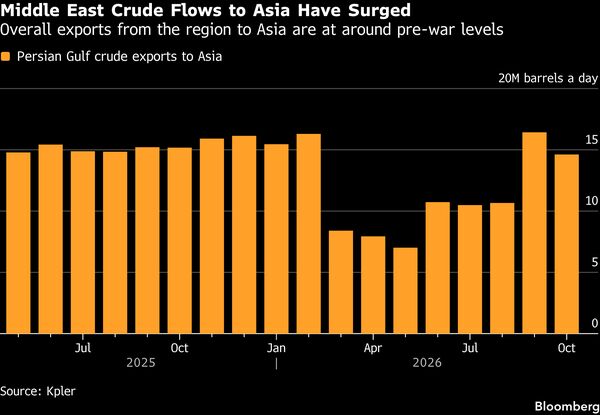
亚洲的炼油商正日益重新转向中东产油国的原油,此前数月冲突导致供应受扰,如今流量已经回升,这降低了对美国等替代供应来源进口的依赖。
Oil refiners in Asia are increasingly turning back toward crude from Middle Eastern producers as flows rebound after months of conflict, lessening the need for imports from alternative suppliers including the US.
据知情交易员透露,日本、中国和泰国等国的炼油商已加大或恢复从该地区采购,其中包括需要穿越仍存争议的霍尔木兹海峡的供应。这些交易员因讨论商业事务要求不具名。他们表示,来自阿联酋、沙特阿拉伯和卡塔尔的供应量正在增加。
Refiners in countries including Japan, China and Thailand have either ramped up or restarted buying from the region, including supplies that need to cross the still-contested Strait of Hormuz, according to traders familiar with the matter, asking not to be named discussing commercial matters. Greater volumes are coming from the United Arab Emirates, Saudi Arabia and Qatar, they said.
全球石油市场正日益显现出恢复至2月美国与伊朗开战前格局的迹象,尽管双方尚未达成解决方案。其中之一便是全球最大进口地区的炼油商持续倾向于依赖中东供应原油。价格下跌和运费走弱也印证了这一趋势。
The global oil market is showing increasing signs of reverting to patterns seen before the outbreak of war between the US and Iran in February, even as the sides have yet to reach a resolution. Among them is a sustained preference from refiners in the world’s biggest importing region to rely on the Middle East for cargoes. Slumping prices and weaker freight rates add to the picture.
“你怎么才能摆脱对最大原油来源的依赖?在试图实现多元化方面,全球供需平衡中根本没有足够的余量来显著改变局面,”荷兰国际集团大宗商品策略主管沃伦·帕特森在谈及亚洲对中东石油的需求时表示。
“How do you break the reliance on your biggest source of crude? There is just not enough slack in global balances to move the needle significantly when it comes to trying to diversify,” said Warren Patterson, head of commodities strategy for ING Groep NV, referring to Asia’s appetite for Mideast oil.
战争初期,由于途经霍尔木兹海峡的油轮以及能源基础设施成为攻击目标,来自波斯湾发货方的供应量大幅下降。此后产量已回升,沙特阿拉伯告知欧佩克,其10月石油产量激增至多年来最高的月度水平之一。这意味着亚洲买家对包括来自遥远美国在内的应急补充供应的需求减少。
In the early stages of the war, flows from Persian Gulf shippers sank as tankers passing through Hormuz were targeted, along with energy infrastructure. Output has since rebounded, with Saudi Arabia telling OPEC its oil output surged in October to one of the highest monthly levels in years. That means less demand from Asian buyers for stopgaps, including from the distant US.
与此同时,主要中东产油国已大幅削减对亚洲买家的即期价格,以更积极争夺市场份额。沙特阿拉伯最近将官方对该地区的销售价格下调至六年来的新低,而阿拉伯联合酋长国——该国于四月退出欧佩克卡特尔——则降低了其旗舰等级十二月供应的价格溢价。
At the same time, major Middle Eastern producers have slashed term rates for Asian buyers, as they compete more aggressively for market share. Saudi Arabia recently cut official selling prices to the region to a fresh six-year low, while the United Arab Emirates — which quit the OPEC cartel in April — has reduced the price premium for December supplies of its flagship grade.
亚洲炼油厂对美国原油的十一月交付订单大幅下跌约50%,降至2400万至2600万桶,交易员上月告诉彭博社。另据美国最大港口——科珀斯克里斯蒂港首席执行官肯·布里顿本周表示,上周离开美国墨西哥湾港口的40艘原油船中,没有一艘是运往亚洲的。
Asian refinery orders for US crude for delivery in November tumbled roughly 50% to 24 million to 26 million barrels, traders told Bloomberg last month. Separately, Port of Corpus Christi Chief Executive Officer Kent Britton — head of the US largest port — said this week that none of the 40 crude cargoes that departed US Gulf Coast ports last week was bound for Asia.
尽管近期整体运费均有所下降,但美国至亚洲航线的运费下降幅度超过其他航线,显示亚洲炼油厂对中东石油的偏好有所恢复。美国墨西哥湾航线的超大型油轮每日收益较十月高点下降61%,而波斯湾至东亚航线仅下降24%。
While shipping costs have slid across the board in recent weeks, those for US-to-Asia voyages have softened more than other routes, showing the revived preference from Asian refiners for Middle Eastern oil. Daily earnings for very large crude carriers on routes from the US Gulf are down 61% from an October peak, compared with just 24% from the Persian Gulf to East Asia.
在全球最大石油买家中国,十月份全国原油进口升至七个月来的最高水平,波斯湾的装运出现回升。官方海关数据本周显示,进口量攀升至近4200万吨,伊拉克货运居首。
In China — the world’s largest oil buyer — nationwide crude imports rose to a seven-month high in October, marked by a recovery in shipments from the Persian Gulf. The purchases climbed to nearly 42 million tons, led by Iraqi cargoes, according to official customs data this week.
日本方面,交易员称包括昭和壳牌控股株式会社和Cosmo Energy Holdings Co.在内的炼油企业近期曾从阿联酋采购石油。与此同时,独立的中国加工商正增加对伊拉克的即期供应订单。Kpler数据则显示,印度从波斯湾的进口已超过对俄罗斯的进口量。
In Japan, refiners including Eneos Holdings Inc. and Cosmo Energy Holdings Co. had been among recent purchasers of oil from the UAE, traders said. Meanwhile, independent Chinese processors have been ordering more prompt supplies from Iraq, they said. India’s imports from the Persian Gulf, meanwhile, have now topped volumes from Russia, according to Kpler data.
日本进口商的分析师Rakuten Securities经济研究所的西丰太表示,只要“仍能从中东获得原油”,炼油厂可能会继续购买该地区的原油。
For Japanese importers, as long as they “can still get crude from the Middle East, refiners will probably keep buying it,” said Yutaro Nishi, an analyst at the Rakuten Securities Economic Research Institute.
这位前大宗商品交易员补充说:“各国情况不尽相同,但我认为基本格局不会改变。亚洲仍将是中东原油的主要市场。”
“It varies from country to country, but I don’t think the basic picture is going to change,” the former commodities trader added. “Asia will remain a major market for Middle Eastern crude.”