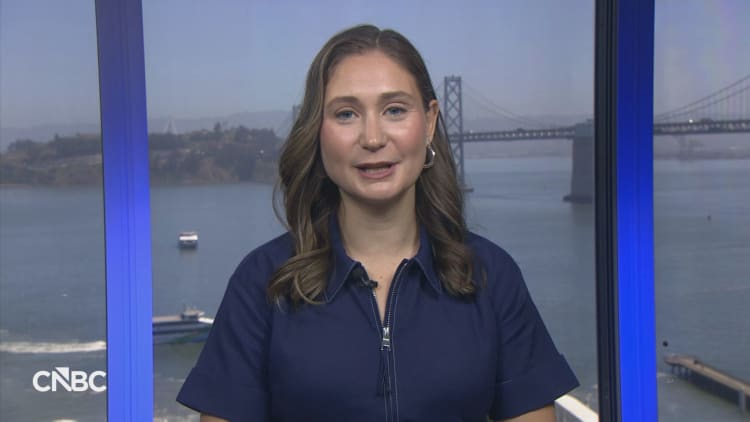
Dario Amodei 和 Daniela Amodei、Tom Brown、Jack Clark、Jared Kaplan、Sam McCandlish 以及 Chris Olah 每人预计将在 Anthropic 首次公开募股(IPO)后获得 2.5 亿美元现金收益,并持有价值超过 180 亿美元的股票。
Dario and Daniela Amodei, Tom Brown, Jack Clark, Jared Kaplan, Sam McCandlish, and Chris Olah each stand to make $250 million in cash proceeds and to hold stock worth upwards of $18 billion after Anthropic's IPO.
这些联合创始人此前均在 OpenAI 任职,最终于 2020 年底离职,创办了一家专注于安全的前沿实验室。
The co-founders were previously at OpenAI, ultimately leaving at the end of 2020 to start a frontier lab focused on safety.
四名研究人员、一名前记者、一名公共政策制定者和一名工程师于 2021 年创立了 Anthropic。六年后,这家人工智能公司即将上市,交易预计将于 11 月 19 日开始,这将是有记录以来最大规模的 IPO 之一。这七位联合创始人每人有望身价达数十亿美元。一切始于一次出走。
Four researchers, a former journalist, a public policymaker, and an engineer founded Anthropic in 2021. Six years later, the artificial intelligence company is about to go public, with trading expected to begin on Nov. 19, in what will be one of the biggest IPOs on record. Those seven co-founders are poised to each be worth many billions of dollars. It all started with a defection.
2020 年底,兄妹俩 Dario Amodei 和 Daniela Amodei 是 OpenAI 的副总裁,该公司凭借 ChatGPT 的推出引发生成式 AI 热潮。但两人对雇主在 AI 安全方面的做法感到沮丧。担心模型能力的进步会快于人类对它们的理解,二人于次年年初创立了 Anthropic。
At the end of 2020, siblings Dario and Daniela Amodei were vice presidents at OpenAI the company that kicked off the generative AI frenzy with the launch of ChatGPT. But the two had grown frustrated with their employer over its approach to AI safety. Fearing a world where models' capabilities would progress faster than our understanding of them, the duo launched Anthropic early the next year.
他们带走了几位 OpenAI 同事:GPT-3 研究工程负责人 Tom Brown;政策总监 Jack Clark;合同研究顾问 Jared Kaplan;以及 OpenAI 技术员工 Sam McCandlish 和 Chris Olah。
They took a handful of OpenAI colleagues with them: Tom Brown, the company's research engineering lead on GPT-3; Jack Clark, a policy director; Jared Kaplan, a contract research consultant; and Sam McCandlish and Chris Olah, both members of OpenAI's technical staff.
他们都深感担忧 OpenAI 将重心转向商业化,如今他们有望成为最早从 AI 繁荣中套现获利的人群之一。
They were all deeply concerned about OpenAI's ambitions to focus on commercialization, and they now stand to be some of the first to cash in on the AI boom.
“他们创立 Anthropic 真不是为了发财,而是因为他们想塑造这件世界上极其重要的事情,并且认为如果由别人来做可能会做得更糟,”Jeffrey Ladish 表示。他于 2021 年 9 月以合同安全工程师身份加入 Anthropic,现任 AI 安全研究机构 Palisade Research 的执行董事。
"They really started Anthropic not because they were hoping to get rich, but they started Anthropic because they like wanted to shape this really important thing in the world, and they thought that other people might do it worse than them," said Jeffrey Ladish, who joined Anthropic as a contract safety engineer in September 2021, and now serves as the executive director of AI safety institute Palisade Research.
联合创始人共同持有 Anthropic 约 10% 的股份。每人拥有约 2.4 亿股 A 类股,约占 1.4% 的股份。
Collectively the co-founders own about 10% of Anthropic. Each has about 240,000,000 class A shares, or about a 1.4% stake.
在 Anthropic 最近一轮融资中,这些股份按每股 58.90 美元估值,使每位联合创始人的持股价值约为 140 亿美元。若 Anthropic 首次公开募股(IPO)达到每股 70 至 78 美元的目标价,或市场估值近 1.4 万亿美元,这些持股价值将增至 170 亿至 180 亿美元。
During Anthropic's most recent funding round, those shares — valued at $58.90 each — amounted to about $14 billion in value for each co-founder. If Anthropic's IPO reaches its target of $70 to $78 per or a market valuation of nearly $1.4 trillion, it would push those stakes to $17 billion to $18 billion.
“很难不受自身激励机制的影响,”拉迪什说。“你有投资人,金钱不仅是目的,也是手段。”Anthropic 未回应置评请求。
"It's extremely hard not to be influenced by your incentives," Ladish said. "You have investors, and money is not just like an end; it's also a means." Anthropic did not respond to requests for comment.
达里奥·阿莫代伊 Anthropic 的公众面孔是首席执行官达里奥·阿莫代伊。他在该群体中持股最多:245,259,100 股,含受投票委托约束的股份。
Dario Amodei The face of Anthropic is CEO Dario Amodei. He holds the most shares of the bunch: 245,259,100 including shares subject to voting proxies.
现年 43 岁的阿莫代伊并非从商界起步。他来自研究领域,2011 年在普林斯顿大学获得计算神经科学博士学位。随后于 2011 至 2014 年在斯坦福大学担任博士后研究员。
Amodei, 43, didn't get his start in business. He comes from the world of research, obtaining a doctorate in computational neuroscience from Princeton University in 2011. He then went to work at Stanford University as a postdoctoral scholar from 2011 to 2014.
即便进入私营部门,阿莫代伊的经历仍以研究为主。2014 至 2015 年,他在中国百度领导语音识别研究;随后在 Google Brain 从事深度学习和神经网络研究,为当今大语言模型奠定了科学基础。2016 年 7 月,他加入 OpenAI。
Even in the private sector, Amodei's experience was focused on research. He worked at China's Baidu leading research on speech recognition from 2014 to 2015, followed by a stint at Google Brain working on deep learning and neural networks, foundational scientific frameworks for today's large language models. He joined OpenAI in July 2016.
2025 年 7 月,阿莫代伊在“大科技”播客节目中表示,他投身 AI 是为了解决生物学领域“近乎棘手”且“进展缓慢”的问题。
On the Big Technology podcast in July 2025, Amodei said he got into AI to solve the "almost intractable" and "slow moving" problems of biology.
他说:“我认为我创办公司的原因是,我在其他公司工作过,就是觉得那些公司的运营方式并不真正致力于产生那种影响力。”他补充说,追求影响力常被公司用作招揽人才的不真诚借口。
"I think my reason to start a company was that I had worked at other companies and I just didn't feel like the way those companies were run was really oriented towards trying to have that impact," he said, adding that the desire for impact was often used by companies as an insincere ploy to recruit talent.
在OpenAI,阿莫代伊与Anthropic联合创始人汤姆·布朗共同被认为发明了基于人类反馈的强化学习(RLHF)。RLHF是一种微调方法,用于使模型输出与人类需求保持一致。这可能意味着训练模型礼貌地说话,或者不提供暴力或有害的问题解决方案。
At OpenAI, Amodei is credited with co-inventing reinforcement learning from human feedback (RLHF), alongside Anthropic co-founder, Tom Brown. RLHF is a fine-tuning method used to align model outputs with human needs. That could mean training a model to speak politely or to not offer violent or harmful solutions to problems.
丹尼拉·阿莫代伊 比她哥哥小四岁的丹尼拉·阿莫代伊,39岁,担任Anthropic的总裁兼董事会主席。阿莫代伊兄妹都是旧金山本地人,在使命区长大,距离Anthropic现在的总部只有几英里。
Daniela Amodei Four years her brother's junior, Daniela Amodei, 39, serves as the president and board chair of Anthropic. The Amodeis are both San Francisco natives, growing up in the Mission District, just a few miles away from Anthropic's current headquarters.
两人在青少年时期经历了互联网泡沫的顶峰及其随后的余波,都就读于洛厄尔高中,这是一所磁校,也是全美最负盛名的公立学校之一。毕业后,丹尼拉进入加州大学圣克鲁兹分校学习英语文学和政治学,于2009年获得学位。
The pair were teenagers during the height of the dot-com bubble and its subsequent fallout, both attending Lowell High School, a magnet school and one of the most prestigious public schools in the country. After graduating, Daniela went on to study English literature and politics at the University of California, Santa Cruz, earning her degree in 2009.
丹尼拉的职业生涯始于政治领域,曾为当时代表宾夕法尼亚州第17国会选区的民主党人马特·卡特赖特工作,随后转入科技行业,在Stripe担任风险管理方面的各种职务,历时五年。
Daniela started her career in politics, working for Matt Cartwright, a Democrat representing what was then Pennsylvania's 17th congressional district, and then moved into tech, taking on various roles in risk management at Stripe for five years.
在6月接受斯坦福大学商学院采访时,她说,她在政治领域的经验,特别是竞选活动,自然而然地引领她走向了初创企业和硅谷。
In a June interview with Stanford's Graduate School of Business, she said her experience in politics, specifically campaigns, naturally led her to startups and Silicon Valley.
她说:“我当时想,‘哇,一小群人努力工作,年轻且有动力,真的能改变世界。’”汤姆·布朗 Anthropic的首席算力官汤姆·布朗,39岁,或许是这群人中最具创业精神的。2010年从麻省理工学院获得工程硕士学位后,布朗创办了两家初创公司,MoPub和Grouper。
"I was like, 'Wow, a small number of people that work really hard, who are young and driven, can really change the world,'" she said. Tom Brown Anthropic's chief compute officer, Tom Brown, 39, is perhaps the most entrepreneurial of the bunch. After graduating from the Massachusetts Institute of Technology with a Master of Engineering in 2010, Brown went on to found two startups, MoPub and Grouper.
MoPub是一家移动广告业务,于2013年被Twitter收购。他于2011年在那里担任创始工程师。Grouper由布朗担任联合创始人兼技术负责人,是一款获得Y Combinator孵化的团体约会应用。
MoPub was a mobile advertising business acquired by Twitter in 2013 There he served as founding engineer in 2011. Grouper, where Brown served as co-founder and technology chief, was a Y Combinator-backed group dating app.
Grouper之后,布朗转向研究,并于2025年8月在Y Combinator的Lightcone播客中分享,他自学机器学习研究,这是一项艰巨的任务,因为他在大学里线性代数得了B-。“我犹豫了六个月,试图鼓起勇气”做出转变,他说。
After Grouper, Brown pivoted to research, sharing on Y Combinator's Lightcone podcast in August 2025 that he was self-taught on machine learning research, a daunting task since he received a B- in linear algebra at university. "I kind of flip-flopped on it for six months trying to build up courage to" make the switch, he said.
除了共同发明RLHF,作为OpenAI的研究人员,布朗领导了GPT-3的训练工作,该模型标志着从GPT-2的历史性飞跃,参数从15亿增加到1750亿。
Alongside co-inventing RLHF, as a researcher at OpenAI, Brown led the training efforts on GPT-3, a model that marked a historic leap from GPT-2, going from 1.5 billion parameters to 175 billion.
杰克·克拉克 杰克·克拉克,37岁,Anthropic的公共利益负责人,2016年离开记者职业加入OpenAI。克拉克现在也是Anthropic研究所的负责人,这是该公司内部智库,探索人工智能的社会和经济影响。
Jack Clark Jack Clark, 37, the head of public benefit at Anthropic, left his career as a journalist in 2016 to work at OpenAI. Clark is now also the leader of the Anthropic Institute, the company's internal think tank that explores AI's social and economic impacts.
克拉克是英国人,在海滨城市布莱顿长大,后来在东英吉利大学学习英语文学和创意写作。他随后为包括ZDNet英国、《The》和彭博社在内的出版物撰稿。
A native of the U.K., Clark grew up in the seaside town of Brighton and later studied English literature and creative writing at the University of East Anglia. He then went on to write for publications including ZDNet UK, The, and Bloomberg.
当时,克拉克在给一位彭博社同事的电子邮件中说,他离开新闻业的决定是因为他“以前从未如此坚定地相信过某事”,并且他需要加入OpenAI“并承受后果,我希望后果是好的。”贾里德·卡普兰 卡普兰,42岁,Anthropic首席科学官,仍在约翰斯·霍普金斯大学物理与天文学系担任副教授职位。这位理论物理学家2009年在哈佛大学获得物理学博士学位,之后在SLAC国家加速器实验室担任博士后研究员四年,该实验室是一家粒子物理研究设施,由斯坦福大学运营,能源部提供资金。
In an email to a colleague at Bloomberg at the time, Clark said his decision to leave journalism was because he had "never believed in something strongly before" and that he needed to join OpenAI "and live with the consequences, which I hope are good." Jared Kaplan Kaplan, 42, Anthropic's chief science officer, still holds a position as an associate professor in the department of physics and astronomy at Johns Hopkins University. The theoretical physicist got his PhD in physics from Harvard in 2009, working for four years after as a postdoctoral fellow at the SLAC National Accelerator Laboratory, a particle physics research facility run by Stanford and funded by the Department of Energy.
Kaplan 与 Dario Amodei 共同开创了缩放定律,即大语言模型在更大规模数据集上训练时会呈指数级变强这一概念。他还开创了“宪法 AI”,即通过一份安全原则和政策清单来对齐模型的方法。他的日常工作涉及模型安全评估、公司的负责任扩展政策以及生存性风险。
Kaplan co-pioneered scaling laws, or the notion that large language models get exponentially better when trained on larger and larger data sets, alongside Dario Amodei. He also pioneered "constitutional AI," or a method of aligning models by using a list of safety principles and policies. His day-to-day work concerns safety assessments for models, responsible scaling policy at the company, and existential risks.
在 2025 年 12 月接受《卫报》采访时,Kaplan 指出,关于是否允许 AI“递归自我改进”,即在无人工介入的情况下编写代码以增强自身,这一决定将“在某些意义上构成终极风险,因为这有点像让 AI 自己跑”,他预计这一风险将在 2027 年至 2030 年之间被采取。
interview with The Guardian in December 2025, Kaplan noted that the decision over whether or not to let AI "recursively self improve," or write the code to enhance itself without a human in the loop, would be "in some ways the ultimate risk, because it's kind of like letting AI kind of go," and that he expects this risk will be taken sometime between 2027 and 2030.
Anthropic 首席架构师 Sam McCandlish,36 岁,最初以研究员身份加入 OpenAI,专注于 AI 安全。他还主导了编码工具 Codex 的早期研究,该工具如今构成 OpenAI 收入的重要部分。
Sam McCandlish Anthropic's chief architect, Sam McCandlish, 36, came to OpenAI as a fellow focused on AI safety. He also led early research on coding tool Codex, which now constitutes a significant portion of OpenAI's revenue.
McCandlish 称,他和其他 Anthropic 联合创始人在自行创业时并非遵循创业精神。他在 Anthropic YouTube 频道 2024 年 12 月的一段视频中说:“我们没人想创公司。我们只是觉得这是我们的责任。”与 Kaplan 一样,McCandlish 也来自学术界,2017 年在斯坦福大学获得理论与数学物理博士学位,次年在波士顿大学担任博士后研究员。他的研究聚焦于量子引力和张量网络。
McCandlish claims he and the rest of the Anthropic co-founders were not following an entrepreneurial spirit when they charted out on their own. In a December 2024 video from Anthropic's YouTube channel, he said, "None of us wanted to found a company. We just felt like it was our duty." McCandlish, like Kaplan, also came from the world of academia, completing his PhD in theoretical and mathematical physics at Stanford in 2017 and working at Boston University as a postdoctoral fellow the year afterward. His work focused on quantum gravity and tensor networks.
如今,他的工作重点包括预训练——即在海量数据上训练大语言模型的第一步——等。
Now, his work focuses on pre-training, or the first step of training a large language model on swaths of data, among other things.
Chris Olah,34 岁,负责 Anthropic 的可解释性研究,这是机器学习的一个分支,旨在理解大语言模型如何“思考” —— 更准确地说,是理解模型使用哪些数据输入和推理方法得出输出。
Chris Olah Chris Olah, 34, heads Anthropic's interpretability research, a branch of study in machine learning that attempts to understand how a large language model "thinks" — or rather, which data inputs and reasoning methods it uses to arrive at its outputs.
与麦坎德利什不同,奥拉最初并不热衷于创办公司。在同一段2024年12月的YouTube视频中,奥拉说:“我一直主张我们应该成立一家非营利组织,只专注于安全研究。”奥拉进入Anthropic的道路并非传统路径,他在多伦多大学读了一年后退学,先后在政府机构加拿大环境部和软件初创公司Xelerance担任过短期开发人员。
Like McCandlish, Olah was not originally keen on starting a company. In the same December 2024 YouTube video, Olah said, "I was arguing for a long time that we should do a nonprofit instead, and just focus on safety research." Olah had a nontraditional path to Anthropic, dropping out of the University of Toronto after one year and working for short stints as a developer at the government agency Environment Canada and software startup Xelerance.
他的事业在2012年获得蒂尔奖学金后真正起飞,他利用这笔资金进行了为期两年的3D打印相关研究。随后他加入Google Brain,先是担任实习生,后来成为研究员,之后于2018年转投OpenAI。
His career truly took off when he was awarded a Thiel Fellowship in 2012, which he used to pursue research pertaining to 3D printers for two years. He then joined Google Brain, first as an intern and then as a researcher, before moving to OpenAI in 2018.
多数投票控制权 虽然七位创始人合计可能只持有约10%的总股权,但他们将拥有多数投票权。
Majority voting control While together the seven founders may only own about 10% of total equity, they will have a majority vote.
创始人有限责任公司 该法律实体持有一股F类股份,使Anthropic的联合创始人对公司拥有50.1%的多数投票控制权。虽然Anthropic技术人员兼前OpenAI员工本杰曼·曼恩常被称为联合创始人,但他并非创始人有限责任公司的所有者。
Founder LLC the legal entity set up that owns a single Class F share, gives Anthropic's co-founders a 50.1% majority voting control over the company. While Benjamin Mann, a member of Anthropic's technical staff and also an ex-OpenAI employee, is often called a co-founder, he is not an owner of Founder LLC.
根据Anthropic的招股说明书,联合创始人预计在首次公开募股期间合计出售超过2000万股股票,每位联合创始人将获得约2.5亿美元现金。
The co-founders are expected to collectively sell over 20 million shares during the IPO, resulting in roughly $250 million in cash per founder, according to Anthropic's prospectus.
根据首次公开募股文件,他们计划将个人Anthropic股权带来的财富中80%用于慈善事业,但这一承诺不具法律约束力。Anthropic还将预留5%的股份,设立一个新的公益基金——用于资助非营利组织、研究,并可能直接向社区提供补助金——该基金有望随着公司本身的发展而扩大规模。Anthropic联合创始人丹妮拉·阿莫代伊完整访谈
They plan to dedicate 80% of the wealth from their personal Anthropic equity to philanthropy, according to the IPO filing, though the pledge isn't legally binding. Anthropic is also setting aside 5% of its shares to form a new public benefit fund— to finance nonprofits, research, and potentially direct community grants — with potential to grow the size of the fund as the company itself grows. Full interview with Anthropic co-founder Daniela Amodei