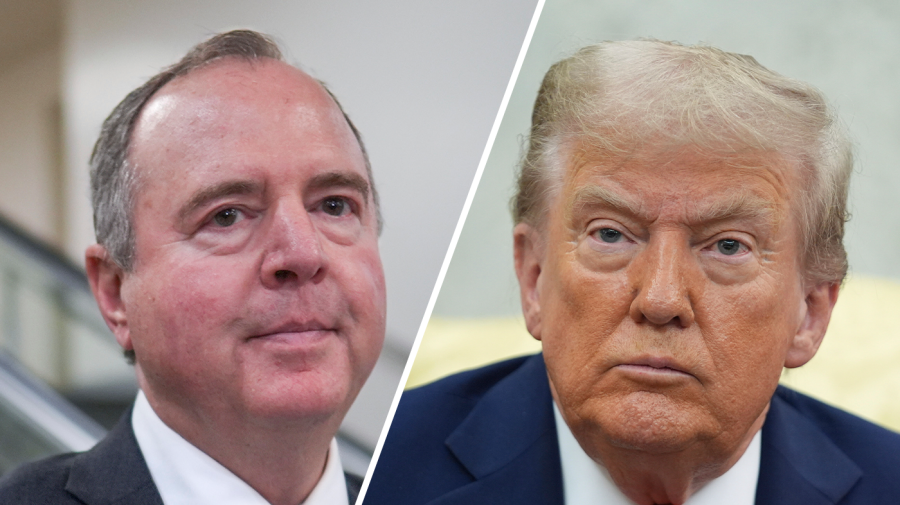
特朗普总统周五宣布,计划与一群共和党和民主党参议员合作推动立法,以振兴美国电影产业。这是在其政党即将于1月移交国会两院控制权之际展现的两党合作姿态。
President Trump announced plans to pursue legislation to boost the U.S. film industry alongside a group of Republican and Democratic senators, a show of bipartisanship as his party prepares to hand over both chambers of Congress in January.
总统表示,他将与民主党参议员亚当·希夫(加利福尼亚州)、拉斐尔·沃诺克(佐治亚州)、亚历克斯·帕迪亚(加利福尼亚州)、马克·沃纳(弗吉尼亚州)、克里斯·库恩斯(特拉华州)和迪克·德宾(伊利诺伊州),以及共和党参议员蒂姆·斯科特(南卡罗来纳州)、约翰·科宁(得克萨斯州)、史蒂夫·戴恩斯(蒙大拿州)、伯尼·莫雷诺(俄亥俄州)、蒂姆·希希(蒙大拿州)、汤姆·蒂利斯(北卡罗来纳州)和凯蒂·布里特(阿拉巴马州)在该立法上合作。
The president said Friday he will cooperate on the legislation with Democratic Sens. Adam Schiff (Calif.), Raphael Warnock (Ga.), Alex Padilla (Calif.), Mark Warner (Va.), Chris Coons (Del.) and Dick Durbin (Ill.), as well as GOP Sens. Tim Scott (S.C.), John Cornyn (Texas), Steve Daines (Mont.), Bernie Moreno (Ohio), Tim Sheehy (Mont.), Thom Tillis (N.C.) and Katie Britt (Ala.).
特朗普在周五晚间于Truth Social发帖承诺,将把电影产业带回美国本土。他说,一些美国制片公司在近期上映的影片中选择在别处拍摄,例如加拿大。
In a Friday evening post on Truth Social, Trump promised to bring the film industry back home to the U.S. as some American production companies behind recent releases have opted to shoot their movies elsewhere, such as in Canada.
特朗普说:“每个人都对电影电视产业有强烈感情——我也是,我们都想挽救它。它是‘美国制造’,必须‘留在美国’。重要的是,该法案通过后,将‘极大地’正面影响数十万蓝领工人。”
“Everyone feels strongly about the Motion Picture and Television Industry — and so do I, and we all want to save it. It was MADE IN AMERICA, and must STAY IN AMERICA,” Trump said. “Importantly, hundreds of thousands of Blue Collar Workers will be positively affected, BIG TIME, by the passage of this Bill.”The bill behind Trump’s calls is the Motion Picture, Television and Entertainment Revitalization Act — introduced in the Senate in September. It would provide a 20 percent tax incentive to production companies looking to film in the U.S. — seeking to compete with similar offers other countries provide.
特朗普呼吁背后的法案是《电影、电视和娱乐振兴法案》——该法案于9月在参议院提出。它将为在美国拍摄的制片公司提供20%的税收激励——旨在与其他国家提供的类似优惠竞争。
Forty-five percent of all U.S. movies and TV shows were filmed internationally last year, up from around 33 percent four years ago, according to Schiff — who championed the legislation. And data from production data company ProdPro shows the U.S. accounted for just 38 percent of global film production in the first quarter of 2026, down from 52 percent four years ago.
据该法案的倡导者希夫称,去年美国所有电影和电视剧中有45%是在国外拍摄的,高于四年前的约33%。制片数据公司ProdPro的数据显示,2026年第一季度,美国仅占全球电影制作的38%,低于四年前的52%。
This spring, Schiff held an event highlighting the grim reality facing Hollywood — that money is flowing to other countries that offer tax credits instead of the U.S.
今年春天,希夫举办了一场活动,凸显好莱坞面临的严峻现实——资金正流向提供税收抵免的其他国家,而非美国。
Industry leaders have increasingly pushed for Congress to act — with Trump’s support — to create incentives to bring filmmaking back home. A September Motion Picture Association report projected that a federal incentive program would double film and TV production in the U.S. by 2032.
业界领袖日益推动国会采取行动——在特朗普的支持下——制定激励措施,将电影制作带回国内。美国电影协会9月发布的一份报告预测,联邦激励计划将使美国的电影和电视制作量在2032年前翻一番。
According to the report, the proposed 20 percent credit would also create around 143,000 production jobs per year.
根据该报告,拟议的20%税收抵免每年还将创造约14.3万个制作岗位。特朗普表示激励措施仍将推出,并补充说政府知道如何为其买单。
Trump suggested the incentives would still be coming, adding that the government knows how to pay for them.
特朗普周五晚间表示:“用于这些税收激励的资金,将由流入国库的资金以十倍偿还。正在例行安排与两党领袖的会晤,以完成此事!”
“The amount of money spent on these Tax Incentives will be made up tenfold by the money pouring into the Treasury’s coffers. Meetings are being set up, routinely, with the Leaders of both Parties in order to, GET THIS DONE!”Trump said Friday evening.
在共和党遭遇中期选举惨败——至少失去八个参议院席位和数十个众议院席位——之后,特朗普最初表示愿意与民主党合作,提出两党移民改革作为可能的共识点之一。
After Republicans’ sweeping midterm defeat — losing at least eight Senate seats and dozens of House seats — Trump initially said he was open to working with Democrats, naming bipartisan immigration reform as one possible point of agreement.
尽管总统在两党合作问题上释放了混合信号,包括提拔移民强硬派斯蒂芬·米勒为幕僚长,但在电影激励措施上与民主党合作,可能预示着更多两党合作的到来。
Though the president has sent mixed signals on bipartisan cooperation, including promoting immigration hardliner Stephen Miller to chief of staff, cooperating with Democrats on film incentives is a possible sign of more bipartisanship.