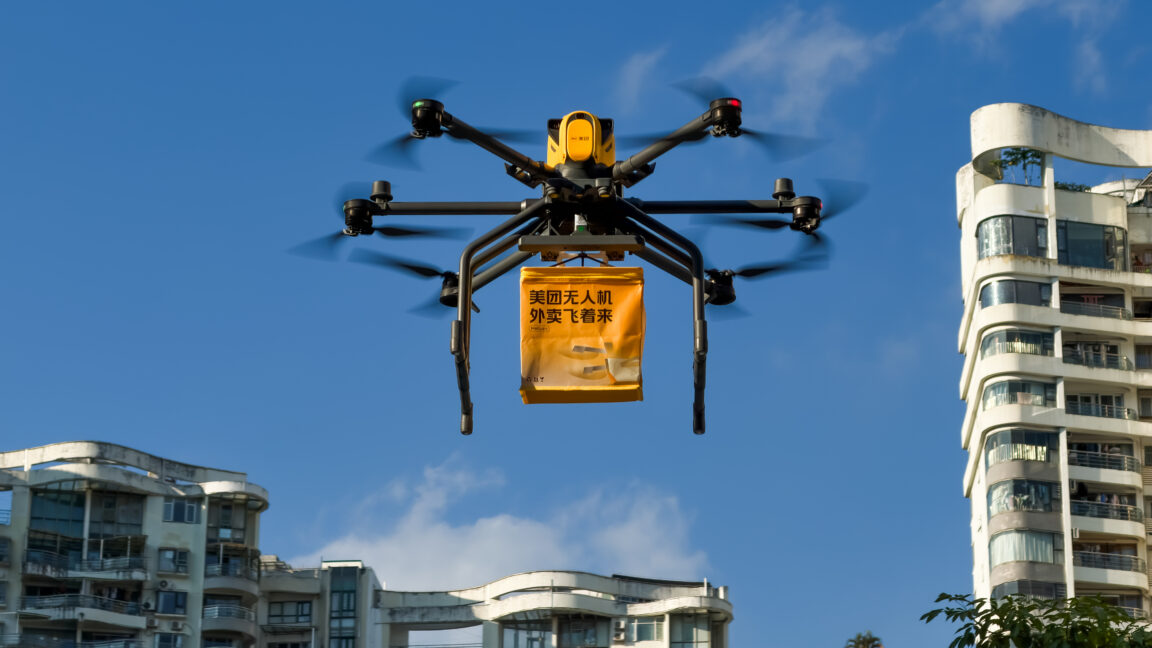
8月,亚马逊宣布计划到2026年底将其Prime Air无人机送货项目扩展到“近500个城市和城镇”。加上DoorDash和Zipline(与Uber和沃尔玛合作)的类似无人驾驶空中送货项目,这一扩张表明,飞行机器人将包裹投放到郊区草坪上很快将变得司空见惯。
In August, Amazon announced plans to expand its Prime Air delivery drone program to “nearly 500 cities and towns by the end of 2026." Combined with similar uncrewed aerial delivery programs from DoorDash and Zipline (in partnership with Uber and Walmart), the expansion suggests that flying robots dropping their payloads onto suburban lawns will soon be commonplace.
对许多人来说,送货无人机不过是个新奇事物,偶尔干出点荒唐事还能博人一笑。但对另一些人而言,其日益普及可能是一场噩梦。随着即时送货行业扫清了美国联邦航空管理局(FAA)对视距外快速送货的最后障碍,全球越来越多的人患有由无人机触发的创伤后应激障碍或其他焦虑相关障碍。
For many people, delivery drones will be little more than a novelty, occasionally good for a laugh when one does something ridiculous. For others, though, their growing use could be a nightmare. As the instant delivery industry clears the last FAA hurdles to rapid deliveries beyond an operator's line of sight, an increasing number of people worldwide are living with post-traumatic stress disorder or other anxiety-related disorders triggered by drones.
在乌克兰持续的战争以及以色列对黎巴嫩和加沙的袭击中,各类武器化无人机的使用已引发一些心理健康专业人士称为“恐无人机症”的流行现象。虽然相对较少的美军曾成为伊朗、伊斯兰国(ISIS)和伊朗支持的民兵在中东飞行的无人机袭击目标,但即使未直接遭受袭击的人,也可能仅因新闻和社交媒体上大量流传的袭击视频而产生焦虑。
The use of all manner of weaponized drones in the ongoing war in Ukraine and in Israeli attacks on Lebanon and Gaza has already produced an epidemic of what some mental health professionals have dubbed “dronophobia.”And while relatively few US troops have been targeted by drones flown by Iran, ISIS, and Iran-backed militias throughout the Middle East, even those who have not directly been attacked may experience anxiety simply because of the ample video footage of attacks circulating in news and social media.