特朗普不仅会迟到东南亚峰会,而且会迟到很多。特朗普总统将在会议接近尾声时抵达马尼拉,这表明美国政策已让该地区处于在华盛顿与北京之间寻求平衡的境地。
Trump Won’t Just Be Late to a Southeast Asia Summit. He’ll Be Really Late. President Trump will arrive in Manila as the meeting is wrapping up, a sign of how U.S. policy has left the region balancing between Washington and Beijing.
连续第二年,特朗普总统出席东南亚领导人年度聚会,以向美国视为战略和海上制衡中国的地区展示盟友关系。
For the second year in a row, President Trump is attending the annual gathering of Southeast Asian leaders, a show of alliance to a region that the United States sees as a strategic and maritime counterweight to China.
但特朗普先生将于周二才抵达今年在马尼拉举行的峰会,此时会议即将结束,预计他不会做出任何重大政策或外交举措。
But Mr. Trump will reach the gathering, held this year in Manila, only on Tuesday, just as the summit wraps up, and he is not expected to make any significant policies or diplomacy moves.
这种模棱两可的信号——更不用说特朗普的惩罚性关税——正加深东盟(东南亚国家联盟)内部普遍存在的一种看法,即美国不是一个可靠的伙伴。这使该集团不得不在华盛顿和北京之间寻求平衡,而东盟许多成员国与北京有着深厚的贸易伙伴关系。
Mixed signals like this — to say nothing of Mr. Trump’s punishing tariffs — are adding to a widespread belief within ASEAN, the Association of Southeast Asian Nations, that the United States is not a reliable partner. That leaves the bloc balancing between Washington and Beijing, with which many of its members have deep trade partnerships.
“他们已经认识到美国不可靠,因此大量的对冲策略都是远离美国的,”前美国驻越南大使泰德·奥修斯说。
“They’ve learned that the United States is not reliable, so a lot of the hedging has been away from the United States,” said Ted Osius, a former U.S. ambassador to Vietnam.
菲律宾作为美国在亚洲最古老的安全盟友,为这种平衡术提供了一个观察窗口。
The Philippines, America’s oldest security ally in Asia, provides a window into this balancing act.
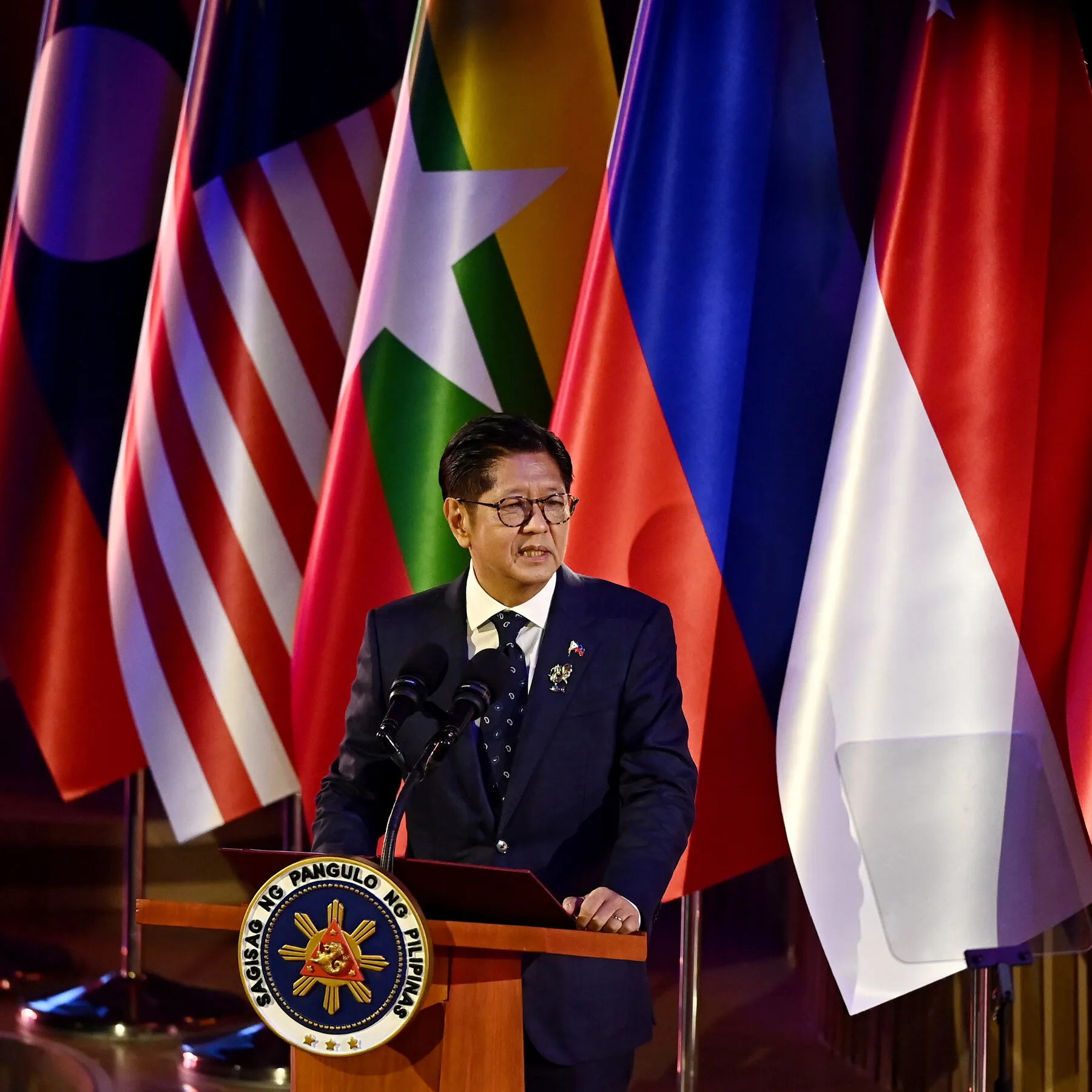
三年前上任后,费迪南德·R·马科斯 Jr. 总统扭转了其前任亲华的倾向,转而回归美国。这一立场导致菲律宾与中国船只在南海发生多次紧张对峙,马尼拉和北京在该海域存在领土主张争端。
After taking office three years ago, President Ferdinand R. Marcos Jr. reversed his predecessor’s tilt toward China and pivoted back toward the United States. That stance contributed to many tense encounters between Filipino and Chinese vessels in the South China Sea, where Manila and Beijing have competing territorial claims.