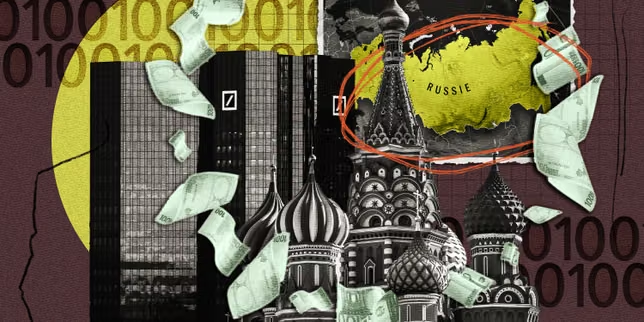
德意志银行对与俄罗斯相关的风险和丑闻的处理,完美诠释了银行业一个众所周知的两难困境:如何在追求利润与合规要求之间取得平衡?
Deutsche Bank's handling of the risks and scandals linked to Russia perfectly illustrates a well-known dilemma in the banking sector: How do you reconcile the pursuit of profit with compliance requirements?
对“深度调查德意志银行”调查数据的分析显示,这家德国银行在与富有但备受争议的俄罗斯寡头、国有企业和金融机构打交道时,往往将商业利益置于首位。这经常令集团内部负责打击金融犯罪的合规官员,以及负责维护银行声誉的团队感到沮丧。
alysis of data from the "Inside Deutsche Bank" investigation shows that the German bank often prioritized business interests, even when dealing with wealthy but controversial Russian oligarchs, state-owned companies and financial institutions. This frequently frustrated the compliance officers responsible for fighting financial crime within the group, as well as the teams charged with protecting the bank's reputation.
甚至在2019年5月,一位高管在风险委员会会议上提出了这一问题——该委员会负责就战略向银行监事会提供建议:“根本问题是,为什么德意志银行要为了如此微薄的利润经营这项[俄罗斯]业务?”官方说法是,该银行基于对客户的审慎分类,实施了稳健的框架:可由其子公司在当地处理的客户,或需要“上报”至区域层面、德国总部,甚至因美国法律风险而上报至纽约的客户。
So much so that, in May 2019, an executive raised the issue at a risk committee meeting – a body tasked with advising the bank's supervisory board on strategy: "The fundamental question is why DB runs this [Russian] business for such a low profit." Officially, the bank implemented robust frameworks based on a careful classification of clients: those that could be handled locally by its subsidiary, or those that required "escalation" to the regional level, the headquarters in Germany, or even New York for legal risks in the US.
例如,接受一名新的俄罗斯客户,可能需要由多个内部委员会和团队(合规、制裁与禁运、反金融犯罪、声誉风险委员会)进行审查。“发现弱点”俄罗斯于2014年吞并克里米亚,标志着该银行开始稳步撤出这个复杂的国家,尽管该国自19世纪末以来一直是其历史市场。涉及该银行的众多金融和法律丑闻,包括在俄罗斯的案件以数亿美元与美国当局达成和解,也促成了德意志银行的变革。
Accepting a new Russian client, for example, might require review by several internal committees and teams (compliance, sanctions and embargoes, anti-financial crime, reputational risk committee). 'Weaknesses identified' The annexation of Crimea by Russia in 2014 marked the start of a steady withdrawal by the bank from a complex country, which nevertheless had been a historic market since the late 19 century. Numerous financial and legal scandals involving the bank, including cases in Russia that were settled with US authorities for hundreds of millions of dollars, also contributed to changes at Deutsche Bank.