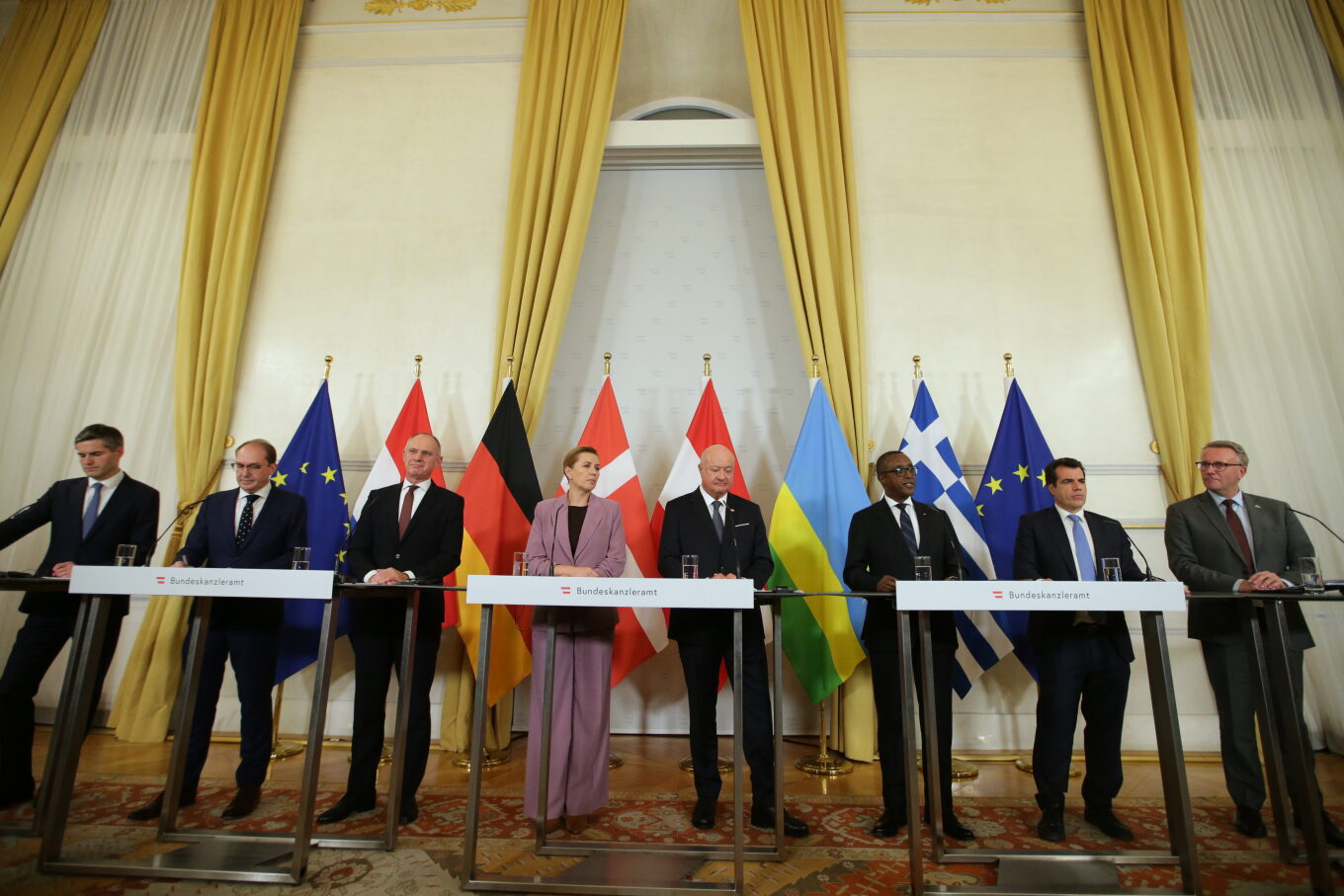
萨姆·麦克尼尔、克劳迪娅·乔巴努 布鲁塞尔报道 —— 一组欧洲国家周一宣布,他们计划在卢旺达建立一个“移民中心”,从明年起可将被拒绝的庇护申请者送往该地。
SAM McNEIL, CLAUDIA CIOBANU BRUSSELS — A group of European countries announced on Monday that they aim to set up a “migrant hub” in Rwanda where rejected asylum-seekers could be sent from next year.
欧盟多年来一直致力于收紧移民规则,减少寻求庇护者进入这27国集团的人数,并增加对无权停留的移民的遣返力度。将人员送往欧洲境外的中心已成为核心举措之一。以下是促成该协议的一系列事件时间线:2015年:超过100万人——绝大多数来自饱受战火蹂躏的叙利亚——抵达欧洲寻求庇护,这是二战以来当时影响欧洲大陆的最大移民危机。
The European Union has worked for years to tighten migration rules, push down the number of asylum-seekers coming to the 27-nation bloc and increase deportations of migrants who aren’t entitled to stay. Sending people to centers outside Europe has emerged as a central element. Here’s a timeline of events that led to this agreement: 2015: Over 1 million people — the majority from war-stricken Syria — arrive in Europe seeking asylum, in what was at the time the largest migration crisis impacting the continent since World War II.
2016年6月:英国在公投中投票决定退出欧盟,此前脱欧派在竞选期间利用排队移民的画面作为警示,暗示留在欧盟将面临此类局面。
June 2016: The U.K. votes to leave the European Union in a referendum following a campaign during which those favoring Brexit use images of lines of migrants as a warning of what staying in the EU would entail.
2018年9月:随着选民推高一个以反移民情绪和政策为竞选纲领的政党,瑞典加入欧洲右转行列。此前德国、奥地利和意大利已出现类似转向,均是对2015年移民危机的反弹。丹麦提出一个后来被搁置的想法,计划将移民遣送至一个曾作为传染性动物疾病研究实验室的偏远岛屿。
September 2018: Sweden joins Europe’s move to the right as voters boost a party that campaigned on anti-migrant sentiment and policies. It follows similar shifts in Germany, Austria and Italy as part of a backlash to the 2015 migration crisis. Denmark floats an idea it later scraps to deport migrants to a remote island once used as a research laboratory for contagious animal diseases.
2020年9月:丹麦任命一名特使,旨在强化欧盟移民政策,包括在欧盟以外的一个或多个国家设立移民接待中心,以减少移民在丹麦寻求庇护的动机,并改善对被拒庇护申请者的遣返工作。
September 2020: Denmark appoints a special envoy to toughen EU migration policies including setting up migrant reception centers in one or more countries outside the EU to diminish the incentive for migrants to seek asylum in Denmark and improving the deportation of rejected asylum-seekers.
2021年4月:在中左翼社会民主党领导的政府总理梅特·弗雷泽里克森推出“零庇护申请者”愿景后,丹麦开始撤销部分叙利亚难民的居留许可。
April 2021: After Danish Prime Minister Mette Frederiksen, leading a center-left Social Democratic-led government, rolls out a vision of having “zero asylum-seekers,” Denmark begins revoking the residency permits of some Syrian refugees.
2022年4月:英国宣布与卢旺达达成协议,将部分寻求庇护者送往数千英里外的东非国家卢旺达——英国政府称该计划将阻止人口走私者让绝望的移民踏上横渡英吉利海峡的危险旅程。
April 2022: Britain announces a deal with Rwanda to send some asylum-seekers thousands of miles to the East African country — a plan it says will stop people-smugglers sending desperate migrants on treacherous journeys across the English Channel.
2023年11月:英国最高法院裁定,将寻求庇护者送往卢旺达的协议非法,因为他们在那里不会安全。保守党政府表示,无论裁决如何,都将把移民送往该非洲国家。意大利总理梅洛尼与阿尔巴尼亚总理拉马达成一项为期五年的协议,由阿尔巴尼亚庇护每月多达3000名在国际水域被意大利海岸警卫队救起的移民。
November 2023: The U.K. Supreme Court rules that the deal with Rwanda to return asylum-seekers there is unlawful because they would not be safe there. The Conservative government says it will send migrants to the African country regardless. Italian Premier Giorgia Meloni and her Albanian counterpart, Edi Rama, strike a five-year deal for Albania to shelter up to 3,000 migrants picked up by the Italian coast guard in international waters each month.
2024年6月:极右翼政党在欧洲议会选举中取得重大进展,动摇了传统政治势力。在法国,总统马克龙宣布提前大选,结果助推了反移民的极右翼势力,削弱了他自己的政府。
June 2024: Far-right parties make major gains in elections to the Parliament of the European Union, rattling traditional political powers. In France, President Emmanuel Macron calls a snap election that results in a boost for the anti-migration far right, weakening his own government.
2024年7月:保守党在大选中失利、工党在首相斯塔默爵士领导下执政后不久,英国废除了卢旺达移民协议。
July 2024: The U.K. scraps the Rwanda migration deal shortly after the Conservatives are defeated in an election, ceding power to the Labour Party under Prime Minister Sir Keir Starmer.
2024年10月:意大利政府正式在阿尔巴尼亚开设两个中心,计划处理在国际水域被拦截的男性移民。不到一个月后,意大利一家法院裁定反对右翼政府将12名移民拘留在新中心的做法。
October 2024: Italy’s government formally opens two centers in Albania where it plans to process male migrants who are intercepted in international waters. Less than a month later, a court in Italy rules against the right-wing government’s move to detain 12 migrants at the new centers.
2025年1月:意大利一家上诉法院拒绝批准对在阿尔巴尼亚被拘留的43名寻求庇护者进行快速驱逐。这些移民是在与阿尔巴尼亚达成的为期五年的协议下,乘坐意大利海军舰艇被转移至阿尔巴尼亚的49人中的一部分。
January 2025: An Italian appeals court refuses to approve the speedy expulsion of 43 asylum seekers detained in Albania . The migrants were among 49 people who were transferred to Albania on an Italian naval ship under the five-year agreement with Albania .
2025年3月:梅洛尼政府批准一项法令,将阿尔巴尼亚快速处理中心的用途扩大至收容已获驱逐令的被拒庇护申请者。自去年10月开放以来,阿尔巴尼亚中心因法律障碍且在人权团体广泛反对声中,基本处于闲置状态。
March 2025: The Meloni government approves a decree expanding the use of the Albanian fast-track processing centers to include the detention of rejected asylum-seekers with deportation orders. The Albanian centers have remained substantially inactive since their opening in October, due to legal hurdles and amid wide opposition from human rights groups.
2025年4月:意大利当局将40名无许可留在该国的移民转移至阿尔巴尼亚中心。
April 2025: Italian authorities transfer 40 migrants with no permission to remain in the country to the Albanian centers.
2026年3月:卢旺达向一个国际仲裁小组称,英国在2024年废除的难民安置协议下仍欠其1亿英镑(1.34亿美元)。法庭驳回了卢旺达的索赔。
March 2026: Rwanda tells an international arbitration panel that Britain still owes it 100 million pounds ($134 million) under the refugee resettlement deal scrapped in 2024. The court dismisses Rwanda’s claim.
2026年3月:欧洲议员投票通过放宽在欧盟外设立新移民拘留中心(称为“遣返枢纽”)的规定。任何欧盟国家均可自行或组成小型联盟启动谈判,将移民遣返至27国集团外尚未建成的设施,而非其原籍国。
March 2026: European lawmakers vote to ease the setting up of new migrant detention centers outside the European Union, known as “return hubs.”Any EU nation can start negotiating on its own or in small coalitions to deport migrants not to their home countries but to facilities yet to be built outside the 27-nation bloc.
2026年6月:欧盟三大主要机构——欧洲议会、欧盟委员会和欧洲理事会——就移民政策达成协议,以增加遣返并允许成员国就所谓“遣返枢纽”达成协议。
June 2026: The three main bodies of the EU, the European Parliament, the European Commission and the European Council, reach agreement over migration policy to increase deportations and to allow member nations to make deals for so-called return hubs.
2026年8月:卢旺达政府一名发言人为设立遣返枢纽的做法辩护,称其政府与欧洲国家及其他国家谈判、潜在接收不获准在别处居住的庇护申请者是“自然的”。
August 2026: A spokesperson for the Rwandan government defends the practice of establishing return hubs, saying it is “natural” for her government to negotiate with European countries and others to potentially host asylum seekers who are not allowed to live elsewhere.
2026年9月:丹麦与其他四个欧盟国家就非欧盟国家的“遣返枢纽”模式达成一致,并表示希望最早于2027年开始向这些设施送移民。乔巴努波兰华沙报道。
Sept. 2026: Denmark and four other European Union countries agree on a model for “return hubs” in non-EU nations and say they hope to begin sending migrants to the facilities as early as 2027. Ciobanu reported from Warsaw, Poland.