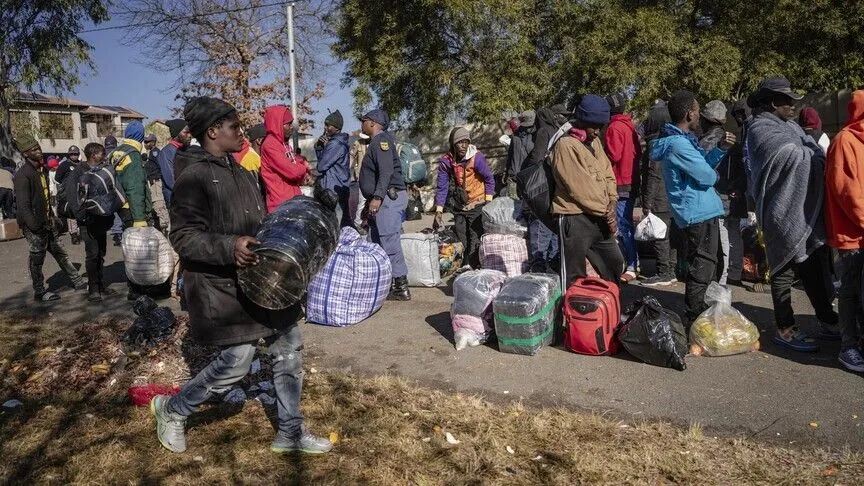
五个欧盟国家和卢旺达周一宣布,正在探讨为面临从欧洲遣返的移民设立一个遣返中心,目标是到2027年开始转移人员,此举引发了关于法律保障和对被送往欧盟以外人员责任归属的疑问。
Five EU countries and Rwanda announced Monday that they are exploring the establishment of a return hub for migrants facing removal from Europe, aiming to begin transfers by 2027 and raising questions over legal safeguards and responsibility for those sent outside the bloc.
德国、奥地利、丹麦、希腊和荷兰在一份联合声明中表示,将采取“循序渐进的方式”推动与卢旺达达成安排。
Germany, Austria, Denmark, Greece and the Netherlands said in a joint statement that they would pursue a “step-by-step approach” to reaching an arrangement with Rwanda.
各国政府表示,该安排将遵守“欧盟、卢旺达和国际法”,包括人权义务。
The governments said the arrangement would comply with “EU, Rwandan and international law,” including human rights obligations.
奥地利内政部长格哈德·卡尔纳说:“从今天起,将与合作伙伴国卢旺达开始就实施事宜进行具体谈判。” 这一倡议是在欧盟通过新的遣返规则之后提出的,新规则允许成员国在遵守国际人权义务的前提下,在欧盟以外设立设施。
Austrian Interior Minister Gerhard Karner said: “Starting today, concrete negotiations with partner country Rwanda will begin for the implementation.”The initiative follows the EU’s adoption of new return rules allowing member states to establish facilities outside the bloc, subject to international human rights obligations.
根据欧洲理事会10月1日通过的欧盟新《遣返条例》,成员国可将无合法居留权且已收到遣返决定的非欧盟公民转移至第三国设施。该条例将无人陪伴未成年人排除在此类安排之外。
Under the EU’s new Return Regulation, adopted by the European Council on Oct. 1, member states may transfer non-EU nationals who have no legal right to remain and have received return decisions to facilities in third countries. The regulation excludes unaccompanied minors from such arrangements.
根据联合声明,拟议中的卢旺达中心将仅限于非法滞留在五个参与国之一、且面临可强制执行的遣返或驱逐决定的移民。
According to the joint statement, the proposed Rwanda hub would be limited to migrants staying illegally in one of the five participating countries who are subject to enforceable return or removal decisions.
各国政府表示,被转移者既不符合国际保护资格,也无其他合法依据留在参与国。
The governments said those transferred would neither qualify for international protection nor have another legal basis to remain in the participating countries.
与非欧盟成员国英国已取消的卢旺达方案不同——该方案涉及将寻求庇护者送往国外处理申请——欧洲这一倡议针对的是已处于遣返程序中的移民。
Unlike non-EU member Britain’s canceled Rwanda scheme, which involved sending asylum seekers abroad for their claims to be processed, the European initiative targets migrants already subject to return procedures.
然而,庇护申请被拒并不自动剥夺个人免受迫害或严重伤害的保护权利。
However, a rejected asylum application does not automatically remove an individual’s entitlement to protection against persecution or serious harm.
“返欧中心”通常旨在安置身处欧盟领土以外的人员,以便在安排他们最终返回原籍国的同时对其进行安置。根据拟议模式,被转移至卢旺达的移民将有机会融入卢旺达社会。
Return hubs are generally intended to accommodate people outside EU territory while arrangements are made for their eventual return to their countries of origin. Under the proposed model, migrants transferred to Rwanda would have an opportunity to integrate into Rwandan society.
他们也可以自愿前往原籍国,或前往另一个可以合法居住或定居的国家。
They could also voluntarily travel to their countries of origin or another country where they can legally reside or settle.
联合声明称,国际组织和这东非国家将支持融入社会和自愿返回两方面工作。
The joint statement said international organizations and the East African country would support both integration and voluntary return.
声明补充道,国际移民组织(IOM)正在提供技术意见,并应卢旺达请求,准备在采取适当保障措施的前提下协助移民。
The International Organization for Migration (IOM) is providing technical input and, at Rwanda’s request, is prepared to assist migrants with appropriate safeguards, it added.
然而,声明并未明确住宿安排、行动自由、就业权利,以及个人可在卢旺达停留多长时间。
However, the statement did not specify accommodation arrangements, freedom of movement, employment rights, or how long individuals could remain in Rwanda.
仍有疑问待解:无法返回原籍国或在卢旺达定居的移民将何去何从,包括由哪个当局负责他们的法律地位及任何后续遣返事宜。联合声明也未明确根据拟议安排最多可向卢旺达转移多少移民。
Questions remain over what would happen to migrants unable to return to their countries of origin or settle in Rwanda, including which authorities would be responsible for their legal status and any subsequent removals. The joint statement also did not specify how many migrants could be transferred to Rwanda under the proposed arrangement.
《返欧条例》允许成员国通过与非欧盟政府达成的协议或安排设立“返欧中心”。
The Return Regulation permits member states to establish return hubs through agreements or arrangements with non-EU governments.
然而,欧盟理事会表示,此类协议只能与“尊重国际人权标准、包括不推回原则”的国家签署。欧盟基本权利署(FRA)强调,“返欧中心”不得在基本权利保护之外运作。
However, the council says such agreements may only be concluded with countries that “respect international human rights standards, including the principle of non-refoulement.”The EU Agency for Fundamental Rights (FRA) has stressed that return hubs cannot operate outside fundamental rights protections.
该机构表示,每一次转移都需要进行个别评估并提供有效的法律保障,包括防止任意拘留的保护和获得司法救济的途径。
The agency says each transfer requires an individual assessment and effective legal safeguards, including protection against arbitrary detention and access to judicial remedies.
因此,欧盟法律框架的存在并不自动意味着向卢旺达的转移将是合法的。
Therefore, the existence of an EU legal framework does not automatically establish that transfers to Rwanda would be lawful.
联合声明还指出,欧盟委员会以观察员身份参与了讨论,为如何依据欧盟法律实施相关条款的考量作出了贡献。获得国际保护仍是核心法律考量。
The joint statement also said the European Commission took part in discussions as an observer, contributing to consideration of how the relevant provisions could be implemented in accordance with EU law. Access to international protection remains a central legal consideration.
即使在庇护申请被拒后,新证据或情况变化可能要求当局重新评估遣返是否会使个人面临被禁止的待遇。当局在执行移送前必须评估适用的保护义务。
Even after an asylum rejection, new evidence or changed circumstances may require authorities to reassess whether removal would expose an individual to prohibited treatment. Authorities must assess applicable protection obligations before carrying out a transfer.
根据《欧盟基本权利宪章》和《欧洲人权公约》,个人必须能够获得有效救济,以对可能使其面临酷刑或不人道、有辱人格待遇的遣返决定提出质疑。
Under the EU Charter of Fundamental Rights and the European Convention on Human Rights, individuals must have access to effective remedies to challenge removal decisions that could expose them to torture or inhuman or degrading treatment.
如果存在可辩论的此类待遇风险,有效救济必须能够在投诉得到审查前阻止遣返。
Where an arguable risk of such treatment exists, an effective remedy must be capable of preventing removal before the complaint is examined.
这引发了关于获得法律援助、独立审查,以及在相关法律挑战仍未解决时移送能否继续进行的问题。
This raises questions about access to legal assistance, independent review, and whether transfers could proceed while relevant legal challenges remain unresolved.
核心原则是不推回原则,该原则禁止将个人移送至面临迫害、酷刑或其他被禁止待遇的地方。
The central principle is non-refoulement, which prohibits transferring individuals to places where they face persecution, torture, or other prohibited treatment.
这一义务体现在《1951年难民公约》、《联合国反酷刑公约》和欧洲人权法中。
The obligation is reflected in the 1951 Refugee Convention, the UN Convention against Torture, and European human rights law.
它还禁止间接或连锁推回,即个人被送往一个中间国,随后该国再将他们移送至面临严重伤害的地方。
It also prohibits indirect or chain refoulement, in which individuals are sent to an intermediary country that subsequently transfers them somewhere they face serious harm.
卢旺达此前曾同意根据英国政府的一项计划接收寻求庇护者,但英国最高法院于2023年11月裁定该安排非法。
Rwanda previously agreed to receive asylum seekers under a British government scheme, but the UK’s Supreme Court ruled the arrangement unlawful in November 2023.
法官认定,有充分理由相信存在“真实的推回风险”,原因是卢旺达的庇护程序存在缺陷。
The judges found substantial grounds for believing there was a “real risk of refoulement” due to deficiencies in Rwanda’s asylum procedures.
尽管欧洲提案与英国安排有所不同,各国政府仍须评估移送的安全性以及抵达后可获得的保护。谁将承担法律责任?
Although the European proposal differs from the British arrangement, governments must still assess the safety of transfers and the protections available after arrival. Who would be legally responsible?
管理返航枢纽和向移民提供服务的责任,与因潜在侵犯人权行为而需承担的法律问责是两码事。
Responsibility for managing return hubs and providing services to migrants is distinct from legal accountability for potential human rights violations.
根据协议,卢旺达可承担安置和某些移民程序的责任,而欧洲各国政府可能保留因其移送决定或持续参与而产生的义务。
Rwanda could assume responsibility for accommodation and certain immigration procedures under the agreement, while European governments could retain obligations arising from their transfer decisions or continued involvement.
欧盟基本权利署警告,成员国和欧盟机构可能仍需为与返航枢纽及后续移送相关的权利侵犯行为负责。
The FRA has warned that member states and EU agencies may remain accountable for rights violations connected to return hubs and subsequent transfers.
联合国难民署建议,在无法在合理期限内实现遣返原籍国时,将返航枢纽作为临时措施使用,同时强调对保护申请进行“充分且公正”的评估。
The UN refugee agency UNHCR has recommended that return hubs be used as temporary measures when return to a person’s country of origin cannot be achieved within a reasonable period, while emphasizing “full and fair” assessment of protection claims.
根据联合声明,联合国难民署正就遵守国际人权标准向参与国提供建议,同时寻求维护这五个欧盟成员国境内有需要者获得国际保护的渠道。
According to the joint statement, UNHCR is advising the participating governments on compliance with international human rights standards, while seeking to preserve access to international protection for those in need in the five EU states.
欧洲委员会人权专员迈克尔·奥弗拉赫蒂于7月也敦促参与国建立保障机制,包括风险评估、独立监督和司法审查。
Council of Europe Human Rights Commissioner Michael O’Flaherty in July also urged participating governments to establish safeguards, including risk assessments, independent monitoring, and judicial scrutiny.
联合声明未具体说明个案责任、监督或法律救济将如何在卢旺达与欧洲各国政府之间划分。
The joint statement did not specify how responsibility for individual cases, monitoring, or legal remedies would be divided between Rwanda and the European governments.
虽然这五个欧盟国家将该倡议描述为“巨大突破”,但其最终影响和合法性将取决于协议条款、个别移送决定,以及人权保障措施在实践中是否得到落实。
While the five EU countries described the initiative as a “huge breakthrough,” its ultimate impact and legality will depend on the terms of the agreement, individual transfer decisions, and whether human rights safeguards are implemented in practice.