新加坡:近期跨境烟霾事件期间出现的虚假信息宣传活动,已将外国信息操纵与干预(FIMI)对新加坡稳定与安全构成的威胁清晰地摆在了聚光灯下。
SINGAPORE: Disinformation campaigns that occurred during the recent episode of transboundary haze have brought the threat of foreign information manipulation and interference (FIMI) to Singapore’s stability and security clearly into focus.
FIMI 是一个主要由欧盟创造并使用的术语,用于描述外国国家或非国家行为体实施的协调性、欺骗性和操纵性行为,旨在扭曲信息环境并影响目标国家、政府或社会。
FIMI is a term coined and used primarily by the European Union to describe coordinated, deceptive and manipulative behaviour by foreign state or non-state actors aimed at distorting the information environment and influencing a target country, government or society.
“全方位施压”式应对 《亚洲新闻台核查》(CNA Verify)上月的一篇文章指出,在新印两国寻求共同应对烟霾问题之际,社交媒体和网络上出现了数百条帖子,试图描绘新加坡干预印度尼西亚内部事务。
A “FULL COURT PRESS” APPROACH An article by CNA Verify last month highlighted hundreds of posts on social media and online which sought to portray Singapore’s hand in Indonesia’s affairs, at a time when the two countries were seeking to act against the haze problem.
这些推动或重复关于新加坡虚假且无根据指控的网络内容已超越烟霾议题本身,展示了虚假信息如何能动用多种杠杆,例如不同的叙事和放大手段。
The online content which pushed or repeated false and unfounded claims about Singapore went beyond the issue of haze, illustrating how disinformation can involve a host of levers, such as different narratives and methods of amplification.
第一个虚假指控源于全球指数提供商 MSCI 表示正考虑因治理问题降级印度尼西亚市场地位,导致印尼股市暴跌。
The first of the false claims stemmed from Indonesia’s stock market rout after global index provider MSCI said it was considering downgrading Indonesia’s market status over governance concerns.
数日后,印度尼西亚前贸易部长穆罕默德·卢特菲在网上发布的视频中指称,新加坡国家投资机构淡马锡和新加坡政府投资公司(GIC)影响了 MSCI 做出此举——这一说法遭到印尼证券交易所官员和新加坡官员否认。在其他视频中,卢特菲先生还公开批评新加坡对烟霾的应对。
Days later, former Indonesian trade minister Muhammad Lutfi alleged in videos posted online that Singapore’s state investors Temasek and GIC had influenced MSCI into the move – a claim denied by Indonesian stock exchange officials and Singaporean officials. In his other videos, Mr Lutfi also publicly criticised Singapore’s response to the haze.
尽管没有证据将卢特菲先生的言论与协调性的虚假信息宣传活动联系起来,但卢特菲先生系前官员且为真实人物,而非匿名或未经核实的网络账号,这意味着他的言论为当时出现的各种叙事增添了不同的色彩。
While there is no evidence linking Mr Lutfi’s comments to a coordinated disinformation campaign, the fact that Mr Lutfi is a former official and real person, as opposed to an anonymous or unverified online account, means his comments add a different complexion to the various narratives emerging around the time.
网络叙事很快试图将印度尼西亚随后宣布减少对新加坡的天然气出口,与卢特菲在 MSCI 的言论联系起来。网上还出现了关于新加坡驻雅加达大使与一名前印尼外交副部长及当地学者会面的虚构帖文。
Online narratives soon attempted to tie a subsequent announcement by Indonesia to reduce gas exports to Singapore with Mr Lutfi’s MSCI’s claim. There were also fictitious posts about a meeting between Singapore’s ambassador in Jakarta and a former Indonesian deputy foreign minister and local academic.
这些事态发展显示,网络与现实世界的内容和行动,可能对社会各阶层产生叠加效应。即使个别活动并非集中协调或策划,情况依然如此。
These developments show how online and real-world content and actions can potentially have a combined effect on various segments of a society. This would be the case even if the individual activities are not centrally coordinated or planned.
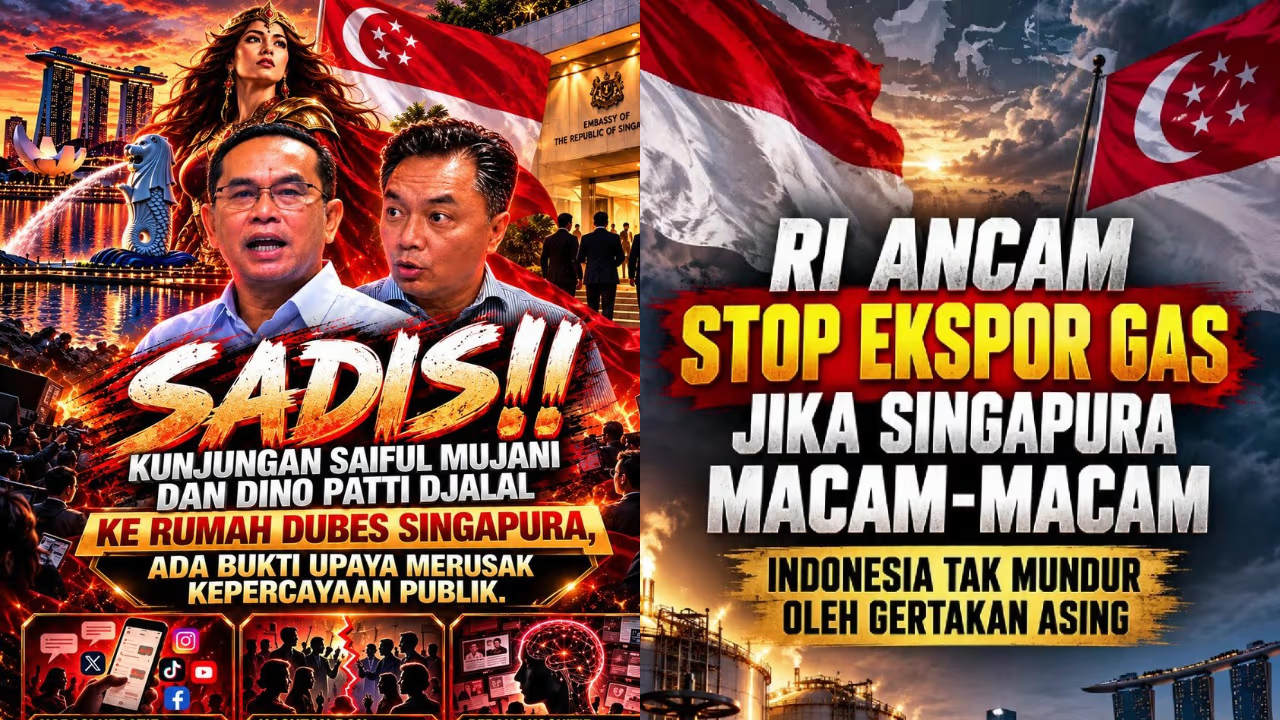
流传的谬误包括(左图)印尼知名人士造访新加坡驻印尼大使官邸的捏造行程;以及(右图)警告印尼将停止向新加坡出口天然气,并暗示新加坡在印尼市场危机中扮演了角色。(截图来源:X)根据同一份 CNA Verify 报道,其他手段还包括动用“水军”,即受雇利用社交媒体推送信息、淹没异见、大量转发评论,以制造某个叙事比实际更受欢迎的假象。
The falsehoods circulated included (left) a fabricated visit by prominent Indonesian figures to the home of the Singapore ambassador to Indonesia; and (right) warnings of Indonesia stopping gas exports to Singapore, while alluding to the latter's supposed role in Indonesia's market crisis. (Screengrabs: X) According to the same CNA Verify report, other efforts include the deployment of “buzzers”, or individuals who are paid to leverage social media to push messages, drown out other views, and repost and comment en masse to make a narrative look more popular than it is.
这些叙事与工具结合而成的,用体育打个比方,是一种“全场紧逼”式做法。这是一个篮球术语,形容一方在全场范围内对对手施加压力并运用多种战术,可视为虚假信息战术的一种转变。
What has emerged out of these various narratives and tools was – to use a sporting analogy – a “full court press” approach. This is a basketball term which describes a strategy where one team applies pressure and a range of tactics against its opponent across the entire length of the court, and can be seen as a change in disinformation tactics.
无法确认是谁指挥这些战术,也无法确认这些行动的议程,但这确实带有在世界其他地区(如乌克兰战争中)发起的 FIMI(外国信息操纵与干预)行动的特征。
It is not possible to confirm who directed these tactics nor the agenda of these efforts, but it does bear the hallmarks of FIMI campaigns that have been launched in other parts of the world, such as in the Ukraine war.
无论新加坡人是主要目标还是附带受害者,这种广泛的影响力或干预行动的最终效果,依然可能令人担忧。
And whether Singaporeans are the key target or collateral damage, the end effect of such a broad influence or interference campaign can still be troubling.
外国信息操纵与干预(FIMI)行动通常旨在操纵公众认知、影响政治决策,并推进恶意国家和非国家行为体的战略或国家利益。
IMPACT ON SINGAPORE FIMI operations typically seek to manipulate public perception, shape political decisions, and advance the strategic or national interests of malign state and non-state actors.
研究表明,此类行动往往旨在削弱公众信任和国际社会对目标国家机构(包括选举制度、主流媒体和政府程序)的信心。
Research has shown that such campaigns will often aim to erode public trust and international confidence in institutions including electoral systems, mainstream media and government processes in a target country.
同时,它们还试图利用现有的社会、种族、宗教或政治分歧制造混乱、激化矛盾、破坏社会凝聚力。
At the same time, they have sought to exploit existing social, ethnic, religious, or political divisions to create chaos, inflame tensions, and disrupt social cohesion.
最终,这可能导致试图影响政治结果、干预选举、左右重大政策决策或基建项目的公共辩论,以及抹黑政治候选人或人物。
Eventually, this could lead to attempts to influence political outcomes, interfere in elections, sway public debate on major policy decisions or infrastructure projects, and discredit political candidates or figures.
FIMI的影响可能是即时的,尤其是在危机时期部署时,人们本已担忧困惑。但如果其破坏了公民与政府之间的社会契约,或国际社会对某一国家的信任和认知,其长期影响可能更为显著。像新加坡这样的小国,并不豁免于此类潜在威胁,也无法免疫。
The effects of FIMI can be immediate, especially if deployed during times of crisis when people are already concerned and confused. But the long-term impact can be more significant if it undermines social compacts between citizens and government, or international trust and perception of a particular country. A small country like Singapore is not exempt nor immune from such potential threats.
目前尚不清楚近期的虚假信息行动是否专门针对新加坡或新加坡人。在某些情况下,鉴于所用语言,部分信息似乎是针对印尼国内受众的。
It is not clear if the recent disinformation campaigns were designed specifically to target Singapore or Singaporeans. In some cases, some of the messaging seemed targeted at a domestic Indonesian audience given the language used.
但仍可看出,所部署的各种叙事有可能让新加坡人对本国政府应对霾害的反应感到困惑。若关于新加坡操纵MSCI(摩根士丹利资本国际指数)的指控扎根,也可能影响该国的国际声誉,导致新加坡整体公信力受损。
But it is still possible to see how the various narratives deployed could potentially confuse Singaporeans when it came to their own government’s responses to the haze. There could also be impact to the country’s international reputation should the allegations of Singaporean manipulation of MSCI take root, resulting in a hit to Singapore’s credibility as a whole.
除了最新的霾事件,Black Dot Research 的事实核查团队还看到有内容声称中国对新加坡拥有过大的影响力,以及有内容描绘黄循财接任总理后,新加坡出现政治和经济动荡。问题是,可以采取什么措施来防御此类威胁。
Beyond the latest haze episode, the fact-checking team at Black Dot Research has also seen content claiming that China had outsized influence on Singapore, and others that have painted political and economic upheaval in Singapore after Mr Lawrence Wong took the helm as prime minister. The question then is what can be done to defend against such threats.
将信息韧性纳入全面防卫 新加坡的全面防卫策略为应对日益增长的外国信息操纵和干预威胁提供了一些启示。
INFORMATION RESILIENCE AS PART OF TOTAL DEFENCE Singapore’s Total Defence strategy offers some hints as to what might be needed to guard against the rising FIMI threat.
全面防卫于 1984 年推出,是一个包含六大支柱的国家概念——军事、民防、经济、社会、心理和数码——每个新加坡人都在其中扮演一份角色。
Introduced in 1984, Total Defence is a national concept consisting of six pillars – military, civil, economic, social, psychological and digital – in which every Singaporean has a part to play.
鉴于外国信息操纵和干预往往作用于社会的所有层面,像全面防卫这样整体性的策略将是恰当的回应。在六大支柱中,对心理防卫的重视以及最新增设的数码防卫,将成为未来应对潜在外国信息操纵和干预攻击最相关的对策。
Given that FIMI is often applied across all segments of a society, a holistic strategy like Total Defence would be an appropriate response. Of the six pillars, the focus on psychological defence and the most recent addition of digital defence would serve as the most relevant counters to potential FIMI attacks in the future.
基于我们对外国信息操纵和干预演变的了解,以及其攻击有多大程度部署在信息空间并寻求在认知层面影响目标受众,在新加坡的全面防卫策略中单独聚焦建设信息韧性或许也是必要的。
With what we know of FIMI’s evolution and how much of FIMI attacks are deployed in the information space and seek to impact target audiences at the cognitive level, a separate focus on building information resilience within Singapore’s Total Defence strategy may also be warranted.
信息韧性被定义为个人、组织和系统预判、吸收、适应并从信息环境中的中断、操纵或故障中恢复的能力。
Information resilience is defined as the ability of individuals, organisations and systems to anticipate, absorb, adapt to, and recover from disruptions, manipulation, or failures in the information environment.
提升在这一方面的意识和能力,将在打击虚假信息和网络谣言时补充数码防卫,同时也将在建设捍卫我们生活方式的集体意志、以及共同克服危机的决心时支持心理防卫。
Enhancing awareness and capabilities in this aspect will complement digital defence when it comes to combating disinformation and online falsehoods, while also supporting psychological defence when it comes to building collective will to defend our way of life, and the resolve to overcome crises together.
这将要求新加坡采取全民总动员的方式,涵盖政府行动,如立法和监管、公众宣传和教育,特别是针对更年轻、数字连接程度更高的世代,以及在社会各阶层发展批判性思维、媒体素养和认知技能。
Doing so would require Singapore to adopt a whole-of-nation approach that spans government actions such as legislation and regulation, public outreach and education, especially of younger and more digitally connected generations, and the development of critical thinking, media literacy and cognitive skills at all levels of society.
强大且可信的媒体部门的重要性,以及其他利益相关方的发展,如事实核查机构和专门研究外部信息操纵和干扰威胁的学术机构,也将至关重要。
The importance of a strong and credible media sector, and the development of other stakeholders such as fact-checkers and academic institutions specialising in the study of FIMI threats, will also be critical.
方伟杰是市场研究咨询公司 Black Dot Research 的创始人兼董事总经理,该公司运营一个独立的事实核查平台。他曾任提名议员,目前担任国防部战略传播专家小组主席。他为《亚洲新闻台》撰写月度专栏。
Nicholas Fang is founder and managing director of market research consultancy Black Dot Research, which operates an independent fact-checking platform. He is also a former Nominated Member of Parliament, and currently chairs an expert panel on strategic communications for the Ministry of Defence. He writes a monthly column for CNA.