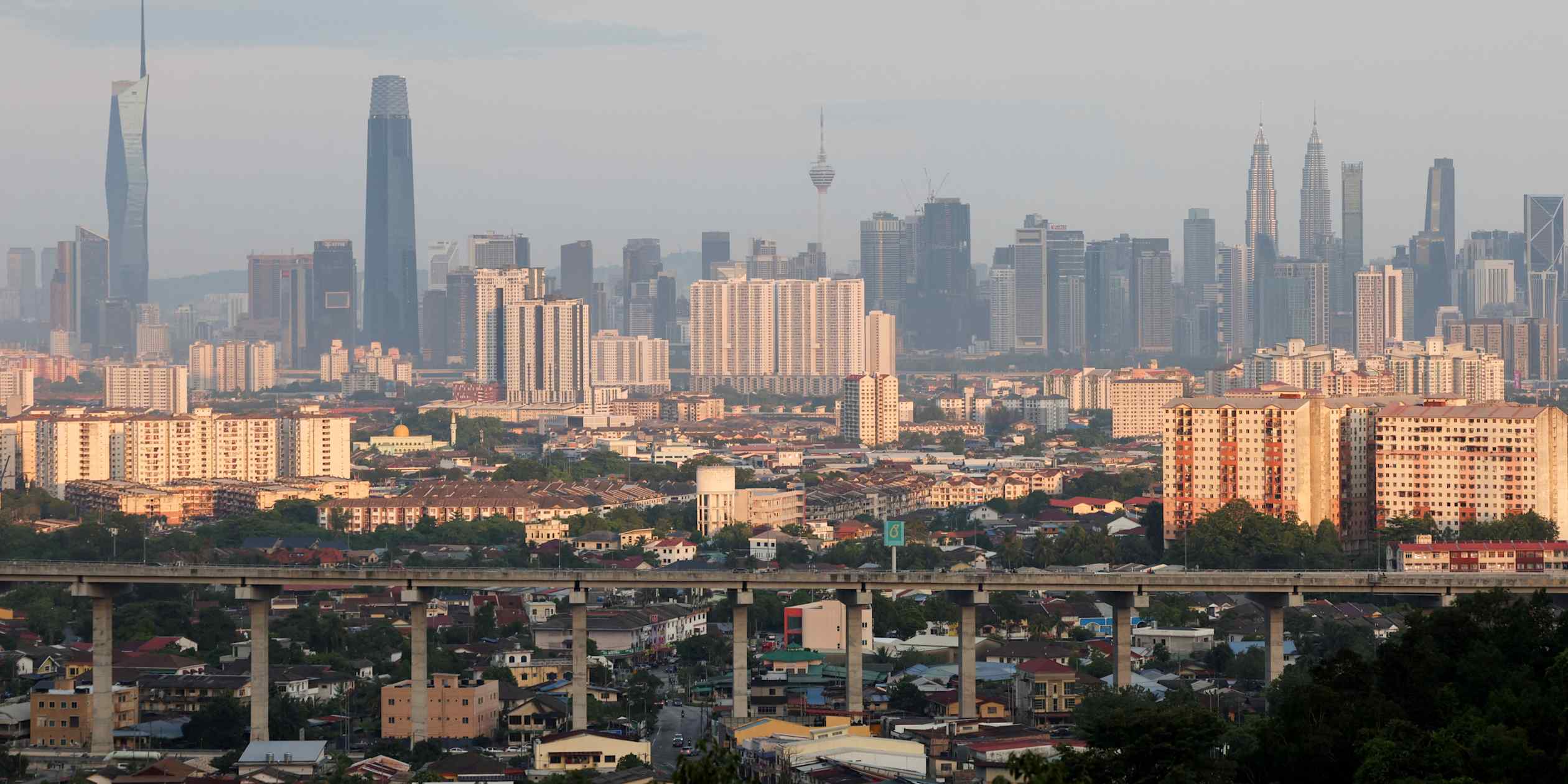
吉隆坡——马来西亚官方数据周三显示,马来西亚经济在7月至9月季度较去年同期增长5.5%,受私营部门投资增加以及由科技相关产业推动的出口表现强劲支持。
KUALA LUMPUR -- Malaysia's economy grew 5.5% in the July-September quarter from a year earlier, supported by higher private sector investment and stronger export performance driven by technology-related industries, according to official data released Wednesday.
该读数超过了政府的预估值和经济学家预期的5.3%,但低于4月至6月季度的6.0%增长。
The reading exceeded the government's advance estimate and economists' expectations of 5.3%, and lower than the 6.0% expansion in the April-June quarter.
马来西亚国家银行行长阿卜杜勒·拉希德·加富尔在新闻发布会上表示:“尽管存在外部不确定性,马来西亚有韧性的供应链有助于缓冲近期冲击的影响。”他表示,科技上行周期仍是该国增长的关键驱动力,而人工智能扩张继续支撑半导体需求。
"Despite the external uncertainty, Malaysia's resilient supply chains have helped to cushion the impact of the recent shocks," Bank Negara Malaysia Gov. Abdul Rasheed Ghaffour said during a press conference. He said the tech upcycle remains a key driver of the country's growth, while AI expansion continues to sustain demand for semiconductors.
作为经济最大支出组成部分的私人消费增长4.3%,而第二季度为4.8%。私人投资增长9.4%,公共投资增长3.0%。货物和服务出口增长25.2%,进口也增长26.7%,导致净出口增长5.7%。
Private consumption, the economy's largest expenditure component, grew 4.3%, compared with 4.8% in the second quarter. Private investment expanded 9.4%, while public investment rose 3.0%. Exports of goods and services rose 25.2%, while imports also grew 26.7%, resulting in a 5.7% increase in net exports.
按行业划分,制造业增长7.7%,而上一季度为7.3%;服务业扩张5.8%。采矿业因石油和天然气产量下降以及计划维护活动,萎缩6.1%。
By industry, manufacturing grew 7.7%, against 7.3% in the preceding quarter, while services expanded 5.8%. The mining sector contracted 6.1% due to lower oil and gas production and scheduled maintenance activities.
IPP财富管理公司投资策略主管兼国家经济学家莫哈末·塞德克·詹坦表示,第三季度受出口导向型制造业、半导体需求和国内消费支持。
Mohd Sedek Jantan, director of investment strategy and country economist at IPP Wealth Managers, said the third quarter was supported by export-oriented manufacturing, semiconductor demand and domestic consumption.
他对《日经亚洲》表示:“总体而言,我们认为马来西亚仍处于稳健的增长轨道,有望录得另一年超过5%的经济增长。”他表示,机械和设备进口增加表明企业仍在投资,可能增强生产能力和生产率。
"Overall, we believe Malaysia remains on a solid growth trajectory and is poised to record another year of economic growth exceeding 5%," he told Nikkei Asia ahead of the release. Rising imports of machinery and equipment indicated that businesses were continuing to invest, potentially strengthening production capacity and productivity, he said.
塞德克预计,在国内需求以及制造业和服务业的支撑下,马来西亚第四季度增速将保持在5%以上。他说:“基数效应上升可能会影响同比增速,但这未必反映实际经济活动出现恶化。”
Sedek expects Malaysia's fourth-quarter growth to remain above 5%, supported by domestic demand and manufacturing and services sectors. "A higher base effect may influence the year-on-year growth rate, but this does not necessarily reflect a deterioration in actual economic activity," he said.
马来西亚的数据为东南亚参差不齐的局面再添一笔。在该地区,各国增长率出现分化。
Malaysia's figures add to a mixed picture in Southeast Asia, where growth rates diverge among countries.
越南是地区内增长最快的经济体,第三季度增速达到9.95%,高于上一季度的8.81%。
Vietnam the fastest-growing economy in the region, marked 9.95% growth in the third quarter, accelerating from 8.81% in the previous quarter.
印度尼西亚和新加坡的增长保持在5%以上,后者基于其初步估算。
Growth in Indonesia Singapore the latter based on its advance estimate -- stayed above 5%.
另一方面,菲律宾的增长近几个季度持续放缓,第三季度进一步降温至2.1%,为疫情时期以来的最弱水平。
On the other hand, growth in the Philippines which has been slowing in recent quarters, further cooled in the third quarter to 2.1%, its weakest since the pandemic period.
泰国的增长同样疲弱,但最新数据(2.9%)显示,受出口强劲带动,经济出现一定复苏。专家表示,令东南亚国家受益的技术投资热潮也伴随着风险。
Thailand's growth has also been weak, but the latest figures (2.9%) showed some recovery due to strong exports. The technology investment boom that has benefited Southeast Asian countries also carries risks, according to experts.
穆迪评级在11月12日发布的新兴市场展望中,将马来西亚和印度尼西亚列为数字基础设施早期建设较为集中的经济体,相关项目正扩展至泰国等市场。
In its Nov. 12 emerging markets outlook, Moody's Ratings identified Malaysia and Indonesia among the economies where the early buildup of digital infrastructure had been concentrated, with projects spreading to markets such as Thailand.
穆迪评级警告称:“但并非所有项目都会完工。”并指出,在国内需求或与全球网络的连通性仍然有限的地方,存在回报不足的风险。
"But not all projects will be completed," it cautioned, citing the risk of inadequate returns where domestic demand or connectivity to global networks remained limited.
世界银行同样警告称,马来西亚强劲的国内基础无法使其完全免受外部冲击。
The World Bank has similarly warned that Malaysia's strong domestic foundations cannot fully shield it from external shocks.
世界银行菲律宾、马来西亚和文莱局局长扎费尔·穆斯塔法奥卢在为11月11日一场活动准备的讲话稿中写道:“作为一个高度开放的经济体,马来西亚仍然面临风险,尤其是通过贸易和金融渠道。”
"As a highly open economy, Malaysia remains exposed, especially through trade and financial channels," Zafer Mustafaoglu, its division director for the Philippines, Malaysia and Brunei, wrote in prepared remarks for a Nov. 11 event.
他说,就业增长、有针对性的财政支持和投资应继续支撑国内需求,而地缘政治冲突、贸易紧张局势和全球需求疲软可能会拖累出口和信心。
Employment gains, targeted fiscal support and investment should continue to anchor domestic demand, he said, while geopolitical conflict, trade tensions and softer global demand could weigh on exports and confidence.