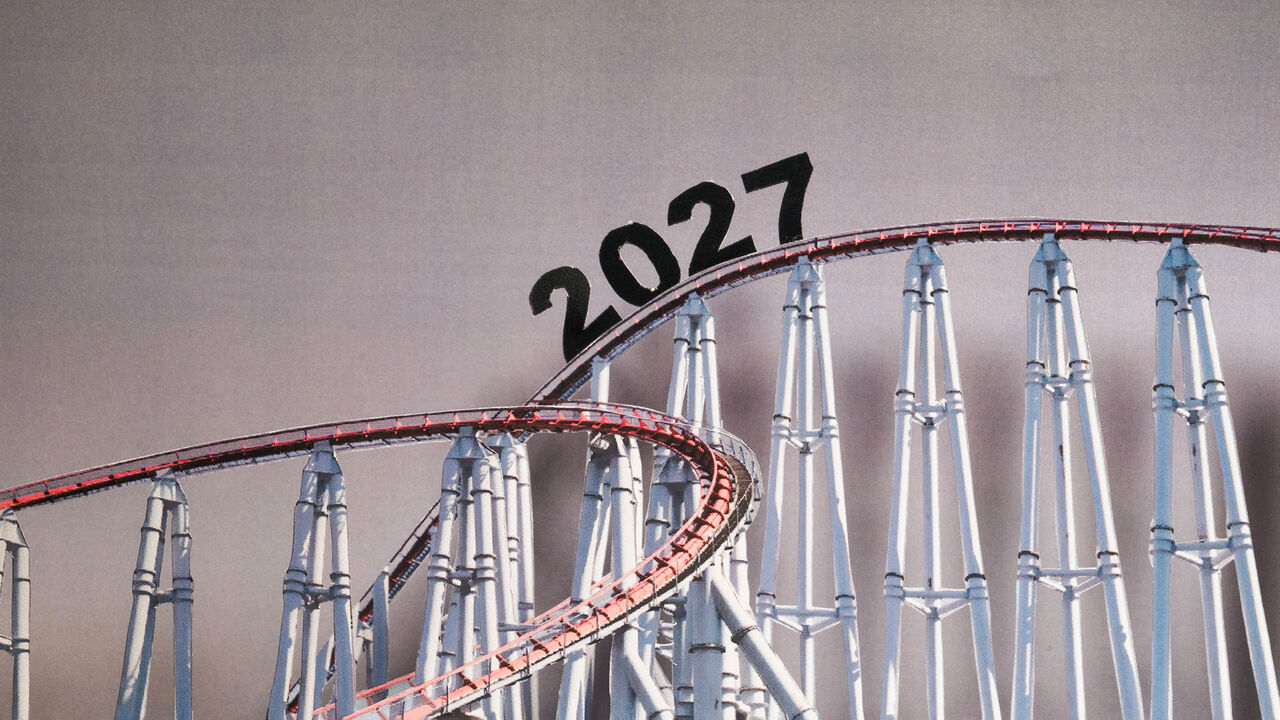
在2026年下半年,两起相隔仅几周的事件让人们将目光聚焦在将塑造2027年的力量上。其中一桩是11月3日美国中期选举中,总统唐纳德·特朗普遭到空前规模的否决,这成为了全球头条新闻。另一桩则是OpenAI最强大(且未发布)的模型破解了370多个迄今未解的数学难题这一消息,它让极客们大跌眼镜,但在其他地方却几乎无人关注。
Within weeks of each other, two events in late 2026 shone a spotlight on the forces that will shape 2027. One, the stunning scale of President Donald Trump’s repudiation in America’s midterms on November 3rd, was headline news around the world. The other—an announcement that OpenAI’s most powerful (and unreleased) model had cracked more than 370 hitherto unsolved maths problems—blindsided geeks but was little noticed elsewhere.
这次中期选举是半个世纪以来规模最大的浪潮选举,也是特朗普主义走向终结的开始。这个长期受到极化和总统霸凌削弱的全球最重要民主国家,证明了自身的生命力与韧性。选民对一场不受欢迎的战争和高昂的燃料费用感到愤怒,他们奋起抗拒腐败并要求变革。当民主党人在几代人以来首次赢得得克萨斯州和堪萨斯州时,美国政治中可能性的棱镜被拓宽了。
The midterms were the biggest wave-vote in half a century and the beginning of the end of Trumpism. The world’s most important democracy, long enfeebled by polarisation and presidential bullying, proved vital and resilient. Furious about an unpopular war and costly fuel, voters pushed back against corruption and demanded change. When Democrats win in Texas and Kansas for the first time in generations, the prism of the possible in American politics has widened.
然而,“数学末日”(mathpocalypse)以及它所体现的人工智能威力,或许更能说明未来将发生什么。在即将到来的一年里,重大的政治变革是可行的;但由人工智能主导的剧变则是确定的,其规模之大,硅谷以外很少有人真正理解。这项打破定理的突破展示了当人工智能模型的改进达到指数曲线陡峭上升阶段时会发生什么。
Yet the “mathpocalypse”, and the power of AI it exemplifies, may say more about what lies ahead. Big political change is feasible in the coming year; but AI-led upheaval is certain, and on a scale that few outside Silicon Valley have yet got their head around. The theorem-busting breakthrough shows what happens when improvements in AI models reach the steepening part of an exponential curve.
曾经无法想象的事情突然变得无处不在。在2027年,这种情况将在数学和编程之外的广阔领域发生。期待令人瞩目的科学突破:以令人瞠目结舌的速度更好地理解疾病并发现新材料。
The unimaginable suddenly becomes the ubiquitous. In 2027 that will happen far beyond maths and coding. Expect striking scientific breakthroughs: diseases better understood and new materials discovered, all at a jaw-dropping pace.
2027年的核心问题是人工智能的崛起与特朗普主义的衰落将如何相互作用。随着个人人工智能代理成为常态、无人驾驶汽车出现在更多城市以及人形机器人首次亮相,人们将开始更切实地看到人工智能的影响。正如最悲观的预言家所预测的那样,白领工作不会突然被一扫而空,但随着更多行业的更多企业重塑其组织方式,将会出现更大的混乱。
The big question for 2027 is how the rise of AI and the decline of Trumpism will interact People will begin to see the impact of AI more tangibly as personal AI agents become the norm, driverless cars appear in more cities and humanoid robots make their debut. There won’t be a sudden wipe-out of white-collar work, as the doomiest seers still predict, but there will be greater disruption, as more firms in more industries reinvent the way they are organised.
人工智能也将变得更加可怕。乌克兰战场上将出现自主无人机群。网络攻击本已激增,未来将更加频繁、破坏力更大。预计在未来一年内,某地将发生一起造成人员伤亡的人工智能事故。
AI will become scarier, too. Swarms of autonomous drones will be used on Ukraine’s battlefields. Cyber-attacks, already surging, will become more frequent and more damaging. Expect an AI incident that costs lives somewhere in the coming year.
2027年的重大问题是,人工智能与特朗普主义的衰落这两股力量将如何相互作用。可能会发生代价高昂的冲突。美国人对人工智能感到恐惧并抱有深深的疑虑。许多民主党人将反对数据中心和科技寡头作为其竞选的核心。中期选举包括45项关于限制或禁止数据中心的州和地方投票,其中44项获得通过。得克萨斯州新任州长吉娜·希诺霍萨(全美计划建设的数据中心有三分之一位于该州)已承诺实施暂停令。
The big question for 2027 is how these two forces, AI and the decline of Trumpism, will interact. There could be a costly clash. Americans are fearful and deeply suspicious of AI. Many Democrats put opposition to data centres and tech oligarchs at the centre of their campaigns. The midterm elections included 45 state and local ballots on restricting or banning data centres; 44 of them passed. Gina Hinojosa, the new governor of Texas (home to a third of America’s planned data centres) has promised a moratorium.
更有可能出现的是一笔新的交易:州和地方政府将要求获得更多资金和地方福利,作为承办数据中心的交换条件。
More likely is a new bargain: states and local governments will demand more money and local benefits in return for hosting data centres.
在联邦层面,对人工智能进行更多监管现在已不可避免。新一届由民主党控制的国会将大力推动规则和监督,尤其是在安全方面,这是几位人工智能巨头长期以来一直呼吁的,甚至连政府内部的一些官员也暗中赞赏。目前存在许多蓝图,相关内容很快将成为法律。2027年将标志着美国对人工智能采取的“放任自流”态度的终结。
At the federal level, more regulation of AI is now inevitable. The new Democratic-controlled Congress will push hard for rules and oversight, especially around safety, something several AI bosses have long called for and which even some officials within the administration quietly applaud. Numerous blueprints exist and something will become law soon. 2027 will mark the end of America’s “let it rip” attitude to AI.
这种转变不会从根本上改变人工智能的发展轨迹。阻止这项技术是不可能的,即使这是一个好主意。但幸运的是,深思熟虑的监管将确保超级强大智能的出现稍微放缓且更加安全。这将刺破围绕高风险架构的盲目增长而建立的金融泡沫。它还可能调整领先人工智能实验室的商业模式。与其发布最强大的模型,它们可能会将其留在内部,建立科学实验室或交易大厅,以自行收获科学突破或金融洞察带来的回报,同时规避法律责任风险。
This shift will not dramatically change AI’s trajectory. Stopping the technology is impossible, even if it were a good idea. But thoughtful regulation will, with luck, ensure that the emergence of super-powerful intelligence is slightly slower and somewhat safer. That will puncture the financial bubble built around pell-mell growth in the riskiest structures. It could also tweak the business model for leading AI labs. Rather than releasing their most powerful models, they might keep them in house, building science labs or trading floors to reap the rewards of scientific breakthroughs or financial insights themselves, without liability risks.
理想情况下,2027年还应在安全问题上与中国开展一些基本合作。中国的“开放权重”模型落后于美国,但差距不大。2027年,中国在这方面也将取得显著的能力提升。在一个更理智的世界里,两国会制定一些最低限度的规则,地缘政治对手以前也这样做过。唉,这不会发生。尽管中国对人工智能安全的关注和投入比许多美国人意识到的要多,但两个超级大国之间的相互猜疑根深蒂固,双方都(正确地)将这项技术视为21世纪成功的关键。
Ideally, 2027 would also bring some basic co-operation on safety with China. Chinese “open-weight” models lag America’s, but not by much. And 2027 will see remarkable capability gains there, too. In a saner world the two countries would set some minimal rules, as geopolitical adversaries have done before. Alas, that won’t happen. Although China cares more, and is doing more, about AI safety than many Americans realise, the mutual suspicions of two superpowers, which both (rightly) see the technology as the key to 21st-century success, run deep.
中期选举的政治革命不会延伸到重新思考与中国的人工智能关系。特朗普总统和习近平主席会晤时可能会提到人工智能安全,但不会有什么效果。
The midterm political revolution will not extend to rethinking AI with China. AI safety may get mentioned when Presidents Trump and Xi meet, but to little effect.
不过,在其他方面,选举结果对地缘政治的影响可能比通常的中期选举更大。外交政策在很大程度上是美国总统的职权范围,因此也是跛脚鸭总统通常关注的领域,往往产生戏剧性效果。乔治·W·布什在2006年中期选举失败后下令向伊拉克增兵;巴拉克·奥巴马在2014年失利后谈判达成了伊朗核协议。特朗普可能会以更激进的外交议程来回应国内的惨败:更多的霸凌、更多的军事冒险主义、更多的关税。
Elsewhere, though, the election results could affect geopolitics more than midterms usually do. Foreign policy is largely the purview of America’s president and is thus where lame-duck presidents generally focus, often to dramatic effect. George W. Bush ordered the Iraq surge after his midterm defeat in 2006; Barack Obama negotiated the Iran nuclear deal after his loss in 2014. Mr Trump could respond to his domestic drubbing with an even more aggressive foreign agenda: more bullying, more military adventurism, more tariffs.
但民主党多数的规模表明,国会不会完全俯首帖耳。特朗普可以下令对伊朗发动新的攻击,但国会将不愿为一场持久的军事行动提供资金。国会也可能拒绝任何出卖乌克兰的协议,尤其是如果涉及与俄罗斯的商业附带交易。如果特朗普在关税问题上走火入魔,国会甚至可能投票收回那里的控制权。
But the size of the Democratic majorities suggests Congress won’t be entirely supine. Mr Trump could order new attacks on Iran, but Congress will be loth to fund a prolonged military campaign. It could also balk at any agreement that sells out Ukraine, especially if business side-deals with Russia are involved. And if Mr Trump goes tariff-crazy, Congress might even vote to take back control there.
因此,更可能的结果是,特朗普的外交政策表面上看似未变,但随着世界其他国家开始着眼于其总统任期之后,其影响力将减弱。与习近平主席和普京总统的会晤将更多是拍照留念的机会,而非现代版的波茨坦会议。预计会有高调出访(或许包括朝鲜),但不会达成开创性协议。部分国家将因这一转变而受损(尤其是以色列)。大多数国家将感到宽慰。
The more likely outcome is, therefore, that Mr Trump’s foreign policy is superficially unchanged, but less consequential as the rest of the world starts to look beyond his presidency. Meetings with Presidents Xi and Putin will be more photo-op than a modern Potsdam. Expect flashy trips (to North Korea, perhaps), but no ground-breaking deals. Some will lose from this shift (notably Israel). Most countries will be relieved.
2027年的最大例外将是欧洲。具有讽刺意味的是,就在特朗普主义在美国遭到否决之际,几个欧洲国家可能会拥抱民粹右翼。玛丽娜·勒庞可能在5月成为法国总统,这将对乌克兰、金融市场和欧盟本身产生剧烈影响。
The big outlier in 2027 will be Europe. Ironically, just as Trumpism has been repudiated in America, several European countries may embrace the populist right. Marine Le Pen could become France’s president in May with dramatic consequences for Ukraine, financial markets and the European Union itself.
欧洲资金正维持着乌克兰的生存。如果勒庞女士及欧洲民粹右翼的其他人所提议的那样切断这些资金,乌克兰将会崩溃。幸运的是,勒庞女士若当选总统,会迅速意识到,在欧洲东翼拥有一个失败国家并非好主意。还有一个安全阀:预计欧洲国家最终将同意没收被冻结的俄罗斯资产,以支付乌克兰2027年的账单,而非动用纳税人资金。
European money is keeping Ukraine afloat. If those funds are cut off, as Ms Le Pen and others on Europe’s populist right propose, it will collapse. With luck a President Le Pen would quickly realise that a failed state on Europe’s eastern flank is not a good idea. And there is a safety-valve. Rather than taxpayer funds, expect European countries to finally agree to seize frozen Russian assets to pay Ukraine’s bills in 2027.
欧洲将成为债券市场紧张情绪的焦点。随着大选临近,法国可能面临全面危机:其公共财政已不可持续。欧洲右翼民粹主义者承诺的政策不仅会造成经济损害,甚至可能导致欧盟解体。但既然是欧洲,现实情况即便勒庞女士获胜,也大概率不会那么戏剧化。危机与勉强应对更有可能发生,而非欧盟崩溃。但机会成本将很高。
Europe will be the focus of bond-market jitters. France could face a full-blown crisis as the election nears: its public finances are already unsustainable. And the policies that European right-wing populists promise will not just cause economic harm, but could spell the end of the EU. But this being Europe, the reality, even if Ms Le Pen wins, is likely to be less dramatic. Crisis and muddle-through is more likely than EU collapse. But the opportunity cost will be high.
欧洲在人工智能时代是一个显眼的落后者。它没有前沿模型,且仅拥有全球5%的人工智能计算能力。这并不能让它免受人工智能风险的影响,但这确实意味着欧洲将无法收获其带来的益处。在美国政治可能会推动人工智能革命朝着更好方向发展的这一年里,欧洲潜在的政治动荡意味着它面临着被永远抛在后面的风险。
Europe is a striking laggard in the era of AI. It has no frontier models and only 5% of global AI computing capacity. That won’t save it from AI’s risks, but it does mean Europe will fail to reap the benefits. In a year when American politics could shape the AI revolution for the better, Europe’s potential political earthquake means it risks being permanently left behind. ■