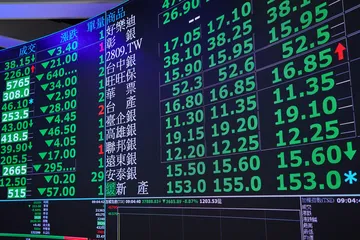
如果美国大选最终导致人工智能热潮降温,亚洲的出口经济强国可能会遭受沉重打击,尽管对于这个驱动全球经济增长的地区而言,消息并非全都是坏事。
Asia’s powerhouse exporters could get hit hard if US elections end up deflating the AI boom, though the news isn’t all bad for the region that drives global economic growth.
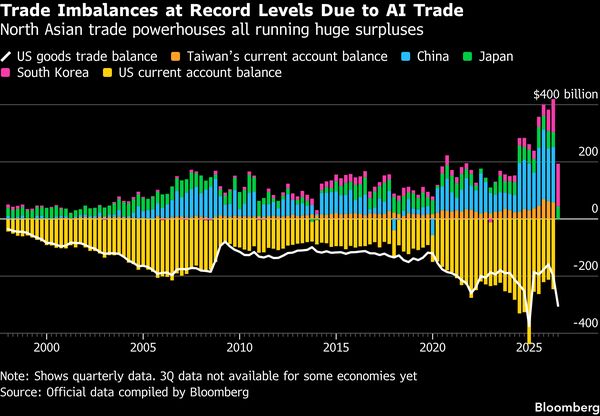
周五蔓延至亚洲的“美国制造”市场暴跌——触发了首尔股市的熔断机制,并使东京和台北股市陷入熊市——反映出人们担心华盛顿将对数据中心踩下刹车。这将冷却对芯片和其他电子产品的需求,而正是这些需求带来了创纪录的贸易顺差。中国面临失去部分高技术出口的风险,正是这些出口维持了其经济的正常运行。韩国等其他国家受到的冲击则更大。
The Made-in-America market rout that spread across Asia on Friday - triggering circuit-breakers in Seoul and plunging Tokyo and Taipei into bear markets — reflects fear that Washington will hit the brakes on data centers. That would cool the demand for chips and other electronics that’s delivered record trade surpluses. China risks losing a chunk of the high-tech exports that have kept its economy on track. Others like South Korea are still more exposed.
不过,在美国总统唐纳德·特朗普的共和党在本周的中期选举中遭受惨败之后,这并非可能重塑世界经济的唯一转变。
Still, that’s not the only shift in the world economy that could result from the stinging defeat for President Donald Trump’s Republican Party in this week’s midterms.
他针对伊朗的战争在美国选民中并不受欢迎,这触发了今年塑造经济的另一股强大力量:能源成本的飙升。亚洲的主要经济体都是进口国,因此它们一直处于首当其冲的位置。印度和尼日利亚等国的外部财政状况及其货币都承受了压力。由于各方希望冲突降级,布伦特原油本周下跌了百分之十五,这带来了一丝缓解。
His war on Iran, unpopular with US voters, triggered the other powerful force shaping economies this year: the surge in energy costs. Asia’s key economies are importers, so they’ve been at the sharp end. Countries like India and Indonesia have seen their external finances, and their currencies, come under strain. Brent crude’s 15% decline this week, on hopes the conflict will de-escalate, offers relief.
汇丰控股有限公司首席亚洲经济学家弗雷德里克·诺伊曼表示,人工智能交易的消退“将在整个亚洲引发经济涟漪”。“从芯片、电缆到冷却系统和电力转换器等各种商品的需求放缓,势必会拖累出口增长。”另一方面,“较低的能源价格将在很大程度上缓冲亚洲的经济增长。”可以肯定的是,仅仅因为美国选民希望美伊战争结束,并不能保证它就会结束。
The fizzling of the AI trade “will cause economic ripples across Asia,” said Frederic Neumann, chief Asia economist at HSBC Holdings Plc. “Slowing demand for everything from chips and cables to cooling systems and electric converters is bound to weigh on export growth.”On the other hand, “lower energy prices will go a long way toward cushioning growth in Asia.”To be sure, there’s no guarantee that the US-Iran war will end just because American voters want it to.
对于由民主党领导的国会和州政府将如何监管人工智能,也没有太多的明朗度。特朗普仍然掌控着贸易政策杠杆(例如关税),这些杠杆在他第二任期内一直是亚洲经济体的另一个巨大干扰因素。以下是美国大选对主要亚洲经济体产生的一些关键问题汇总。
Nor is there much clarity about how a Democrat-led Congress and state governments will regulate AI. And Trump retains control over trade-policy levers like tariffs that have been another big disruptor of Asian economies during his second term. Following is a roundup of some key issues for major Asian economies arising from the US election.
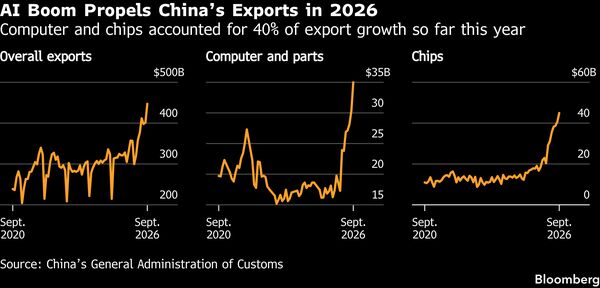
净出口贡献了中国第三季度近40%的增长,创下自2025年初以来的最高占比,其中高科技产品居于领先地位。彭博经济研究(Bloomberg Economics)撰文称,如果美国人工智能(AI)增速放缓,且计算机硬件价格下跌,该国将面临“严峻的经济逆风”,并可能挤压整个供应链的利润率。
Net exports contributed nearly 40% of China’s growth in the third quarter, the highest share since early 2025, and high-tech products were the leader. The country would face “severe economic headwinds” in the event of an AI slowdown in the US and lower prices for computer hardware could squeeze profit margins across the supply chain, Bloomberg Economics wrote.
中国也非常依赖进口能源。该国已动用其庞大的储备来缓冲今年的价格冲击,尽管纺织业等将石油产品作为投入品的行业利润仍受到了打击。
China is also heavily reliant on imported energy. It has deployed its massive reserves to cushion this year’s price shock, though there’s still been a hit to profits in industries like textiles that use oil products as inputs.
随着未来几周预定将举行两场峰会,中国领导人将得以提前一窥中期选举后的特朗普。由于中国拥有稀土这一筹码,当前的贸易休战可能不易受到华盛顿局势变化的影响。更令人担忧的是国内情况,由于家庭不愿消费,增长只能依赖人工智能和其他贸易。彭博经济研究写道:“不断上升的风险,使得北京通过加大对国内消费的支持来重新平衡增长变得更加紧迫。”
Chinese leaders will get an early glimpse of the post-midterms Trump with two summits slated for the coming weeks. The current trade truce may not be vulnerable to shifts in Washington, thanks to China’s rare-earths leverage. There’s more to worry about on the home front, where households aren’t spending – leaving growth reliant on AI and other trade. “The mounting risks raise the urgency for Beijing to rebalance growth by strengthening support for domestic consumption,” BE wrote.
日本拥有大量涉足美国人工智能领域的企业,其股市在周五遭到重挫。尽管如此,伊朗战争以及关于关税的反复交锋对其经济而言也至关重要。
Japan has plenty of companies with stakes in American AI, and its stock market took a pounding on Friday. Still, the war in Iran and the back-and-forth over tariffs will also be key for its economy.
汽车企业贡献了对美出口的四分之一,根据与特朗普达成的一项协议,它们正被征收15%的关税,该协议还见证了东京承诺向美国投资数十亿美元。这个资源匮乏的经济体通常从中东大量采购,目前也被迫转向其他地方寻找石油。根据最新的月度数据,其从美国的进口额增幅超过了800%。
Auto firms, who contribute one-quarter of exports to the US, are getting charged 15% under a deal with Trump that also saw Tokyo pledge billions for investments in America. The resource-poor economy, usually a big buyer from the Middle East, has also been forced to turn elsewhere for oil. Its imports from the US were up more than 800% in the latest monthly data.
野村综合研究所驻东京首席经济学家木内登英表示:“如果关税政策和对伊朗的强硬政策在一定程度上受到限制,这将遏制日本出口环境恶化的势头。”但他认为,短期内存在一种风险,即美国可能会在1月3日新国会召开之前,在两条战线上同时升级局势。
“If tariff policies and hardline policies toward Iran are constrained to a certain extent, this will halt the deterioration of the environment for Japanese exports,” said Takahide Kiuchi, Tokyo-based executive economist at the Nomura Research Institute. But he sees a short-term risk that the US may instead escalate on both fronts before a new Congress convenes on Jan. 3.
作为亚洲第三大经济体,印度也是全球第三大石油进口国,其近90%的原油依赖海外采购。油价上涨已使政府财政承压、进口账单膨胀并扩大了贸易逆差——这一切都对卢比造成了压力,使其成为今年表现较差的主要货币之一。
Asia’s third-biggest economy is also the world’s No. 3 oil importer, buying nearly 90% of its crude overseas. Higher prices have strained government finances, inflated the import bill and widened the trade deficit – all pressuring the rupee, which has been among the worse-performing major currencies this year.
更重要的是,与许多亚洲同行不同,印度处于人工智能贸易的进口端——这也是其股市在本周的大跌中成为某种避风港的原因之一。对于印度的IT服务供应商而言,成本可能会下降。即便如此,经济学家警告称,这个关键行业依然容易受到全球企业科技支出放缓的影响,并表示印度最终仍需要在人工智能领域迎头赶上。
What’s more, unlike many Asian peers, India is on the import side of the AI trade — one reason why its stock markets have become a kind of haven amid this week’s slide. For Indian providers of IT services, costs could go down. Even so, economists caution that this key industry remains vulnerable to a worldwide slowdown in corporate tech spending, and say India still ultimately will need to catch up on AI.
华侨银行经济学家拉瓦尼亚·文卡特斯瓦兰表示,较低的油价将“缓解印度的关键宏观经济脆弱性之一”,并提振家庭购买力。但“企业技术支出的真正放缓可能会对可自由支配的IT预算造成压力,进而影响印度的服务出口”。这些是处于前沿的经济体、最高容量芯片和内存的供应商,它们曾录得非凡的出口增长。在复杂的供应链网络中,这些销售的大部分最初流向其他目的地,但最大的最终用户是美国的的数据中心行业。
Lower oil prices would “alleviate one of India’s key macroeconomic vulnerabilities,” and boost household purchasing power, said Lavanya Venkateswaran, an economist at Oversea-Chinese Banking Corp. But “a genuine slowdown in corporate technology spending could weigh on discretionary IT budgets and, in turn, Indian services exports.”These are the frontline economies, providers of the highest-capacity chips and memory, and they’ve posted extraordinary export growth. Much of these sales go initially to other destinations, in a complex supply-chain network, but the biggest end-user is the data center industry in the US. A Bloomberg Economics analysis found that both economies would take a sharp and swift hit to growth if the AI bubble ever burst, dwarfing the impact elsewhere.
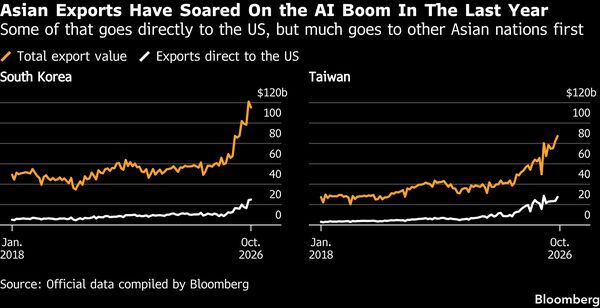
彭博经济研究的一项分析发现,如果人工智能泡沫破裂,中美两国的经济增长都将遭受急剧而迅速的打击,其影响之大将使其他地方相形见绌。汇丰银行的诺伊曼表示,如果美国决定放缓数据中心的建设,一个潜在的对冲因素是亚洲其他国家可能会填补部分空缺。
One potential offset, if the US decides to slow down its data-center buildout, is that other countries in Asia may take up some of the slack, HSBC’s Neumann said. Indonesia, the biggest economy in Southeast Asia, hasn’t gotten much benefit from the AI export boom – and the Philippines even less.
作为东南亚最大经济体,印度尼西亚并未从人工智能出口繁荣中获得太多好处,菲律宾获得的则更少。更便宜的石油将为印尼腾出急需的财政空间——当地的能源补贴已经飙升了50%以上——并缓解菲律宾的通胀压力,当地的通胀率已飙升至接近8%的水平。
Cheaper oil would free up some much-needed fiscal space in the former, where energy subsidies have already jumped more than 50% — and ease some of the inflationary pressure in the latter, where inflation has soared toward 8%. For chipmakers like Singapore and Malaysia, though, a pullback in AI investment would take some wind out of their sails.
不过,对于新加坡和马来西亚等芯片制造商来说,人工智能投资的回落将削减其发展势头。硬件出口以及数据中心的建设一直是今年经济增长的关键驱动力,抵消了石油冲击的影响两国央行在最近的会议上抵制了收紧货币政策的呼吁,这些决定事后证明颇具远见。
Hardware exports, as well as the construction of data centers, have been the key drivers of growth this year, offsetting the oil shock. In decisions that may prove prescient, the central banks in both nations resisted calls to tighten monetary policy at their latest meetings.
澳大利亚本身就是一个重要的数据中心建设者。随着Anthropic PBC等公司寻求参与其中,该行业推动了投资增长,尽管这也构成了引发类似美国政治反弹的威胁。
Australia is a significant data-center builder itself. The industry has helped drive investment growth as companies like Anthropic PBC look to get involved, even as it threatens a political backlash like the one in the US.
但芯片与服务器进口的增加以及能源价格的上涨,已将该国今年的贸易顺差挤压至十年来的最低水平。更便宜的能源将有助于扭转这一局面,并缓解食品价格的压力——所有这些因素,已使该国央行成为今年全球最激进的加息央行之一。
But the combination of chips and server imports and rising energy prices have squeezed the country’s trade surplus this year down to a decade-low level. Cheaper energy would help reverse that and also ease pressure on food prices – all of which have made the country’s central bank one of the world’s most aggressive rate-hikers this year.