
数月来,华尔街人工智能热潮引发的不安情绪本周演变为全球市场剧烈动荡,为这一推高股价、企业支出和经济增长的投资狂热开启了危险的新篇章。
Months of unease over Wall Street’s artificial-intelligence boom erupted into a global market convulsion this week, opening a dangerous new chapter for the investment frenzy that has helped power stock prices, corporate spending and economic growth.
这些担忧全年都在显现:估值过度拉升、债务不断攀升,以及对数万亿美元人工智能投资回报的质疑。但民主党横扫国会增添了新的政治威胁,引发市场担心会对支撑这场热潮的大规模数据中心建设实施限制。
The worries have been on display all year: stretched valuations, mounting debt and doubts about the payoff from trillions of dollars in AI spending. But the Democratic sweep of Congress has added a new political threat, raising the prospect of restrictions on the vast data-center buildout underpinning the boom.
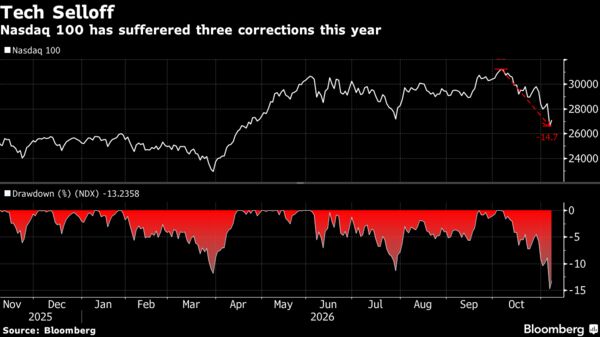
市场反应之剧烈,即便在动荡不安的一年标准下也属罕见。周三,美股意外大幅反弹。周四,纳斯达克100指数市值蒸发2.3万亿美元。收盘时,该指数57%的成分股较高点下跌至少20%,这一比例高于2022年3月指数本身进入熊市时的水平。到周五,芯片股反弹,而强劲的就业数据强化了市场对美联储12月再次加息的押注。
The response has been extraordinary even by the standards of a volatile year. Wednesday brought a sharp – and unexpected — rally in US stocks. Thursday saw a $2.3 trillion wipeout in the Nasdaq 100. At the close, 57% of its constituents had fallen at least 20% from their highs, a greater proportion than when the index itself entered a bear market in March 2022. By Friday, chipmakers had rebounded even as strong jobs data reinforced bets on another Federal Reserve interest-rate increase.
这些剧烈反复展示了人工智能周期下一阶段可能变得多么混乱——且几乎得不到常规救市力量的帮助。美联储依然聚焦通胀,交易员押注12月将再次加息。因中期选举受挫,特朗普总统在财政刺激方面面临新制约,且可能缺乏动力去托举股市——他已将近期股市下跌归咎于民主党。
The reversals offer a glimpse of how disorderly the next phase of the AI cycle could become — with little help from the usual rescuers. The Fed remains focused on inflation, with traders betting on another interest-rate increase in December. Weakened by the midterm election, President Donald Trump faces new constraints on fiscal support and may have less incentive to shore up a stock market whose recent losses he has already blamed on the Democrats.
“会有输家,并非所有投入巨额资本支出的人都会赢,”管理约760亿美元资产的Causeway Capital Management投资组合经理Joe Gubler表示。
“There are going to be losers, and not everybody who’s investing all of this money in capex is going to be a winner,” said Joe Gubler, a portfolio manager at Causeway Capital Management, which oversees about $76 billion.
即使是平时热衷于逢低买入的散户交易者,也以自疫情以来罕见的速度加入了抛售行列。华尔街的投资机器让局势雪上加霜。对冲基金、杠杆投资者和自动化策略增加了抛压,使人难以判断这场暴跌有多少反映了对人工智能的真实疑虑,又有多少是由被迫抛售驱动的。
Even retail traders, normally eager to buy market dips, joined the selling at a pace rarely seen since the pandemic. Wall Street’s investment machinery made matters worse. Hedge funds, leveraged investors and automated strategies added to the pressure, making it harder to tell how much of the rout reflected genuine doubts about AI and how much was driven by forced selling.
寻找新的市场龙头是另一项挑战。投资者在大选前早已开始轮动至公用事业和消费必需品等更便宜、不那么光鲜的板块。但周四的暴跌暴露了这种避险的局限性,新宠未能经受住大型科技股崩盘的冲击。
Finding new market leaders is another challenge. Investors had begun rotating toward cheaper, less glamorous sectors like utilities and consumer staples well before the election. But Thursday’s rout exposed the limits of that escape, with the new favorites failing to withstand the collapse in Big Tech.
存在一个强大的制衡因素:油价因伊朗战争有望平息的预期而暴跌。这缓解了在特朗普重关税总统任期内挤压消费者和企业的通胀压力,尽管这些利好需要时间才能显现。
There is a powerful counterweight: Oil prices have plunged on hopes that the Iran war will wind down. That offers relief from inflationary pressures that have squeezed consumers and businesses throughout Trump’s tariff-heavy presidency, though those benefits would take time to emerge.
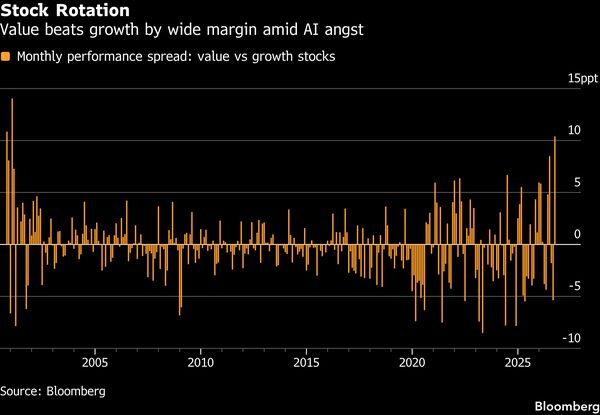
轮动在大选前已开始聚力。10月成长股较价值股落后10个百分点,为2001年以来最大单月差距,仅在一个月前,成长股还录得逾一年来最强表现。
The rotation was already gathering force before the election. Growth stocks trailed value shares by 10 percentage points in October, their biggest monthly gap since 2001, just a month after their strongest showing in more than a year.
这种剧烈反复是跨资产的故事。股票相对国债的表现从跑赢5个百分点,转为过去两个月来自2025年初以来最差的相对表现。一种流行的动量策略也在10月几乎吐还了9月所有涨幅。
The whiplash is a cross-asset story. Equities swung from outperforming Treasuries by five percentage points to their worst relative showing since early 2025 over the last two months. A popular momentum strategy also surrendered almost all its September gains in October.
法国兴业银行量化研究主管安德鲁·拉普索恩将大动荡的很大一部分归因于围绕人工智能和石油建立的拥挤仓位。随着这些交易反向展开,投资者被迫抛售青睐的科技股并买回曾做空的防御性股票,导致波动更加剧烈。
Andrew Lapthorne, Societe Generale’s head of quantitative research, traces much of the turmoil to crowded positions built around AI and oil. As those trades reversed, investors were forced to sell technology shares they had favored and buy back defensive stocks they had bet against, driving even sharper swings.
“投资者在某一类资产上重仓,一旦做多做空策略出现亏损,就不得不迅速平仓,”他说。“也可能是风险预算有限的投资者,只需几个不利因素就会触发保证金追缴,引发平仓潮。”摩根斯坦利数据显示,对冲基金已将总杠杆率从6月峰值下调,降幅为十多年来最大。其量化策略师认为,抛售可能接近尾声,但他们预计在短暂反弹后,市场还将再创新低。
“You’ve got a mixed combination of people being heavily positioned in one set of assets, and then having to rapidly cover if you’re long-short,” he said. “It could be people with risk budgets where it only takes a few things to then start having some kind of margin call unwind.”Morgan Stanley data show hedge funds have reduced gross leverage from its June peak by the most in more than a decade. Its quantitative strategists reckon the liquidation may be nearing exhaustion, though they anticipate another market low following a brief rebound.
拉普索恩认为,几乎没有证据表明抛售反映出市场突然转为经济悲观。并非所有投资者都被套牢。
Lapthorne sees little evidence that the selling reflects a sudden turn toward economic pessimism. And not every investor has been caught out.
杰夫·穆伦坎普在暴跌前几乎清仓了其基金的所有AI持仓。他管理的2.75亿美元投资组合11月大致持平,全年表现跑赢标普500指数。
Jeff Muhlenkamp exited almost all his fund’s AI holdings before the rout. His $275 million portfolio was roughly flat for November and ahead of the S&P 500 for the year.
“我们卖掉了昂贵且热门的资产,买入了便宜且被遗忘的资产,”他说。“一旦动能转向,我们就能获利。”经济可能保持韧性,被迫抛售可能很快结束。但投资者希望看到AI投资能带来回报的证据——而华盛顿的政策转向却给构建AI所需基础设施设下了障碍。
“We sold what was expensive and popular, and bought what was cheap and forgotten,” he said. “When momentum changes, we benefit.”The economy may be holding up, and the forced selling may soon end. But investors want proof their AI investments will pay off — just as the shift in Washington throws up obstacles to building the infrastructure needed to make them work.
“AI支出的激进速度,你必须假设将放缓至更审慎的节奏,”贝莱德全球固定收益首席投资官里克·里德在彭博电视上表示。“这周情况发生了变化,你必须将其纳入你的考量。”
“The aggressive speed of the AI spend, you have to assume that will be at a more deliberate pace,” said Rick Rieder, CIO of global fixed income at BlackRock Inc. on Bloomberg Television. “That changed this week and you have to factor that into your calculus.”