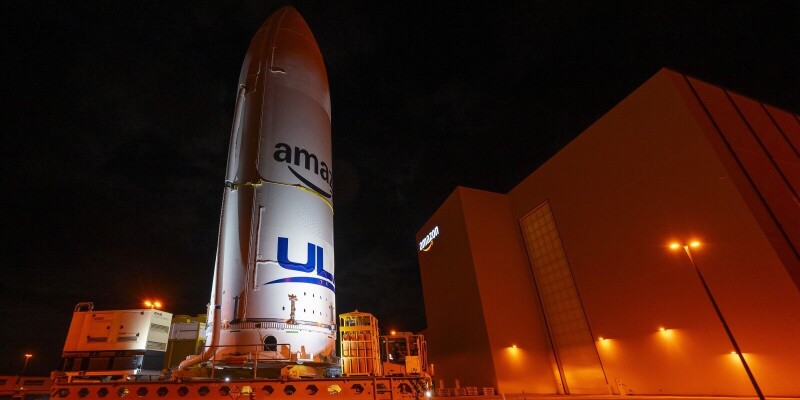
联合发射联盟(ULA)表示,助推器性能不佳似乎导致了周日“火神”运载火箭任务的失败,该任务在火箭复飞时损失了一颗亚马逊“Leo”卫星有效载荷。ULA的初步评估指向发射后几乎立即出现的问题。“早期迹象表明,起飞后不久,运载火箭经历了低助推器性能,”该公司表示。结果,级间分离发生在过低的高度,火箭飞行速度不足以使有效载荷进入轨道。
United Launch Alliance (ULA) says poor booster performance appears to have doomed Sunday's Vulcan mission, which lost an Amazon Leo satellite payload on the rocket's return to flight. ULA's initial assessment points to trouble almost immediately. "Early indications are that just after liftoff the launch vehicle experienced low booster performance," it said. As a result, stage separation occurred at too low an altitude, and the rocket was not traveling fast enough for the payload to reach orbit.
二级火箭似乎表现良好,其RL10发动机按计划运行,但这不足以弥补差距,任务宣告失败。ULA在飞行约十分钟后失去了遥测联系。调查正在进行中,由ULA牵头,美国联邦航空管理局(FAA)监督,后者不得不激活两个碎片响应区域,碎片正坠落于此。该机构指挥飞机离开这些区域,并阻止其他飞机进入。格林尼治标准时间周三下午晚些时候,ULA发布更新称,导致助推器性能不足的原因似乎是燃料供应而非BE-4发动机。
The second stage appeared to perform well, with its RL10 engines operating as planned, but that wasn't enough to make up for the shortfall, and the mission failed. ULA lost telemetry approximately ten minutes into flight. An investigation is underway, led by ULA and overseen by the US Federal Aviation Administration (FAA), which had to activate two Debris Response Areas where debris was falling. The agency directs aircraft to leave these areas, and others are prevented from entering. Late Wednesday afternoon GMT, ULA posted an update stating that it looks like it might be the fuel supply rather than the BE-4 engines that caused the underperformance of the booster.
公司写道:“初步迹象表明,低助推器推力是由于飞行器向BE-4发动机供燃不足造成的,而非发动机性能问题。”此前的飞行曾因固体火箭助推器的问题而受挫,这些助推器旨在发射时给火箭提供初始推力。这些问题曾导致停飞,以便调查人员查明原因。这一次,ULA表示:“所有迹象表明,固体火箭助推器性能正常,此次发射实施了喷管改进。”
The company wrote: “Preliminary indications are that the low booster thrust was the result of inadequate fuel supply from the vehicle to the BE-4 engines, not from the performance of the engines." Previous flights had been blighted by problems with the solid rocket boosters, designed to give the rocket a kick at launch. Those issues prompted a stand-down while investigators examined the cause. This time, ULA said: "All indications are that the solid rocket booster performance was nominal, following nozzle improvements implemented for this launch."
因此关注点转向“火神”火箭的液体燃料芯级,该级由两台蓝色起源BE-4发动机提供动力,尽管这并不确立发动机故障。燃料输送或其他一级系统也可能是原因,调查仍在进行中。
Attention therefore turns to Vulcan's liquid-fueled core stage, powered by two Blue Origin BE-4 engines, though that does not establish an engine fault. Fuel delivery or another first-stage system could also be responsible, and the investigation is ongoing.
BE-4发动机也为蓝色起源的“新格伦”火箭提供动力,该火箭于5月在地面测试期间在发射台上爆炸。8月,蓝色起源首席执行官戴夫·林普表示,问题源于其中一台BE-4发动机的主氧阀。已作出修改以解决该问题。上面级看似正常的表现可能给美国国家航空航天局(NASA)带来一些宽慰,尽管调查仍处于早期阶段。该机构今年早些时候取消了延期的“探索上面级”,正在将拉长版“半人马座V”级与现有的临时低温推进级作为“阿耳忒弥斯IV”任务的选项并行推进。
The BE-4 also powers Blue Origin's New Glenn rocket, which exploded on the launchpad during a ground test in May. In August, Blue Origin boss Dave Limp said that the issue originated at the main oxygen valve on one of the BE-4 engines. Modifications were made to deal with the problem. The upper stage's apparently normal performance may offer some reassurance to NASA, although the investigation remains at an early stage. The agency dropped the delayed Exploration Upper Stage earlier this year and is pursuing a stretched Centaur V alongside its existing interim cryogenic propulsion stage as options for Artemis IV.
NASA计划于2028年初实施“阿耳忒弥斯IV”任务,同年晚些时候实施“阿耳忒弥斯V”任务。联合发射联盟表示:“我们真正理解这对客户的影响,并致力于尽可能安全、快速地恢复飞行。”此次失败也损害了联合发射联盟原本令人印象深刻的发射记录。“火神”火箭的前身“阿特拉斯V”火箭在将有效载荷送入轨道方面拥有100%的成功记录。
NASA is targeting Artemis IV for early 2028 and Artemis V for later that year. ULA said: "We truly understand the impact this has on our customers and are committed to returning to flight as safely and quickly as we can." The failure also dents ULA's otherwise impressive launch record. A predecessor of Vulcan, the Atlas V, has a 100 percent success record for payloads reaching orbit.
然而,它使用俄罗斯RD-180发动机,这是美国希望消除的依赖。® 于格林威治标准时间17:47更新,以反映联合发射联盟关于故障可能原因的声明。
However, it uses Russian RD-180 engines, a dependency the US wishes to remove. ® Updated at 1747 GMT to reflect ULA's statement about the likely cause of the failure.