法国各地学生持续就学校状况举行抗议,这场运动不可避免地被人与该国历史上规模最大的学生抗议——1968年5月的那场运动——相提并论。尽管这个日期对许多法国年轻人来说仍是一句战斗口号,但他们呼吁改变的是一个在过去58年里已发生深刻变化的世界。
As students across France continue demonstrating against conditions in schools, the movement has drawn inevitable comparisons with the biggest student protests in the country's history – those of May 1968. While this date remains a rallying cry for many young French people, they are calling for change in a world that has altered profoundly in the past 58 years.
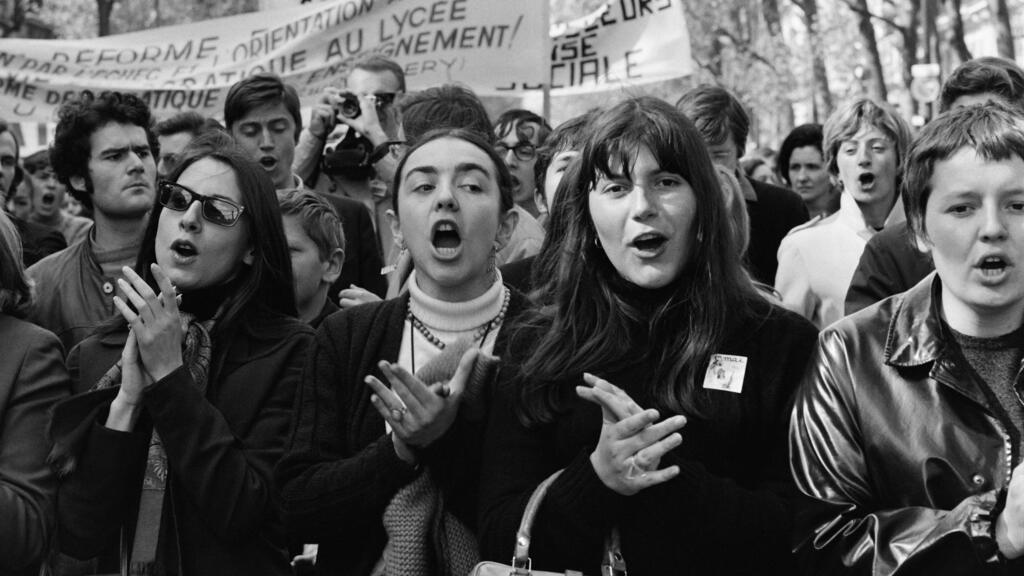
1968年5月1日,学生在巴黎抗议,当时这场运动刚刚兴起,后来演变成法国历史上规模最大的总罢工。© 雅克·马里 / 法新社1968年5月,玛丽斯·埃斯特莱16岁,正在巴黎以西富裕郊区圣日耳曼昂莱的一所女子高中读二年级。她记得那场始于大学的学生运动如何闯入了中学课堂。
Students protest in Paris on 1 May 1968, in the early days of a movement that would go on to become the biggest general strike in French history. © JACQUES MARIE / AFP Maryse Esterle was 16 years old in May 1968, finishing her second year at a girls' high school in Saint-Germain-en-Laye, a wealthy suburb to the west of Paris. She remembers when the student movement that had begun in universities burst into classrooms. "The boys turned up one day in early May. They came as part of a demonstration, there were several hundred of them.
“五月初的一天,男生们出现了。他们是作为一场示威游行的一部分来的,有好几百人。他们到了之后,强行穿过学校的大门,有些女生已经把门打开了。他们不需要搞破坏,只是推开大门就进来了。要我说,男女同校就是这么来的。”
They arrived and they forced their way through the doors of the school, which some of the girls had opened. They didn't need to do any damage, they just pushed the gates and came inside. And that's how co-education came about, I'd say."
当时,单性别学校在法国仍是常态。即便在大学里,男女学生也住在分开的宿舍,不允许互相探访。
At the time, single-sex schools were still the norm in France. Even at university, male and female students lived in separate dorms and were not allowed to visit each other.
性教育根本不存在,堕胎是非法的,而女性获得无需丈夫许可即可工作或开设银行账户的合法权利,才不过三年。
Sex education was non-existent, abortion was illegal and it had only been three years since women gained the legal right to work or open a bank account without their husband's permission.
埃斯特莱的父母都在路那头的男校教书。但她的父亲从一开始就被聘为正式员工,母亲则一直是临时合同,直到退休。
Esterle's parents both taught at the boys' school down the road. But while her father was hired as a permanent member of staff from the start, her mother remained on temporary contracts until she retired.
“据我回忆,当时最重要的事,就是终结男女之间的这种隔离,”Esterle说。“最终能够生活在一个真正的社会里——一个男女混合的社会,就像我们现在生活的这样,男人和女人、男孩和女孩相互交往,诸如此类。那是当时被禁止的事。”
"As I recall, the most important thing at the time was to put an end to this separation between boys and girls," Esterle says. "And to finally be able to live in a real society – a mixed society, like the one we live in now, where we interact between men and women, boys and girls, and so on. Something we were forbidden to do back then."
在Spotlight on France播客中收听本故事的音频版本Spotlight on France,第152期 © RFI
Listen to a version of this story on the Spotlight on France podcast Spotlight on France, episode 152 © RFI
充满希望的一代1968年在法国年轻,意味着夹在两个世界之间。
A hopeful generation To be young in France in 1968 was to be caught between two worlds.
巴黎高等师范学院(ENS Lyon)政治学家Boris Gobille专门研究这一时期,他解释道:“一方面,你们有着不可抑制的解放渴望;另一方面,你们生活在一个依然非常、非常受束缚的社会里。”
Boris Gobille, a political scientist at the ENS Lyon university, who specialises in the period, explains: "On the one hand you had an irrepressible desire for emancipation, but on the other you were living in a society that was still very, very constrained."
那时,夏尔·戴高乐担任总统已近10年。法国仍由经历过二战的一代人统治,但战后出生的人口却激增:1968年,法国13至24岁的年轻人有940万,而65岁及以上的老年人为630万。
By this time, Charles de Gaulle had been president for almost 10 years. France was still governed by the generations who had lived through the Second World War, yet the number of people born after it had exploded: the country had 9.4 million 13 to 24-year-olds in 1968, compared to 6.3 million people aged 65 or older.
这些年轻人中,许多人受教育程度高于父母——到1968年,大学生人数约为1960年的2.5倍——但成年年龄定在21岁,因此他们大多还没有投票权。
Many of these young people were more educated than their parents – by 1968, there were roughly 2.5 times the number of university students there had been in 1960 – but with the age of majority set at 21, most of them didn't yet have the right to vote.
Gobille表示:“他们形成了‘一个日益发展出自己独特文化的一代,拥有属于自己的文化参照系,有时与父母那一代截然不同’。”
They formed "a generation that was increasingly developing a culture of its own, one that was distinct to it, with its own cultural references, which were sometimes very different from those of their parents", Gobille says.
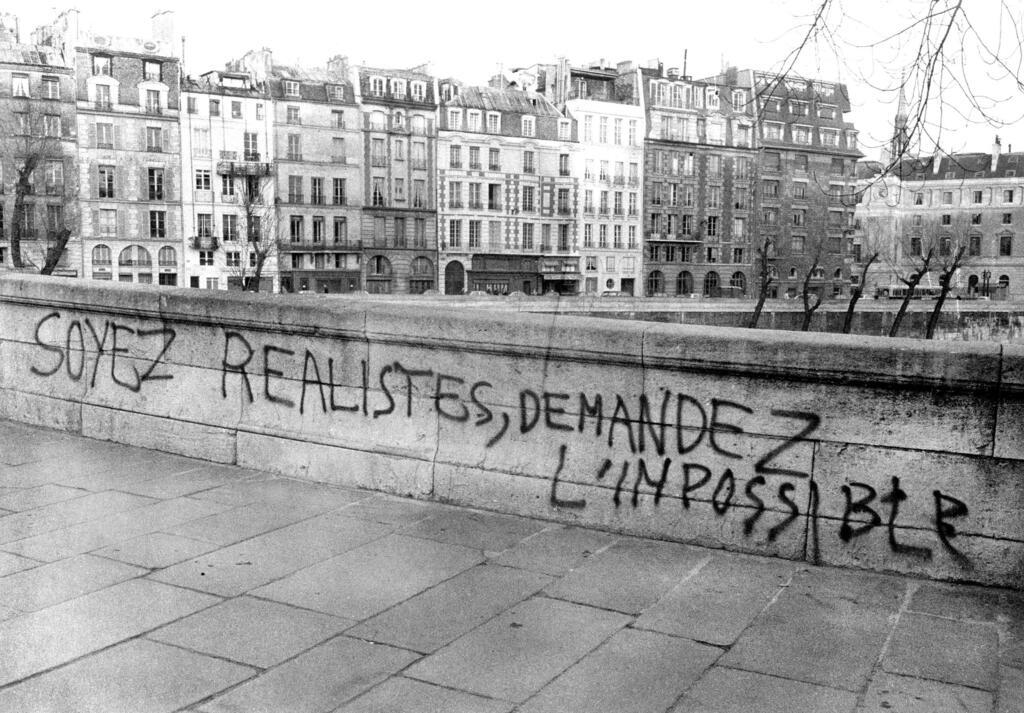
“要现实,要做不可能的事”:这是抗议活动的标志性口号之一,1968年5月3日见于巴黎一座桥梁上。© GERARD-AIME/Gamma-Rapho via Getty关键在于,他们是在繁荣中长大的。法国已进入“光荣三十年”的第三个十年,这是战后持续30年的经济繁荣期,法国经济年均增长5%。
"Be realistic, demand the impossible": one of the emblematic slogans of the protests seen on a bridge in Paris on 3 May, 1968. © GERARD-AIME/Gamma-Rapho via Getty Crucially too, they were growing up in prosperity. France was two decades into the " Trente Glorieuses ", the post-war boom that lasted 30 years and saw the French economy grow by an average of 5 percent annually.
“那时,我们不怕未来,”埃斯特勒回忆道。“有工作可做……我们想把工作做得更好,但感觉我们是知道自己能做到的,无论如何都会有工作,想上大学就会有大学的位置……社会要狭窄得多,但职业道路和社会前景却开阔得多。”戈比耶表示,经济机会助长了一种事情正在变好的感觉。
"Back then, we weren't afraid of the future," Esterle recalls. "There were jobs to be had… We wanted to work better, but it was like we knew we could, or in any case that we'd have work, that there'd be a place for us at university if we wanted to go… Society was much more narrow, but career paths and social prospects were much more open." Economic opportunities fed into a sense that things were getting better, says Gobille.
“空气中仍弥漫着一种进步感。这种观念尚未被搁置,尽管我们不应把那个时代描绘得过于美好。依然存在大量的不平等和排斥……但无论如何,那是一个提供更多希望的背景。如今,前景提供的希望少得多。”
"There was still a sense of progress in the air. It wasn't an idea that had been shelved just yet, even if we shouldn't paint too rosy a picture of the time. There was still a great deal of inequality and exclusion… but it was nonetheless a context that offered far more hope.
“代际愤怒”驱使年轻欧洲人奋斗以发出声音
Today, the outlook offers far less hope."
规模的差异1968年五月抗议者的诉求雄心勃勃。“要现实点,”一句臭名昭著的口号喊道,“要提出不可能的要求。”
‘Generational rage’ drives young Europeans to fight to be heard ## Difference in scale The May '68 protesters were ambitious in their claims. "Be realistic," went one notorious slogan, "demand the impossible."
面对经济危机、公共服务削弱、不平等加剧、气候变暖以及明年总统大选极右翼获胜的前景,今天的抗议者似乎要求更少——更多教师、更好的教室、更轻松的课表。
Faced with economic crisis, eroding public services, widening inequalities, a warming planet and the prospect of a far-right victory in next year's presidential election, today's protesters appear to be asking for less – more teachers, better classrooms, lighter timetables.
但戈比耶指出,1968年的学生最初也呼吁教育改革,反对大学选拔性招生和自上而下的教学方式,要求减少僵化的管理并拓宽课程设置。
But the students of '68 also started out calling for education reforms, Gobille points out, opposing selective university admissions and top-down teaching methods and demanding less rigid governance and a broader curriculum.
即使抗议后来扩大到谴责戴高乐主义、消费社会、资本主义、帝国主义和越南战争,这些诉求依然贯穿其中。
These demands continued to feature in the protests even as they expanded to denounce Gaullism, consumer society, capitalism, imperialism and the Vietnam War.
同样地,随着当前抗议活动持续,口号范围已扩大,矛头指向社会不平等、加沙战争、气候变化、极右翼,以及日益突出的警察暴力。
Similarly, as the current protests have continued, the slogans have broadened to take aim at social inequality, the war in Gaza, climate change, the far right and increasingly, police violence .
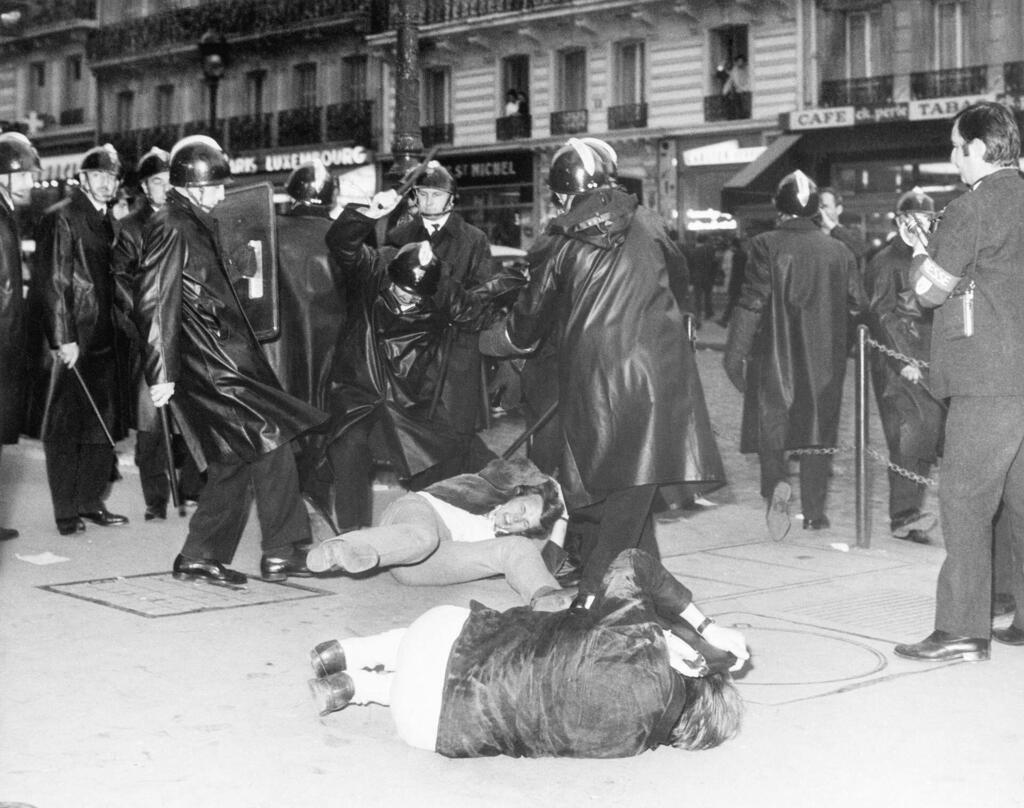
这也是与1968年相似之处,当时警察用警棍驱散年轻抗议者的画面帮助赢得了更广泛公众的同情。
This too is a parallel with 1968, when images of police dispersing young protesters with batons helped win sympathy from the broader public.
1968年5月3日,巴黎索邦大学,警察武力驱散抗议者。© Bettmann / Getty Images在一个决定性的发展中,工人运动与学生汇合,在公私部门发起罢工和占领行动。
Police disperse protesters by force at the Sorbonne university in Paris, 3 May, 1968. © Bettmann / Getty Images In a decisive development, the workers' movement converged with the students and launched strikes and occupations throughout the public and private sectors.
到5月下旬,参与人数达约1000万——占当时法国劳动力的三分之一、总人口的五分之一。这至今仍是法国历史上规模最大的总罢工,迫使戴高乐政府向工会作出重大让步。
By late May, some 10 million people were taking part – a third of France's workforce and a fifth of the entire population at the time. It remains the biggest general strike in French history to this day, and forced de Gaulle's government to make significant concessions to unions.
如今的抗议规模小得多。虽然工会支持学生,但他们于11月5日发起的联合罢工和游行,据组织者称吸引约150万人,据当局称约57.5万人。
Today's protests are on a far smaller scale. While trade unions have backed students, the joint strike and marches they called on 5 November drew around 1.5 million people according to organisers, and 575,000 according to authorities.
1968年,埃斯特勒记得感觉仿佛人人都参与其中。“当我走上街头,尤其是在巴黎,我印象中一切都在改变。人们彼此交谈。”她说,今天已不再是这种情况。
In 1968, Esterle remembers feeling as if everyone was involved. "When I went out on the streets, especially in Paris, I had the impression that everything was changing. People were speaking to each other." Today, she says, that isn't the case.
视频:法国学生抗议的配乐
Video: The soundtrack to France’s school protests
号召的呐喊如今的年轻人不再代表相同的人口力量。1968年,青少年和年轻成年人占法国本土人口的19%,现已降至14%——远少于65岁及以上人群,后者占比已从13%增至22%。
A rallying cry Young people today no longer represent the same demographic force. From 19 percent of the population of mainland France in 1968, teenagers and young adults have fallen to 14 percent – easily outnumbered by people aged 65 and above, who have gone from 13 to 22 percent.
“年龄金字塔已彻底倒置,”戈比耶指出。2026年的年轻人“生活在一个快速老龄化的社会里,退休人员构成了一个史无前例的投票群体”。
"The age pyramid has been completely reversed," notes Gobille. The youth of 2026 "live in a rapidly ageing society, where pensioners constitute a voting bloc unprecedented in history".
法国有组织行动的传统也在衰退,加入学生会、工会或政治团体的人变少了。取而代之的是新的、更分散的动员形式,例如社交媒体上的行动号召,随之而来的是更杂乱的诉求和更大的投机空间。
France's tradition of organised action has also declined, with fewer people joining student or trade unions or political groups. In their place have arrived new, more diffuse forms of mobilisation, such as calls to action on social media, and with them more disparate messaging and greater potential for opportunism.
“你得记住,对这些年轻人中的许多人来说,这是他们第一次抗议,”戈比耶说。他既为他们似乎从中体会到的快乐所打动,也为他们掌握行动技巧的速度所惊讶。
"You have to bear in mind that for many of these young people, these are their first protests," Gobille says. He's been struck by both the joy they seem to be taking in them and the speed with which they have picked up activism skills.
“所有这些表明,此类重大事件具有相当大的政治化力量,能让整整一代年轻人接触政治,包括抗议文化。”
"All this shows that major events of this kind have a considerable power to politicise and introduce an entire young generation to politics, including protest culture."
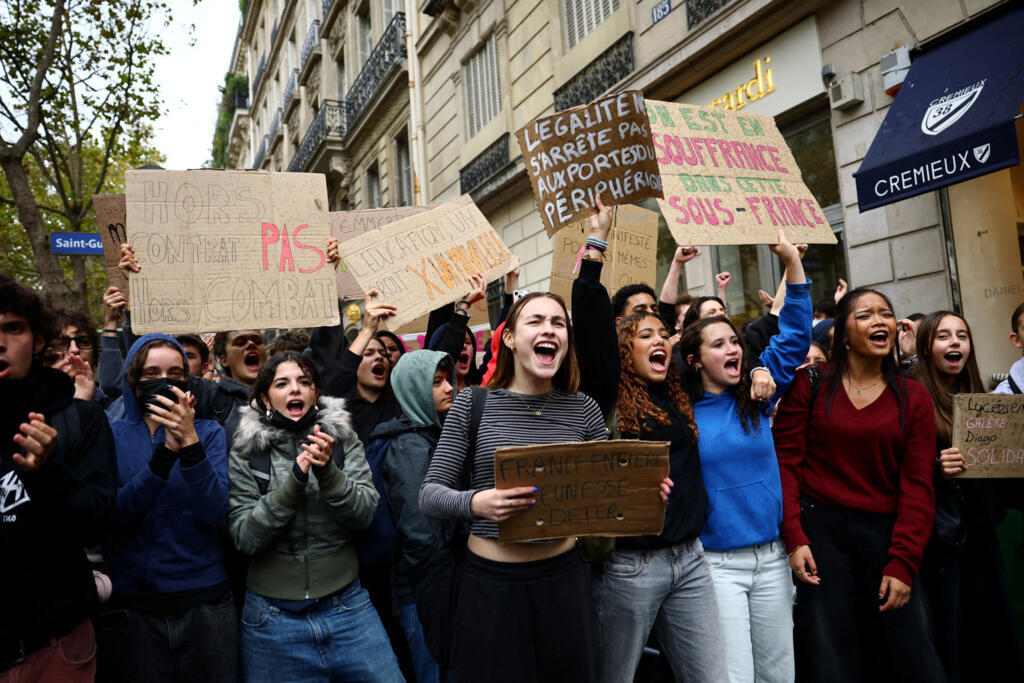
2026年10月7日,巴黎政治学院遭封锁,抗议者走上街头。© 路透社 - Sarah Meyssonnier他说,今天抗议活动中的某些口号让他想起了1968年。它们富有创意、不敬权威,虽带一丝黑色幽默,却比婴儿潮一代更具Z世代特质。
Protesters in the streets during a blockade of Sciences Po university in Paris on 7 October, 2026. © REUTERS - Sarah Meyssonnier He says something in the slogans at today's protests remind him of 1968. They're inventive and irreverent, albeit with a dark vein of humour that feels more Gen Z than Baby Boomer.
有些口号直接划等号:“2026年10月是新的‘五月风暴’”或“‘6-7一代’正在重演‘五月风暴’”。
Some of them draw the parallel directly: "October 2026 is the new May '68" or " Generation 6-7 is redoing May '68".
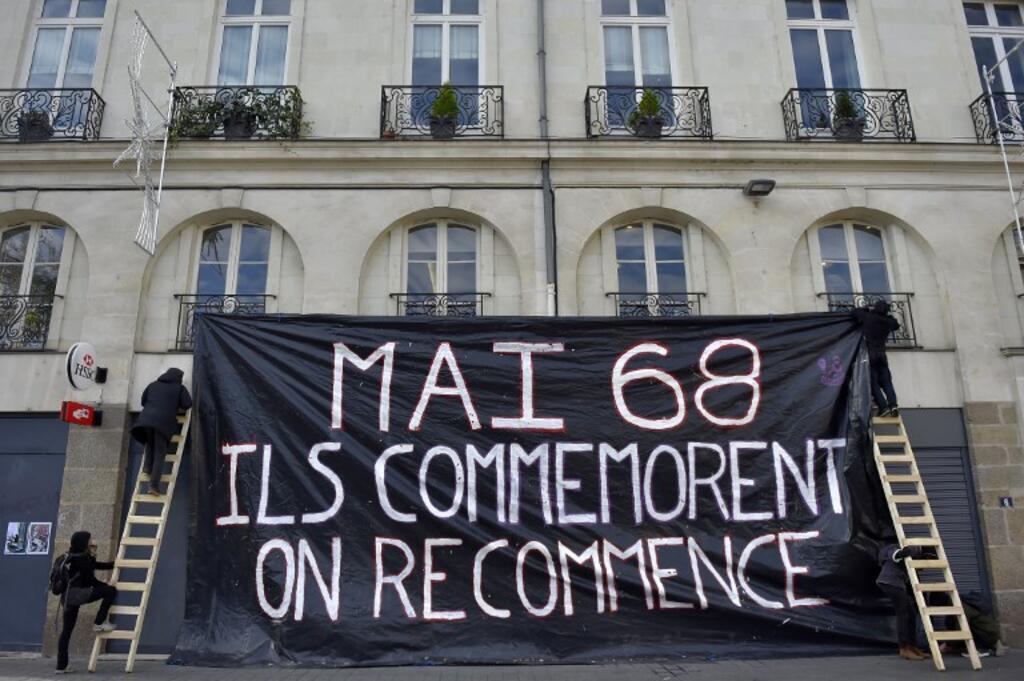
戈比耶并不意外。就像法国大革命一样,“五月风暴”的引用经常出现在法国抗议活动中,被作为大规模社会运动成功迫使变革的典范。[“五月风暴”:法国应铭记的转折点] 2017年11月16日,在针对政府经济和社会改革的全国抗议日当天,南特的抗议者悬挂了一幅横幅,上书“1968年5月,他们在纪念,我们在重演”。 LOIC VENANCE / AFP 1968年的抗议者未能推翻政府,却改变了这个国家的文化。
Gobille isn't surprised. Like the French Revolution, references to May '68 regularly turn up at protests in France, cited as an example of a mass social movement successfully forcing change. May '68: a turning point France should remember Protesters in Nantes hang a banner reading "May '68, they're commemorating, we're doing it again" during a nationwide day of protest against the government's economic and social reforms, on 16 November, 2017. LOIC VENANCE / AFP The protesters of 1968 failed to overturn the government, but did transform the country's culture.
“如果你自己想要推动社会的重大变革,并在某种意义上掌握自己的命运,这非常鼓舞人心,”戈比耶说。
"It's very inspiring if you yourself want to drive a major transformation in society and, in a sense, take control of your own destiny," Gobille says.
“五月风暴”老兵埃斯特莱尔说,她四十多岁的女儿常说,她希望能亲历那个她眼中“令人振奋”的时代。
Esterle, the May '68 veteran, says her 40-something daughter has often said she wished she could have been around for an era she sees as "exhilarating".
“当我谈起那段往事时,我真切地感觉仿佛在讲述一个已经消失的世界,”埃斯特莱尔说。“然而,现在的年轻人——16岁、17岁、18岁、20岁的孩子——他们也有抱负。他们的抱负与我们不同,因为他们面临的问题不一样,但他们确实也有抱负,这正是我感到与他们贴近的地方。”
"When I talk about it, I really feel as though I'm talking about a world that has disappeared," Esterle says. "And yet young people today – 16, 17, 18, 20-year-olds – they have aspirations. They're not the same as ours because they don't face the same problems, but they do have aspirations too, and that's where I feel close to them."