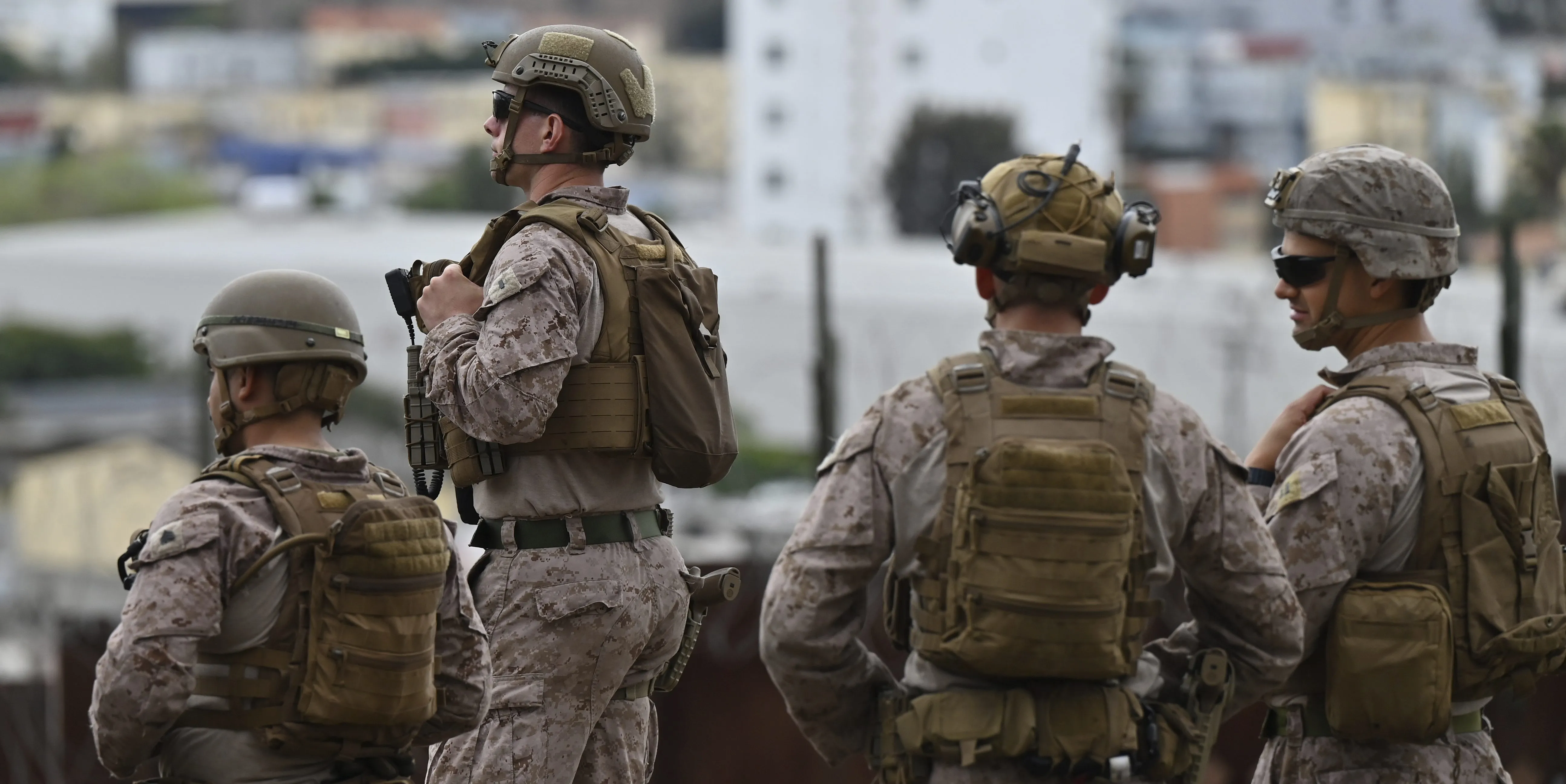
唐纳德·特朗普总统上周将矛头指向墨西哥,此前他的政党在中期选举中惨败。“我国正再次遭受‘入侵’。巨大的‘大篷车’正在形成,并开始非法穿越墨西哥,”他在 Truth Social 上宣布。他扬言要对墨西哥征收关税,“如果他们不阻止这些人。”
President Donald Trump took aim at Mexico last week, in the wake of the rout of his party in the midterm elections. The “INVASION of our Country is taking place again. Huge CARAVANS are forming and beginning their illegal march through Mexico,” he announced on Truth Social. He lobbed threats of tariffs at Mexico “if they don’t stop them.”
特朗普重提反移民恐吓论调——这是让他重返白宫的竞选活动的一个亮点——正值美墨两国军方联合打击贩毒集团的行动不断扩大,有关中央情报局在墨西哥扩大秘密反毒行动的新细节浮出水面,墨西哥国内对双边关系恶化甚至美国单方面发动跨境袭击的担忧与日俱增。
Trump’s renewed anti-immigrant fearmongering — a highlight of the campaign that won him a return to the White House — came as joint U.S. and Mexican military counter-cartel efforts are growing, new details about expanded covert CIA anti-drug operations in Mexico have come to light, and fears of worsening relations and even unilateral U.S. attacks south of the border are on the rise in Mexico.
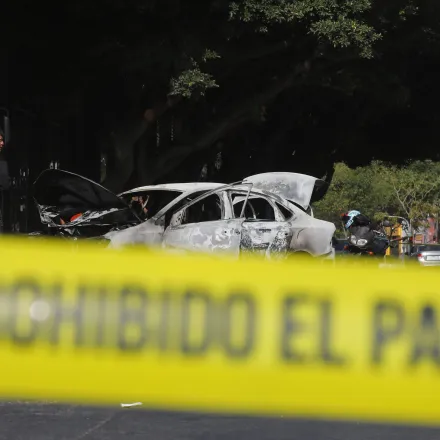
过去两年里,特朗普政府通过大量举措在美洲全面扩大了反毒品行动,从在加勒比海和太平洋对疑似贩毒者实施法外处决,到在厄瓜多尔由精锐部队执行地面行动,再到强化与墨西哥军方的合作。
The Trump administration has, over the last two years, expanded counter-drug efforts across the Americas through a plethora of initiatives from extrajudicial killings of suspected drug traffickers in the Caribbean and Pacific Ocean to ground operations by elite troops in Ecuador to enhanced efforts alongside Mexican forces.
“目前,我们拥有历史性的合作,军事对军事,”自称“战争部长”的皮特·赫格塞斯表示(去年)。今年,他领导的部门成立了“联合跨部门特遣队-打击贩毒集团”,旨在“识别、破坏并摧毁对美国构成威胁、沿美墨边境活动的贩毒集团行动”。与此同时,据报道,在墨西哥总统克劳迪娅·辛鲍姆阻止此类行动后,中央情报局利用一名被贩毒集团渗透的检察官扩大了其在墨西哥的行动。(这些秘密行动只有在中情局特工在任务中死亡后才曝光。)
“Right now, we have historic cooperation, military-to-military,” self-styled War Secretary Pete Hegseth said last year. This year, his department established the Joint Interagency Task Force-Counter Cartel to “identify, disrupt, and dismantle cartel operations posing a threat to the United States along the U.S.-Mexico border.”At the same time, the CIA reportedly used a cartel-compromised prosecutor to expand its operations in Mexico after President Claudia Sheinbaum blocked such efforts. (The covert operations only came to light when CIA operatives died during a mission.)
“美国在‘禁毒战争’中向墨西哥提供的军事援助,重蹈了‘反恐战争’的覆辙。”
“U.S. military aid to Mexico in the ‘war on drugs’ echoes the same failures of the ‘war on terror.’”
根据塔夫茨大学弗莱彻学院世界和平基金会与布朗大学“战争代价”项目合作发布的一份新报告,特朗普政府的最新举措只是美国与墨西哥数十年来安全援助努力惨败的最新一例。该分析独家共享给《拦截者》,考察了近15年来美墨两国打击毒品贸易的努力。它对过去美国的努力提出了严厉谴责,并表明特朗普政府目前在墨西哥的反毒品政策范式——以及更广泛地在美洲的打击贩毒集团政策——注定要失败。
The Trump administration’s latest initiatives are just the latest in a decadeslong string of U.S. security assistance efforts with Mexico that have failed spectacularly, according to a new report by the World Peace Foundation at Tufts University’s Fletcher School released in collaboration with the Costs of War project at Brown University. The analysis, shared exclusively with The Intercept, examines close to 15 years of U.S. and Mexican efforts to combat the drug trade. It offers a stark rebuke of past U.S. efforts, and suggests the Trump administration’s current paradigm for counter-drug policy in Mexico — and counter-cartel policy across the Americas more broadly — is destined to fail.
“美国在‘禁毒战争’中对墨西哥的军事援助,重蹈了‘反恐战争’的覆辙,”“战争代价”项目主任斯蒂芬妮·萨维尔说。“在这两种情况下,美国的安全援助都助长了旷日持久的战争,其特征是长期军事化、暴力螺旋式上升和大规模平民伤害。这些冲突对人权、经济和公民机构产生了负面影响。”
“U.S. military aid to Mexico in the ‘war on drugs’ echoes the same failures of the ‘war on terror,’” said Stephanie Savell, director of the Costs of War project. “U.S. security assistance in both cases has fueled forever wars marked by protracted militarization, spiraling violence, and widespread civilian harm. These conflicts negatively impact human rights, the economy, and civil institutions.”
根据这份新报告,尽管美国提供了数十亿美元援助数十年,但墨西哥禁毒战争的人力、财力和政治代价却飙升。2008年至2021年,美国通过“梅里达倡议”向墨西哥的拦截和反毒品行动投入了33亿美元。研究人员发现,虽然“梅里达计划”原本旨在成为一项共同努力,以强化政府机构、打击犯罪网络和减少跨境毒品流动,但由于政治意愿时强时弱、项目实施屡屡受挫,美墨双方始终未能达到既定基准。
Despite billions of dollars in U.S. aid over decades, the human, financial, and political costs of Mexico’s drug war have skyrocketed, according to the new report. The U.S. poured $3.3 billion into Mexico’s interdiction and counter-drug operations through the Mérida Initiative from 2008 to 2021. The researchers found that while Plan Mérida was originally slated to be a shared effort to strengthen government institutions, target crime networks, and reduce cross-border drug flows, both the U.S. and Mexico consistently failed to meet benchmarks, as political will ebbed and flowed and implantation of projects frequently faltered.
结果,在墨西哥,毒品暴力激增、谋杀率翻了三倍、政府权威瓦解。在边境以北,毒品需求持续不减、过量用药死亡人数激增,而美国为遏制助长毒品贸易的枪支和现金流向几乎未采取任何行动。
As a result, in Mexico, drug violence spiked, homicide rates tripled, and government authority crumbled. North of the border, drug demand continued apace and overdose deaths surged, while little was done in the U.S. to stem the flow of firearms and cash that fuels the drug trade.
该报告作者、得克萨斯农工大学国际事务助理教授艾琳·蒂格和佐治亚格威内特学院政治学兼职教授佩顿·麦奎尔详述了墨西哥暴力造成的巨大人员伤亡:自2006年以来超过46万起谋杀案。
The authors of the report, Aileen Teague, an assistant professor of international affairs at Texas A&M, and Peyton McGuire, an adjunct professor of political science at Georgia Gwinnett College, detailed the immense human toll of violence in Mexico: more than 460,000 homicides since 2006.
他们写道:“尽管在梅里达计划及其后续计划下扩大了军事部署,墨西哥的凶杀率在2016年至2019年间仍达到历史最高水平。”他们还补充说:“平民承受了这场暴力中的绝大部分:屠杀、绑架和定点杀戮已变得普遍。”此外,据报有超过13万人失踪。女性杀害(指因性别动机而实施的杀戮)在毒品战争期间也大幅上升。
“Despite expanded military deployments under Mérida and its successors, Mexico’s homicide rates reached historic highs between 2016 and 2019,” they wrote, adding: “Civilians have borne the overwhelming share of this violence: massacres, kidnappings, and targeted killings have become widespread.”More than 130,000 people have also been reported missing. Femicides, the term for gender-motivated killings, have also spiked during the drug war. Reported femicides increased from 427 in 2015 to 1,004 in 2021 — a 135 percent increase.
据报,女性杀害案件从2015年的427起增至2021年的1004起,增幅达135%。去年,仅锡那罗亚州就有105名女性被杀。这是14年来最高的死亡人数;其中73起杀戮被作为女性杀害案件调查。
Last year, in Sinaloa state alone, 105 women were killed . It was the highest toll in 14 years; 73 of the killings were investigated as femicides. The massive death toll is directly attributable to the U.S. “Many of these homicides are inflicted by firearms trafficked from the United States, which remain a principal source of weapons used by Mexican criminal organizations,” according to Teague and McGuire.
如此庞大的死亡人数可直接归因于美国。蒂格和麦圭尔表示:“这些凶杀案中有许多是由从美国贩运来的枪支造成的,这些枪支仍是墨西哥犯罪组织使用的主要武器来源。”国务卿马尔科·卢比奥至少承认了同样的事实。卢比奥在2025年承认:“这些卡特尔手中的许多武器,都是从美国境内的某个来源购买的。”“这些武器是被贩运来的。”《拦截》的一项调查还发现,卡特尔甚至能够获取为美国军方生产的弹药。
No less than Secretary of State Marco Rubio admitted the same. “Many of the weapons that are in the hands of these cartels are weapons that have been purchased from a source in the United States,” Rubio admitted in 2025. “These weapons have been trafficked.”An Intercept investigation also found that cartels have even been able to procure ammunition produced for the U.S. military. Despite clear evidence of the carnage and its cause, most violence in Mexico goes unreported and unpunished.
尽管有确凿证据证明了这场大屠杀及其成因,墨西哥的大多数暴力案件仍未被报告,也未被追责。研究显示,近 95% 的暴力犯罪案件未破,暴露出墨西哥政府在威慑、侦查和起诉有组织犯罪方面存在巨大缺陷。这场大屠杀多由贩毒集团实施,与国家权威的衰退密不可分。《华尔街日报》近期的报道凸显了贩毒集团对墨西哥的控制。
Research shows that in nearly 95 percent of cases, violent crimes go unsolved, exposing massive deficiencies in the Mexican government’s ability to deter, investigate, and prosecute organized crime. The carnage, much of it inflicted by cartels, is inextricably bound to declining state authority. Recent reporting by the Wall Street Journal highlighted the control of cartels across Mexico. An estimated one-third of the country’s territory is controlled by criminal groups — such as the Sinaloa Cartel and the Jalisco New Generation Cartel — according to U.S. government estimates.
据美国政府估计,该国约三分之一的领土由犯罪集团控制——例如锡那罗亚贩毒集团和哈利斯科新生代贩毒集团。特格和麦奎尔写道:“这种领土治理的侵蚀既是暴力的成因,也是暴力的后果。”
“This erosion in territorial governance is both a cause and consequence of violence,” write Teague and McGuire.
美国和墨西哥针对毒枭的打击行动导致犯罪集团分裂,引发局部冲突激增,超出了地方政府和执法部门的遏制能力。“反过来,机构的弱化使其无法遏制或威慑暴力,形成了一个自我强化的循环:暴力削弱国家能力,而国家能力的下降又助长了进一步的暴力,”报告指出。
U.S. and Mexican efforts to target drug kingpins have fractured criminal groups and caused a proliferation of localized conflicts, overwhelming the abilities of local governments and law enforcement to contain them. “In turn, weakened institutions proved unable to contain or deter violence, creating a self-reinforcing cycle in which violence degrades state capacity, and diminished state capacity enables further violence,” according to the report.
随着地方警察力量失效,军队介入执法助长了猖獗的国家暴力。非政府组织如国际特赦组织和人权观察已详尽记录了墨西哥安全部队的大规模侵权行为,包括酷刑、法外处决和强迫失踪。
As local police forces have faltered, military involvement in law enforcement has fueled rampant state violence. Widespread abuses by Mexican security forces , including torture, extrajudicial killings, and enforced disappearances , have been exhaustedly documented by NGOs like Amnesty International and Human Rights Watch.
除了直接危害受害者和幸存者以及墨西哥国家的权威外,暴力也重创了墨西哥经济。仅2021年,流血冲突造成的经济负担就接近2000亿美元,约占墨西哥国内生产总值的15%。此后这一总额已增至高达2500亿美元,或占GDP近18%。
Beyond its direct impacts on victims and survivors and the authority of the Mexican state, violence has also devastated Mexico’s economy. The economic burden of the bloodshed, in just 2021 alone, was almost $200 billion, roughly 15 percent of Mexico’s gross domestic product. That total has since increased to as much as $250 billion or nearly 18 percent of GDP.
在梅里达倡议及类似的美墨军事化禁毒行动失败后,特朗普政府以关税、移民执法和单方面军事行动(如无人机打击)威胁为筹码,施压墨西哥摧毁贩毒集团。辛鲍姆政府已作出多项让步,包括深化情报共享、加快将知名在押贩毒嫌犯移交美方羁押,以及利用美国情报击毙哈利斯科新一代贩毒集团领导人内梅西奥·奥塞古拉·塞万提斯(绰号“梅诺乔”)。这项后续行动凸显了墨西哥迁就美国的持续风险:暴力随即在10个州爆发,包括纵火袭击、袭击安全部队和设置路障。
In the wake of the failures of the Plan Mérida and similar militarized U.S.-Mexican counter-drug efforts, the Trump administration has pushed Mexico to destroy the cartels using tariffs, immigration enforcement, and threats of unilateral military operations — such as drone strikes — as leverage on Sheinbaum. Her government has made repeated concessions such as deepened intelligence sharing, expediting the transfer of high-profile imprisoned traffickers to U.S. custody, and using U.S. intelligence to kill Nemesio Oseguera Cervantes, known as “El Mencho,” leader of the Jalisco New Generation Cartel. This latter operation threw into broad relief the continued perils for Mexico in placating the U.S. , as violence then erupted across 10 states, including arson attacks, assaults on security forces, and road blockades.
特朗普政府在墨西哥挑起的暴力与动荡,已在美洲大陆各地得到镜像式复刻,这发生在被称为“门罗主义变体”的激进外交与军事介入之中——这是对1823年门罗主义的一种扭曲。今年早些时候,武装冲突地点与事件数据项目发布的一份报告指出:“美国对有组织犯罪的施压,正在加速该地区军事化安全手段的蔓延。”这种动荡预计将“在特朗普剩余任期内助推暴力升级,可能抵消强硬手段所取得的任何短期改善。”
The violence and instability stoked by the Trump administration in Mexico has been mirrored across the Americas, amid the aggressive diplomatic and military engagement dubbed the Donroe Doctrine, a bastardization of the 1823 Monroe Doctrine. Earlier this year, a report by the Armed Conflict Location & Event Data project found that “U.S. pressure on organized crime is accelerating the spread of militarized security approaches in the region.”This volatility was set to “fuel an increase in violence throughout the rest of Trump’s term, potentially undermining any short-term improvements achieved through hardline approaches.”
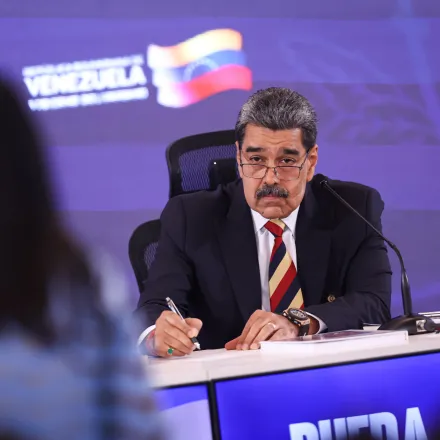
“门罗主义变体”被用来为在加勒比海和太平洋上袭击民用船只、攻击委内瑞拉并绑架其总统、在墨西哥开展中情局行动、与哥伦比亚、危地马拉、洪都拉斯和巴拿马扩大伙伴关系、在厄瓜多尔开展代号为“全面歼灭行动”的联合打击贩毒集团行动,以及在拉美其他地区增加军事和情报行动提供理由。它也可能被用来为在墨西哥的军事行动提供理由。
The Donroe Doctrine has been used to justify strikes on civilian boats in the Caribbean Sea and Pacific Ocean; an attack on Venezuela and the abduction of its president; the CIA operations in Mexico; expanded partnerships with Colombia , Guatemala, Honduras, and Panama ; joint counter-cartel operations in Ecuador dubbed “ Operation Total Extermination ”; and increased military and intelligence operations elsewhere in Latin America. It may be utilized to justify military operations in Mexico, too.
尽管辛鲍姆指出,所谓的中美洲移民大篷车距离美国边境约2000英里,且并未向北移动,特朗普本周仍持续发出威胁。“他们将不被允许入境,”特朗普周一表示。“他们说会阻止他们,如果不阻止,我们将对墨西哥征收重关税。”
Even though Sheinbaum noted the so-called caravan of Central American immigrants was about 2,000 miles from the U.S. border and not moving northward, Trump continued lobbing threats this week. “They will not be allowed in,” Trump said on Monday. “They said that they were going to stop them, and if they don’t stop them, we’re going to put heavy tariffs on Mexico.”
这种制造恐慌的做法紧随特朗普的排外顾问斯蒂芬·米勒最近晋升为白幕僚长之后。作为“多诺罗主义”的主要设计师,他曾主导关闭美国南部边境和特朗普的大规模驱逐行动,米勒一直是极端强硬反墨西哥政策的鼓吹者,并似乎主张在美洲地区进一步将美国政策军事化。“在本半球活动的贩毒集团就是本半球的‘伊斯兰国’和‘基地’组织,必须同样无情地对待,”米勒今年早些时候表示,并补充说必须采取“硬实力”和致命武力——而非刑事司法手段。
This fearmongering follows the recent promotion of Trump’s xenophobic adviser Stephen Miller to White House chief of staff. The chief architect of the Donroe Doctrine, who oversaw the closure of the U.S. southern border and Trump’s mass deportation campaign, Miller has been an advocate of extreme hard-line anti-Mexican policies and has seemed to advocate for even greater militarization of U.S. policy in the Americas. “Cartels that operate in this hemisphere are the ISIS and al-Qaida of this hemisphere and must be treated just as ruthlessly,” Miller said earlier this year, adding that “hard power” and lethal force — not criminal justice — must be employed.
世界和平基金会的新报告表明,几十年的军事化安全合作屡屡失败。报告指出,“梅里达倡议”的教训表明,任何新政策都必须关注边境两边“毒品经济的结构性驱动因素——需求、武器、资金和体制薄弱”。
The new report by the World Peace Foundation demonstrates that decades of militarized security cooperation has repeatedly failed. The lessons of the Mérida Initiative, according to the report, indicate that any new policy must focus on the “structural drivers of the drug economy — demand, arms, finance, and institutional weakness — on both sides of the border.”
在经历了数十年的徒劳和流血之后,蒂格和麦奎尔认为,美国对其南方伙伴的安全援助需要彻底重置。“展望未来,”他们写道,“一个更有效的美墨(进而延伸为美拉)安全框架,将需要从以执法为主导、军事化的做法,根本性地重新校准为真正的双边战略,以解决毒品贸易的完整政治经济问题。”白宫和赫格塞斯办公室均未回应多次置评请求。
After decades of futility and bloodshed, Teague and McGuire say that U.S. security assistance to its partner to the south needs a complete reset. “Moving forward,” they wrote, “a more effective U.S.-Mexico (and by extension, U.S.-Latin America) security framework will require a fundamental recalibration away from enforcement-dominant, militarized approaches toward a genuinely binational strategy that addresses the full political economy of the drug trade.”Neither the White House nor Hegseth’s office responded to repeated requests for comment. The post [U.S.
该文章《美国在墨西哥的禁毒战争助长了更多谋杀、暴力和毒品致死》首发于《拦截者》。
Drug War in Mexico Fueled More Murders, Violence, and Drug Deaths](https://theintercept.com/2026/11/19/us-war-drug-mexico-violence/) appeared first on The Intercept .