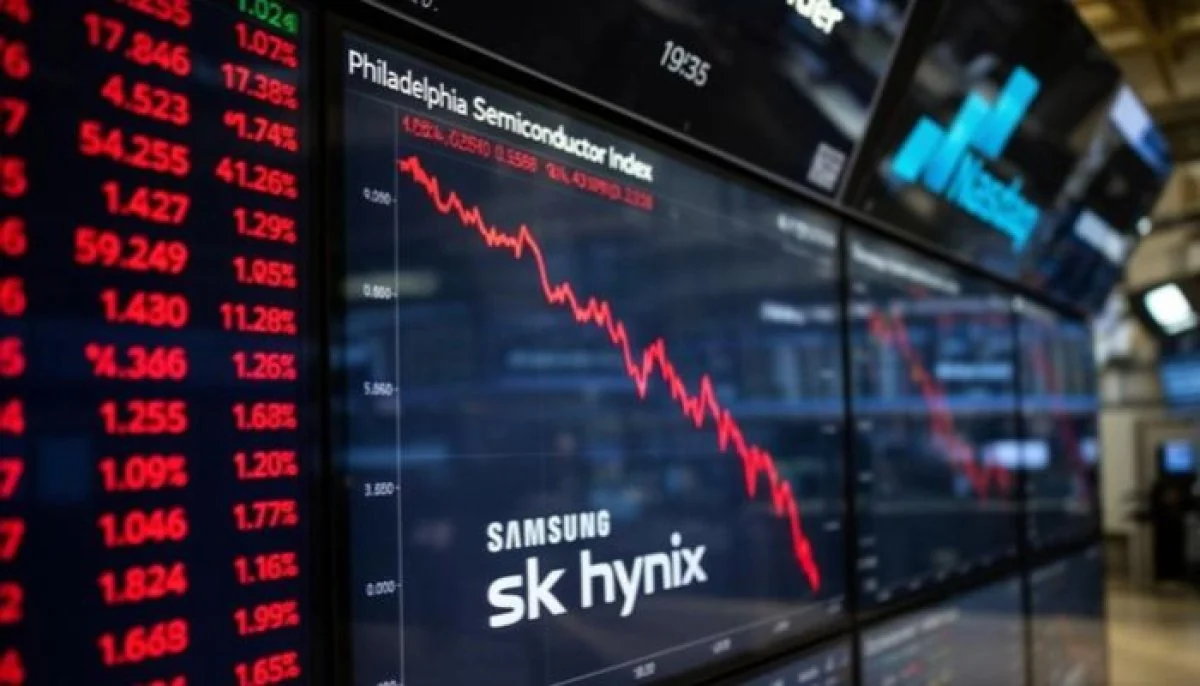
韩国综合股价指数盘中一度暴跌近6%,跌幅随后收窄至3%以上,促使首尔方面准备设立80亿美元的市场稳定基金。与此同时,香港和中国大陆也受到跌势冲击,亚洲股市在2026年11月23日周一大幅下跌,延续了全球科技股的抛售潮,投资者开始质疑数万亿美元的人工智能基础设施支出能否产生可持续的回报。
South Korea’s Kospi dropped more than 3% after plunging nearly 6% intraday—prompting Seoul to ready a $8 billion market stabilization fund—as losses also hit Hong Kong and mainland China Asian stock markets fell sharply on Monday, November 23, 2026, extending a global technology rout as investors questioned whether trillions of dollars in artificial intelligence infrastructure spending will generate sustainable returns.
韩国、香港和中国大陆的市场周一进一步深陷跌势,延续了周五横跨太平洋两岸的由科技股主导的抛售潮。
Markets in South Korea, Hong Kong and mainland China sank deeper into the red on Monday, continuing Friday’s tech-led sell-off on both sides of the Pacific.
韩国基准股指韩国综合股价指数在早盘暴跌近6%,触发了程序化抛售的自动熔断机制(sidecar),随后跌幅收窄至3%以上,芯片巨头三星电子和SK海力士仍然承受着巨大的抛售压力。
South Korea’s benchmark Kospi plunged nearly 6% in early trading—triggering an automated sidecar halt on program selling—before paring losses to trade down more than 3% as chip giants Samsung Electronics and SK Hynix remained under heavy pressure.
香港恒生指数、中国大陆上证综合指数以及台湾地区股市也受到跌势波及。此前台湾加权指数在上周暴跌18%后,盘中依然震荡。日本股市则因假日休市。
Losses also rippled across Hong Kong’s Hang Seng, mainland China’s Shanghai Composite, and Taiwan, where the Taiex remained volatile following an 18% slump last week. Japanese markets were closed for a holiday.
此前,标准普尔500指数在周五下挫3.7%,这一跌幅使得该美国基准股指陷入回调区间。
The sell-off followed Friday’s 3.7% slide in the S&P 500, which pushed the U.S. benchmark into correction territory.
尽管Anthropic上周创纪录地进行了813亿美元的首次公开募股,但仍未能平息市场情绪,随着IPO之后的股价波动以及资金从老牌硬件供应商流出,市场对估值的担忧进一步加剧。
Even Anthropic’s record-setting $81.3 billion initial public offering last week failed to calm nerves, as post-IPO volatility and capital rotation out of established hardware suppliers intensified valuation fears.
尽管首尔、北京和台湾的紧急稳定措施帮助缓解了盘中低点,且美国股指期货反弹超过2%,但策略师警告称,在美联储12月9日做出利率决定之前,市场波动性将持续存在。
While emergency stabilization steps in Seoul, Beijing, and Taiwan helped cushion intraday lows—and U.S. stock futures rebounded more than 2%—strategists warned volatility will persist ahead of the Federal Reserve’s December 9 interest rate decision.
长期以来,投资者一直担心科技公司可能无法维持对人工智能训练和运行所需基础设施注入的数万亿美元投资。
Investors have long been concerned that tech firms may not be able to sustain the multi-trillion-dollar investments they have poured into the infrastructure needed to train and run AI.
根据技术洞察公司高德纳的数据,全球人工智能相关投资预计将在2026年达到2万7000亿美元,在2027年达到3万6000亿美元。
Global AI-related investment is expected to reach $2.7 trillion in 2026 and $3.6 trillion in 2027, according to technology insights company Gartner.
这场由债务驱动的投资狂潮引发了激烈的辩论,焦点在于科技公司是否正在制造一场类似于2000年互联网泡沫破裂前夕出现的股市泡沫。有关人工智能热潮可能正在失去动力的担忧,因对该行业加强监管的呼声日益高涨而进一步加剧。
The debt-fuelled investment splurge has stirred intense debate about whether tech firms are creating a stock market bubble similar to the one that emerged in the run-up to the 2000 dot-com crash> Concerns that the AI boom may be running out of steam have been exacerbated by growing calls for greater oversight of the sector.