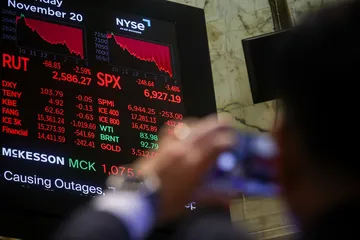
发布时间:2026-11-23T18:29:20+08:00 上周华尔街的抛售令标普500指数市值蒸发逾5万亿美元,暴露出市场命运在多大程度上系于其最大几只股票以及人工智能投资热潮。
Published: 2026-11-23T18:29:20+08:00 Wall Street’s unwind wiped more than $5 trillion from the S&P 500 last week, exposing just how much of the market’s fortunes rest on its biggest stocks and the AI investment boom.
标普500指数在五个交易日内下跌8.6%,使这一基准指数较10月6日的高点低12%。英伟达领跌,重挫23%,此前因业绩好于预期而出现的初步上涨突然逆转。但跌势远远蔓延到科技板块之外,等权重标普500指数下跌6.3%。
The S&P 500 dropped 8.6% over the five sessions, leaving the benchmark 12% below its Oct. 6 high. Nvidia Corp. led the retreat, sinking 23% as an initial rally on better-than-expected results abruptly reversed. But the damage spread well beyond tech, with the equal-weighted S&P 500 losing 6.3%.
最大的调整正在那些推动市场上行的公司中展开。超大型市值股票的估值正以新冠疫情以来最快的速度向大盘靠拢,而未来利润仍异常依赖芯片制造商和人工智能投资周期。
The biggest adjustment is playing out among the companies that powered the market higher. Megacap valuations are converging with the broader index at the fastest pace since the Covid-19 pandemic, while future profits remain unusually reliant on chipmakers and the AI investment cycle.
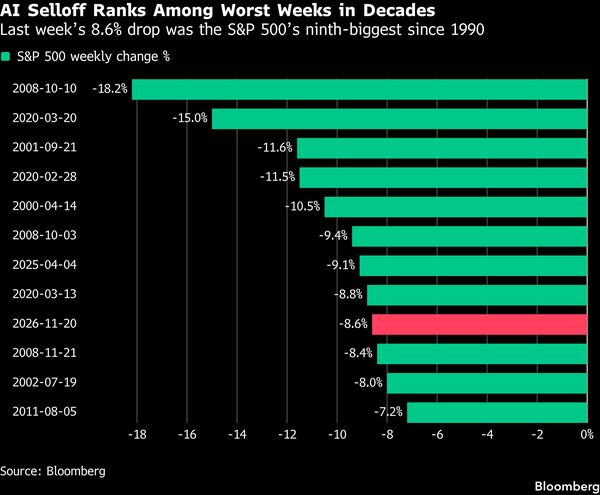
以下五张图表展示了这轮抛售的规模、为何最大几只股票首当其冲、盈利前景在多大程度上已依赖人工智能,以及历史是否表明这轮回调还有进一步下行空间:历史上糟糕的一周 上周的走势规模在历史上格外突出。标普500指数的下滑是1990年以来第九大单周跌幅,也是2020年3月疫情崩盘以来第二大跌幅。过去六年中,只有2025年4月的关税抛售更为严重。
The five charts below show the scale of the rout, why the biggest stocks are bearing the brunt, how dependent the earnings outlook has become on AI and whether history suggests the correction has further to run: A Historically Bad Week The scale of last week’s move stands out historically. The S&P 500’s slide was its ninth-biggest weekly drop since 1990, and the second largest since the pandemic crash of March 2020. Only the April 2025 tariff rout was worse over the past six years.
这一走势将基准指数推入回调区间,而等权重指数的下跌表明,疲软已远远蔓延到市场的科技领头羊之外。
The move pushed the benchmark into correction territory, while losses in the equal-weighted index showed the weakness had spread far beyond the market’s technology leaders.
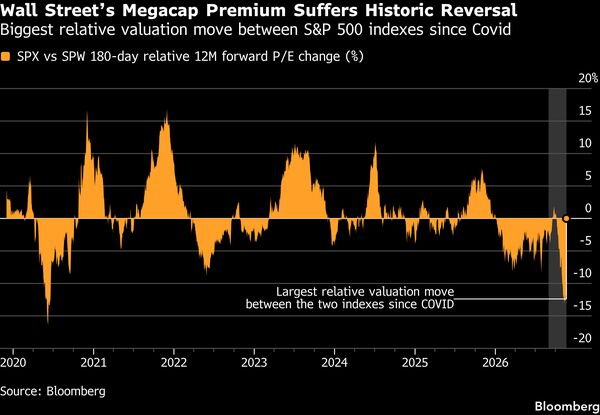
超大型市值溢价收窄 抛售或许是广泛的,但重新定价在市场顶端最为剧烈。过去六个月,标普500指数的远期市盈率相对于其等权重对应指数下降了13%,这是2020年6月以来超大型市值相对估值最急剧的逆转。
Megacap Premium Shrinks The selloff may have been broad, but the repricing was the most severe at the top of the market. The S&P 500’s forward price-to-earnings ratio has fallen 13% relative to its equal-weighted counterpart over the past six months, the sharpest reversal in megacap relative valuations since June 2020.
自10月6日以来,市值加权指数相对普通股票的平均溢价已从19%收窄至6%,其远期市盈率则从19.2倍降至16.5倍。投资者正在全面削减持仓,但规模最大、此前估值最高的公司被下调得最快。
Since Oct. 6, the cap-weighted index’s premium to the average stock has narrowed from 19% to 6%, as its forward multiple fell from 19.2 times earnings to 16.5 times. Investors are cutting exposure across the market, but the largest and previously most richly valued companies are being marked down fastest.
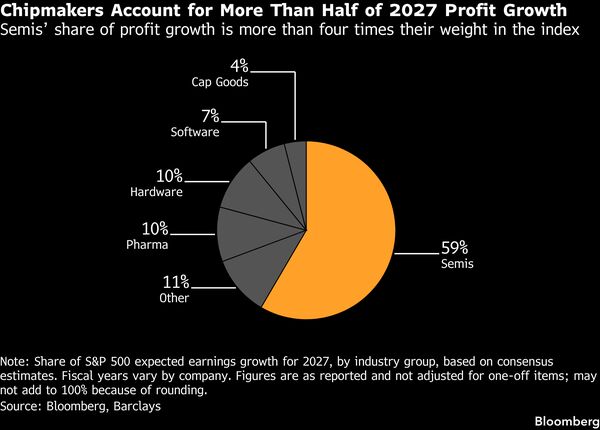
AI带来超高利润。巴克莱策略师表示,这种缩水之所以重要,是因为利润前景高度集中。芯片制造商在标普500指数中的权重约占13%,但根据市场普遍预期,预计到2027年它们将贡献该指数净利润增长的近三分之二。
AI Carries Outsized Profits That shrinkage matters because the profit outlook is highly concentrated, according to Barclays strategists. Chipmakers account for about 13% of the S&P 500 by weight but are expected to deliver almost two-thirds of its net-income growth in 2027, based on consensus estimates.
五家公司约占总量的半壁江山,因此这五家公司支出一旦放缓,市场预期利润增长中就会有超大一部分面临风险。
Five companies account for about half of the total, and any slowdown in that spending would therefore put an outsized share of the market’s expected profit expansion at risk.
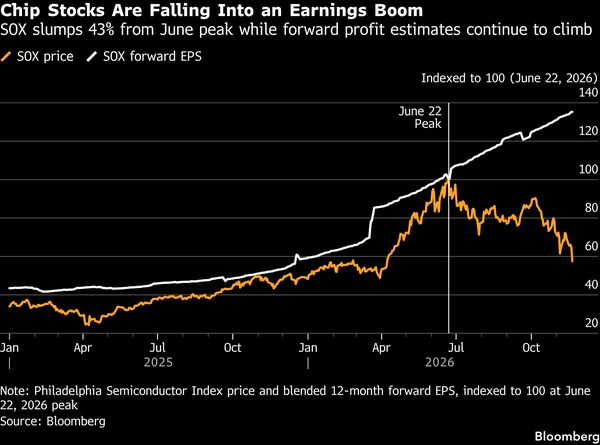
芯片下跌而预测上升。不过就目前而言,股价中显现的恶化尚未传导至预测。费城半导体指数已较6月22日的峰值下跌43%,而分析师对其成分股的远期盈利预测却上升了35%,创下历史新高。
Chips Fall as Forecasts Rise For now, though, the deterioration visible in share prices has yet to reach forecasts. The Philadelphia Semiconductor Index has fallen 43% from its June 22 peak even as analysts’ forward earnings estimates for its members have climbed 35% to an all-time high.
这种背离使该指数的远期市盈率从近30倍压缩至13倍以下。芯片股历来先于基本面转向:2022年,该指数在10月见底,大约比预测停止下降早了七个月。这一次的信号更为不同寻常。预测根本还没有开始下降。
That divergence has compressed the index’s forward price-to-earnings ratio from almost 30 times to below 13 times. Chip stocks have a history of turning before fundamentals do: in 2022, the index bottomed in October, roughly seven months before estimates stopped falling. This time the signal is more unusual. Forecasts haven’t started falling at all.
回调很少转为熊市。这一差距究竟是通过股价回升还是通过预测走弱来弥合,可能有助于决定接下来的走势。
Corrections Rarely Turn Bearish Whether that gap closes through recovering share prices or weaker estimates may help determine what comes next.
历史表明,回调不会自动演变为熊市。自1990年以来,标普500指数此前有13次收盘较历史高点低至少10%。其中只有四次随后跌破20%的熊市门槛,而每一次都伴随着重大冲击:互联网泡沫破裂、全球金融危机、疫情以及2022年的通胀飙升。
History suggests a correction does not automatically become a bear market. Since 1990, the S&P 500 has closed at least 10% below a record high on 13 previous occasions. Only four went on to breach the 20% bear-market threshold, and each coincided with a major shock: the dotcom bust, the global financial crisis, the pandemic and the 2022 inflation surge.
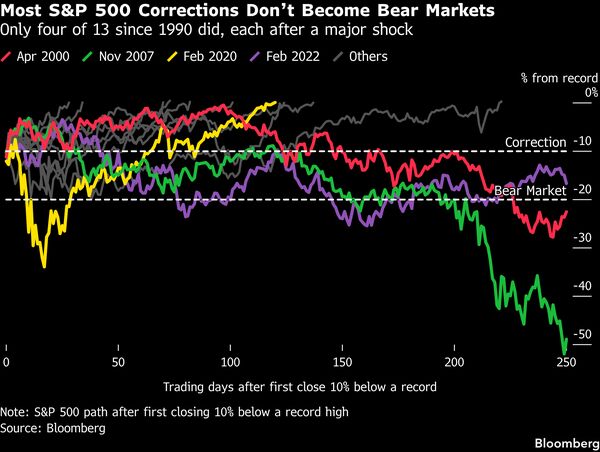
其余九起在跨越那条界限前已恢复,尽管1990年、1998年、2018年和2025年的事件一度接近那条界限,相差大约一个百分点。
The other nine recovered before crossing that line, although the episodes of 1990, 1998, 2018 and 2025 came within roughly a percentage point.
随着标普500指数目前较10月高点下跌11.6%,关键问题是,人工智能交易的回调是仅仅重新定价预期,还是会演变成历史上曾将修正推入熊市的经济和利润冲击。
With the S&P 500 now 11.6% below its October peak, the key question is whether the AI unwind remains a repricing of expectations or turns into an economic and profit shock that has historically pushed corrections into bear markets.