新加坡:一场惨烈的抛售已将美国主要股指推入回调区间,并引发亏损在亚洲蔓延,市场由此面临一个问题:是否已接近底部,抑或仍有下跌空间。
SINGAPORE: A bruising sell-off has pushed major US stock indices into correction territory and sent losses rippling across Asia raising the question of whether markets are nearing a bottom or have further to fall.
周五(11月20日),标普500指数下跌3.7%,较10月6日的纪录高位回落11.6%,稳处回调区间。科技股占比较大的纳斯达克综合指数收盘下跌5.3%,道琼斯工业平均指数下跌1.9%。
On Friday (Nov 20), the S&P 500 fell 3.7 per cent, leaving it 11.6 per cent below its Oct 6 record and firmly in correction territory. The technology-heavy Nasdaq Composite finished the day down 5.3 per cent and the Dow Jones Industrial Average dropped 1.9 per cent.
抛售于周一蔓延至亚洲,韩国综合股价指数一度跌超5%,芯片巨头SK海力士与三星电子再度遭重创,即便美国股指期货已反弹。香港、新加坡、孟买和曼谷股市亦全线下跌。
The selling spilled into Asia on Monday, with South Korea’s Kospi falling more than 5 per cent at one point as chip titans SK Hynix and Samsung were hammered again, even as US stock futures rebounded. Hong Kong, Singapore, Mumbai and Bangkok all also dropped into negative territory.
本台梳理了推动此轮抛售的因素、何种信号意味着市场已触底,以及当前动荡是否有演变为更严重局面的风险。什么是市场回调?
CNA looks at what is driving the sell-off, what would signal that markets have found a bottom, and whether the current turmoil risks becoming something more serious. WHAT DOES A MARKET CORRECTION ACTUALLY MEAN?
回调通常指较近期市场高点下跌至少10%,而跌幅达20%或以上则通常被称为熊市。
A correction generally refers to a decline of at least 10 per cent from a recent market peak, while a fall of 20 per cent or more is commonly described as a bear market.
回调描述的是价格已下跌的幅度。它并不预示价格会否进一步下跌,也不一定意味着经济衰退即将来临。
A correction describes how far prices have already fallen. It does not indicate whether they will fall further, nor does it necessarily mean an economic recession is coming.
“回调是投资的常态,但关键在于是什么在驱动回调,”华侨银行财富顾问主管安布(Chez Anbu)对本台表示。
“Corrections are a normal part of investing, but what matters is what is driving them,” OCBC's head of wealth advisory Chez Anbu told CNA.
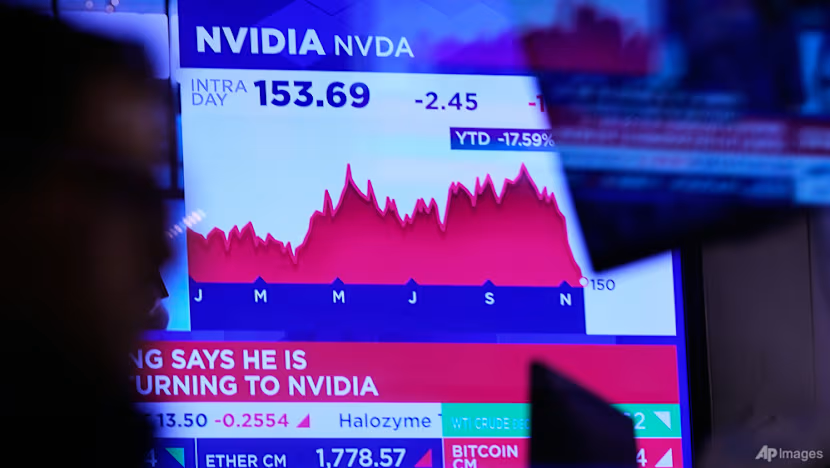
科技股承受了抛售的主要冲击,因投资者质疑在人工智能基础设施上投入的巨额资金能否足够快地产生回报,以支撑当前的高估值。
Technology stocks have borne the brunt of the sell-off as investors question whether the vast sums being spent on artificial intelligence infrastructure will generate returns quickly enough to justify elevated valuations.
尽管部分科技巨头财报强劲,市场仍下滑,因关注点转向芯片、数据中心及其他AI基础设施支出的可持续性。
The market’s slide has come despite strong earnings from some major technology companies, as attention shifts towards the sustainability of spending on chips, data centres and other AI infrastructure.
“这里的担忧是真实的:AI估值、巨额AI支出能持续多久,以及利率问题。但跌势的速度似乎也因大型投资者和自动化策略同时削减风险而被放大了。”他指出,纳斯达克100指数周五收盘较10月峰值下跌近20%,科技股跌幅远超防御性板块。他说,这指向AI的重新定价,而非广泛的经济崩溃。
“The concerns here are real: AI valuations, how long heavy AI spending can continue, and interest rates. But the speed of the fall also looks amplified by large investors and automated strategies cutting risk at the same time” He pointed to the Nasdaq 100, which ended Friday nearly 20 per cent below its October peak, with technology stocks falling far more than defensive sectors. This points to a re-pricing of AI rather than a broad economic breakdown, he said.
“投资者应认真对待这一点,特别是当他们的投资组合高度集中在科技板块时。但他们应避免基于短期恐慌做出长期决策。”我们触底了吗?
“Investors should take it seriously, particularly if their portfolios are concentrated in technology. But they should avoid making long-term decisions based on short-term fear.”HAVE WE HIT BOTTOM?
没有可靠的方法来判断抛售何时会告一段落,因为抛售背后没有单一驱动因素。安布指出了四个压低市场的因素:民主党控制美国国会以及许多州长职位和州议会,使其掌握了AI建设(尤其是数据中心)的监管议程;与黄仁勋和英伟达领导层变动相关的问题,以及对其作为AI“中央银行”角色的施压;作为英伟达问题后果的更严格限制和保护主义;以及鹰派的美国联邦储备委员会,迫使市场为更高利率定价。
There is no reliable way to identify when the selling has run its course, as there is no single driver behind the sell-off. Anbu pointed to four factors weighing on markets: Democrats getting control of the US Congress and many state governorships and legislatures, giving them control over the regulatory agenda over AI build out, especially data centres; issues relating to Jensen Huang and Nvidia leadership changes and pressure on its role as the “central bank” of AI; tighter restrictions and protectionism as fallout of the Nvidia issue; and a hawkish US Federal Reserve which is forcing the markets to price in higher rates.
“投资者应关注芝加哥期权交易所波动率指数(VIX)、VIX期货曲线的形态(期限结构),以及市场走势是否得到广泛股票和板块的支撑(更广泛的参与度)。”安布说。
“Investors should watch the CBOE Volatility Index (VIX), the shape of the VIX futures curve (term structure), and whether market movements are being supported by a broad range of stocks and sectors (broader participation),” said Anbu.
“市场往往在消息面好转前就已反转,所以我不会等到所有信号都转为正面。”即使出现一日反弹,也不能说明是可持续的复苏或反弹行情。
“Markets often turn before the news improves, so I would not wait for every signal to turn positive.”Even if a one-day rebound were to occur, that is no indication of a sustainable recovery or relief rally.
“在一个被迫抛售的市场中,随着压力缓解,急剧反弹可能迅速发生,因此任何特定交易日的成交量都是糟糕的参考指标。”安布说。
“In a market where selling has been forced, sharp rebounds can happen quickly as pressure eases, so the trading size of any specific day is a poor guide,” said Anbu.
OANDA高级市场分析师Kelvin Wong建议,以各股市各自的200日移动平均线作为一个简单的判断指标。
Kelvin Wong, senior market analyst at OANDA, advised using the stock markets’ respective 200-day moving averages as a simple gauge.
他说:“如果反弹的价格走势保持在200日均线之下,这很可能是在中期和主要下跌趋势阶段中的一次技术性/解套反弹。”
“If the price action of the rebound remains below the 200-day MA, it is likely a corrective/relief rally within a medium-term and major downtrend phase,” he said.
Anbu同时表示,可持续的复苏应当能在数个交易日中守住涨幅,并将涨势从最大的科技龙头股扩展到其他板块。
Anbu meanwhile sa id a sustainable recovery should hold gains over several sessions and broaden beyond the biggest technology names to other sectors.
此外,还应伴随盈利预期趋于稳定,或对利率和AI支出有更清晰的认识。
It should also be heralded by steadier earnings expectations or greater clarity on interest rates and AI spending.
Anbu说:“给长线投资者的主要教训是,不要追逐单日反弹,也不要恐慌性抛售。稳健、分阶段的方法通常比试图精准抄底更可靠。”
“The main lesson for long-term investors is not to chase a one-day rally or to sell in a panic. A steady, staged approach is usually more reliable than trying to time the turn,” said Anbu.
Saxo首席投资策略师Charu Chanana表示,可持续复苏的一个重要信号将是盈利预期企稳,特别是如果AI支出承诺保持完好,且盈利预测没有大幅下调。她说:“那将表明此次抛售更多关乎估值,而非基本面恶化。”
Saxo chief investment strategist Charu Chanana said an important sign of a sustainable recovery would be earnings expectations stabilising, particularly if AI spending commitments remain intact without significant cuts to earnings forecasts. “That would suggest the sell-off has been more about valuations than deteriorating fundamentals,” she said.
Chanana说,市场需要获得美联储不会保持过度鹰派立场的保证,同时经济疲软不演变成增长恐慌。
Chanana said that markets need reassurance that the Fed won't remain excessively hawkish, without economic weakness turning into a growth scare.
她说,围绕英伟达调查的更大清晰度也有助于恢复对AI交易的信心。
Greater clarity around Nvidia's investigations could also help restore confidence in the AI trade, she said.
Chanana说:“市场不需要所有不确定性都消失才能找到底部,但它们需要证据表明风险不再继续恶化。”什么会告诉我们情况正在变得更严重?
“Markets don't need every uncertainty to disappear to find a bottom, but they need evidence that the risks are no longer getting worse,” said Chanana. WHAT WOULD TELL US IT'S BECOMING MORE SERIOUS?
当疲软开始影响企业的利润、投资和借贷能力时,股市下跌会变得更令人担忧。
A falling stock market becomes more worrying when weakness begins affecting companies’ profits, investment and ability to borrow.
Chanana说:“最大的警示信号将是抛售从估值修正演变为盈利和信用问题。”
“The biggest warning sign would be the sell-off moving from a valuation correction into an earnings and credit problem,” said Chanana.
“如果主要科技公司因需求疲软或资金限制而开始削减资本支出,分析师下调盈利预测,同时信用利差扩大,情况会更令人担忧,”信用利差是指两种到期日相同但信用质量不同的债券之间的收益率差。当这一差距急剧扩大时,可能预示投资者对公司偿债能力的担忧正在增加。
“It becomes more concerning if major technology companies start cutting capital expenditure because of weaker demand or funding constraints, analysts downgrade earnings forecasts, and credit spreads widen at the same time.”A credit spread is the yield difference between two bonds with the same maturity but different credit qualities. When that gap widens sharply, it can signal that investors are becoming more worried about companies’ ability to repay their debts.
“这将表明,问题不再仅仅是投资者为未来增长支付了过高的价格,而是增长本身正变得不确定,”查纳表示。
“That would suggest the problem is no longer simply that investors were paying too much for future growth, but that the growth itself is becoming less certain,” said Chanana.
安布表示,其他预警信号还包括亏损超出科技股范围、分析师下调各行业盈利预测以及公司削减支出。
Other warning signs would include losses spreading beyond technology stocks, analysts cutting earnings forecasts across sectors and companies cutting spending, Anbu said.
企业借贷成本急剧上升、融资条件收紧或市场波动率持续高企,也将表明动荡正在演变为更广泛的经济问题。
A sharp rise in corporate borrowing costs, tightening of funding conditions or persistently high market volatility would also suggest that the turmoil was developing into a broader economic problem.
“其中任何一种迹象都表明,市场正在定价更深层的经济问题,而非对人工智能主题的重新定价,”安布表示。这会成为另一次互联网泡沫破裂吗?
“Any of these would suggest the market is pricing a deeper economic problem, rather than a repricing of the AI theme,” said Anbu. COULD THIS BECOME ANOTHER DOTCOM CRASH?
与人工智能相关的股票大幅下跌,不可避免地引发了与本世纪初互联网泡沫破裂的比较,但分析师警告不要将两个时期视为相同。
The sharp fall in AI-linked stocks has inevitably drawn comparisons with the dotcom crash at the turn of the century, but analysts cautioned against treating the two periods as identical.
查纳表示,与互联网泡沫时代不同,当今许多领先的人工智能公司拥有成熟的业务、可观的现金流、真实客户和强劲利润。对人工智能基础设施的需求也是真实的,而非纯粹投机。然而,这并不意味着其股票不会遭受大幅损失。
Unlike the dotcom era, many of today’s leading AI companies have established businesses, substantial cash flows, real customers and strong profits, Chanana said. Demand for AI infrastructure is also real, rather than purely speculative. However, that does not make their shares immune to steep losses.
查纳表示,该行业部分领域可能会出现类似于互联网泡沫的经历:产能过剩、定价能力减弱和融资压力导致重大损失,即使底层技术仍在不断进步。
Chanana said parts of the sector could see something resembling the dotcom experience in which excess capacity, weaker pricing power and financing pressures lead to significant losses, even as the underlying technology continues to advance.
她表示,那些更依赖借款和未来需求预期的公司,如果人工智能的采用或变现令人失望,其脆弱性会高于那些依靠现有现金流为扩张融资的公司。
Companies that rely more heavily on borrowing and expectations of future demand are more vulnerable if AI adoption or monetisation disappoints compared with firms that fund expansion from existing cash flows, she said.
“一种技术可能具有变革性,但如果投资者付出过高代价,或者公司建设了过多产能,它仍可能成为糟糕的投资,”恰纳纳表示。“这是互联网泡沫的重要教训,同样适用于人工智能。”
“A technology can be transformative and still become a poor investment if investors pay too much or companies build too much capacity,” said Chanana. “That was an important lesson from the internet boom, and it applies equally to AI.”