编者注:本文为关于气候变化应对为何失败及应对之道的三篇社论中的第二篇。第一篇请点此阅读。
By The Editors Published: 2026-11-23T20:20:13+08:00 This is the second of three editorials about why the fight against climate change is failing, and what to do about it. Read the first one here.
第31届联合国气候大会的破裂,凸显了世界在阻止全球变暖方面失败的程度,尽管有大量证据表明其有害影响。
The breakdown of the 31st United Nations climate conference demonstrates the extent to which the world is failing to halt global warming, despite ample evidence of its deleterious effects.
但这也应成为行动的号召:如果志同道合的政府继续寻求跨境合作的方式,他们可以取得更大进展。
Yet it should also serve as a call for action: If like-minded governments keep working on ways to cooperate across borders, they can make much more progress.
人类活动每年向大气排放超过500亿吨温室气体(二氧化碳当量)。这一速率需要尽快放缓。减排发生在何处并不重要:印度一吨减排量与伊利诺伊州一吨减排量同样有效。因此,最佳方法应是全球性的。为各地人们提供强有力的激励,例如碳税或碳价,让他们寻找无论在哪里都最便宜、最快速的减排方式——并追求降低其余减排成本的创新。
Human activity spews more than 50 billion tons of greenhouse gases (in carbon dioxide equivalent) into the atmosphere every year. That rate needs to be slowed as soon as possible. Where it happens doesn’t matter: One ton of abatement in India is as good as one in Illinois. Thus, the best approach would be global. Give people everywhere a strong incentive, such as a carbon tax or price, to find the cheapest and fastest reductions wherever they may be — and to pursue innovations that lower the cost of the rest.
迄今为止,这种情况仅在不足的规模上发生,各个司法管辖区各自为政,往往代价高昂。例如,欧盟正在触及其碳排放交易体系在当前每吨约83欧元碳价下所能达到的极限。这使其面临艰巨任务,即针对钢铁制造商、水泥厂和普通家庭等目标,其减排成本高达数百欧元每吨。在美国,该国长期依赖绿色补贴而非碳定价,累计财政成本预计最终将达到或超过1万亿美元。
So far, that’s happening only on an inadequate scale, with individual jurisdictions going it alone, often at great expense. The European Union, for example, is running up against the limits of what its cap-and-trade system can achieve at the current carbon price of about €83 per ton. This leaves it with the daunting task of targeting the likes of steelmakers, cement works and regular households at abatement costs well into the hundreds of euros per ton. In the US, which has relied heavily on green subsidies instead of carbon pricing, the cumulative fiscal cost is expected to eventually reach or exceed $1 trillion.
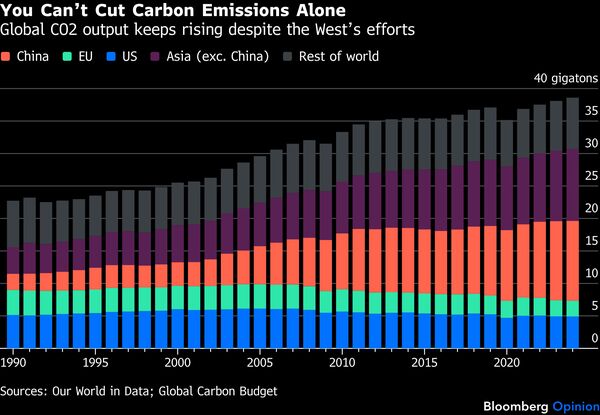
诚然,扩大新技术规模可能需要巨额初始投资——考虑到发达国家对大气中二氧化碳的巨大历史贡献,由它们率先行动是公平的。但它们的减排成果正被其他地方的排放增加所抵消。从2005年到2024年,欧盟和美国的年二氧化碳排放量合计减少了25亿吨。同期,中国的排放量增加了超过这个数量的三倍。亚洲目前约占不断增长的全球总量的五分之三。
Granted, scaling up new technologies can require big initial investments — and it’s fair that developed nations take the lead, given their large historical contributions to atmospheric CO2. But their emissions reductions are being canceled out by increases elsewhere. From 2005 to 2024, the EU and US cut annual CO2 emissions by a combined 2.5 billion tons. Over the same period, China’s increased by more than three times that amount. Asia now accounts for about three-fifths of the growing global total.
与此同时,成本带来了后果。发达国家的选民合理地询问,为什么他们要为热泵和智能电表花钱,只为实现全球碳排放的微小增量减少。企业担心竞争力——尤其是在欧洲,核心产业已经因高昂的能源价格、中国出口和惩罚性的美国贸易政策而苦苦挣扎。一些政客试图通过替代能源来博取政治分数,即使清洁能源会降低消费者成本。所有这些都使进展变得更加困难。
Meanwhile, the costs have consequences. Voters in the developed world reasonably ask why they should shell out for heat pumps and smart meters to achieve a globally incremental reduction in carbon emissions. Businesses worry about competitiveness — particularly in Europe, where core industries are already reeling from a combination of elevated energy prices, Chinese exports and punishing US trade policy. And some politicians try to score points by scapegoating clean energy, even when it would reduce consumer costs. All of that has made progress more difficult.
在现任政府下,美国已退出《巴黎气候协定》,取消了大部分绿色能源激励措施,并增加了化石燃料补贴(正值数据中心即将大幅推动需求之时)。欧盟已推迟将限额与交易制度扩展到建筑和交通领域,推迟了关键的甲烷规则,并正在考虑可能削弱这一极为成功的排放交易体系的改革。
Under its current administration, the US has exited the Paris climate accord, eliminated large swathes of its green energy incentives and increased subsidies for fossil fuels (at a time when data centers are set to sharply boost demand). The EU has postponed extending cap-and-trade to buildings and transportation, delayed key methane rules and is considering reforms that could weaken what has been a highly successful emissions-trading system.
那么,游戏结束了吗?绝非如此。COP31的结果令人沮丧,但强烈表明,世界上大部分国家仍致力于应对气候变化。在俄罗斯、沙特阿拉伯及其他化石燃料生产国的压力下,最终宣言中未提及远离化石燃料的任何内容,超过100个由欧盟领导的政府反对这一宣言。从许多方面看,绿色转型正在加速:在欧盟和美国,去年新增电力产能中,超过90%为清洁能源。
So, game over? Not at all. The outcome at COP31, discouraging as it was, strongly suggests that much of the world remains committed to fighting climate change. More than 100 governments, led by the EU, opposed a final declaration that — amid pressure from Russia, Saudi Arabia and other fossil fuel producers — omitted any reference to the transition away from fossil fuels. In many ways, the green transition proceeds apace: In the EU and the US, more than 90% of newly added power capacity last year was clean.
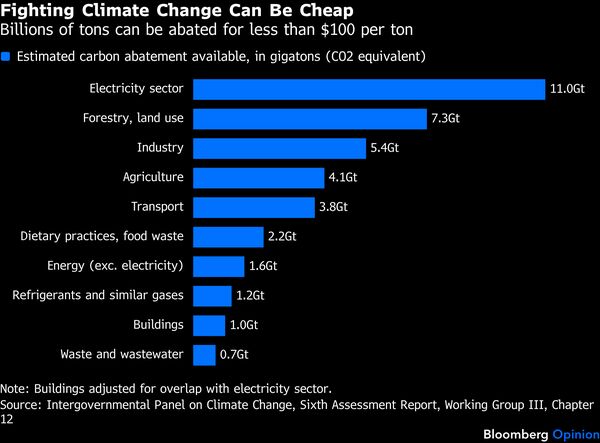
但要加速进展,发达国家必须放眼国界之外。世界上存在大量低成本的减排机会,主要集中在中低收入国家。例如,中国和印度更好的甲烷管理,在考虑捕获天然气的价值后,可在极低——在某些情况下甚至为负——的净成本下,削减约2亿吨二氧化碳当量。全球范围内,估计有380亿公吨的排放量可在每吨不到100美元的成本下削减——这足以让世界朝着完全消除净排放的最终目标迈出超过一半的步伐。
But to accelerate progress, developed nations must look beyond their borders. The world abounds in inexpensive opportunities to reduce carbon emissions, largely in low- to middle-income countries. Better methane management in China and India, for example, could remove about 200 million tons of CO2 equivalent at very low — in some cases negative — net cost, given the value of the natural gas captured. Worldwide, an estimated 38 billion metric tons could be abated for less than $100 per ton — enough to get more than halfway toward the ultimate goal of eliminating net emissions completely.
挑战在于如何挖掘这一潜力。国际碳信用市场——公司资助森林保护等项目以履行净零承诺——一直存在测量问题和公然欺诈。应鼓励正在开展的改善诚信的努力。
The challenge is tapping into that potential. The market for international carbon credits — where companies fund, say, forest protection projects to meet their net-zero commitments — has been riddled with measurement issues and outright fraud. Efforts underway to improve integrity should be encouraged.
然而,世界领导人可以做得更好。如果足够多志同道合的政府愿意合作——在扩大碳定价、联通碳排放交易体系以及提供绿色融资等领域——他们可以以更低的成本取得更大成就。本系列第三篇也是最后一篇社论将详细阐述。
Yet world leaders can do better. If enough like-minded governments are willing to cooperate — in areas such as expanding carbon pricing, linking emissions trading systems and providing green financing — they can achieve much more at much lower cost. The third and final editorial in this series will elaborate.