塞思·博伦斯坦 发布:2026-11-20T02:00:07Z联合国气候谈判首次可能得出结论:由于社会未能让地球免于进入变暖危险区,世界不仅要削减碳污染,还必须从空气中吸出锁热气体。
SETH BORENSTEIN Published: 2026-11-20T02:00:07Z For the first time, United Nations climate talks are likely to conclude that the world will have to suck heat-trapping gases out of the air as well as cut carbon pollution because society has failed to keep Earth out of the warming danger zone.
科学家和联合国官员表示,这样做将耗资数十万亿美元,且依赖仍未经证实的技术,但这是全球所能期待的最好结果,因为世界必然会突破2015年《巴黎气候协定》设定、后续科学报告确认的安全温度阈值,这已成定局。
Doing that will cost tens of trillions of dollars and rely on still unproven technology, but it’s the best the globe can hope for because it is now inevitable that the world will blow beyond the safe temperature threshold set by the 2015 Paris climate agreement and confirmed by subsequent scientific reports, scientists and United Nations officials said.
今年早些时候,联合国一份年度报告确认,地球肯定会突破《巴黎协定》设定的长期变暖幅度不超过工业化前(19世纪中叶)1.5摄氏度(2.7华氏度)的阈值。虽然这一关键温度阈值是以几十年为周期来衡量的,但短期预警信号持续增多。伯克利地球组织的科学家表示,10月全球平均气温创下有记录以来同期最高纪录,比工业化前水平高出1.8摄氏度(3.2华氏度);他们还预测,2026年将超越2024年,成为有记录以来最热年份。
Earlier this year, a United Nations annual report acknowledged it’s certain that the planet will breach the Paris threshold of keeping long-term warming below 1.5 degrees Celsius (2.7 degrees Fahrenheit) since the mid 1800s. While that key temperature threshold is measured over a couple decades, short-term warning signs continue to mount. October’s global average temperature set a record for highest above pre-industrial times for any month of the year, at 1.8 degrees Celsius (3.2 degrees Fahrenheit) higher, said scientists at Berkeley Earth, who also predict that 2026 will pass 2024 as the hottest year on record.
被称为COP31的联合国气候谈判定于周五在土耳其结束,但很少能按时闭幕。
The U.N. climate negotiations, known as COP31, are scheduled to end Friday in Turkey, though they rarely finish on time.
会议结束公报的早期草案承认,世界未能阻止1.5摄氏度的变暖,将进入一个持续数十年的更危险温度区间,随后以某种方式将曲线拉回1.5摄氏度以下。根据草案,做到这一点需要大幅削减二氧化碳排放,并从大气中移除碳。燃烧煤炭、石油和天然气等化石燃料排放的二氧化碳在大气中锁住热量,导致地球变暖。
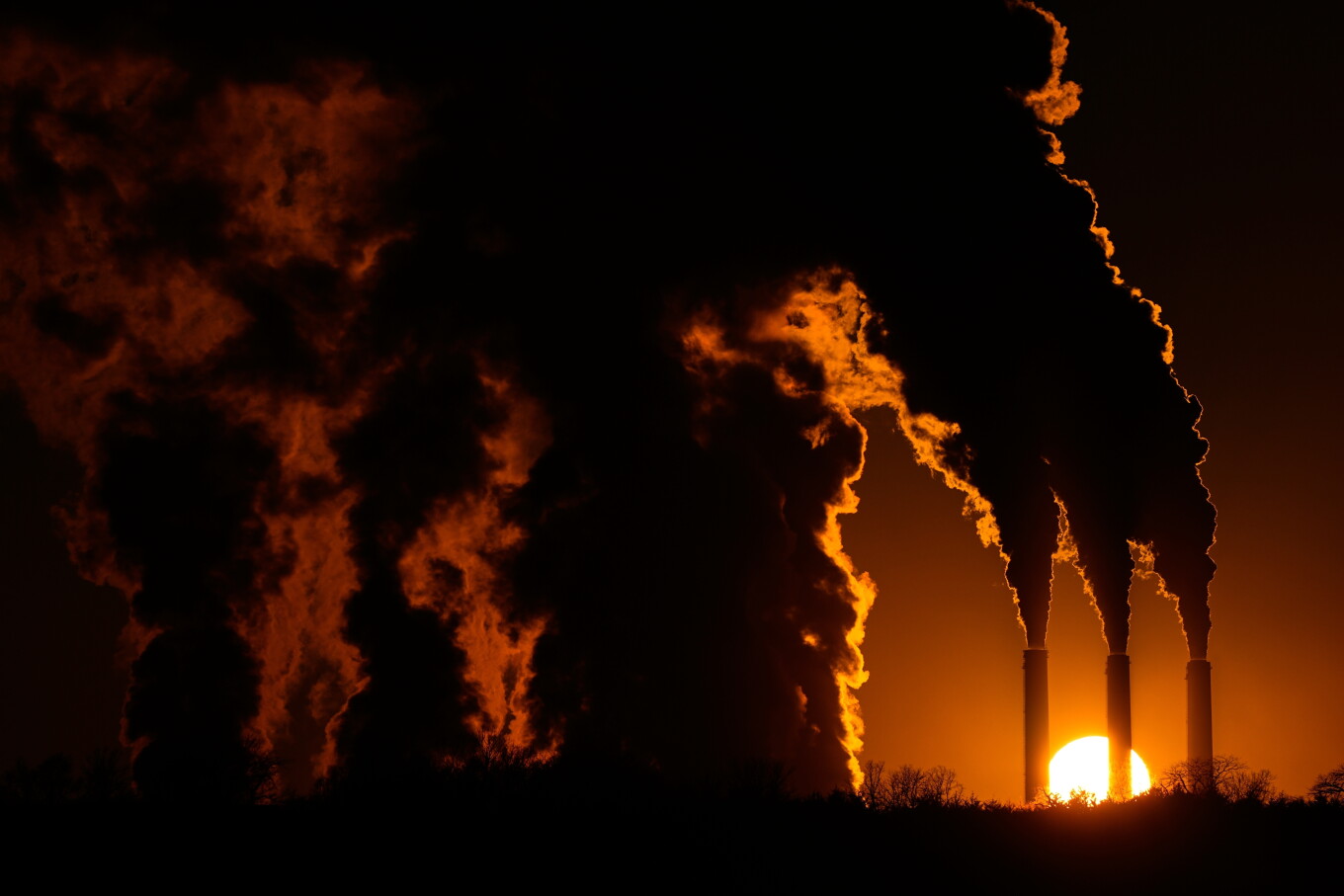
Early drafts of the end-of-conference communique acknowledge that the world has failed at preventing 1.5 degrees of warming, will enter a period of decades of temperatures in a more dangerous zone and then somehow bend the curve back down below 1.5. Doing that requires sharp cuts in carbon dioxide emissions and the removal of carbon from the atmosphere, according to the drafts. Carbon dioxide emitted from the burning of fossil fuels such as coal, oil and gas traps heat in the atmosphere and causes the planet to warm.
“当我们已经耗尽了世界的碳预算,比如1.5摄氏度目标时,碳移除就是我们剩下的‘神奇橡皮擦’,”斯坦福大学气候科学家、排放追踪者罗布·杰克逊在电子邮件中说。“从技术上讲,二氧化碳移除可行吗?是的。它有可能以每年十亿吨的规模发生、从而产生实质性影响吗?没有。”
“Carbon removal is the magic eraser we’re left with when we’ve busted the world’s carbon budget, such as the 1.5C target,” Stanford University climate scientist and emissions tracker Rob Jackson said in an email. “Is carbon dioxide removal feasible technically? Yes. Is it likely to happen at the billion-ton scale needed to make a difference? No.” The world needs to remove 320 billion metric tons (350 billion tons) of carbon dioxide from the atmosphere this century to bend the curve back down, United Nations Environment Programme Director Inger Andersen said at the climate conference this week.
联合国环境规划署执行主任英格·安德森本周在气候大会上表示,本世纪世界需要从大气中移除3200亿公吨(3500亿吨)二氧化碳,才能让排放曲线拐头向下。她说,这相当于八年全球排放量。
That’s eight years’ worth of global emissions, she said.
伯克利地球气候科学家泽克·豪斯法瑟测算,通过碳移除将全球气温每降低十分之一摄氏度(0.18华氏度),成本约为22万亿美元。豪斯法瑟说,即使全球气温峰值仅比《巴黎协定》阈值高出两到三十分之一摄氏度(0.36至0.54华氏度)——这是最乐观的情景——到2100年要想重新降回阈值以下,也将耗资44万亿至66万亿美元。
Berkeley Earth climate scientist Zeke Hausfather calculated that it costs about $22 trillion to reduce global temperatures by every tenth of a degree Celsius (.18 degrees Fahrenheit) through carbon removal. Even if the world were to peak at two or three tenths of a degree Celsius (.36 to .54 degrees Fahrenheit) above the Paris threshold — the most optimistic scenario — it would cost $44 to $66 trillion by 2100 to get back underneath the threshold, Hausfather said.
专家表示,种植更多树木远远无法移除足够的碳。安德森说,过去十年里,增加植树和其他基于自然的解决方案,充其量只移除了20亿公吨二氧化碳。
Planting more trees would not remove anywhere near enough carbon, experts said. In the past decade, increased tree planting and other nature-based solutions removed, at most, 2 billion metric tons of carbon dioxide, Andersen said.
因此需要的是机械方法,例如类似巨型风扇的巨大装置,能从空气中吸取碳,其中一些正在试点规模进行测试。德国波茨坦气候影响研究所所长约翰·罗克斯特伦说,这项新兴技术目前一年移除的二氧化碳量,相当于化石燃料燃烧电厂每半小时排放的量。他说,目前的希望是到2050年能扩大到每年50亿公吨。
So what’s needed are mechanical methods, such as huge devices resembling giant fans that suck carbon out of the air, some of which are being tested at pilot scale. This nascent technology currently removes as much carbon dioxide in a year as fossil fuel burning plants put in the air every half hour, said Johan Rockström, director of the Potsdam Institute for Climate Impacts Research in Germany. And the current hope is that it could scale up to 5 billion metric tons by 2050, he said.
这种碳去除方式不同于一些行业用来防止自身污染排放到空气中的碳捕集与封存技术。气候谈判也可能会推动更多此类碳捕集。
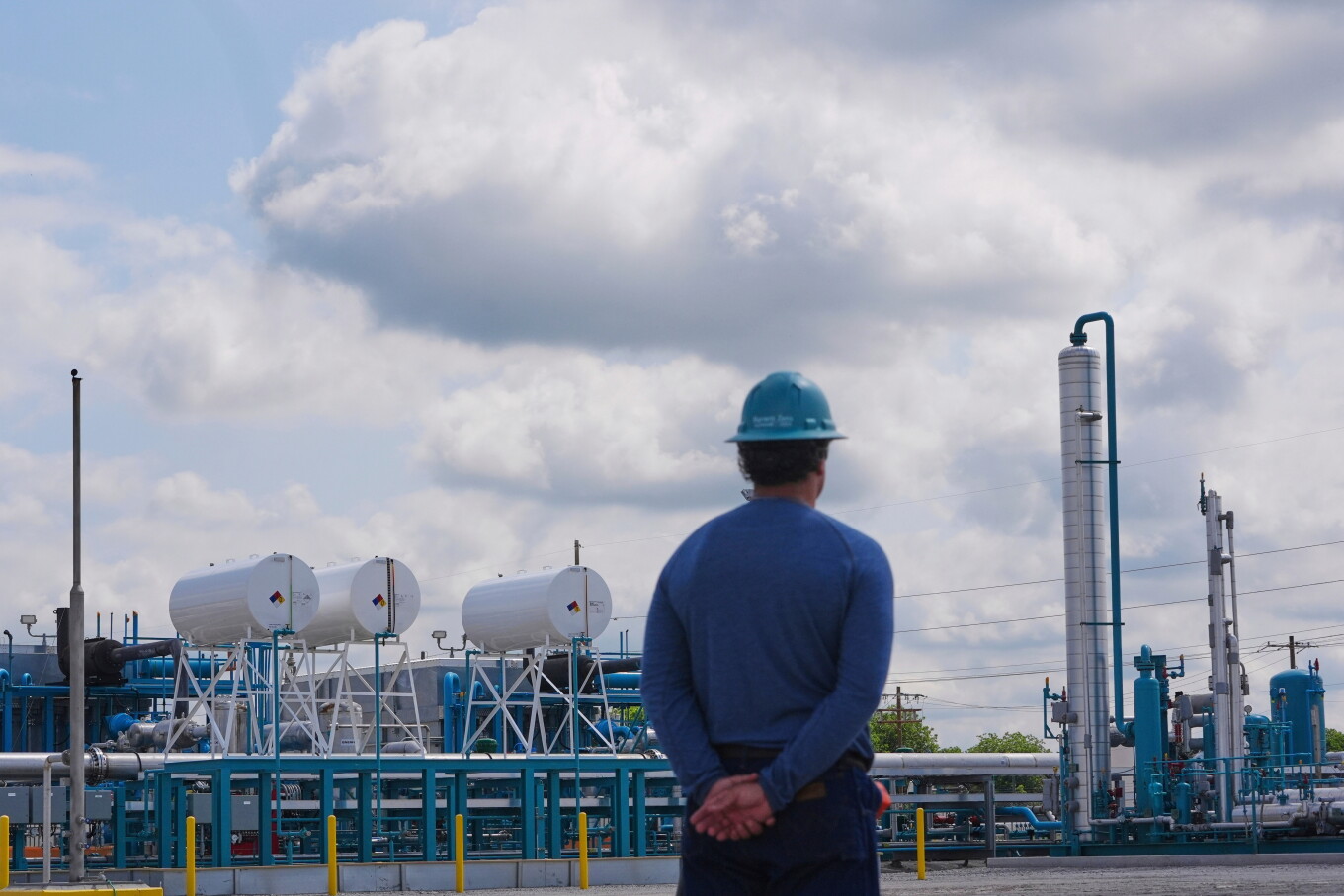
This type of carbon removal is different than carbon capture and storage technology that some industries use to prevent their own pollution from escaping into the air. The climate talks are also likely to encourage more of that type of carbon capture.
气候分析公司首席执行官比尔·哈雷在会议上表示,世界将需要去除大量二氧化碳,“但在我们实现深度减排之前,考虑这一点意义不大”。因为除非全球政策改变,世界正走向到2100年至少升温2.7摄氏度的局面,而他指出,世界不可能从空气中去除足够的碳来弥补这一点。
The world will need to remove massive amounts of carbon dioxide, “but there’s not much point of thinking about that until we have deep emission reductions,” Climate Analytics CEO Bill Hare said at the conference. That’s because unless policies around the world change, the world is heading for at least 2.7 degrees Celsius of warming by 2100, and there’s no way the world can remove enough carbon from the air to compensate for that, he said.
然而,安德森表示,世界必须认真考虑碳去除,“因为在1.5摄氏度以上真的没有好的结果”,并指出升温已经导致更强的热浪、干旱、洪水和极端风暴。
Still, the world has to seriously consider carbon removal “because there really are no good outcomes above 1.5 degrees, ” Andersen said, noting that warming is already causing stronger heat waves , droughts, floods and extreme storms.
她和其他人说,碳去除——有时称为负排放——并不是对大幅减排的替代,而是对其的补充。
She and others said carbon removal - sometimes called negative emissions - is not a replacement for steep emission cuts, but rather an addition to them.
丹麦环境部长萨米拉·纳瓦说:“我们需要深度减排。这始终是我们手中最重要的工具。”这也是丹麦力争实现110%减排的原因,即在实现净零排放的基础上,使大气中的碳比海洋和森林自然吸收的量少10%。
“We need deep emission reductions. That is, and will always remain, the most important tool at our disposal,” said Denmark’s environment minister Samira Nawa. That’s why Denmark is aiming for a 110% reduction of emissions, going beyond net zero emissions to putting 10% less carbon in the air than what oceans and forests naturally take out.
丹麦和明年气候谈判主席国埃塞俄比亚正牵头一个新成立的联盟——负排放者集团(Group of Negative Emitters,简称GONE)。
Denmark and Ethiopia, the chair of next year’s climate talks, are leading a newly formed coalition called the Group of Negative Emitters, or GONE.
官员、分析师和科学家表示,人类已使地球陷入困境。由于社会未响应多年的大幅减排呼吁,他们认为地球基本上只能依赖碳去除。
Officials, analysts and scientists say humans have put the planet in a tough spot. Because society has not heeded years of calls for steep emissions cuts, they say the planet is essentially stuck with relying on carbon removal.
世界资源研究所全球气候与经济主管梅拉妮·罗宾逊表示:“我认为这还不是所有人都已内化的观念。如果你支持1.5摄氏度目标,那你同样也支持实现净负排放。”
“This is something I don’t think everyone has internalized yet. If you’re a champion of 1.5 degrees C, then you’re also a champion of reaching net-negative emissions,” said World Resources Institute’s global climate and economics director Melanie Robinson.
尽管罗克斯特伦指出了碳移除面临的困难,但他表示:“既然我们已充分认识到升温超过1.5°C有多么危险,我们就必须继续把1.5°C作为我们的安全着陆温度。”
Even though he pointed out the difficulties in carbon removal, Rockström said, “we must keep this as our safe landing temperature, now that we fully understand how dangerous it is to exceed 1.5°C.”