发布时间:2026-11-23T12:30:00Z 本该是AI行业投资者的看涨时刻。英伟达设计了驱动AI繁荣的大多数芯片,刚刚报告其销售额和利润同比翻倍,并有望在明年再增长75%。英伟达表示,整个行业拥有2.5万亿美元的未来订单积压,意味着需求依然强劲。作为行业两大主导大语言模型开发商之一的Anthropic,于周四上市,其首次公开募股(IPO)募集资金超历史上任何公司。
Published: 2026-11-23T12:30:00Z This should be a bullish time for investors in the AI business. Nvidia, which designs most of the chips that have driven the AI boom, just reported that its sales and profits doubled year-over-year, and that it’s on pace to grow another 75 percent next year. The industry as a whole, Nvidia said, has a backlog of $2.5 trillion in future orders, meaning that demand remains strong. Anthropic, one of the industry’s two dominant developers of large language models, went public on Thursday and raised more money in its IPO than any company in history.
然而,投资者的主导情绪是深深的焦虑,甚至可以说是恐慌。上周四,受Anthropic上市提振,开盘股市大涨。但到上午晚些时候,投资者开始抛售,收盘时市场下跌超过2%。周五,股市抛售更加剧烈,导致以科技股为主的纳斯达克指数今年以来首次进入负值区间。
Yet the dominant mood among investors is a sense of deep anxiety, not to say panic. Last Thursday, stocks soared when the market opened, buoyed by Anthropic’s debut. But by late morning, investors started selling, and by the end of the day the market was down more than 2 percent. On Friday, stocks sold off even more sharply, leaving the tech-heavy Nasdaq in negative territory for the year.
AI公司总价值仍达数万亿美元,但投资者首次以更挑剔的眼光审视它们。部分原因是出乎意料的事态发展。英伟达爆出丑闻,其创始人兼首席执行官黄仁勋因曝光多桩婚外情(包括一名疑似中国情报人员)被迫突然辞职,给这家几乎独自支撑整个AI行业的公司带来动荡。民主党在中期选举中大获全胜,也引发了对AI发展前景的疑虑。许多民主党候选人以减缓甚至禁止建设AI数据中心为竞选纲领——据出口民调,这一做法引起选民共鸣——并将给该行业带来新的政治逆风。
AI companies are still collectively worth many trillions of dollars, but investors are looking at them, for the first time, with a more jaundiced eye. This is in part due to developments that few anticipated. The scandal at Nvidia, in which its founder and CEO, Jensen Huang, was forced to suddenly step down after revelations of multiple affairs, including one with a possible Chinese intelligence asset, has created turmoil at the company that has almost single-handedly propped up the entire AI industry. The Democrats’ massive victory in the midterms has also sparked doubt about the future of AI development. Many Democrats ran on a platform of slowing or even prohibiting the construction of AI data centers—an approach that resonated with voters, according to exit polls, and promises new political headwinds for the sector.
即便在大选日以及黄仁勋不体面地离场之前,市场对 AI 公司的态度已发生根本性转变。自 2022 年 OpenAI 推出 ChatGPT 以来,投资者欣然向 AI 业务注资,假设在未来某个时候它会变得非常赚钱。科技巨头自身也采取了相同策略。Google 和 Meta 等公司已投入数千亿美元构建 AI 能力。但这种建设所需资金规模极其庞大——而盈利前景依然遥不可及——因此投资者近来变得更加苛刻、耐心也更少。
Even before Election Day and Huang’s unceremonious exit, a fundamental shift in the market’s attitude toward AI companies was under way. Since OpenAI released ChatGPT in 2022, investors have blithely poured money into the AI business on the assumption that somewhere down the road, it would become very profitable. Tech giants themselves have adopted the same strategy. Companies such as Google and Meta have spent hundreds of billions of dollars to build out their AI capabilities. But the sums of money required for this build-out are so immense—and the prospects for profit still so distant—that investors have, of late, become more demanding and less patient.
目前,用于 AI 的大部分资金都是由 AI 公司自己花费的,无论是建设数据中心,还是从制造商处购买 GPU 和内存芯片,或是从超大规模云服务商处购买算力。这一业务存在循环性:行业内许多公司相互投资、相互融资,同时也相互销售、相互采购,甚至相互竞争。今年早些时候,英伟达向 OpenAI 投资 300 亿美元,后者转手购买英伟达芯片。Anthropic 则从 Google 购买芯片,而 Google 既是其最大投资方之一,也是其最大竞争对手之一。
At the moment, most of the money being spent on AI is being spent by AI companies, whether they’re constructing data centers or buying GPUs and memory chips from manufacturers or compute power from hyperscalers. There is a circularity to the business, whereby many of the companies in the industry are investing in and financing one another, while also selling to or buying from, or even competing with, one another. Earlier this year, Nvidia invested $30 billion in OpenAI, which in turn bought Nvidia chips. Anthropic, meanwhile, buys chips from Google, which is also one of its biggest investors—and one of its biggest rivals.
这并没有什么不对。在美国修建铁路时,大部分资金来自铁路行业内部公司;国家推进家庭和工业电气化时也是如此。这就是预期未来收益的大规模基础设施建设的本质。
There’s nothing wrong with this. When railroads were being built across the United States, much of the money came from companies in the rail industry. The same was true when the country electrified homes and industry. This is the nature of a massive build-out of infrastructure with anticipated future benefits.
关键在于,要使建设投资获得盈利——这才是投资者关心的——行业外的客户必须开始在产品上投入巨额资金。这需要时间;大规模商业铁路建设开始后,铁路花了近30年才实现可持续盈利。就AI而言,实现盈利所需的资金规模确实巨大。多项近期研究估计,到2032年,AI年收入必须超过3.5万亿美元,公司才能在迄今为止所有的资本支出上获得10%的回报。
The key, though, is that in order for a build-out to be profitable—which is what investors care about—customers outside the industry will need to start spending huge sums on the product. This can take time; it took close to 30 years after the big commercial-rail build-out started for railroads to become sustainably profitable. In the case of AI, the sums necessary to turn a profit are truly huge. A number of recent studies estimate that AI revenues will have to exceed $3.5 trillion a year or more by 2032 just for companies to earn a 10 percent return on all the capital expenditures they’ve made so far.
如果AI最终彻底重塑制药等整个行业,这些数字并非不可能。但目前很难看出那么多额外收入将从何而来。例如,Anthropic通过授权其大语言模型建立了强劲的业务;该公司目前有望在未来一年实现超过800亿美元的收入。但Anthropic的增长率似乎已在放缓,即使该公司预计未来四年将至少投入4500亿美元的资本支出。高盛最近估计,Anthropic要到2030年才能产生自由现金流——即收入超过支出。
If AI ends up radically reinventing entire industries, such as pharmaceuticals, these numbers are not impossible. But at the moment, it’s hard to see where all of that additional revenue would come from. Anthropic, for instance, has built a strong business licensing its LLMs; the company is currently on track to earn more than $80 billion in revenue over the next year. But Anthropic’s growth rate already appears to be slowing, even as the company is projected to spend at least $450 billion in capital expenditures over the next four years. Goldman Sachs recently estimated that Anthropic won’t generate free cash flow—meaning make more than it spends—until 2030.
AI公司面临的挑战在于,如何说服经济其他领域的企业开始大规模投入AI,而且要尽快。目前,尽管AI热度高涨,但这种情况并未发生。阿波罗全球管理公司首席经济学家托尔斯滕·斯洛克最近的一项研究发现,AI支出高度集中在少数几家公司手中。在AI的商业价值明确之前(甚至在那之后),企业不愿抛弃现有投资转而投向AI。
The challenge for AI companies is to convince businesses in the rest of the economy to start spending massively on AI, and soon. Right now, despite the hype surrounding AI, that is not happening. A recent study by Torsten Slok, the chief economist at Apollo Global Management, found that spending on AI was highly concentrated in a small number of firms. Companies don’t want to scrap existing investments in favor of AI until the business case for it is clear (and perhaps not even then).
对许多CEO而言,为最新的前沿模型买单——而不是使用旧模型,甚至开源模型——带来的收益仍不确定。斯洛克的研究未发现迹象表明,大型科技公司之外的领域因AI而提升了生产力增长。
For many CEOs, the benefits of paying for the latest frontier model—as opposed to older models, or even open-source ones—remain uncertain. Slok’s study found no sign that AI has boosted productivity growth outside of big tech firms.
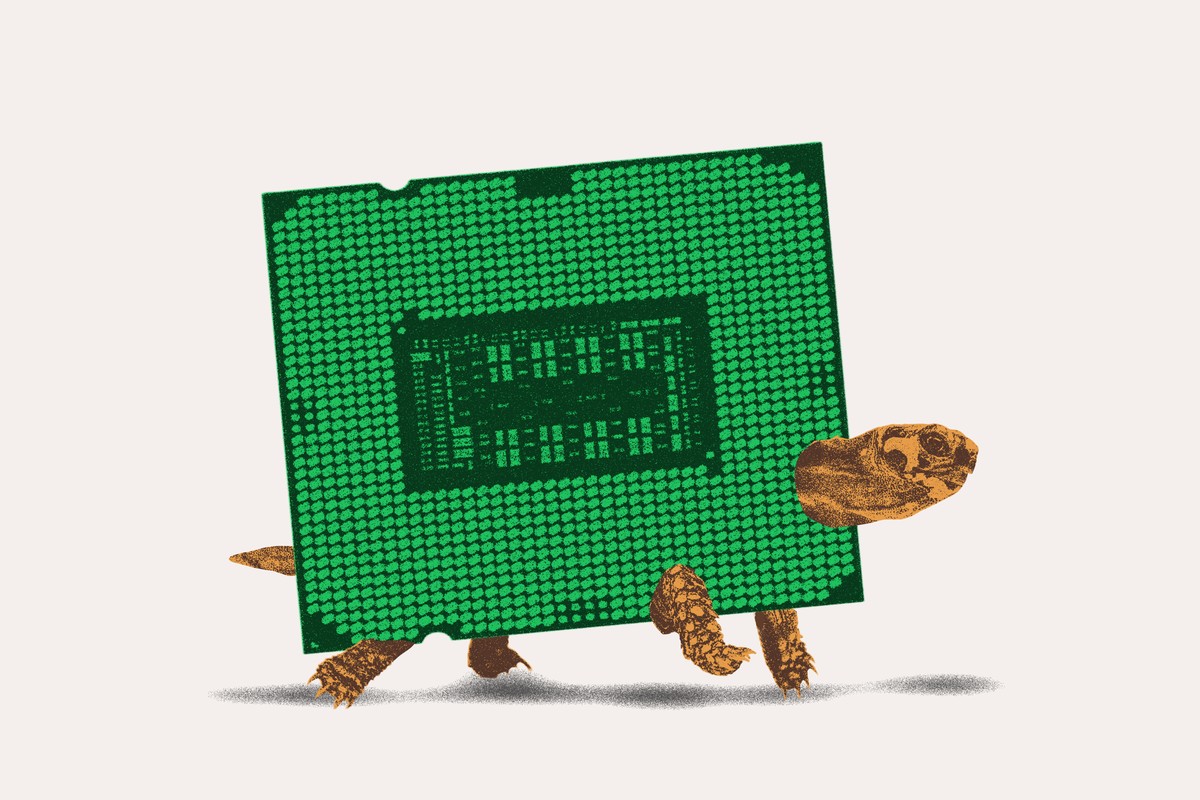
AI仍可能改变经济。但这种转变可能更像是一个漫长、缓慢的过程——或许类似于20世纪初电气化改变美国工业的方式——而非快速、剧烈的变革。然而,投资者押注这场变革将迅速到来,大型科技公司自身也是如此。如果结果证明这是一场马拉松而非短跑,许多AI股票将被严重高估——这或许有助于解释为何这些股票在近几周出现抛售。
AI could still transform the economy. But this shift may be more of a long, drawn-out process—similar, perhaps, to the way electrification transformed American industry in the early 20th century—rather than a fast and dramatic one. Investors, though, have bet that the transformation will be rapid, as have Big Tech companies themselves. If it turns out to be a marathon rather than a sprint, lots of AI stocks will have been seriously overvalued—which may help to explain why those stocks have been selling off in recent weeks.
除了可能影响你的401(k)退休账户,这并非坏事。如果AI确实是一个泡沫,让它缓慢泄气远比一次性破裂要好得多。市场正在向企业发出信号:资金水龙头不会永远敞开;如果它们找不到方法将已投入数据中心和算力的数千亿美元变现,就需要放缓脚步。考虑到AI公司自身不断谈论这项技术可能带来的生存风险,放缓发展或许在社会、经济及其他层面都是有益的。
Apart from what it might mean for your 401(k), this is not a bad development. If AI is indeed a bubble, letting the air out slowly is much better than having it burst all at once. The market is signalling to companies that the cash spigot will not be open forever and that if they can’t find ways to monetize the hundreds of billions of dollars they’re already pouring into data centers and computing power, then they need to slow down. Given that AI companies themselves keep talking about the potential existential risks this technology poses, a slowdown might well be beneficial—socially, economically, and otherwise.
尽管这些公司已向投资者隐含承诺,它们将成为历史上最赚钱的公司,但AI公司目前面临的问题,最终还是困扰几乎所有营利性企业的问题:迟早——可能比它们希望的更早——它们必须向投资者展示收益。
Although these companies have implicitly promised investors that they will become the most profitable in history, the problem now facing AI firms is ultimately the one that haunts nearly any for-profit enterprise: At some point, and probably sooner than they may like, they will have to show investors the money.