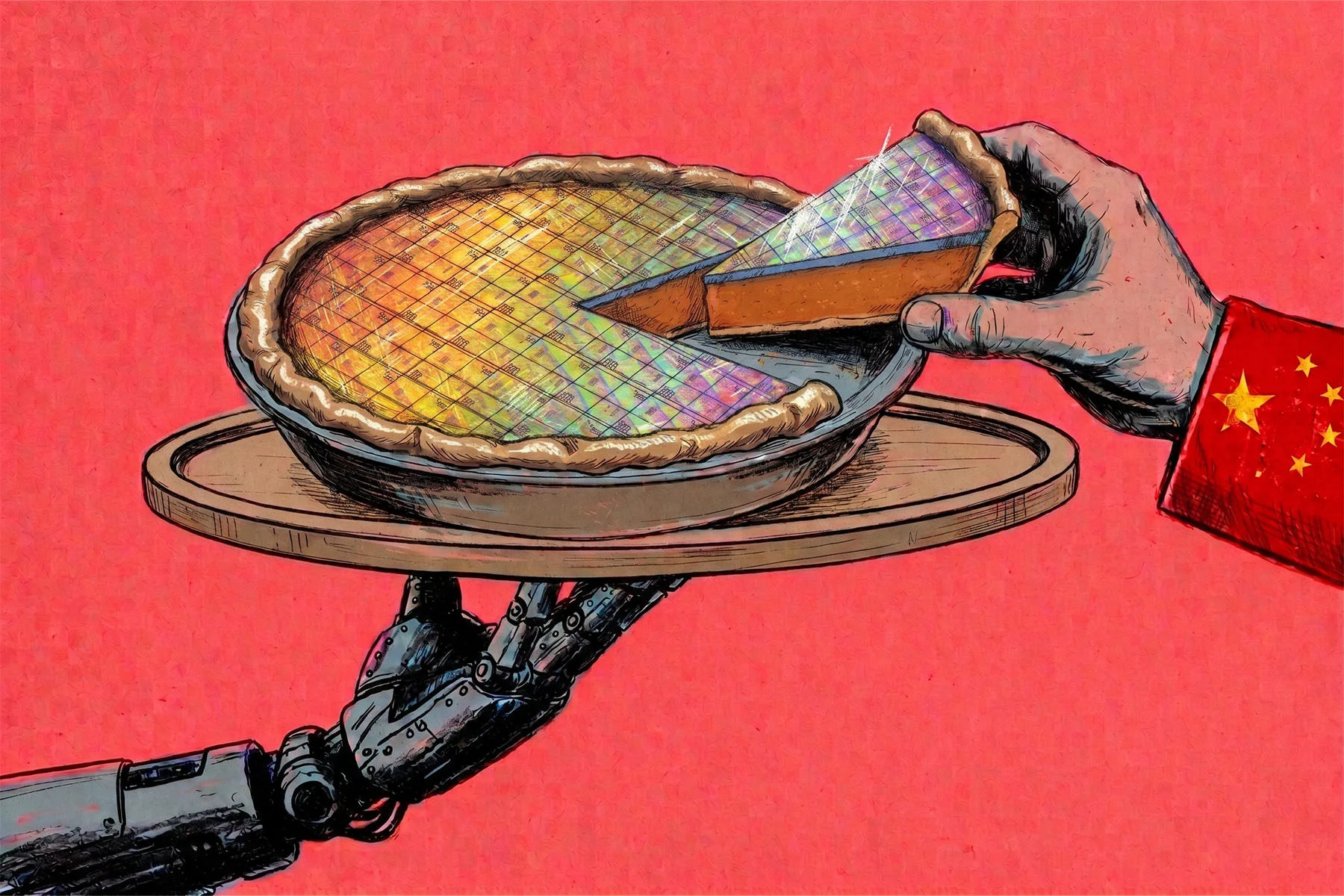
乘着持续两年的 AI 热潮,中国本土存储芯片制造商的成长速度和力度前所未有——但市场降温的早期迹象恐将考验其势头。
CXMT and YMTC are the twin pillars of China’s memory self-sufficiency drive amid US export restrictions. Illustration: Dennis Yip This article was first published by The Korea Times in a partnership with the South China Morning Post.
在存储芯片自给自足方面,中国的两大主力长鑫存储(CXMT)和长江存储(YMTC)借助国家支持、新厂投产和技术进步,尽管面临美国出口管制,仍获得了市场份额。这种快速扩张正撞上不断变化的市场。
Riding a two-year artificial intelligence boom, China’s domestic memory chipmakers have grown faster and bolder than ever – but early signs of a market cool-down threaten to test their momentum. China’s two biggest champions in memory chip self-sufficiency, ChangXin Memory Technologies (CXMT) and Yangtze Memory Technologies (YMTC), have leveraged state backing, new factories and advancing technology to gain market share despite US export curbs. That rapid expansion is colliding with a shifting market.
据 TrendForce 预测,在经历了两年非同寻常的暴利之后——这期间韩国对手 SK 海力士和三星电子的第三季度营业利润分别同比增长逾七倍和近九倍——NAND Flash 合约价预计明年上半年将趋于平稳或下跌最多 5%,更广泛的下跌将从第二季度开始。
After two years of extraordinary windfalls – which saw South Korean rivals SK Hynix and Samsung Electronics post third-quarter operating profits up more than sevenfold and nearly ninefold year on year, respectively – NAND flash contract prices are projected to flatten or fall up to 5 per cent early next year, with broader declines starting in the second quarter, according to TrendForce.
“中国供应商无需倾销海外市场即可制造这种压力。”Gavekal Technologies 研究总监 Laila Khawaja 说。
Chinese suppliers do not need to flood overseas markets to create that pressureLaila Khawaja, research director at Gavekal
分析师表示,即使中国企业目前仍落后于外资老牌厂商,中国不断增长的产量将日益使全球供应和定价复杂化。
Analysts say China’s rising output will increasingly complicate global supply and pricing even if its firms currently trail foreign incumbents.
据 Gavekal Technologies 研究总监 Laila Khawaja 称,中非中两大市场预计将在供应链和技术路径上出现分化,中国供应商在国内取得的增益将外溢至全球定价和议价能力。“中国供应商无需倾销海外市场即可制造这种压力,”她说。
Chinese and non-Chinese markets were expected to diverge in supply chains and technology paths, with Chinese suppliers’ domestic gains spilling over into global pricing and bargaining power, according to Laila Khawaja, research director at Gavekal Technologies. “Chinese suppliers do not need to flood overseas markets to create that pressure,” she said.
中国存储芯片的崛起总部位于合肥的长鑫存储(CXMT)成立于2016年,已成为全球第四大DRAM(动态随机存取存储器,即计算机和智能手机使用的工作内存)生产商。Counterpoint Research数据显示,其全球DRAM营收份额在2026年第三季度达到9%,较一年前的5%有所上升。
China’s memory ascent Hefei-based CXMT, founded in 2016, has become the world’s fourth-largest producer of DRAM, the working memory used in computers and smartphones. Its share of global DRAM revenue reached 9 per cent in the third quarter of 2026, up from 5 per cent a year earlier, Counterpoint Research data shows.
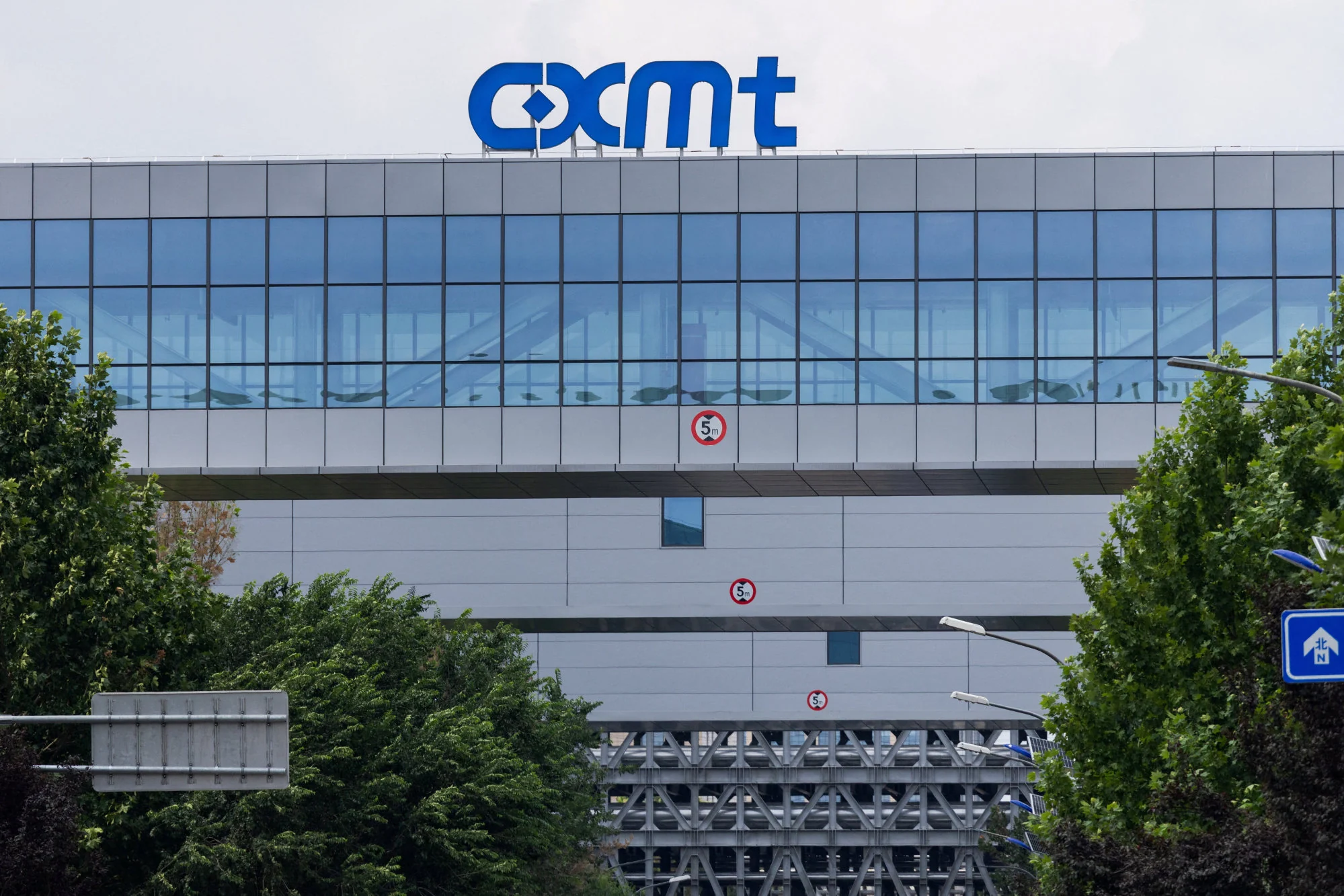
2026年7月29日,长鑫存储的标志出现在其位于北京的生产设施外墙上。 。如今,存储芯片繁荣正为其产能扩张提供资金:2026年前九个月营收增长逾八倍,达到2690亿元人民币。其7月在上海的大型首次公开募股(IPO)募集666亿元人民币,成为当年亚洲最大IPO。
The CXMT logo appears on the facade of company’s production facility in Beijing, on July 29, 2026. Photo: Reuters Government funding helped finance its entry into the capital-intensive industry. The memory boom is now funding its ramp-up: revenue rose more than eightfold to 269 billion yuan in the first nine months of 2026. Its blockbuster Shanghai initial public offering (IPO) in July raised 66.6 billion yuan, the biggest in Asia of the year.
摩根士丹利估计,到2028年,长鑫存储的月晶圆加工产能可能达到50万片,约占全球DRAM总产能的15%。
Morgan Stanley estimates that CXMT’s monthly wafer-processing capacity could reach 500,000 by 2028, roughly 15 per cent of the global DRAM total.
长鑫存储也在攀登技术阶梯。公司表示,已开始第五代工艺的量产,该工艺每片晶圆产出的芯片数量比上一代至少多50%。
CXMT is also climbing the technology ladder. It said it has begun mass production on its fifth-generation process, which produces at least 50 per cent more chips per wafer than its predecessor.
长鑫存储还表示,已验证原型并将很快出货客户样品的第六代4F2设计——这种结构通过在单个芯片上容纳更多存储单元,实现了更高的存储密度。
CXMT also said it had validated prototypes and would soon ship customer samples of its sixth-generation 4F2 design – a structure that enabled higher storage density by fitting more cells onto a single chip.
总部位于武汉的长江存储(YMTC)同样成立于2016年,在NAND闪存(断电后仍能保存数据的存储器)领域取得了类似进展。Counterpoint称,按第二季度出货量计算,其全球排名第三,市场份额16.5%,超越日本的铠侠(Kioxia)。高级分析师崔正九(Choi Jeong-ku)预计,长江存储2026年营收增速将是整个行业的六倍。
Wuhan-based YMTC, also founded in 2016, has made similar strides in NAND flash, which retains data without power. It ranked third globally by second-quarter shipment volume with a 16.5 per cent share, ahead of Japan’s Kioxia, Counterpoint said. Senior analyst Choi Jeong-ku expected YMTC’s 2026 revenue to grow six times faster than the broader industry. Its strength lies partly in Xtacking, an architecture bonding memory cells and control circuitry on separate wafers for denser storage and faster data transfer.
其优势部分来自Xtacking架构。这种架构将存储单元和控制电路键合在独立晶圆上,以实现更高密度存储和更快数据传输。据当地媒体报道,三星已获得长江存储混合键合专利的授权,SK海力士也已就同样事项进行过洽谈。美国存储芯片巨头美光科技正面临长江存储的专利诉讼。
Samsung has licensed YMTC’s hybrid-bonding patents and SK Hynix has held talks about doing the same, according to local media outlets. US memory chip giant Micron Technology is facing YMTC patent lawsuits.
长江存储正寻求通过上海IPO募集330亿元,但尚未给出明确时间表。根据其招股说明书,该公司报告第一季度净利润为334亿元,超过其2025年全年净利润的两倍以上。
YMTC is seeking 33 billion yuan through a Shanghai IPO but it has not given a clear timeline yet. The company reported a first-quarter net profit of 33.4 billion yuan – more than twice its 2025 total – according to its prospectus.
更困难的部分尽管长鑫的4F2进展点燃了国内对DRAM领域中国产品更强的希望,但竞争对手更为谨慎。SK海力士表示将继续扩展其经过验证的6F2架构,并指出“技术开发的时机和商业化的时机是不同的”。美光科技则将4F2排除在其路线图之外,原因是考虑到电容尺寸和间距带来的限制,怀疑该方法能否显著提升存储密度。
Harder part While CXMT’s 4F2 progress has fuelled local hopes of stronger Chinese offerings in DRAM, rivals were more circumspect. SK Hynix said it would keep extending its proven 6F2 architecture, noting “the timing of technological development and the timing of commercialisation are distinct”, while Micron Technology has excluded 4F2 from its road map given doubts the approach can significantly boost memory density given limits imposed by capacitor size and spacing.
野村预计长鑫的4F2芯片要到2027至2028年才能实现量产,并估计其制造技术仍落后领先者至少三年。
Nomura expects CXMT’s 4F2 chips to reach volume production only in 2027-28, and estimates that its manufacturing technology still trails the leaders by at least three years.
制造成本效益也显示出类似的差距。麦格理股票分析师丹尼尔·金估计,长鑫的传统DRAM工艺每片晶圆产出的存储容量约为领先竞争对手的65%,大约落后两代。
Manufacturing economics show a similar gap. Macquarie equity analyst Daniel Kim estimated that CXMT’s conventional DRAM process delivered about 65 per cent as much memory per wafer as leading rivals, about two generations behind.
在高带宽内存(HBM)领域,差距更大。HBM通过堆叠DRAM芯片为AI处理器提供数据。哈瓦贾表示:“长鑫仍然主要是一家传统DRAM制造商,尚不具备以有利可图的方式量产HBM的能力。”他估计其良率仍低于85%至90%的行业标准。
The divide is wider in high-bandwidth memory (HBM), which stacks DRAM chips to feed AI processors. “CXMT remains primarily a conventional DRAM maker, and is not yet capable of mass-producing HBM profitably,” Khawaja said, estimating yields still trail the 85 to 90 per cent industry standard.
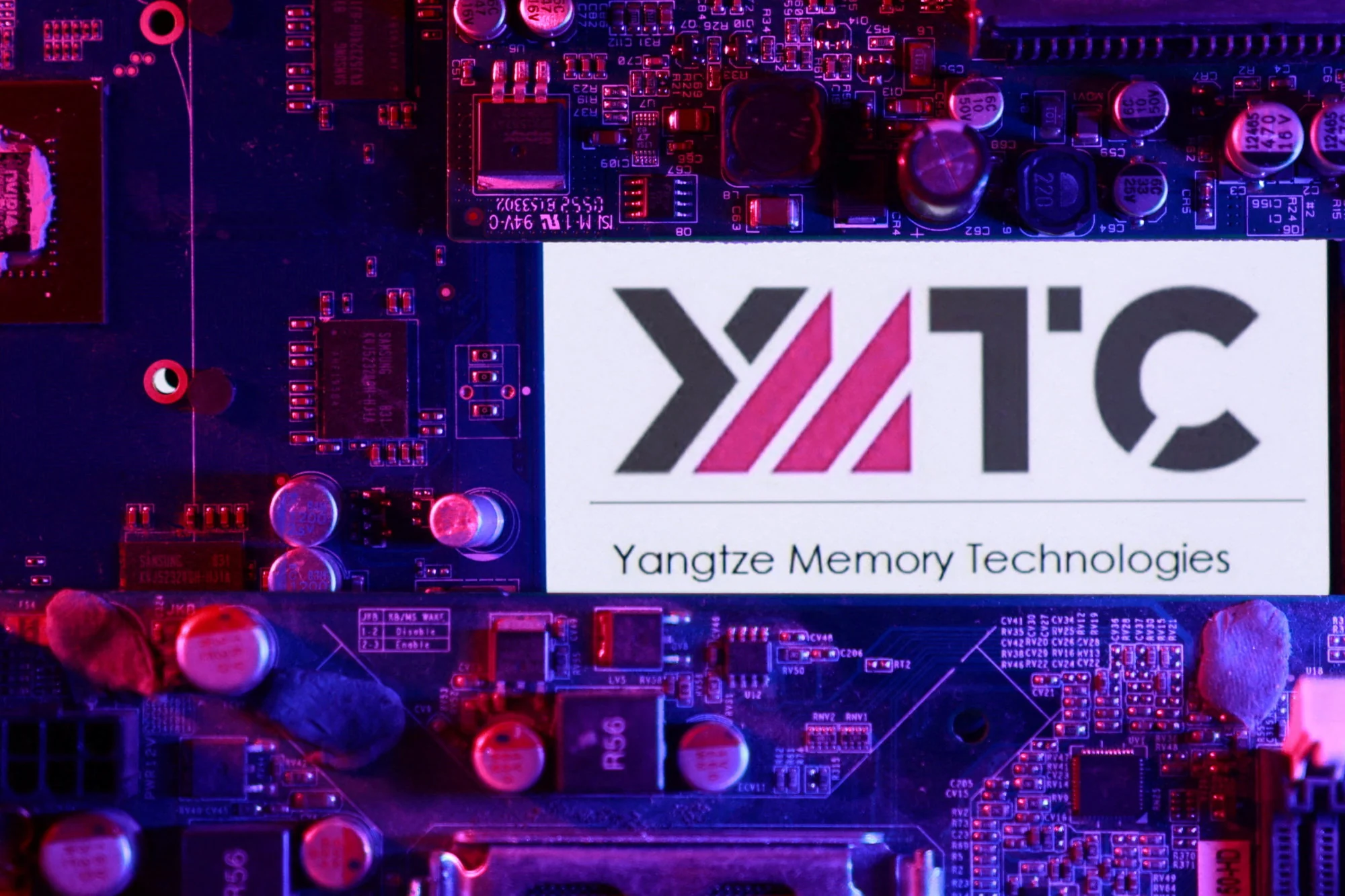
2026年4月14日,图中可见长江存储(YMTC)的标志和一块电脑主板。图片:路透社长江存储在NAND领域与行业领先者的差距较小,在层数上大约落后一代,但增加层数需要先进的刻蚀设备,而中国本土供应商无法提供这类设备。Khawaja表示,除了技术诀窍和人才之外,国内设备制造商还面临“专利壁垒,更不用说所需的严格验证周期以及对设备稳定性的高要求”。
The YMTC logo and a computer motherboard are seen in this illustration taken April 14, 2026. Photo: Reuters YMTC is closer to industry leaders in NAND, trailing by about a generation in layer counts, but adding layers requires advanced etching tools which are not available from local Chinese suppliers. Beyond know-how and talent, domestic toolmakers face “patent walls, not to mention the rigorous validation period required and the high requirement for tool stability,” Khawaja said. ### Disruption starts at home
颠覆从国内开始Khawaja表示,中国存储制造商眼前的机会是在国内的智能手机、个人电脑和存储市场取代外国供应商。他还说,北京推动本地化的努力以及对地缘政治供应风险的担忧,正促使买家考虑国产芯片。
The immediate opportunity for Chinese memory makers was to displace foreign suppliers in the country’s smartphone, PC and storage markets, Khawaja said, adding that Beijing’s localisation push and concerns over geopolitical supply risks were encouraging buyers to consider domestic chips.
随着现有厂商优先将存储产能用于AI芯片,供应短缺正促使海外买家将中国替代产品认证为第二或第三供应来源。Khawaja认为,这“长期来看可能影响三大厂商(三星、SK海力士、美光科技)的议价能力”。
As incumbents prioritise memory for AI chips, shortages are prompting overseas buyers to qualify Chinese alternatives as second or third sources, which “could affect the big three’s [Samsung, SK Hynix, Micron Technology] bargaining power over the long run”, according to Khawaja.
虽然长鑫存储在传统DRAM领域对三大厂商构成更直接的挑战,但长江存储进军企业级固态硬盘,可能使其在数据中心存储方面更接近三星。
While CXMT poses a more immediate challenge to the big three in conventional DRAM, YMTC’s push into enterprise SSDs could bring it closer to Samsung in data centre storage.
Counterpoint预计,到2028年,服务器产品将贡献长江存储近39%的收入,而2024年这一比例几乎为零。不过研究总监MS Hwang指出,关键考验是在中国以外赢得设计订单。
Counterpoint expects server products to generate nearly 39 per cent of YMTC’s revenue by 2028, up from virtually nothing in 2024, though research director MS Hwang noted the key test was winning design orders outside China.
Khawaja表示,更大的中期风险是新增产能上线后AI需求放缓,迫使现有厂商重新转向传统DRAM,而在这一领域,实力更强的中国竞争对手可能侵蚀其定价权。
The greater medium-term risk is an AI demand slowdown after new capacity comes online, pushing incumbents back into conventional DRAM where stronger Chinese rivals could erode pricing power, Khawaja said.
对存储制造商而言,繁荣通常带有保质期:价格上涨为新工厂提供资金,造成产能过剩,进而摧毁利润。AI打断了这一周期,SK海力士预计到2030年需求都将超过供应。
For memory makers, prosperity usually carries an expiry date: rising prices finance new factories, creating a glut that destroys profits. AI has interrupted that cycle, with SK Hynix expecting demand to outstrip supply through 2030.
栏目:科技 / 大型科技公司 / 科技战 / 新闻 / 中国未来科技 / 半导体 | 话题:半导体,焦点,长鑫存储 (CXMT), 三星电子,人工智能 (AI), 美国,上海,韩国,中国,摩根士丹利,麦格理,美光短链接: 在《南华早报》阅读原文
Sections: Tech / Big Tech / Tech War / News / China Future Tech / Semiconductors | Topics: Semiconductors, In Focus, CXMT (ChangXin Memory Technologies), Samsung Electronics, Artificial intelligence (AI), United States, Shanghai, South Korea, China, Morgan Stanley, Macquarie, Micron Short link: https://sc.mp/w5rl3 Read the original article on SCMP