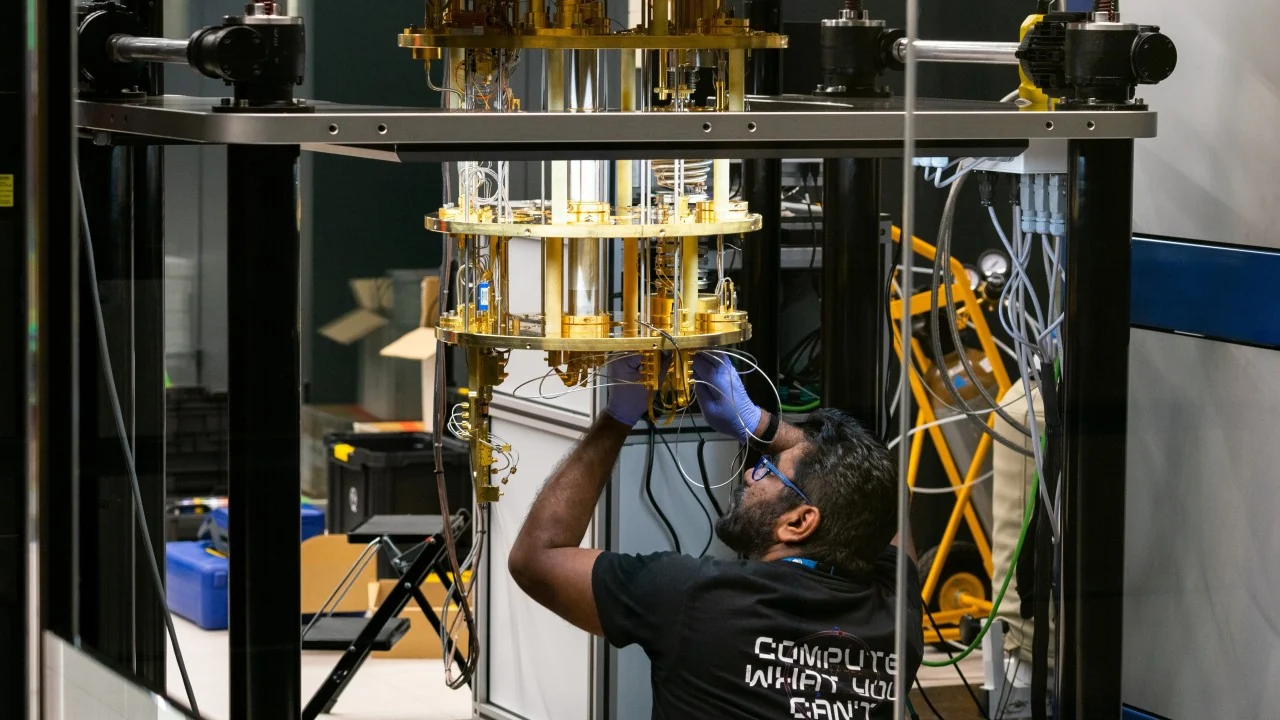
尽管与华盛顿存在贸易摩擦,欧盟仍承认无法独自建立量子能力,并欢迎美国制造商参与。
Despite trade friction with Washington, the bloc admits it cannot build quantum capacity alone and welcomes American manufacturers.
周三,欧盟委员会公布了《量子法案》,这是一个旨在将欧洲的量子研究转化为产品和服务的框架。 。欧盟正寻求提升其在这项下一代技术上的能力,同时减少对这个亚洲巨头的依赖。
On Wednesday, the European Commission unveiled the Quantum Act, a framework aimed at converting Europe’s quantum research into products and services. Photo: Shutterstock Chinese companies are set to be excluded from EU quantum computing procurement markets under legislation unveiled on Wednesday, as the bloc looks to ramp up its capabilities in the next-generation technology while cutting its dependency on the Asian giant.
为欧盟量子未来提供动力所需的昂贵机器,其采购招标将只对《世界贸易组织政府采购协议》的签署方开放,而中国并非签署方之一。
The procurement tenders to provide the expensive machines required to power the EU’s quantum future will be open to signatories to the World Trade Organization’s agreement on procurement – of which China is not one.
不过,美国企业将获准参与投标,向各国政府出售计算机、模拟器和医学影像系统等硬件,尽管欧洲部分地区也在寻求摆脱对华盛顿的技术依赖。
Firms from the United States will, however, be welcome to bid to sell hardware such as computers, simulators and medical imaging systems to governments, even as parts of Europe look to unwind their technological reliance on Washington too.
[[嵌入媒体]](
一位要求匿名的高级欧盟官员说:“属于签署方的国家,原则上按类似(欧洲)联盟控制的实体对待。不属于签署方的国家,则不按联盟控制的实体对待。”
[embedded media] While Hong Kong remains an independent signatory to the WTO’s Agreement on Government Procurement (GPA), EU officials said Chinese-controlled entities operating out of the special administrative region could be excluded on national security terms.
这名官员说:“量子与安全相关……如有疑问,如果涉及与安全相关的技术,也可以逐案限制采购招标。”
“Those countries who are in are, in principle, treated like [European] Union-controlled entities. Those countries who are out are not treated like union-controlled entities,” said a senior EU official, who was speaking on condition of anonymity.
安全领域的豁免显示了欧盟对华采取分门别类的做法,即便其于11月20日在布鲁塞尔通过一场关于金融服务的官方对话重新与香港接触。这是自2020年7月以来双方建立的首个重要新论坛,当时欧盟外长在《国家安全法》实施后禁止与香港展开新谈判。欧盟委员会未回应关于该对话是否意味着禁令已终止的提问。
“Quantum is security-relevant … in case of doubt, if there is a security-relevant technology, there are possibilities as well, individually, to restrict procurement calls,” the official said. The security carve-out shows the EU’s compartmentalised approach to China, even as it re-engaged with Hong Kong through an official dialogue on financial services in Brussels on November 20. It was the first major new forum established between the sides since July 2020, when the EU’s foreign ministers banned new negotiations with Hong Kong following the imposition of the national security law . The commission did not respond to questions over whether the dialogue meant the ban had been discontinued.
周三,委员会发布了《量子法案》,这是一个旨在将欧洲的量子研究转化为产品和服务的框架。
On Wednesday, the commission unveiled the Quantum Act, a framework aimed at converting Europe’s quantum research into products and services.
该法案旨在加强欧洲的量子研究和产业能力,激发投资——同时偏向欧洲企业——用于公共采购,并保障供应链安全,以保护关键基础设施免受量子技术赋能的威胁。
The act is intended to bolster European quantum research and industrial capacity, galvanising investment – while favouring European companies – in public procurement, and securing supply chains to protect critical infrastructure against quantum-enabled threats.
与此同时,布鲁塞尔公布了设立主权技术基金的计划,希望该基金规模达到500亿欧元(约合533亿美元),并撬动数千亿欧元的私人投资。
Alongside this, Brussels unveiled plans for a sovereign technology fund it hopes will reach €50 billion (US$53.3 billion) and mobilise hundreds of billions more in private investment.
人们希望,这一组合拳能阻止欧洲初创企业和研究人员前往别处实现和商业化其技术创新,包括在量子计算领域。
Combined, it is hoped the package will stop European start-ups and researchers from going elsewhere to realise and commercialise their technological innovations, including in the field of quantum computing.
“欧洲拥有全球约三分之一的量子公司,这些公司往往在欧洲以外寻找成长、扩大规模所需的资本,正如我们最近在Pasqal等案例中所见,”第二位欧盟高级官员表示。
“Europe hosts around one-third of the world’s quantum companies, and these companies often find the capital they need in order to grow, to scale up, outside Europe, as we have recently seen in some cases like Pasqal,” a second senior EU official said.
法国量子计算领军企业Pasqal转向美国资本市场为其扩张融资,并于8月在与一家美国投资实体合并后在纳斯达克上市。一个月后,它被排除在法国国家国防项目之外。
French quantum computing champion Pasqal turned to US capital markets to finance its expansion and floated on the Nasdaq exchange in August following a merger with a US investment entity. A month later, it was excluded from French state defence projects. “This is largely due to Europe’s market failure in the provision of strategic growth capital and equity,” the second official said.
“这在很大程度上是因为欧洲在提供战略性增长资本和股权方面出现了市场失灵,”第二位官员说。
“Europe’s fragmented and underdeveloped capital markets contribute every year to an estimated €300 billion of European savings flowing outside the EU. This means funding other countries’ growth, other countries’ economies, other countries’ tech champions.”
“欧洲资本市场的碎片化和欠发达,导致每年估计有3000亿欧元的欧洲储蓄流向欧盟以外。这意味着在为其他国家的增长、其他国家的经济、其他国家的科技领军企业提供资金。”
The EU is home to 32 per cent of the world’s quantum companies, higher than the US (25 per cent) and China (5 per cent). It trails, however, in terms of quantum patents, with the bloc accounting for just 6 per cent compared to 23 per cent in the US and 46 per cent in China, according to a report last year from the European Commission.
全球32%的量子公司位于欧盟,高于美国(25%)和中国(5%)。但根据欧盟委员会去年的一份报告,欧盟在量子专利方面落后,仅占6%,而美国占23%,中国占46%。
[[嵌入媒体]](
[embedded media] The quantum dynamic shows the dilemmas that will dominate Europe’s technological future. Leaders frequently discuss their plans in terms of “tech sovereignty”, but still rely on foreign capital and manufacturers to realise them.
在唐纳德·特朗普总统任内,欧洲虽与美国在贸易、数字法律乃至领土问题上争执不下,却准备欢迎美国公司参与其中,因为明白自己无法独自完成。另一方面,中国预计从一开始就会被排除在外。
“欧洲的技术主权并不意味着欧洲的技术自给自足……技术上的相互依存将持续存在,”第二位欧盟官员说。
While Europe is at loggerheads with the US over trade, digital laws, and even territorial issues, under President Donald Trump, it is prepared to welcome American firms to take part, understanding that it cannot do it alone. China, on the other hand, is expected to be excluded from the outset. “European technological sovereignty doesn’t mean European technological autarky. … Technological interdependence is there to stay,” the second EU official said. Sections: News / China / Diplomacy | Topics: China-EU relations, European Union, World Trade Organization (WTO), China, Hong Kong, United States
栏目:新闻/中国/外交|话题:中欧关系、欧盟、世界贸易组织(WTO)、中国、香港、美国短链接: 在南华早报阅读原文
Short link: https://sc.mp/qi5sg Read the original article on SCMP