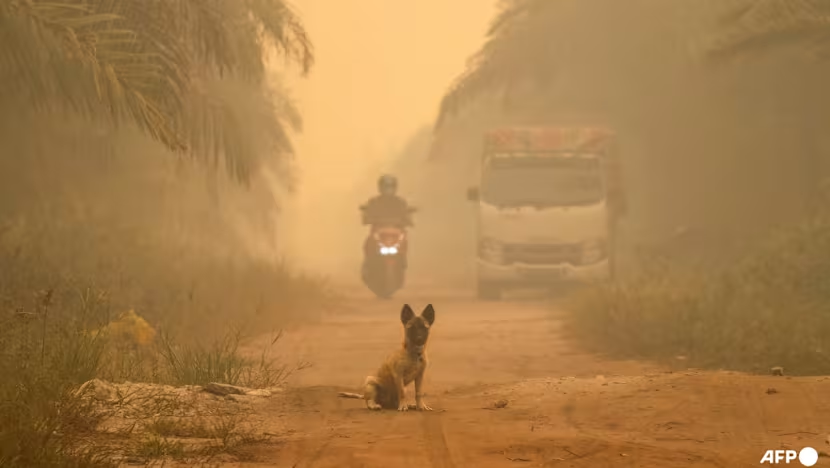
新加坡:每当东南亚地区出现雾霾天气,人们往往只关注由此引发的呼吸道疾病、学校停课、航班延误以及能见度下降等问题。而另一类长期暴露在污染空气中的群体——农作物,却很少受到关注。实际上,雾霾只是空气质量问题的外在表现,其背后还隐藏着颗粒物、地表臭氧以及氮氧化物等污染物。这些污染物不仅危害人类健康,还会影响农作物的生长、产量与品质,使得空气污染不再仅仅是公共卫生问题,更演变为粮食安全隐患。
SINGAPORE: When haze descends on Southeast Asia, attention focuses on respiratory illnesses, school closures, disrupted flights and poor visibility. Far less attention is paid to another population continuously exposed to polluted air: crops. Haze is only the visible symptom of a broader air-quality problem that includes particulate matter, ground-level ozone and nitrogen oxides. These pollutants can affect crop growth, yield and quality, making air pollution a food security issue, not just a public health concern.
植物通过叶片上的气孔进行气体交换,并依靠阳光完成光合作用。空气质量恶化会抑制光合作用,进而阻碍植物生长、降低产量并影响品质。此外,颗粒物中常含有各类污染物,它们会在植物体内不断累积,尤其是那些生长在城市与工业区周边的蔬菜。严重的雾霾还会减少光照强度。1997年印度尼西亚发生森林火灾时,太阳辐射量显著下降,直接导致水稻、水果、蔬菜及多年生作物的产量大幅减少。
Plants exchange gases through tiny holes called stomata on leaves and depend on sunlight for photosynthesis. Poor air quality can reduce photosynthesis, growth, yields and crop quality. Particulate matter may also carry contaminants that accumulate in plants, especially in vegetables grown near urban and industrial areas. Severe haze also reduces sunlight. During the 1997 Indonesian forest fires, reduced solar radiation affected photosynthesis, which then shrank output of rice, fruits, vegetables and perennial crops.
2026年频发的雾霾天气再次印证了这一风险。在2025年12月至2026年5月的旱季期间,东盟方面报告称湄公河次区域出现大范围跨境烟雾污染,受影响地区包括缅甸东部、泰国北部、老挝和越南。在东南亚南部地区,2026年上半年的火灾热点数量较2025年同期增加了约86%。
The 2026 haze episodes underline this risk. During the December 2025 to May 2026 dry season, ASEAN reported widespread transboundary smoke across the Mekong sub-region, particularly in eastern Myanmar, northern Thailand, Laos and Vietnam. In southern ASEAN, hotspot counts in the first half of 2026 were about 86 per cent higher than in the same period of 2025.
截至2026年9月30日,主要的雾霾污染区域已转移至东南亚海域,加里曼丹岛与苏门答腊岛成为烟雾的主要来源地,马来西亚、新加坡、婆罗洲乃至菲律宾部分地区均受到影响。大面积农业区暴露于污染物之中暴露的农业区面积可能远大于受火灾影响的区域,因为烟雾可以传播数百公里。东盟拥有约1.26亿公顷的耕地。本文作者的一个指示性估计表明,大约5000万至7000万公顷的农田——相当于东南亚耕地总面积的40%至55%——在2026年主要的北部和南部雾霾事件期间可能曾暴露于显著的雾霾之中。
By Sep 30, 2026, the main active haze problem had shifted to maritime Southeast Asia, with Kalimantan and Sumatra becoming critical source areas of smoke, affecting parts of Malaysia, Singapore and Borneo, and even the Philippines. LARGE AGRICULTURAL AREAS EXPOSED TO POLLUTANTS The exposed agricultural areas can be substantially larger than the fire-affected areas because smoke travels hundreds of kilometres. ASEAN has about 126 million hectares (ha) of farmed land. An indicative estimate by this author suggests approximately 50 to 70 million ha of cropland - roughly 40 to 55 per cent of Southeast Asia’s farmland - may have been potentially exposed to significant haze during the major 2026 northern and southern episodes.
该估计结合了东盟气象专门中心(ASMC)发布的2026年雾霾足迹数据与联合国粮农组织(FAO)的耕地统计数据。这是对暴露程度的估计,而非作物损失的估计。东盟目前仍缺乏对雾霾对农业生产力影响的科学评估。
This estimate combines the 2026 haze footprints released by the ASEAN Specialised Meteorological Centre (ASMC) with the Food and Agricultural Organisation’s (FAO) cropland statistics. It is an estimate of exposure, not of crop loss. ASEAN still lacks scientific assessments of the impact of haze on agricultural productivity.
雾霾并非唯一的大气威胁。地面臭氧也是一种无形污染物,被描述为导致作物产量和质量损失的隐藏原因。
Haze is not the only atmospheric threat. Ground-level ozone is also another invisible pollutant that has been described as a hidden cause of crop quantity and quality losses.
臭氧长期以来一直是农业领域的关注点。美国的估计显示,臭氧在1981年至2021年的40年间使玉米产量减少了3.5%,大豆产量减少了6.1%。仅在1984年,美国农业的估计损失介于20亿至30亿美元之间。不同作物对臭氧的敏感性各不相同,包括水稻、大豆、豆类、花生和园艺作物。越南的研究已经记录了臭氧对水稻和花生品种的影响。即使是微小的产量下降,当乘以数百万公顷时也会变得意义重大。
Ozone has long been a concern for agriculture. US estimates show that ozone reduced maize yield by 3.5 per cent and soybean by 6.1 per cent across 40 years (1981–2021). In 1984 alone, estimated losses for American agriculture ranged between USD$2 to 3 billion. Crop sensitivity varies between rice, soybean, beans, peanuts and horticultural crops. Research in Vietnam has documented effects on rice and peanut cultivars. Even small yield reductions matter when multiplied across millions of hectares.
东盟传统上将雾霾视为跨境环境问题。《第二份无雾路线图2023–2030》、东盟泥炭地管理战略2023-2030以及东盟无雾可持续土地管理投资框架,都有可能支持推动实现无雾农业和商品部门的行动。
ASEAN traditionally treats haze as a transboundary environmental problem. The Second Haze-Free Roadmap 2023–2030, ASEAN Peatland Management Strategy 2023-2030 and ASEAN Investment Framework for Haze-Free Sustainable Land Management could potentially support action leading to haze-free agriculture and commodity sectors.
然而,《2026–2030年东盟食品、农业与林业部门规划》并未将空气质量与农业生产力、产量损失及粮食安全直接联系起来。这一缺失的关联正变得愈发重要。政策启示:应优先采取以下五项举措。
However, the ASEAN Food, Agriculture and Forestry Sectoral Plan 2026–2030 fails to connect air quality directly with agricultural productivity, output loss and food security. This missing link is increasingly consequential. POLICY IMPLICATIONS Priority should be given to the following five actions.
首先,东盟各成员国政府及私营部门需将作物分布图与火灾、臭氧及PM2.5(扩散性极强的颗粒物)的监测数据相结合,从而监测农业活动受空气质量的影响情况。
First, government and private entities in ASEAN member states (AMS) need to monitor agricultural exposure by integrating crop maps with observations of fire, ozone, and PM2.5 (which disperses widely).
其次,需通过田间试验以及对主要作物的长期监测来量化空气质量对农业造成的损失。
Second, research is needed to quantify losses through field experiments and long-term monitoring of major crops.
第三,东盟各国环境与农业主管部门应借助卫星、低成本传感器、农场气象站及作物模型,将空气质量预警信息融入数字化农业体系。
Third, AMS’ environment and agriculture agencies should integrate air-quality warnings into digital agriculture using satellites, low-cost sensors, farm weather stations and crop models.
第四,公共与私营部门应加大研发力度,培育并管理具备耐受臭氧、颗粒物污染能力的作物品种,同时增强其抗旱、抗热、抗涝及耐盐碱能力。
Fourth, public and private entities should intensify their efforts in breeding and managing crops for tolerance to ozone and particulate pollution alongside drought, heat, flood and salinity.
第五,各国政府应出台相关政策,推广残茬还田、堆肥、生物炭利用、用作动物饲料以及生物质能源开发等经济可行性较高的替代方案,以减少农业活动本身对雾霾污染的贡献。
Fifth, governments need to enforce policies to reduce agriculture’s own contribution to haze pollution by promoting economically attractive alternatives to open residue burning - such as residue incorporation, composting, biochar, animal feed and productive biomass use.
2026年第四季度至2027年初的气候趋势值得密切关注。厄尔尼诺现象、东盟南部旱季的到来、东南亚群岛部分地区的降雨量低于正常水平以及火灾频发等因素可能相互叠加,引发多重危机。
The climatic trends in the final quarter of 2026 and going into early 2027 warrant close attention to agriculture. El Nino conditions, the southern ASEAN dry season, below-normal rainfall in parts of archipelagic Southeast Asia and elevated fire activity can reinforce one another into a polycrisis.
监测工作应重点关注对经济与粮食安全至关重要的作物,包括水稻、玉米、木薯、大豆、蔬菜、水果、咖啡、可可、橡胶及油棕。在当前局势多变且充满不确定性的背景下,实施农业政策必须以雾霾与臭氧的含量数据,以及这些污染物与作物产量及其他农业响应之间的关联研究为依据。
Monitoring operations should prioritise crops of economic and food security importance, namely rice, maize, cassava, soybean, vegetables, fruits, coffee, cocoa, rubber and oil palm. Implementing agricultural policy in the current conditions of flux and uncertainty requires evidence on the amount of haze or ozone, and the relationship between these pollutants and crop yield and other responses.
这些关系必须本地化到东南亚,因为作物敏感性、污染物混合、气候和生产系统与其他地区不同,而大多数现有证据正是在这些地区发展起来的。
These relationships must be localised to Southeast Asia because crop sensitivity, pollution mixtures, climate, and production systems differ from those in other regions where most existing evidence was developed.
农业依赖健康的土壤、水、气候和生物多样性。清洁空气应被视为另一种关键自然资源,是农业政策不可或缺的一部分。关键问题不再是污染空气是否会损害作物;科学表明它会。东盟现在需要量化其因空气污染而损失的农作物有多少吨。随着超级厄尔尼诺季节带来的长期雾霾事件笼罩地平线,这正日益成为一个生存性问题。
Agriculture depends on healthy soil, water, climate and biodiversity. Clean air should be recognised as another essential natural resource integral to agricultural policy. The critical question is no longer whether polluted air can damage crops; the science shows that it can. ASEAN now needs to quantify how many tonnes of its crops are being lost due to air pollution. This is increasingly becoming an existential question as prolonged haze episodes with the super El Niño season darken the horizon.
保罗·腾是新加坡国立大学东南亚气候变化项目(ISEAS – Yusof Ishak Institute)的访问高级研究员。他也是新加坡南洋理工大学NIE International的高级顾问。本文首发于ISEAS – Yusof Ishak Institute博客《Fulcrum》。
Paul Teng is a Visiting Senior Fellow in the Climate Change in Southeast Asia Programme of ISEAS – Yusof Ishak Institute. He is also Senior Consultant of NIE International, Nanyang Technological University Singapore. This piece first appeared on ISEAS - Yusof Ishak Institute’s blog, Fulcrum.