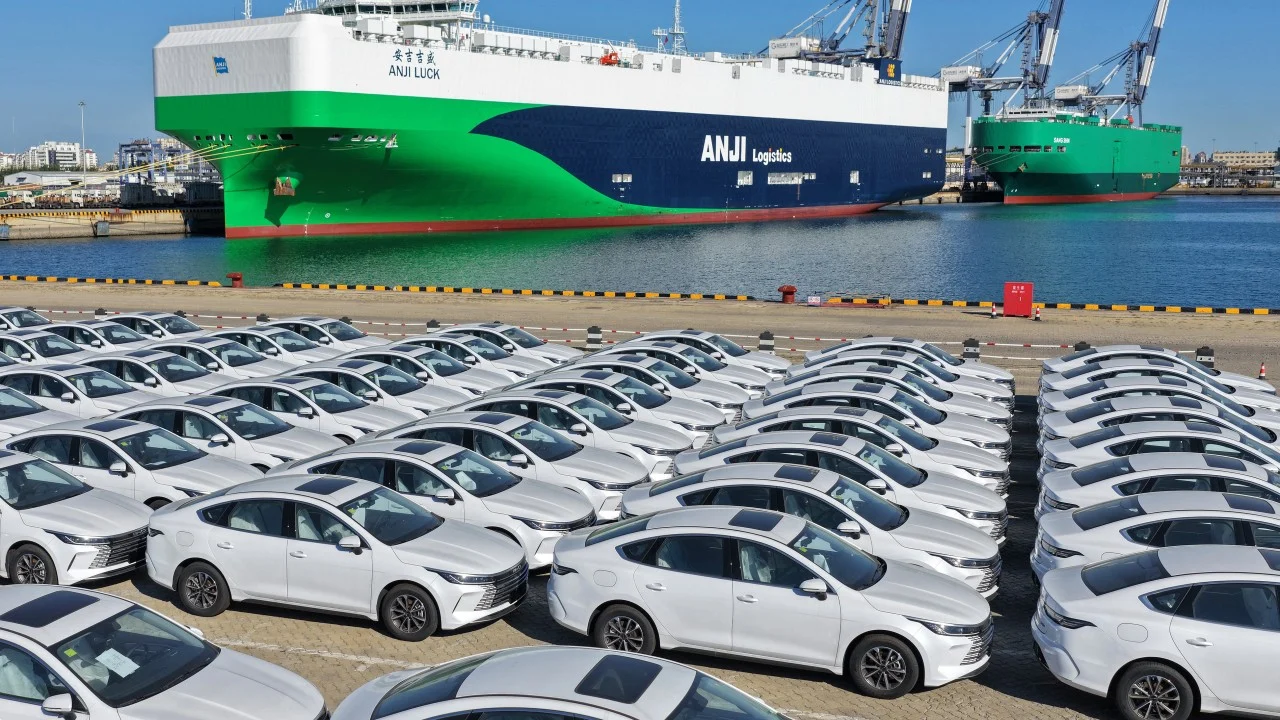
9月份,中国向欧盟出口的混合动力汽车数量较去年同期增长了两倍;预计在最近达成的贸易协议中的进口限制措施生效之前,这一出口趋势将持续保持高位。
China’s hybrid car exports to the European Union tripled in September from a year earlier, with shipments expected to remain elevated before an import cap agreed during recent trade talks takes effect.
根据海关数据,上个月中国向欧盟出口了近10万辆混合动力汽车,同比增长18.9%,较8月份增长了204.2%。
The country shipped nearly 100,000 hybrid cars to the bloc last month, up 18.9 per cent from August and 204.2 per cent from a year earlier, customs data showed on Tuesday.
这一增长速度远远超过了中国对欧盟出口的乘用车总量的年增长率(142.7%)。分析师指出,这种快速增长很可能是因为汽车制造商在10月初于北京举行的高层谈判前,提前大量生产了相关产品。
The surge outpaced a 142.7 per cent year-on-year rise in China’s total exports of passenger cars to the EU. Analysts said the rapid growth likely reflected carmakers front-loading vehicles ahead of high-level negotiations held in Beijing in early October.
ING大中华区首席经济学家林恩·宋(Lynn Song)表示:“在贸易谈判之前,经销商可能试图尽可能多地完成购车订单,以避免未来可能实施的配额或关税。”
“Dealerships may have sought to get as many purchases in as possible before potential quotas or tariffs ahead of trade talks,” said Lynn Song, chief economist for Greater China at ING.
在经历了数月的紧张局势后,中国和欧盟官员于本月早些时候在北京举行了贸易谈判,双方同意在未来四年内对混合动力汽车的进口量实施限制。该限制措施从每年35万辆开始实施,并从第二年起每年增加6%。
After months of rising tensions, Chinese and EU officials met for trade talks earlier this month in Beijing, where they agreed to cap hybrid car imports into the bloc for four years. The limit starts at 350,000 units a year and will rise 6 per cent annually from the second year.
林恩·宋进一步指出:“由于进口限制将于12月1日正式生效,未来两个月的出口数据也很可能会继续保持高位。”
“With the import cap set to go into effect on December 1, we would likely see elevated imports in the next two months of data as well,” Song said.
自2024年布鲁塞尔对来自中国的纯电动汽车征收高达35.3%的关税以来,中国汽车制造商越来越多地将混合动力汽车作为面向欧洲市场的主要产品。
Chinese carmakers have increasingly pivoted to hybrid cars for the European market since Brussels imposed tariffs of up to 35.3 per cent on pure electric cars from the country in 2024.
根据海关数据,今年前三个季度,中国向欧盟27个成员国出口了约67万辆混合动力汽车,这一数字几乎是2025年全年出口量(35.6万辆)的两倍。
China exported about 670,000 hybrid cars to the EU’s 27 member states in the first three quarters of this year, nearly double the 356,000 recorded for the entirety of 2025, according to customs data.
经济学人智库(Economist Intelligence Unit)的高级经济学家徐天辰(Xu Tianchen)分析称,中国汽车制造商此前就有在贸易限制实施前提前发货的习惯;他以巴西去年提高电动汽车关税以及泰国在2023年底调整电动汽车补贴政策为例,说明了这一现象的普遍性。
Xu Tianchen, a senior economist at the Economist Intelligence Unit, said Chinese carmakers had previously shown a pattern of shipping vehicles early to get ahead of potential restrictions, citing Brazil’s tariff increase on electric vehicles (EVs) last year and changes to Thailand’s EV subsidy programme at the end of 2023.
他预计出口量在10月和11月期间仍将保持高位,并指出中欧之间的贸易协议并未对提前发货行为设置任何限制。
He expected exports to remain elevated through October and November, noting that the China-EU trade understanding did not appear to place any restrictions on front-loading.
“但这不会损害双边贸易关系,因为相关协议已经达成,欧盟应该会对中国的让步感到满意,”徐表示。
“But it will not hurt trade ties because an agreement has already been made, and the EU should be quite happy with China’s concession,” Xu said.
9月份,中国对欧盟的出口额同比增长了25.3%;而中国的整体出口额则增长了36.3%,远超市场预期。
China’s total exports to the EU rose 25.3 per cent year on year by value in September, while the country’s total exports surged 36.3 per cent, far above market expectations.
在国内需求持续疲软的情况下,强劲的出口表现有助于支撑经济增长——中国第三季度的经济增速为4.5%。
Strong exports have helped support economic growth amid persistent weakness in domestic demand, with China’s economy expanding 4.5 per cent in the third quarter.
宋认为,由于进口配额限制的实施,汽车出口量预计将增加,再加上与技术相关的贸易持续繁荣,这些因素将“有助于中国在今年年底前继续保持强劲的出口势头”。
Song said the expected increase in car shipments ahead of the import cap, alongside continued strength in technology-related trade, should “help keep China’s exports strong to close out the year”.
“我预计中国的贸易顺差将在2026年创下新的历史新高,”宋补充道。
“I expect China will reach a new record high for its trade surplus in 2026,” Song added.
去年,中国的贸易顺差达到了创纪录的1.2万亿美元,引发了西方贸易伙伴的密切关注。尽管欧盟最近与北京达成了协议,但欧洲官员上周仍呼吁采取进一步的贸易措施来平衡贸易失衡问题。
China’s trade surplus reached a record US$1.2 trillion last year, drawing heightened scrutiny from Western trading partners. Despite the EU’s recent agreement with Beijing, European officials called for further trade measures to counter imbalances last week.