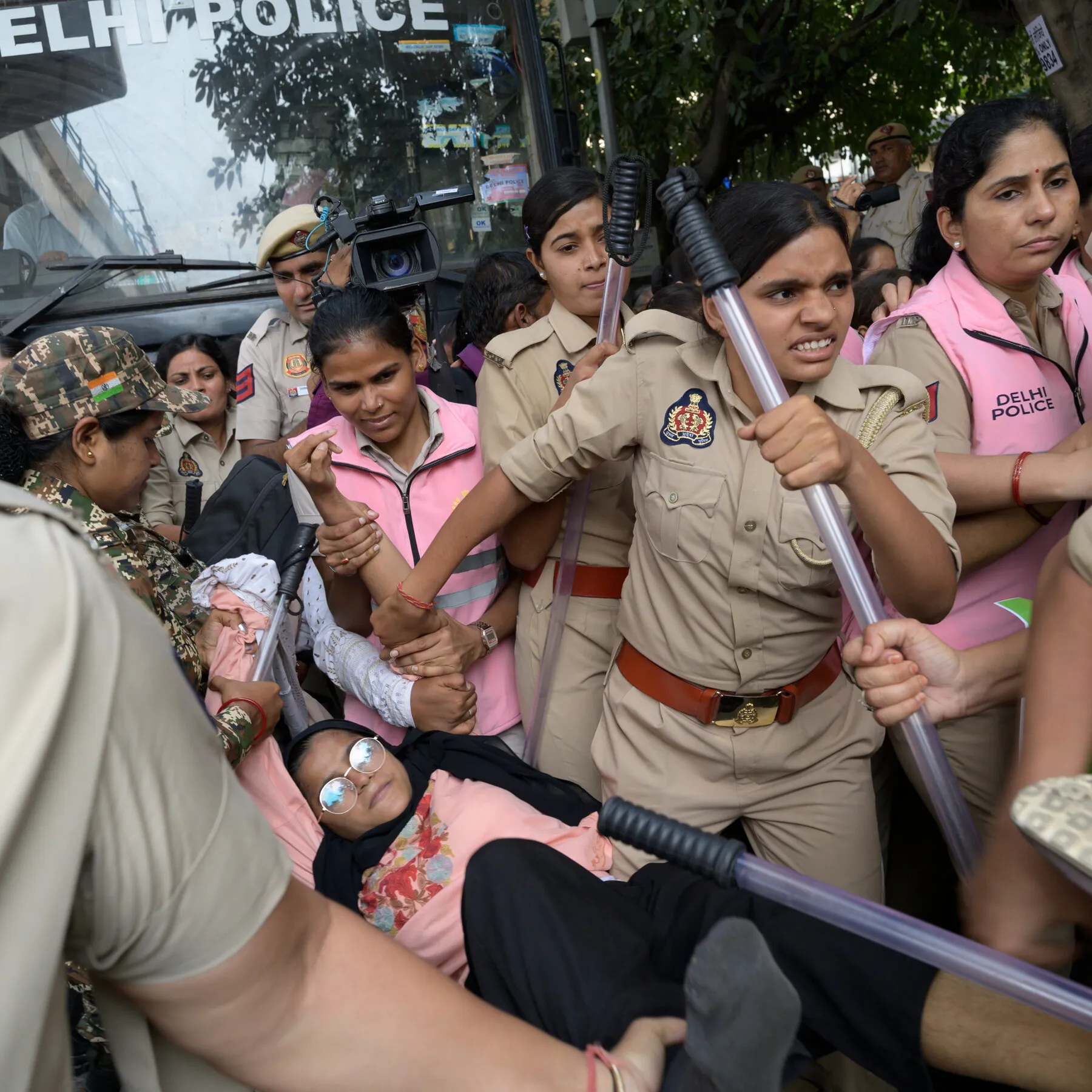
莫迪试图通过遏制Z世代抗议来安抚盟友印度执政联盟的领导人正试图将这些示威描绘为传统政党争夺权力的行为,而非草根青年运动。
Modi Seeks to Calm Allies by Shackling Gen Z Protests Leaders of India’s governing coalition are trying to frame the demonstrations as a power grab by traditional political parties rather than a grass-roots youth movement.
在夏季首次爆发时,正在进行的青年抗议让总理纳伦德拉·莫迪感到意外。
The ongoing youth protests rocking India caught Prime Minister Narendra Modi by surprise when they first broke out in the summer.
他动用警棍和催泪弹,并在社交媒体上发布以Z世代风格与其沟通的视频,但这些措施并未有效遏制抗议。一次罕见的政治退让——牺牲其教育部长——让抗议者暂时回家,但也使他的对手更加胆大。
His deployment of police batons and tear gas, plus social media videos seeking to connect with Gen Z in their style, did little to contain them. A rare political climb-down, by sacrificing his education minister, got the protesters to go home for the time being, but it also emboldened his opponents.
因此,当抗议者本月早些时候在首都宣布再次示威,抗议内容转为对国家选民名册变动的不满时,强人莫迪的执政联盟内部许多领导人感到警惕,而莫迪对任何负面消息仍保持其标志性的沉默。
So when the protesters announced another demonstration in the capital earlier this month, this time angry over changes to the nation’s voter roll, many leaders of the strongman’s own governing coalition were alarmed, as Mr. Modi maintained his trademark silence on anything negative.
但莫迪近几日对动荡的处理方式——封锁新德里核心地区、拘留抗议领袖并大规模抓捕抗议者——显示出更为成熟的策略,已让部分支持者放心,认为他能够遏制抗议运动的势头。此结论来自对超过半打执政联盟高级成员的采访,其中大多数受访者要求匿名,因为他们未获授权公开讨论内部策略。他们表示,政府的做法是双管齐下。
But how Mr. Modi has dealt with the unrest in recent days — locking down the heart of New Delhi, detaining protest leaders and rounding up protesters by the thousands — signaled a better prepared strategy that has reassured some of his backers that he can stall the momentum of the protest movement, according to interviews with more than half a dozen senior members of the governing coalition. Most of them asked not be identified as they are not authorized to publicly discuss internal strategy. The government’s approach is two-pronged, they said.
第一:压制任何暗示公众愤怒是夏季Z世代自发爆发延续的动员努力,因为据称该爆发已动摇莫迪的执政根基。
First: Quash any mobilizing effort that suggests that public anger is the continuation of the organic Gen Z eruption over the summer that, by all accounts, unsettled Mr. Modi’s grip on power.
第二:允许传统反对党组织的集会继续进行,将斗争框定为针对传统对手——莫迪在选举中屡次击败并自信还能再次击败的对手。目前,这一做法似乎已见成效。
Second: Allow the gatherings of the traditional opposition parties to go ahead, framing the fight squarely against a traditional foe that Mr. Modi has repeatedly beaten at elections and is confident of vanquishing again. For now, the approach appears to be working.
这场“蟑螂”青年运动今夏因教育体系的失职而兴起,今秋又因莫迪被指操纵印度选举制度而再度活跃,如今却在国家投入的巨大力量面前陷入停滞。
The “cockroach” youth movement — which began this summer over the failings of the education system and was revived this autumn over accusations that Mr. Modi is manipulating India’s election system — has become bogged down by the enormous powers of the state thrown at them.
随着运动领导人反复进出拘留所,并被卷入可能纠缠他们多年的法律案件,他们的势头已经消退。安全部队通过封锁地点、向相关区域大量增派穿制服的警员来应对抗议号召。组织者和支持者在城门口被拦截,被从火车和公交车上带走,许多人被羁押在家中,或被围困在大学校园内。
Their momentum has deflated as their leaders move in and out of detention, and get tangled up in legal cases that could follow them for years. Security forces have met protest calls by putting locations under lockdown and flooding the area with uniformed officers. Organizers and supporters are stopped at the city gates, pulled out of trains and buses, and in many cases held in their homes or barricaded inside their university campuses.
被视为对政府友好的广播媒体随后宣称,低出席率说明这场运动彻底失败。
Broadcast media seen as friendly to the government has then declared the low turnout a flop.
另一方面,有组织的政治反对派因这场对莫迪罕见的公开挑战而受到鼓舞。但这个反莫迪联盟长期以来一直十分脆弱,其团结屡屡因全国各地地方地盘上的内部竞争而受到考验。
The organized political opposition, on the other hand, has received a boost from the rare public challenge to Mr. Modi. But the anti-Modi coalition has long been a fragile one, its unity frequently tested by internal competition on local turf across the country.
莫迪领导的印度人民党长期以来一直将这位强人塑造成与其说是联合政府的总理,不如说是一位行政统治者。该党正将当前的动荡定性为反对派联盟领导人拉胡尔·甘地试图通过暴力手段推翻莫迪的努力。
Mr. Modi’s Bharatiya Janata Party has long portrayed the strongman as less of a prime minister of a coalition government, and more of an executive ruler. It is framing the current agitation as an effort by Rahul Gandhi, the leader of the opposition bloc, to topple Mr. Modi through violent means.
“他们的目的很简单:就是想要改变现政权,”印度人民党(BJP)的高级领导人、前内阁部长斯姆里蒂·伊拉尼(Smriti Irani)上周在电视节目中说道。她曾在2019年的选举中击败了莫迪先生。她补充说:“这个无法通过选举当选的‘王子’,妄图有朝一日成为‘皇帝’,现在正在发泄自己的政治怒火。”不过,许多执政联盟的领导人表示,莫迪目前面临着自他执政12年来从未遇到过的麻烦。
“Their intention is pure and simple regime change,” Smriti Irani, a senior B.J.P. leader and former cabinet minister who defeated Mr. Gandhi in his constituency in 2019, said in TV appearances last week. “An unelectable prince, who hopes to be emperor one day, is now throwing a political tantrum.”Still, Mr. Modi has found himself in troubled waters that he has not experienced in his 12 years at the national helm, many of the governing coalition leaders said.
一些中立的民间社会组织正在揭露政府的失误;对于这些批评,印度人民党很难将其简单地归结为“过时的党派政治”。
A nonpartisan civil society is managing to break through and question government failures in ways that the B.J.P. cannot easily dismiss as old-school partisan politics.
在抗议运动爆发之前,莫迪的支持阵营内部就已经存在一些不满情绪。印度人民党及其联盟内的部分人士对权力过度集中的现象感到不满。
Internal Discord There was already some discontent within Mr. Modi’s camp before the protest movement. Some figures within the B.J.P. and other parties in his coalition had become disgruntled by how much power has become centralized.
“反对派对他们来说根本不是问题,”杜尔加·南德·贾(Durga Nand Jha)说道。她是一位学者,领导着一个隶属于印度人民党母组织的智库。“真正的问题是:为什么公众以及他们自己的支持者都不为他们辩护呢?他们现在正努力巩固自己的支持基础——有些人表示反对,有些人保持沉默,还有些人则只是待在家里。”据党内领导人和分析人士称,印度人民党已经过度依赖政府的行政手段和选举策略,从而牺牲了自身的政治活力。在多个邦,民众对政府在地方选举和各种问题上的“自上而下”的处理方式感到失望。
“The opposition is not a problem for them,” said Durga Nand Jha, an academic who leads a think tank affiliated with the B.J.P.’s parent organization. “The problem is, why is the public and their own supporters not defending them? They are struggling to consolidate their own supporters in this moment — some are opposing, some are silent, some are just sitting at home.”The B.J.P. has become overly dependent on state levers and electoral machinations at the cost of political dynamism, according to party leaders and analysts. In several states, supporters have been disheartened over what they see as a heavily top-down approach to local elections and issues.
不过,党内领导人仍表示有信心:他们仍会比反对党国大党(Congress Party)表现得更好。国大党目前正努力将其领导人莫迪的日益高涨的人气转化为地方和邦级层面的实际政治影响力,但这一过程显得十分艰难。
Party leaders, however, expressed confidence that they would still be better placed than the opposition Congress Party, which is struggling to translate the growing popularity of its leader, Mr. Gandhi, to an actual revival of its cadres at the local and state levels.
“这里那里几千名抗议者——学生、农民、商人——动摇不了我们的获胜能力,”印度最大邦北方邦(人口2.4亿)的一位印度人民党领导人克里希纳·坎特·舒克拉说,该邦将于明年举行选举。
“A few thousand protesters here and there — students, farmers, businessmen — don’t make a dent in our winnibility,” said Krishna Kant Shukla, a B.J.P. leader in Uttar Pradesh, India’s largest state of 240 million people, which will hold an election next year.
据一位印度人民党领导人和执政联盟中两个党派的领导人透露,夏季的青年抗议活动吸引了大量人群,其中包括许多来自非反对派家庭的青年。这些青年用标语牌和表情包嘲讽莫迪,态度不敬。许多人在镜头前表示,他们来自支持执政党的家庭。
The summer youth protests had drawn large crowds, including many youth from families not associated with the opposition, according to one B.J.P. leader and two leaders of parties in the ruling coalition. The youth were irreverent in how they poked fun at Mr. Modi with their placards and memes. Many, on camera, suggested they came from families who supported the ruling party.
处理政治动荡的任务落在了阿米特·沙阿身上,他是莫迪的得力内政部长,实际上是莫迪的二号人物,陪伴莫迪已超过二十年。
The task of handling political agitation falls to Amit Shah, Mr. Modi’s powerful home minister, who is his effective No. 2 and has been at his side for over two decades.
在本月新德里抗议活动前夕,沙阿部署了数万安全部队,并在市中心大片区域设置路障,以确保无法聚集类似夏季规模的人群。
Ahead of the protests this month in New Delhi, Mr. Shah deployed tens of thousands of security forces and barricaded a large swath of the city center to make sure crowds similar to those from the summer could not gather.
但在镇压期间,出现了一个有趣的缓和:警方允许国大党及其反对派盟友的大规模集会涌入新德里市中心。莫迪的支持者随后将这次集会描绘为甘地试图夺权——选择了一个首选的攻击对象,而不是承认面临着青年愤怒的问题。摇摇欲坠的联盟?在虚张声势的背后,莫迪的政党正处于更不稳固的境地。在2024年失去议会多数席位后,莫迪一直依赖几个联盟伙伴。
But even during the crackdown, there was an interesting let up: The police allowed a large gathering of the Congress Party and its opposition alliance partners to crowd into central Delhi. Mr. Modi’s supporters then cast the gathering as Mr. Gandhi attempting a power grab — choosing a preferred foe to address rather than acknowledging that it was facing a problem with youth anger. A Shaky Alliance? Behind the bravado, Mr. Modi’s party is facing the moment on shakier ground. After losing his party’s parliamentary majority in 2024, Mr. Modi has been dependent on several coalition partners.
他如何维系联盟将至关重要,特别是如果青年运动壮大,而他的伙伴们认为与执政党的关系是一种累赘。
How he holds together his alliance will be key, particularly if the youth movement grows and his partners see their ties with the ruling party as a liability.
两党中一直支持莫迪的领导人抱怨称,莫迪和纳赫吉特·沙 rarely 会咨询本党领袖,更不用说联合伙伴的领袖。一位盟友党的领导人将莫迪比作英格拉吉,这位在20世纪70年代两次暂停民主制度的总理。该党领导人表示,双方都无法接受批评。
Leaders from two parties that have brought support to Mr. Modi complained that Mr. Modi and Mr. Shah rarely consult leaders of their own B.J.P., let alone those from coalition partners. A leader from one of the allied parties likened Mr. Modi to Indira Gandhi, the prime minister who suspended democracy for two years in the 1970s. Neither could take criticism, the party leader said.
随着青年运动承受了国家镇压的重压,其领导人因未能与有组织的反对力量更紧密地协调以“抱团取暖”而受到质疑。
As the youth movement has faced the brunt of the state’s suppression, its leaders have been questioned for not coordinating more closely with the organized opposition to find safety in numbers.
但阿尼什·加万德(Anish Gawande),一位反对党发言人,同时也与青年运动的领袖保持密切关系,表示这种合并只会正中莫迪下怀。
But Anish Gawande, a spokesman for an opposition party who also maintains close ties to leaders of the youth movement, said that such merging would play right into Mr. Modi’s designs.
“只有当第三空间打开时,反对力量才能重新振作起来,”加万德说。
“It’s only if the third space opens up that the opposition can revive itself,” Mr. Gawande said.
他表示,面对政府镇压,青年运动需要自我革新,但严厉的镇压反而有助于推动运动更广泛的问责使命:通过揭露莫迪政府压制性的措施。其粗暴手段,尤其是对非暴力游行青年领袖的反复拘留,可能会在年轻一代中适得其反。
He said the youth movement needed to reinvent itself in the face of government suppression, but the harsh crackdown was helping with the movement’s broader mission for accountability: by exposing the repressive measures of Mr. Modi’s government. Its heavy-handedness, particularly the repeated detention of youth leaders for nonviolent marches, may backfire with a younger generation.
“你必须认识到,你不能一直这样做,这些安全部队不可能再坐在德里一整年,”加万德说。“所以,正如国家耗尽我们,我们也耗尽了国家。”
“You have to realize that you cannot constantly do this, that these security forces cannot sit in Delhi for the next year,” Mr. Gawande said. “So just as the state tires us out, we also tire the state out.”
穆伊布·马萨尔(Mujib Mashal)是《泰晤士报》南亚分局首席记者,负责领导印度及周边地区(包括孟加拉国、斯里兰卡、尼泊尔和不丹)的新闻报道。
Mujib Mashal is the South Asia bureau chief for The Times, helping to lead coverage of India and the diverse region around it, including Bangladesh, Sri Lanka, Nepal and Bhutan.
哈里·库马尔(Hari Kumar)常驻印度新德里,拥有二十多年新闻从业经验。
Hari Kumar covers India, based out of New Delhi. He has been a journalist for more than two decades.