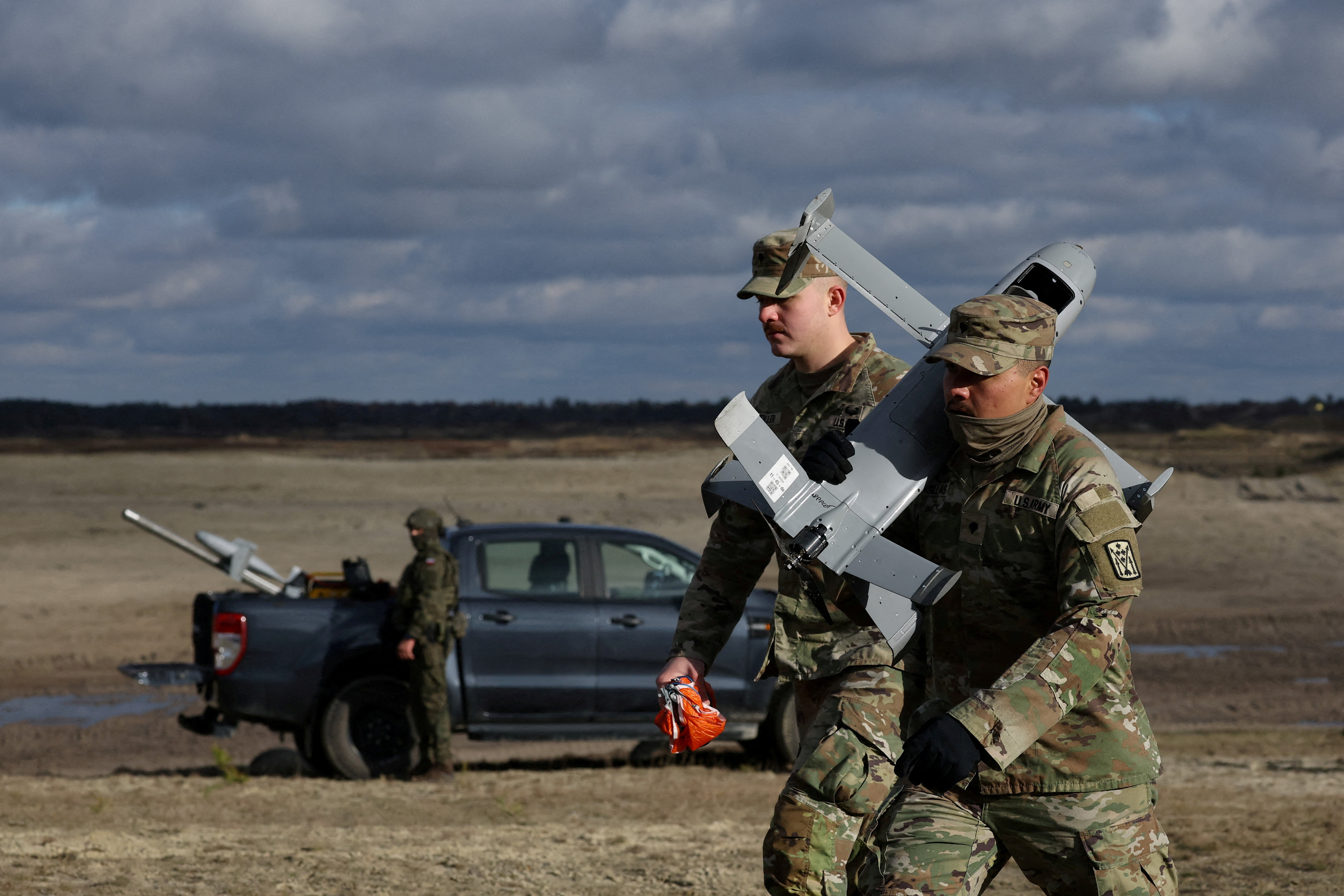
在巴黎南部一处前飞行试验基地,无人机掠过田野和林地,地面团队正在测试旨在拦截无人机的系统——这是对自2022年俄罗斯入侵乌克兰以来无人机入侵和“混合攻击”日益增多的回应。
At a former flight-test base south of Paris, drones swoop over fields and woodland as teams on the ground test systems designed to stop them — a response to a growing wave of drone incursions and “hybrid attacks” since Russia invaded Ukraine in 2022.
在布雷蒂尼-苏尔日尔日(Brétigny-sur-Orge)基地测试的电子干扰器和拦截无人机等技术,其潜在客户不再仅仅是政府、警察和军队。
The potential clients for technology such as electronic jammers and interceptor drones tested at the Brétigny-sur-Orge site are no longer just governments, police and armies.
在欧洲运营关键基础设施的私营公司和国有实体希望加强防御,一些公用事业公司正在申请授权,自行击落无人机。从巴黎到柏林,各国政府正在予以关注。
Private firms and state entities across Europe that operate critical infrastructure want to strengthen their defenses, with some utilities asking for authorization to shoot drones down themselves. From Paris to Berlin, governments are taking note.
他们担心,混合战争或无人机攻击可能导致数百万人断电——这在俄罗斯袭击乌克兰后频繁发生。
They are worried that hybrid warfare or a drone attack could knock out power to millions of people — as has happened frequently in Ukraine after Russian strikes.
爱沙尼亚考虑购买轻型喷气式飞机,以击落俄罗斯喷气式无人机。“今年冬天因混合攻击导致供暖中断,在理论上,而且越来越在现实中,是有可能的,”欧洲能源机构Eurelectric秘书长克里斯蒂安·鲁比(Kristian Ruby)对路透社表示。
Estonia weighs buying light jet aircraft to shoot down Russian jet-powered drones“It is a theoretical, and increasingly a practical, possibility that there could be heating outages this winter due to hybrid attacks,” Kristian Ruby, secretary general of European energy body Eurelectric, told Reuters.
一些欧洲政府开始赋予企业传统上仅限于军队的权力,以作出回应。与此同时,路透社对30多名公司高管、官员和无人机专家的采访显示,探测和击落无人机的技术正在成熟,其速度快于关于谁可以使用该技术的规则。
Some European governments are responding by starting to give firms powers traditionally confined to the military. Interviews by Reuters with over 30 company executives, officials and drone experts meanwhile show the technology to detect and bring down drones is maturing faster than the rules on who may use it.
欧洲各国的做法差异很大,法律上的不确定性依然存在,包括谁有权下令应对无人机威胁。击落无人机可能会对地面人员造成伤害或死亡,或损坏财产,这引发了公司关于责任和问责的问题。“无防备能力”法国是率先立法的国家之一。其议会在8月通过了一项法律,允许经过批准的关键基础设施运营商和承包商,在指定设施附近探测、干扰和击落无人机。
Approaches vary widely across Europe and legal uncertainties remain, including over who has the right to order a response to a drone threat. Bringing down a drone could cause injury or death to people on the ground or damage property, raising questions for companies about liability and accountability. “Defenseless”France is among countries that have led the way. Its parliament passed a law in August allowing approved operators of critical infrastructure and contractors to detect, jam and shoot down drones near designated facilities.
法国议会于8月通过的这项法律回应了针对关键和军事设施的无人机入侵浪潮,其中包括2025年12月在法国西北部的布雷斯特附近朗岛核潜艇基地上空飞行的航班。
The law passed by the French parliament in August responded to a wave of drone incursions over critical and military sites, including flights over the Ile Longue nuclear submarine base near Brest in northwestern France in December 2025.
一位参与该计划的高级法国官员向路透社表示,法国希望在2027年前建立一个扩展后的敏感场所清单,称不愿透露细节,因为该计划尚未公开。
France wants a newly expanded list of sensitive sites deemed of vital importance equipped by 2027, a senior French official involved in the plans told Reuters, asking not to be named because details of the plan are not yet public.
“面对(无人机)威胁我们毫无防备,”这位官员说,并补充称,随着无人飞行器变得越来越容易获取、越来越常见,过去十年里人们的担忧一直在增长。
“We were defenseless in the face of the (drone) threat,” the official said, adding that concerns had been growing over the last decade as unmanned aerial vehicles became more accessible and more common.
法国政府希望为关键基础设施的运营者——如国有电力公司EDF和国有铁路公司SNCF——提供一份经过批准的系统目录,涵盖从电子干扰设备到拦截无人机等不同类型,具体取决于不同的环境和情况。
The French government wants to give operators of critical infrastructure such as state-owned utility company EDF and state-owned railway company SNCF a catalogue of approved systems ranging from electronic jammers to interceptor drones, depending on different environments and situations.
确认了该法国官员概述的计划的重要内容,负责在布雷日-苏尔格运行政府测试项目的巴黎系统地区局表示,今年夏季启动的评估目前已编录了三家系统集成商——将不同计算机系统整合为一个整体——以及17种反无人机系统。
Confirming important elements of the plan outlined by the French official, Systematic Paris-Region, which runs the government testing program at Brétigny-sur-Orge, said evaluations launched this summer had so far catalogued three systems integrators — which combine different computer systems into a unified whole — and 17 counter-drone systems.
该机构表示评估仍在继续,并正在加快从上述解决方案中采购的工作。
It said assessments were continuing and work was underway to accelerate procurement from among those solutions.
法国国防部表示,8月通过的法律有助于加强应对威胁的能力,不过它表示只能代表其管辖范围内的关键基础设施。EDF和SNCF拒绝置评。谁能击落无人机?
France’s defense ministry said the law passed in August would help strengthen capabilities to counter the threat, though it said it could speak only for the critical infrastructure under its authority. EDF and SNCF declined comment. Who can bring down a drone?
2025年8月,一枚载有爆炸物的无人机在德国莱丁/哈勒机场附近发现,凸显了风险已经扩散到了多远。
The discovery of an explosives-laden drone near a Ukrainian cargo plane at Germany’s Leipzig/Halle airport in August underlined how far the risks have spread.
德国将此次事件归咎于俄罗斯。莫斯科方面否认与此事有关,并多次否认曾在欧洲发动过任何形式的攻击;而这些攻击大多发生在那些支持基辅、反对俄罗斯在乌克兰战争的国家。
Germany blamed Russia for the incident. Moscow denied it was behind it, and has repeatedly denied carrying out hybrid attacks in Europe, many of which have been in countries that support Kyiv in Russia’s war in Ukraine.
然而,人们越来越担心:各国政府在应对此类攻击时可能无法迅速采取有效措施来保护分布广泛的基础设施;此外,使用价格相对低廉的无人机所造成的破坏可能会带来高昂的修复成本。
But concerns are growing that national authorities cannot respond fast enough to protect widely dispersed infrastructure against such attacks, and that the damage caused by relatively cheap drones could bring hefty repair costs.
在德国,反无人机行动目前仍主要由警方负责执行。德国内政部向路透社表示,正在研究如何让关键基础设施的运营方及第三方依法参与反无人机行动。
In Germany, where counter-drone operations remain a policing function, the interior ministry told Reuters it was reviewing how critical infrastructure operators and third parties could be legally involved in active counter-drone measures.
9月,奥地利宣布计划赋予关键基础设施运营方(包括大型能源企业)相应的权力。国防部长克劳迪娅·坦纳在新闻发布会上指出:“政府无法独自保护所有关键基础设施。”
In September, Austria announced plans to give similar powers to critical infrastructure operators, including large energy firms. Defense Minister Klaudia Tanner told a press conference that the state could not protect every site on its own.
波兰的举措更为激进:相关企业已部署反无人机系统,并与军队及警方进行了联合训练。在关键能源设施周围设立了禁飞区;受委托负责安保的部门被授权摧毁、禁用或控制进入这些区域的无人机。
Poland has gone further. Operators told Reuters they have deployed counter-drone systems and trained with military and police units. Drone-restricted zones have been established around critical energy infrastructure, and designated security units working for operators have been authorized to destroy, disable or take control of drones entering them.
不过,北约东线地区两家能源传输公司的消息人士向路透社表示,要实现有效干预,仍需要进一步明确责任归属(尤其是对于可能造成的附带损害)。他们认为,如果无法确定责任方,关键基础设施的运营方可能会因担心操作反无人机系统可能引发人员伤亡或重大损失而犹豫不决。
But two sources at energy transmission companies on NATO’s eastern flank told Reuters that effective intervention still requires more assurances, and perhaps a judicial precedent, on who bears responsibility for collateral damage. Without that certainty, they said, operators of critical infrastructure could remain reluctant to neutralize drones because bringing one down could itself cause injury or costly damage.
对于欧洲各地的企业而言,获得摧毁无人机的权力将意味着需要改变现有的应对策略。高管、官员及能源分析师均向路透社表示:多年来,这些企业主要致力于加强网络安全、并准备在遭受攻击后尽快恢复服务,而非主动预防攻击的发生。
Built for recovery Having powers to bring down drones would be a change of approach for companies across Europe. Executives, officials and energy analysts told Reuters that utilities have spent years hardening networks and preparing to restore disrupted services, rather than preventing attacks.
德国能源公司 E.ON 的首席执行官莱昂哈德·比尔恩鲍姆(Leonhard Birnbaum)在 9 月份表示,能源公司必须承认某些攻击行为很可能会得逞,因此不能指望能够完全阻止所有攻击。他提到,该公司在德国境内运营着约 2,720 座变电站。
Leonhard Birnbaum, chief executive of German energy firm E.ON, said in September that operators must assume some attacks will succeed, rather than plan on stopping all of them. The company operates about 2,720 substations across Germany, he said.
作为波罗的海国家及波兰加强防御措施的一部分,立陶宛正在其与俄罗斯的边境附近建设一座加固型变电站;这些防御措施还包括建造掩体、安装反无人机装置,以及储备那些难以替换的关键能源基础设施设备。
Lithuania is building a fortified substation near its border with Russia as part of plans by the Baltic states and Poland to improve their defenses that include constructing bunkers, installing anti-drone nets and building up stocks of hard-to-replace equipment for critical parts of the energy grid.
波兰的国有输电运营商 PSE 通过直升机对全国约 16,500 公里(10,250 英里)长的高压输电网络进行巡逻,并正在准备更先进的飞行器,以保护与瑞典之间的海底电力连接。
Poland’s state-owned transmission operator PSE patrols parts of its about 16,500-km (10,250-mile) high-voltage network by helicopter and is preparing more powerful aircraft to help protect an undersea power link to Sweden.
然而,价格相对低廉的无人机对这类防御措施构成了严重威胁。像大型变压器这样的关键设备可能需要数年时间才能更换;即使修复成功,也可能导致相关基础设施在数个月内无法正常运行。并非所有能源公司都希望自己在防御工作中承担更重要的角色。
Yet relatively inexpensive drones are challenging such defenses. Essential equipment such as large transformers can take years to replace, while even a successful repair can leave infrastructure out of service for months. Not all utility operators are seeking a bigger role in defending themselves.
芬兰国家电网运营商 Fingrid 的首席执行官阿斯塔·西夫沃宁-庞卡(Asta Sihvonen-Punkka)对路透社表示,应对关键基础设施所面临威胁的责任应始终由芬兰政府及武装部队承担。她认为,将相关权力交给能源公司将会是一个“非常重大的变化”,需要经过仔细的法律评估。
Asta Sihvonen-Punkka, chief executive of Finland’s national power grid operator Fingrid, told Reuters that responsibility for countering threats around critical infrastructure should remain with Finnish authorities and armed forces. Any move to give such powers to utility operators would be “a very, very big change” requiring careful legal consideration, she said.
芬兰能源公司 Fortum 的安全主管贾里·斯泰纽斯(Jari Stenius)表示,他希望能源公司能够专注于能源生产,而将安全威胁的处理工作交给警方和军方。
Jari Stenius, head of security of Finnish utility Fortum, said he was content for energy companies to focus on producing energy while police and military authorities handled security threats.
安全官员及反无人机技术公司指出,相关技术正在变得越来越自动化——因为能源公司无法在每个设施现场都部署专业安保团队。
Technology ready, rules are not Security officials and counter-drone technology firms say systems are becoming increasingly automated because operators cannot station specialist teams at every site.
现代反无人机系统将传感器、指挥与控制软件以及各种反制措施整合成一个完整的系统,旨在在几秒钟内识别、分类并应对潜在威胁。
Modern counter-drone systems combine sensors, command-and-control software and countermeasures into a single chain designed to identify, classify and respond to threats within seconds.
多家公司向路透社表示,由于目前尚不清楚谁有权批准采取反制措施,这导致了该系统后续开发阶段的投资进度放缓。参与法国反无人机计划的高级官员称,法国正努力尽可能实现这一过程的自动化。
Several companies told Reuters that uncertainty over who can authorize a response has slowed investment in the latter stages of that process. France is therefore trying to automate the process as much as possible, said the senior French official involved in France’s plans.
该官员表示,公用事业公司的安保人员最终应该能够通过按下按钮来自动启动反制措施;因为在每个地点都配备经过军事级操作培训的专业人员是不现实的。
The official said security workers at utilities should eventually be able to detect a threat and launch an automated response at the press of a button, because having operators trained to use military-grade solutions at every location was unrealistic.
德国国防企业莱茵金属(Rheinmetall)向路透社指出,民用机构在部署反无人机系统时面临的最大障碍通常是“从发现无人机到决定采取反制措施之间的时间延迟”——因为相关法律责任尚未得到明确界定。
German defense company Rheinmetall told Reuters the biggest hurdle for civilian operators was often the delay between detecting a drone and deciding whether to deploy a countermeasure, as legal responsibilities remain fragmented.
莱茵金属表示,私营基础设施运营商对反无人机系统的兴趣正在急剧上升;该公司正在为相关运营商举办培训课程、进行现场调查并进行基础设施评估,同时为这个“增长迅速”的市场领域做准备。
Rheinmetall said interest from private infrastructure operators in counter-drone systems was rising sharply. The company said it was conducting workshops, site surveys and infrastructure assessments for operators and was preparing for what it described as a “very fast-growing” market segment.