以色列在连续三次降息后维持利率不变,距离该国面临最具决定性的选举之一仅剩六天。
Israel held interest rates steady after three consecutive cuts, just six days before the country faces one of its most consequential elections.
以色列央行周三将基准利率维持在3.25%,符合彭博社调查的16位经济学家一致预期。
The Bank of Israel held its base rate at 3.25% on Wednesday, in line with the unanimous projection of 16 economists surveyed by Bloomberg.
央行还表示,以色列有望超越早先的增长预测,现在预计今年经济将扩张5.6%。这一数字比国际货币基金组织(IMF)自身4.5%的增长预测高出一个多百分点——在经济合作与发展组织(OECD)成员国中最高。
The central bank also said Israel is on track to exceed earlier growth forecasts and now expects the economy to expand 5.6% this year. The figure is more than a percentage point higher than the International Monetary Fund’s own projection of 4.5% growth this year — the highest among the Organisation for Economic Co-operation and Development’s members.
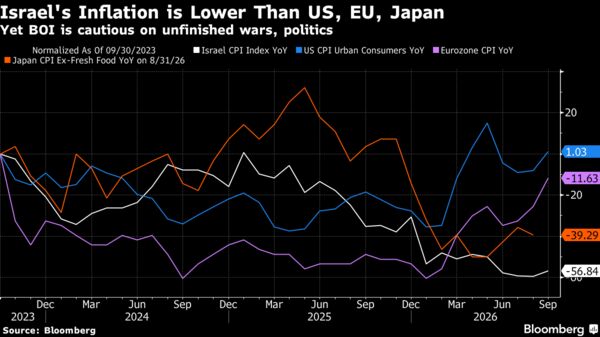
自政策制定者上次调整利率以来,进一步降息的压力有所缓解,通胀降幅超预期降至1.6%,谢克尔兑美元汇率走弱。
Pressure for further cuts eased since policymakers last revised interest rates, with inflation slowing more than expected to 1.6% and the shekel easing against the dollar.
花旗银行经济学家米歇尔·尼斯在决议公布前表示:“谢克尔进一步远离峰值强势水平、地区地缘政治风险升温——尽管这次以色列并非处于中心位置——以及利率决议仅一周后就将举行选举,这些因素使人难以看出以色列央行为何要急于再次降息。”
“The fact that the shekel has moved further away from peak strength, the flare-up of geopolitical risk in the region — albeit with Israel not at the center of it this time — and elections just a week after the interest rate decision, make it difficult to see why the BOI would want to rush into another rate reduction,” Citibank economist Michel Nies said ahead of the decision.
最新利率决议的背景是以色列大选,这被广泛视为对该国任职时间最长的总理本雅明·内塔尼亚胡的实质性公投。周二的选举将是哈马斯武装分子袭击以色列三年来的首次大选。
The backdrop for the latest rate decision is Israel’s election, widely considered a de facto referendum on the country’s longest-serving prime minister, Benjamin Netanyahu. Tuesday’s election will be the first since Hamas militants attacked Israel three years ago.
近期民调显示竞争胶着,内塔尼亚胡领导的右翼集团和加迪·艾森科特领导的反对派均未达到组建政府所需的61个议会席位。
Recent polls show the race is tight, with neither Netanyahu’s right-wing bloc nor the opposition under Gadi Eisenkot reaching the 61 parliamentary seats needed to form a government.
与投资者、企业和评级机构一样,央行正在关注下届政府是否会采取能够满足飙升的国防需求、同时支持增长、扭转日益严重的人才外流并重建与西方经济体关系的财政政策。
The central bank, like investors, businesses and rating agencies, is watching whether the next government will adopt fiscal policies that can meet soaring defense needs while supporting growth, reversing a growing brain drain and rebuilding ties with Western economies.
“任何新政府面临的巨大挑战将涉及一个财政三难困境:压缩债务、管理国防开支以及投资增长引擎,”以色列央行行长阿米尔·亚龙8月在接受彭博电视台采访时表示。“这包括让极端正统派男性融入劳动力市场和服兵役;这些是具有巨大经济影响的政治问题。”
“The big challenge for any new government will involve a fiscal trilemma: narrowing debt, managing defense expenditure, and investing in growth engines,” Bank of Israel Governor Amir Yaron told Bloomberg TV in August. “This includes integrating ultra-Orthodox men into the labor force and military service; political issues with huge economic ramifications.”