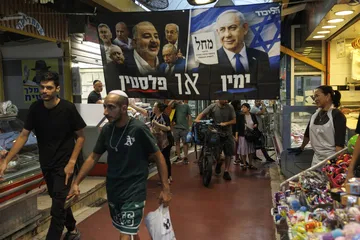
以色列的大选竞选活动已被伊朗、国家安全以及三年战争的影响所主导,以色列总理本雅明·内塔尼亚胡及其主要挑战者加迪·艾森科特极少偏离这一主题。
Israel’s election campaign has been consumed by Iran, national security and the impact of three years of war, with Israeli Prime Minister Benjamin Netanyahu and his main challenger, Gadi Eisenkot, rarely straying from the theme.
文/加利特·阿尔特施泰因 这种执着掩盖了以色列家庭面临的一个令人清醒的现实:周二的投票上空笼罩着一场经济分裂,下一届政府将不得不予以应对。
By Galit Altstein Those fixations belie a sobering reality for Israeli households: overshadowing Tuesday’s ballot is is an economic schism that the next government will have to address.
此次投票将把内塔尼亚胡的军事鹰派立场和宗教民族主义,与艾森科特通过结构性改革帮助降低政府债务、以此为国防建设提供资金的计划对立起来。过去三年,政府债务飙升。
The vote will pit Netanyahu’s military hawkishness and religious nationalism against Eisenkot’s plans to fund Israel’s defense buildup through structural reforms that help bring down the government’s debt, which has soared in the past three years.
艾森科特是一名退役将军,他希望优先推动快速增长的极端正统派群体融入国防力量和劳动力市场。该群体在很大程度上免除兵役,并严重依赖政府补贴。
Eisenkot, a retired general, wants to prioritize integrating the rapidly growing ultra-orthodox population, which is largely exempt from military service and heavily subsidized by the government, into the defense forces and the labor market.
在内塔尼亚胡的设想中,以色列应成为一个“超级斯巴达”,并花费数千亿谢克尔以实现更大程度的军事自给自足。
In Netanyahu’s vision, Israel should become a “Super Sparta” and spend hundreds of billions of shekels to achieve greater military self-reliance.
“多年来,我们控制国防开支以鼓励经济增长,”他在周五表示。“现在经济必须支撑国防,因为没有安全,就不会有经济。”
“For years, we kept defense spending under control to encourage economic growth,” he said on Friday. “Now the economy must support defense, because without security, there will be no economy.”
他因表示——暗示以色列日益孤立——该国应准备好利用加密货币作为“另一种经济体系”的一部分,以规避可能的国际制裁,而招致批评,其中包括来自央行的批评。
He drew criticism, including from the central bank, by saying — in a nod to Israel’s growing isolation — that it should prepare to circumvent possible international sanctions by using cryptocurrencies as part of “an alternative economic system.”
“即将到来的大选代表了经济的一个十字路口,结果可能产生重大影响,”总部位于特拉维夫的IBI投资公司首席经济学家拉斐尔·戈兹兰表示。
“The upcoming elections represent a crossroads for the economy, with the outcome likely to have significant implications,” said Rafael Gozlan, chief economist at the Tel Aviv-based IBI Investment House.
这场分歧不仅仅是“炮弹与黄油”的辩论,而是关乎以色列将走多远来为其炮弹买单。
More than a guns-versus-butter debate, the divide is over how far Israel will go to pay for its guns.
表面上看,以色列经济在战争背景下依然繁荣。去年外国直接投资创下260亿美元纪录,在科技行业带动下,今年经济增长预计将跑赢同类经济体,谢克尔也是全球表现最好的货币之一。
On the surface, Israel’s economy is thriving against the backdrop of war. Foreign direct investment hit a record $26 billion last year, while growth — fueled by the tech industry — is expected to outperform peers this year and the shekel is among the world’s top-performing currencies.
然而,经济学家警告,即将上台的政府将继承严重的结构性脆弱性。
Economists, however, warn the incoming government will inherit severe structural vulnerabilities.
无论下一任领导人是谁,都必须应对飙升的国防预算、国际孤立、人才外流以及人口结构失衡,这些因素恐将在选票尘埃落定后长期瘫痪经济。
Whoever the next leader is, they must navigate a skyrocketing defense budget, the international isolation, a brain drain and demographic imbalances that threaten to paralyze the economy long after the ballots are counted.
生活成本是长期存在的社会不安根源,尤其是住房方面,仍位居经合组织(OECD)最高之列,与冰岛和瑞士并列。
The cost of living, a long-running source of social unease, especially when it comes to housing, remains one of the highest in the OECD, alongside Iceland and Switzerland.
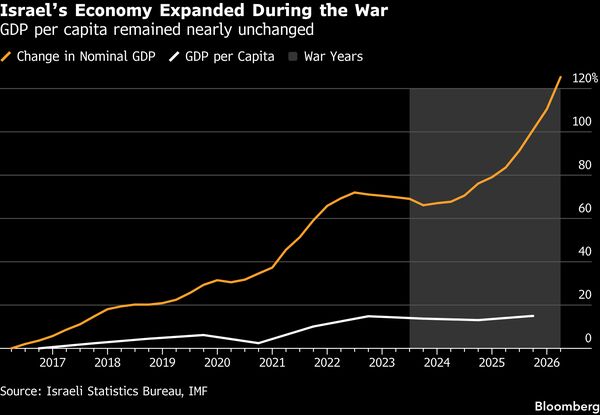
“韧性不等于繁荣”,总部位于特拉维夫的国家安全研究所(Institute for National Security Studies)的一组研究人员在本月的一份报告中表示。以色列正将更大比例的国家资源投入国防,“不可避免地以牺牲对增长引擎和民生服务的长期投资为代价”。自2023年10月哈马斯发动袭击引发多场战争以来,人均国内生产总值几乎没有变化。
“Resilience is not equivalent to prosperity,” a group of researchers from the Tel-Aviv-based Institute for National Security Studies said in a report this month. Israel is channeling a bigger portion of its national resources to defense, “unavoidably at the expense of long-term investment in growth engines and in civilian services.”Gross domestic product per capita has barely changed since Hamas’s attack in October 2023 triggered the start of multiple wars.
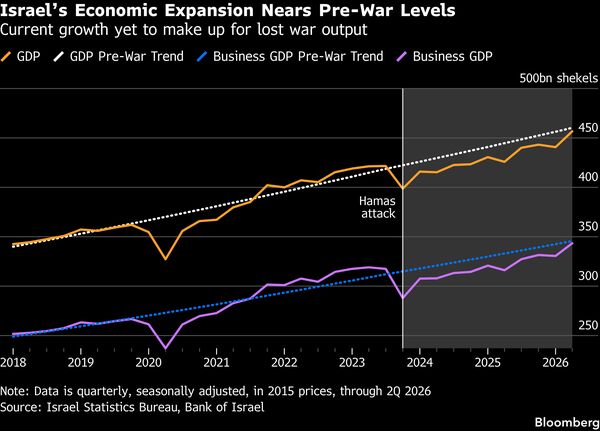
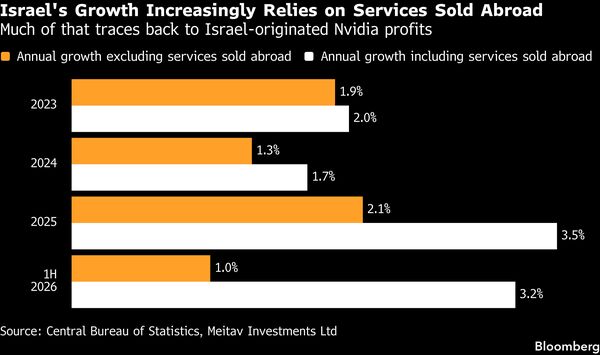
周三,央行将今年增长预测上调至5.6%,2027年预测上调至7.5%。不过,行长阿米尔·亚龙(Amir Yaron)表示,“快速增长可能造成真实国内经济活动步伐的扭曲图景”。他称,数据受到所谓“英伟达效应”推高。这指美国芯片设计商英伟达(Nvidia)以色列分部获得的巨额收入,有助于提振税收,但对支持本地投资和就业作用甚微。若剔除英伟达因素,今年经济增速仅为3.4%。
On Wednesday, the central bank raised its growth projections to 5.6% for this year and 7.5% for 2027. Still, Governor Amir Yaron said that “rapid growth may create a distorted picture of the pace of real domestic economic activity.”The numbers are heightened by the so-called “Nvidia effect,” he said. That refers to the huge revenues earned by the US chip designer’s Israeli arm, which help boost tax revenue but do little to support local investment and jobs. Excluding Nvidia, the economy would grow just 3.4% this year.
战争期间数万以色列人被动员、无法照料生意,是下一届政府面临的逆风因素之一。这将增加控制预算赤字的难度。
The mobilization of tens of thousands of Israelis during the war, keeping them away from their businesses, is one of the headwinds awaiting the next government. That will complicate keeping the budget deficit under control.
为战争买单 虽然停火协议降低了各场冲突的激烈程度,但以色列部队仍占据加沙、黎巴嫩和叙利亚的部分地区。他们在约旦河西岸开展日常行动,推高了薪资和弹药开支。与此同时,与伊朗的战争可能即将升级。
Paying for Guns While ceasefires have reduced the intensity of the various conflicts, Israel’s forces are still occupying parts of Gaza, Lebanon and Syria. They’re conducting daily operations in the West Bank, pushing up expenditure on salaries and munitions. The war with Iran, meanwhile, may be about to escalate.
反对派基本接受以色列新的先发制人军事方针,因此无论周二的投票结果如何,国防预算都可能维持在高位。
The opposition largely accepts Israel’s new preemptive military approach, so it’s likely the defense bill will remain elevated regardless of the voting on Tuesday.
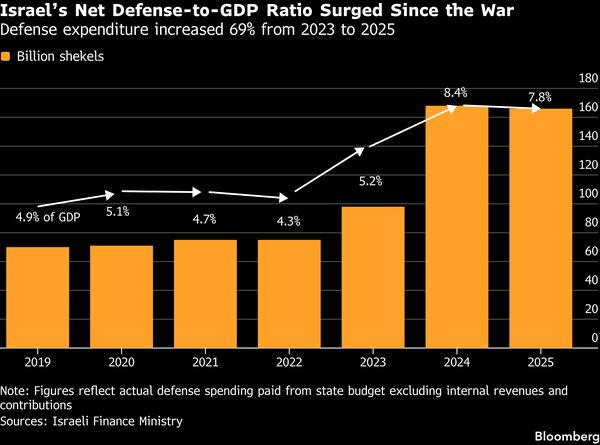
今年以色列国防预算占国内生产总值(GDP)的比重接近 8% —— 在西方同类国家中最高 —— 内塔尼亚胡提议在 12 年内追加 4500 亿谢克尔(约合 1450 亿美元)军费。若该计划推行,央行预计债务占产出比例最快将在 2035 年升至 85%。尽管按当今发达国家标准这仍属较低水平,但在哈马斯发动袭击前,这一比例仅约 60%。
Israel’s defense budget stands at almost 8% of GDP this year — the highest share among its Western peers — and Netanyahu has proposed a 450-billion-shekel ($145 billion) buildup over 12 years. If the plan goes ahead, the central bank sees debt increasing to as high as 85% of output through 2035. While still fairly low by today’s rich-world standards, it was only around 60% before Hamas’s attack.
留住人才 内塔尼亚胡政府吹嘘以色列的军事和经济成就,反对派则认为财政紧张,国家面临最具生产力的公民大规模外流的风险。
Retaining Talent While Netanyahu’s government boasts of Israel’s military and economic achievements, the opposition argues that finances are stretched and the country risks a mass departure of the country’s most productive citizens.
“当我在沙龙聚会上询问听众,如果内塔尼亚胡继续执政,他们最大的担忧是什么,最常见的回答是:‘我的孩子收拾行李离开这个国家,’” 曾任财政部官员、现与艾森科特搭档参选的沙乌尔·梅里多尔说。
“When I ask audiences at parlor meetings what their greatest fear is if Netanyahu stays in power, the most common answer is: ‘That my kids pack up and leave the country,’” said Shaul Meridor, a former Finance Ministry official now running with Eisenkot.
特拉维夫大学的一项研究显示,2023 年和 2024 年约有 10 万以色列人离开该国,远超往年。学者、工程师、医生等高收入群体在其中占比突出,初步数据显示这一趋势延续至 2025 年。
Some 100,000 Israelis left the country in 2023 and 2024, far more than in previous years, according to a Tel Aviv University study. Academics, engineers, physicians and other high-earners featured prominently among them and preliminary data suggest the trend continued into 2025.
这波外流潮始于内塔尼亚胡政府推动削弱司法权力,并在战争期间持续,因为许多以色列人想摆脱反复的导弹袭击和没完没了的预备役服役。
The exodus began to take shape after Netanyahu’s government embarked on a push to curb judicial powers and continued through the war, as many Israelis sought respite from repeated missile attacks and relentless reserve duty.
财政部首席经济学家什穆埃尔·阿布拉姆宗表示,移民潮尚未达到影响宏观经济的程度,但承认这一趋势令人担忧。
Finance Ministry Chief Economist Shmuel Abramzon said emigration hasn’t reached macroeconomic-relevant levels, but acknowledges the trend is concerning.
超正统派豁免 奈坦亚胡拒绝征召超正统派男性服兵役,无视最高法院的一项裁决,该裁决遭到宗教政党的强烈反对,这些政党长期以来一直是其执政联盟中的关键造王者。
Ultra-Orthodox Exemptions Netanyahu has resisted drafting ultra-Orthodox men into military service, in defiance of a Supreme Court ruling fiercely opposed by religious parties that have long been kingmakers in his coalitions.
这导致数万名预备役士兵被征召入伍,其中包括该国一些最熟练的科技工作者。反对派和经济学家认为,通过征召数千名符合条件的超正统派男性入伍,可以解决这一问题。
That’s meant tens of thousands of reservists were called to serve, including some of the nation’s most skilled tech workers. The opposition and economists argue this can be resolved by drafting thousands of eligible ultra-Orthodox men to the military.
当局表示,动员已完成义务役的平民,成本远高于征召尚未服役的以色列人。
Authorities say mobilizing civilians who have already done mandatory service is far more expensive than integrating Israelis yet to do so.
IBI投资公司的戈兹兰表示,由反对派领导的政府更有可能追求这些目标,同时“可能会缩减一些活跃的军事战线”。他认为,目前的执政联盟“将不愿结束现有的军事行动,且未能推动更公平的兵役负担分配”。这一挑战已存在多年,但战争将其推向了政治舞台的前沿。许多世俗犹太人和遵守教规的犹太人都对看到亲人冒生命危险参加战斗、离开家庭、生意和学业数月,而其他人却获豁免感到不满。
An opposition-led government would be more likely to pursue those goals while “potentially winding down some active military fronts,” said Gozlan of IBI Investment House. The current coalition, he believes, “would be reluctant to end existing military campaigns and has failed to pursue a more equitable distribution of the military service burden.”The challenge has loomed for years, but the war has pushed it to the forefront of politics. Many secular and observant Jews alike resent seeing loved ones risk their lives in combat, leaving families, businesses and studies for months while others remain exempt.
以色列宗教人口增长的经济影响远不止军事领域。四分之一的一年级学生就读于独立的超正统派学校,这些学校往往忽视数学和英语等核心课程。这可能导致该国劳动力中越来越大的比例被排除在高收入工作之外,并过度依赖补贴。
The economic implications of Israel’s growing religious population extend well beyond the military. One in four first-graders attends an independent ultra-Orthodox school, where core subjects like math and English are often neglected. That risks leaving the country with an increasing share of the workforce sidelined from high-income jobs and overly reliant on subsidies.
“我们必须让极端正统派和阿拉伯社区融入社会,”梅里多尔说。“这始于终止所有不教授核心课程的学校的预算。”以色列银行也表达了类似的担忧。它还呼吁采取措施,解决公共服务长期投资不足的问题,2025年公共服务投资占经济产出的比重为43%,比经济合作与发展组织(OECD)平均水平低十个百分点。
“We must integrate the Ultra-Orthodox and Arab communities,” Meridor said. “It starts by terminating all budgets for schools who don’t teach a core curriculum.”The Bank of Israel has voiced similar concerns. It’s also called for measures to address a chronic under-investment in public services, which in 2025 lagged the OECD’s 43% share of economic output by ten percentage points.
这导致了看病专科医生的等待时间过长,以及以色列学生在国际学生评估项目(PISA)比较测评中得分创历史新低。
That’s translated into long wait times to see medical specialists and record-low scores by Israeli students in the PISA comparative assessment.