菲律宾中央银行有望连续第四次会议上调关键利率,因为严重的厄尔尼诺干旱天气有可能进一步推高反弹的通胀。
The Philippine central bank is on track to raise the key rate for a fourth consecutive meeting as a severe El Niño dry spell threatens to further fan resurgent inflation.
根据对25位分析师的调查,其中24位预计菲律宾中央银行将于周四把目标逆回购利率上调25个基点至5.25%。一位分析师预测将更激进地加息半个百分点。
The Bangko Sentral ng Pilipinas will increase the target reverse repurchase rate by 25 basis points to 5.25% on Thursday, according to 24 of 25 analysts in a poll. One is predicting a more aggressive, half-point hike.
这个严重依赖进口的东南亚国家已经经历了该地区最严重的通胀冲击之一,几乎没有补贴来缓冲全球能源冲击的影响。如今,菲律宾正准备应对厄尔尼诺天气扰动对食品价格的影响。
The import-dependent Southeast Asian nation has already seen one of the worst spells of inflation in the region, with few subsidies to cushion the blow from the global energy shock. Now, the Philippines is bracing for the impact of El Niño weather disruptions on food prices.
央行行长雷莫洛纳本月早些时候表示,即便是“温和”的厄尔尼诺现象也已构成风险,但所谓的“哥斯拉级厄尔尼诺”将是“非常、非常坏的消息”。“我们必须同时担心这两种情形,并以此为依据决定货币政策。”尽管经济增长远低于预期,但决策者已在央行过去三次会议上每次都将关键利率上调25个基点,以抑制顽固的高通胀。
A “benign” El Niño would already be a risk, but a so-called “Godzilla El Niño” would be “really, really bad news,” Governor Eli Remolona said earlier this month. “We have to worry about both those scenarios and decide on monetary policy based on that.”Policymakers have raised the key rate by a quarter-point each during the central bank’s last three meetings to rein in a stubbornly high inflation, even as the economy grew way below expectations.
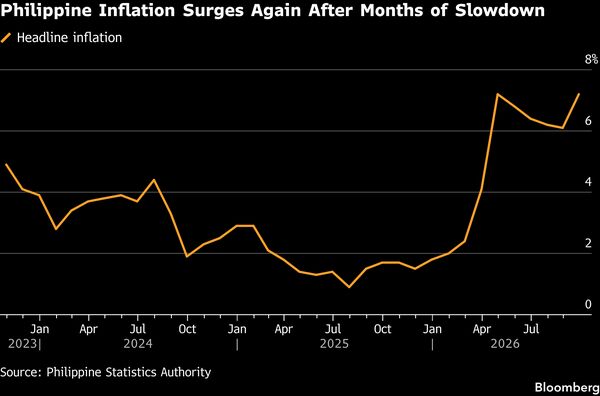
以下是菲律宾中央银行定于马尼拉时间下午2:30发布的政策声明、以及下午3:00举行的媒体简报会中值得关注的要点:9月消费者价格同比飙升7.2%,扭转了此前连续四个月的放缓趋势,原因是中东冲突重燃推高了燃油价格。
Here are the things to watch for in the BSP’s policy announcement at 2:30 p.m. in Manila, followed by a media briefing at 3:00 p.m.: Consumer prices surged 7.2% in September from a year earlier, reversing four months of deceleration as renewed fighting in the Middle East sent fuel prices higher.
这使得今年以来的平均通胀率达到5.4%,远高于央行3%的目标。统计局已警告存在进一步的通胀威胁,尤其是食品方面。
That brought the year-to-date inflation average to 5.4%, well above the central bank’s 3% target. The statistics agency has warned of further inflationary threats, particularly on food.
华侨银行高级经济学家拉万亚·文卡特斯瓦兰表示:“决策者也可能担心管道通胀风险,包括食品价格上涨的前景,以及全球高油价持续传导至国内燃油、运输和公用事业成本。”
“Policymakers are also likely to be concerned about pipeline inflation risks, including the prospect of higher food prices and the continued pass-through of elevated global oil prices into domestic fuel, transport and utility costs,” Oversea-Chinese Banking Corp. senior economist Lavanya Venkateswaran said.
“鉴于这些上行风险,菲律宾中央银行(BSP)很可能将优先锚定通胀预期,并防止二轮效应固化,”她补充道。
“Given these upside risks, the BSP is likely to prioritize anchoring inflation expectations and preventing second-round effects from becoming entrenched,” she added.
菲律宾比索兑美元汇率上周首次跌破关键心理关口63,并一直在该水平附近交易,这一事态发展可能进一步推高进口成本并推升通胀。
The Philippine peso breached the key psychological point of 63 per dollar for the first time last week and has traded near that level, in a development that could further increase the cost of imports and stoke inflation.
菲律宾联合银行首席经济学家鲁本·卡洛·阿松西翁表示:“比索‘走弱’加剧了‘输入性通胀压力,特别是通过燃油和其他进口商品’。”
The “weak” peso adds to “imported inflation pressures, particularly through fuel and other imported goods,” said Ruben Carlo Asuncion, chief economist at Union Bank of the Philippines.
大都会银行与信托公司首席经济学家尼古拉斯·马帕表示:“比索贬值可能加剧输入性通胀,但更大的担忧依然是全球油价居高不下以及厄尔尼诺现象可能导致的供应中断。”
“Peso weakness could add to imported inflation, but the bigger concerns remain elevated global oil prices and potential supply disruptions from El Niño,” Metropolitan Bank & Trust Co. chief economist Nicholas Mapa said.
菲律宾第二季度经济增速放缓至2.3%,为2009年以来最低(不含疫情期间),部分原因是能源冲击余波和一起腐败丑闻的影响。
Philippine economic growth slowed to 2.3% in the second quarter, the slowest since 2009 excluding the pandemic, in part due to the fallout from the energy shock and a corruption scandal.
阿松西翁表示:“增长放缓、劳动力市场条件转软以及需求降温,都不支持更激进的加息周期。”“我们认为,加息25个基点在抑制通胀和避免对经济造成不必要拖累之间取得了平衡。”
“Slowing growth, softer labor market conditions and moderating demand argue against a more aggressive tightening cycle,” Asuncion said. “In our view, a 25-basis-point increase strikes a balance between containing inflation and avoiding an unnecessary drag on the economy.”