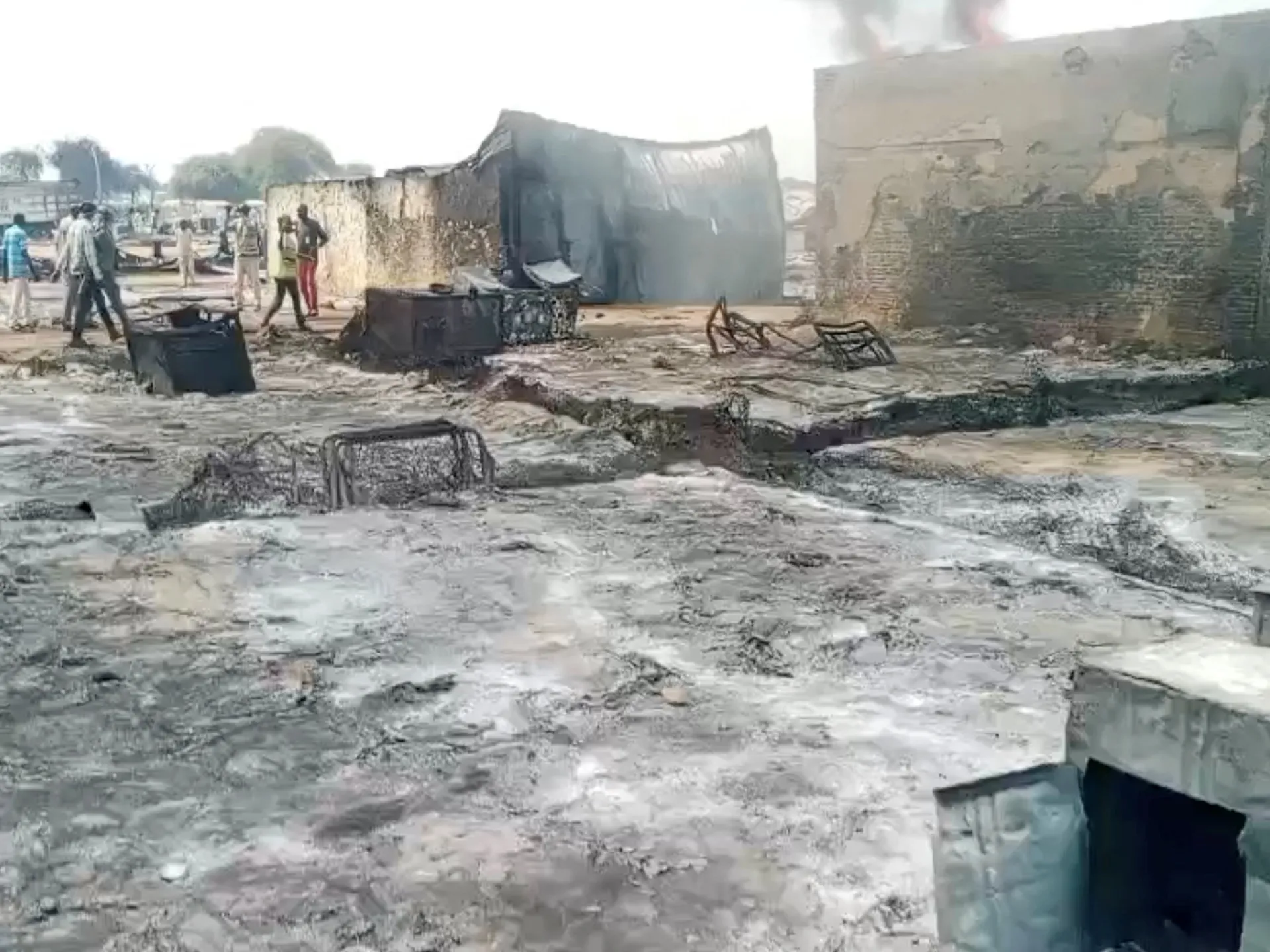
在苏丹首都喀土穆东部的伊姆蒂亚达·纳赛尔(Imtidad Nasser)社区,居民们正面临着一个令人恐惧的新现实:天空中到处都是无人机。
In the Imtidad Nasser neighbourhood east of Sudan’s capital Khartoum, residents are grappling with a terrifying new reality of skies filled with drones.
“我们最初听到了无人机在空中的嗡嗡声,但并没有太在意,”该地区的居民艾哈迈德·阿卜杜勒·哈米德(Ahmed Abdel Hamid)告诉半岛电视台(Al Jazeera),他提到了最近快速支援部队(Rapid Support Forces, RSF)发动的一次无人机袭击。随后,防空炮火和两次巨大的爆炸震撼了整个地区,导致该社区中一个家庭的三名儿童丧生。
“We heard the buzz of drones in the sky, but did not pay attention to it at first,” Ahmed Abdel Hamid, a resident of the area, told Al Jazeera about a recent drone attack by the Rapid Support Forces (RSF). Then, anti-aircraft fire and two huge explosions shook the area, killing three children from a family in the community.
最近几天,苏丹各地发生的无人机袭击已经导致超过160人死亡,这标志着自2023年4月以来持续不断的军事冲突出现了新的致命发展。
A devastating wave of drone attacks across Sudan has killed more than 160 people in recent days, marking a lethal evolution in the conflict between competing military forces which began in April 2023.
苏丹武装部队(Sudanese Armed Forces, SAF)和快速支援部队(RSF)越来越多地使用无人机,这使得战争逐渐蔓延到居民区。这种战术的变化背后,是双方都想彻底击败对方的迫切愿望。
A rise in the use of unmanned aerial vehicles (UAVs) by the Sudanese Armed Forces (SAF) and the paramilitary RSF has pushed the war deep into residential neighbourhoods, driven by shifting battlefield motives and a mutual desire to exhaust the opponent.
根据冲突监测机构ACLED的数据,这场残酷的内战已经持续了四年,至少有59,000人丧生,约1,400万人流离失所,其中450万人逃离了苏丹。
Shifting military tactics The use of drones is a relatively new development in the brutal civil war, which is now in its fourth year and has killed at least 59,000 people, according to conflict monitor ACLED.
目前,苏丹武装部队和快速支援部队仍在争夺对该国不同地区的控制权,主要通过地面进攻和战斗来实现这一目标——而这些行动往往以平民的生命为代价。去年发生在该国西部的埃尔-法希尔(el-Fasher)的大屠杀被国际特赦组织(Amnesty International)称为“种族清洗”事件,这一事件将这场危机推向了国际舆论的焦点。快速支援部队的武装分子在围攻该城市18个月后将其占领,杀害了数万名居民;当时,埃尔-法希尔曾是苏丹武装部队在达尔富尔地区(Darfur region)的最后据点。
Some 14 million people have been displaced from their homes, with 4.5 million fleeing the country. In the meantime, the SAF and the RSF have continued to vie for control of different parts of the country, mostly through ground invasions and fighting – and often at the cost of civilians. The massacre in el-Fasher in the west of the country last year – described by Amnesty International as “ethnic cleansing” – propelled the crisis to international headlines. RSF fighters murdered tens of thousands of inhabitants of the city after holding it under siege for 18 months and then capturing it – at the time the last SAF stronghold in the Darfur region.
如今,双方对无人机依赖的加剧,反映出一种向远程、先发制人行动的刻意转变。对苏丹武装部队而言,无人机提供了应对复杂地理环境、抵消快速支援部队优势的关键工具。
Now, the intensified reliance on drones by both sides reflects a deliberate shift towards long-range, preemptive operations. For the SAF, drones offer a crucial tool to navigate complex geography and neutralise RSF advantages.
军事专家阿布·贝克尔·阿卜杜勒·拉希姆表示,军方在达尔富尔和科尔多凡地区纵深地带升级无人机打击的主要动机是“打击指挥与控制中心、燃料和弹药库以及主要补给路线,尤其是那些与利比亚、乍得和南苏丹边境相连的路线”。
Military expert Abu Bakr Abdel Rahim said the army’s main motive for escalating drone strikes deep inside the Darfur and Kordofan regions is “targeting command and control centres, fuel and ammunition depots, and main supply routes, especially those linked to the borders with Libya, Chad and South Sudan”.
地理因素在这一战略中起着关键作用。阿卜杜勒·拉希姆解释说:“达尔富尔地区幅员辽阔,与军队目前在科尔多凡的集结区之间隔着沙漠距离和漫长且军事上暴露的道路,如果没有大规模的工程、空中和后勤掩护,地面推进将极为复杂。”
Geography plays a pivotal role in this strategy. “The Darfur region is vast, separated from the army’s current concentration areas in Kordofan by desert distances and long, militarily exposed roads, making ground advance highly complex without massive engineering, aerial, and logistical cover,” Abdel Rahim explained.
阿卜杜勒·拉希姆指出,通过这些有针对性的打击,军方领导层试图削弱快速支援部队“集结兵力、发动反击或夺回其失去的战略地区的能力”。此外,通过打击尼亚拉等城市,军方旨在“打击其士气,使其即使在后方控制区也感到不安全,并破坏其建立平行行政实体的任何努力”。
Through these targeted strikes, Abdel Rahim noted, army leadership seeks to weaken the RSF’s “ability to assemble its forces and launch counterattacks, or reclaim the strategic areas it lost”. Furthermore, by striking cities like Nyala the army aims to “strike their morale, make them feel insecure even in their rear control areas, and disrupt any efforts to establish parallel administrative entities”.
相互竞争的战场叙事 军方官员表示,近期升级行动背后有具体的战术目标。苏丹武装部队驻科尔多凡特别行动部队发言人穆罕默德·迪丹在一则帖文中表示,军方在科尔多凡、西达尔富尔和南达尔富尔各地发动了“75次空袭,打击固定和移动目标,以及快速支援部队的步兵部队、车辆、指挥官和个人”。
Competing battlefield narratives Military officials say there are specific tactical goals behind the recent escalation. Mohamed Didan, spokesperson for the SAF’s Special Action Forces in Kordofan, stated in a post that the army launched “75 air strikes targeting fixed and moving targets, along with infantry forces, vehicles, commanders and individuals from the Rapid Support Forces” across Kordofan, West Darfur and South Darfur.
迪丹将快速支援部队近期对喀土穆的无人机袭击直接与其战场损失联系起来,将此次升级归因于“在西科尔多凡州达巴布地区针对该部队的打击中,约80名动员人员被打死”。
Didan directly linked the RSF’s recent drone attacks on Khartoum to their battlefield losses, attributing the escalation to “the killing of about 80 mobilised personnel for the forces in strikes that targeted them in the Al-Dabbab area in West Kordofan”.
他补充说,快速支援部队故意以民用基础设施为目标,“正如上周二发生在喀土穆机场、达马津的加油站以及北科尔多凡州滕德尔蒂市的变压器站的情况一样,这导致该州和邻近的北科尔多凡州的城市停电”。
He added that the RSF is deliberately targeting civilian infrastructure, “as happened at Khartoum airport, fuel stations in Damazin, and the electrical transformer station in Tendelti city in North Kordofan state last Tuesday, which led to the blackout of cities in the state and the neighbouring North Kordofan state”.
对此,快速支援部队周一发表声明,指责军方使用无人机实施“尼亚拉牲畜市场和阿卜耶伊纳阿姆市场的屠杀,以及西科尔多凡达巴布地区一个卡车站的屠杀”。一名苏丹政府官员在匿名的条件下对半岛电视台表示,军方使用无人机严格来说是战术性的。“军队不以平民为目标,但将快速支援部队的所有军事和后勤据点及补给线视为合法目标,”该官员表示。
In response, the RSF issued a statement on Monday accusing the military of using drones to carry out “massacres in the livestock market in Nyala and al-Na’am market in Abyei, and at a truck station in the al-Dabbab area in West Kordofan A Sudanese government official, speaking to Al Jazeera on condition of anonymity, said the military’s use of drones is strictly tactical. “The army does not target civilians, but it considers all military and logistical sites and supply lines of the Rapid Support Forces as legitimate targets,” the official stated.
不断上升的平民死亡人数平民正在为此付出最高代价。最近最致命的袭击发生在西科尔多凡达巴镇一个市场附近,一架无人机击中了一个运输枢纽,造成80人死亡。
Mounting civilian death toll Civilians are paying the highest price for all this. The deadliest recent attack occurred near a market in al-Dabba town in West Kordofan, where a drone struck a transport hub, killing 80 people.
周一早些时候,一架军方无人机袭击了快速支援部队据点尼亚拉,造成17人死亡;而该准军事组织对青尼罗省一处流离失所者聚集地的袭击造成41人死亡。
Early on Monday, an army drone attack hit the RSF stronghold of Nyala, killing 17 people, while a strike by the paramilitary group on a gathering of displaced people in the Blue Nile province killed 41 individuals.
联合国谴责了这些袭击。“我们对全国范围内持续发生的致命无人机袭击感到震惊,这些袭击正在杀害包括儿童在内的平民,并扰乱核心服务,”联合国秘书长发言人斯特凡·杜加里克对记者表示。
The United Nations has condemned the strikes. “We are alarmed by the continued deadly drone strikes across the country that are killing civilians, including children, and that are disrupting central services,” Stephane Dujarric, spokesperson for the UN secretary-general, told reporters.
信息韧性中心(CIR)的一份调查报告显示,自战争爆发以来,已有21种不同型号的无人机被使用。
An investigative report by the Centre for Information Resilience (CIR) revealed that 21 different drone models have been used since the war erupted.
这些武器的采购背后是一条多元化的国际供应链,调查发现这些武器主要来自六个国家:白俄罗斯、伊朗、中国、俄罗斯、苏丹和土耳其。
A diverse international supply chain is behind their procurement of these weapons, which have been found to originate mainly from six countries: Belarus, Iran, China, Russia, Sudan and Turkiye.
根据CIR的调查,快速支援部队部署了10种不同类型的无人机,而苏丹武装部队则使用了五种不同型号。总体结果是,这是一场令人恐惧且正在迅速机械化的冲突,天空无法为下方的平民提供庇护。
According to the CIR investigation, the RSF has deployed 10 different types of drones, while the SAF has used five different models. The overall result is a terrifying and rapidly mechanising conflict where the skies offer no sanctuary to the civilians below.